

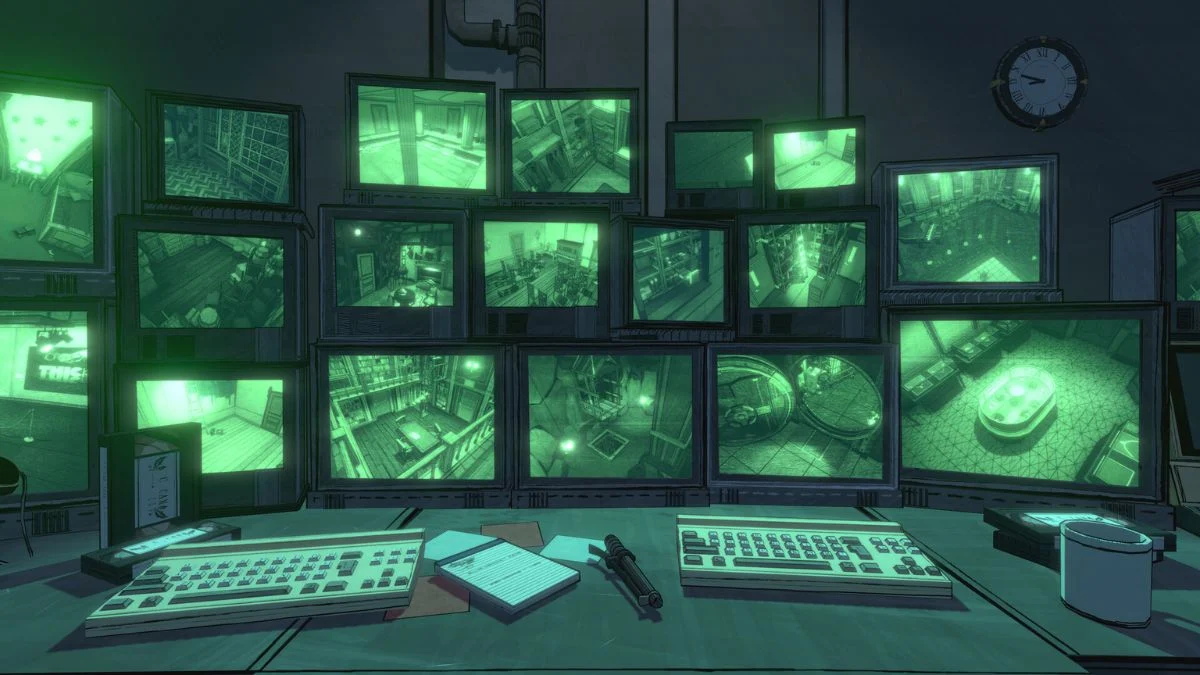
The gaming community recently found itself embroiled in controversy when accusations surfaced questioning whether Blue Prince, the acclaimed indie puzzle game, incorporated artificial intelligence during its development. Publisher Raw Fury moved swiftly to address these claims, issuing a definitive statement that clears the air around one of 2025’s most celebrated indie titles.
The Controversy Origins
The debate ignited following an article from The Escapist that mistakenly suggested Blue Prince contained generative AI elements in its final product. This claim emerged amid a broader industry conversation about AI usage in game development, particularly after Clair Obscur: Expedition 33 lost its Indie Game Awards recognition for employing generative AI tools during production.
Blue Prince found itself caught in the crossfire of this heated discourse, despite having no connection to AI-assisted development. The situation escalated when the game inherited the Game of the Year title at the Indie Game Awards after Expedition 33’s disqualification, prompting scrutiny from various corners of the gaming community.
Raw Fury’s Definitive Response
Raw Fury, the publisher behind Blue Prince, released an unambiguous statement on social media addressing the speculation. The company emphasized that developer Tonda Ros and his team at Dogubomb created the game entirely through human creativity and labor.
“There is no AI used in Blue Prince,” Raw Fury declared in their official statement. The publisher stressed that the game represents eight years of dedicated development, driven exclusively by imagination and human craftsmanship. This timeline alone speaks to the traditional, hands-on approach the development team maintained throughout the entire production cycle.
The statement highlighted what Raw Fury called “full human instinct” guiding every aspect of the game’s creation. This phrasing deliberately contrasts with the efficiency-focused, algorithm-driven approach that characterizes AI-assisted development workflows.
Understanding the Development Journey
Blue Prince emerged from nearly a decade of careful iteration and artistic refinement. The game showcases a distinctive visual style and intricate puzzle mechanics that reflect the singular vision of its creator. Such cohesive artistic direction typically indicates human authorship rather than the sometimes inconsistent results AI tools can produce.
The development team maintained creative control across all aspects of production, from conceptual design through final implementation. This extended timeline allowed for the organic evolution of ideas, a process fundamentally different from the rapid prototyping capabilities AI tools offer modern developers.
What Defines AI-Free Development
Raw Fury’s statement invites consideration of what truly constitutes AI-free development in modern game creation. The term “AI” encompasses a spectrum of technologies, from decades-old pathfinding algorithms to contemporary generative models.
Blue Prince’s team maintained traditional workflows throughout production. This means human artists created every visual asset, human designers crafted every puzzle, and human programmers wrote the underlying code. The development process relied on established tools and techniques rather than emerging AI technologies.
The eight-year development timeline supports this traditional approach. AI tools typically accelerate certain development phases, so extended production periods often indicate more conventional methodologies.
More Trending Gaming News & Guides:


Leave a Reply