
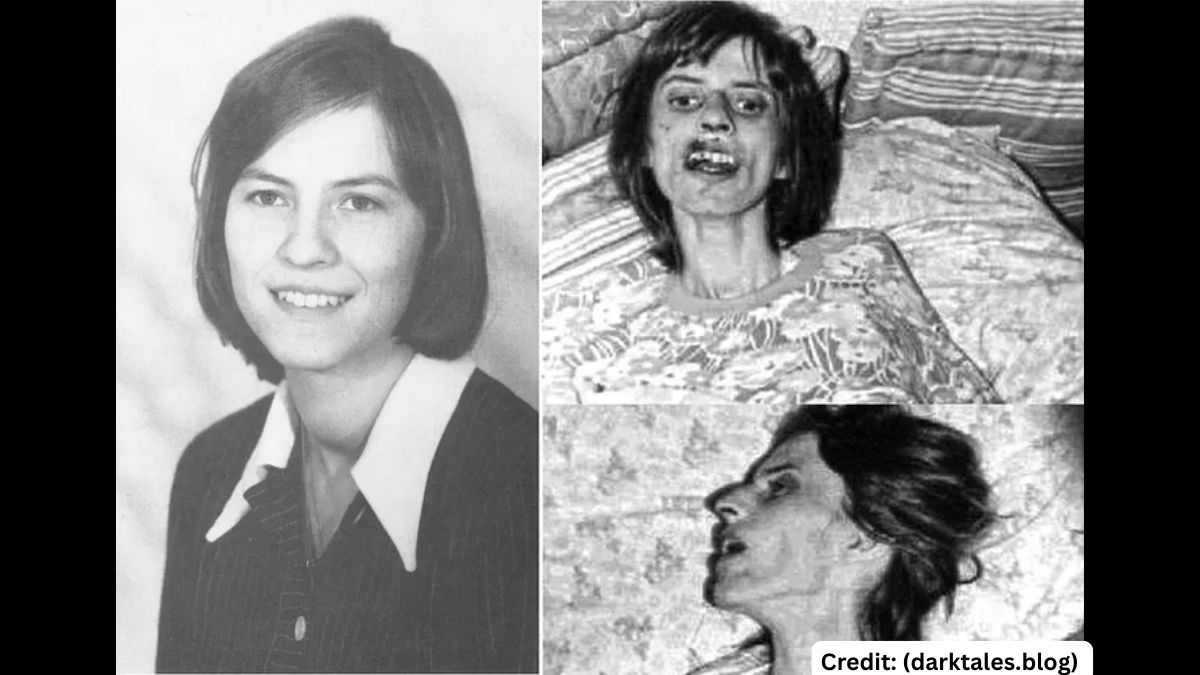
When audiences first watched The Exorcism of Emily Rose in 2005, many were struck by the haunting claim: this terrifying courtroom-horror was inspired by real events. Behind the fictional Emily lies the true story of Anneliese Michel, a young German woman whose tragic death after dozens of exorcism rituals became one of the most infamous cases blending faith, medicine, and law.
In This Post:
The Beginning: A Young Woman of Faith
Anneliese Michel was born in 1952 in a devout Catholic family in Klingenberg, Bavaria. By all accounts, she was bright, religious, and sensitive. At the age of 16, her life took a dark turn when she suffered her first major seizure. Doctors diagnosed her with temporal-lobe epilepsy, a neurological condition that can trigger hallucinations, visions, and emotional disturbances.
Over the years, Anneliese struggled with depression and frightening visions. She reported hearing voices and feeling an invisible presence pressing her down at night. Despite medication, including anticonvulsants and psychiatric drugs, her condition worsened.
The Descent into Darkness
By the early 1970s, Anneliese began showing an intense aversion to religious objects. She claimed she could not step into a church, drink holy water, or even look at a crucifix without overwhelming pain. Her family, deeply rooted in Catholic faith, grew convinced that something more than mental illness was tormenting her.
Doctors adjusted her treatments, but Anneliese and her parents became increasingly frustrated with the lack of progress. When her behavior turned violent—self-injury, growling, and consuming insects—her family sought help from the Church.

Permission for Exorcism
Two priests, Father Ernst Alt and Father Arnold Renz, believed Anneliese’s suffering could not be explained by medicine alone. They petitioned Bishop Josef Stangl, who granted permission to perform the Rite of Exorcism under secrecy.
From September 1975 to June 1976, Anneliese underwent an astonishing 67 exorcism sessions, each lasting several hours. Tapes from these sessions reveal her growling, screaming in multiple voices, and naming supposed demons—Lucifer, Judas, Nero, and even Hitler.
Physical Symptoms

- Seizures and convulsions – Violent shaking, falling to the floor, and rigid postures, consistent with her diagnosed temporal-lobe epilepsy.
- Extreme weakness and emaciation – By the time of her death, she had stopped eating and drinking, leading to severe malnutrition and dehydration.
- Self-injury – Scratching, hitting herself, and tearing her clothes during exorcism sessions.
- Aversion to sacred objects – She reportedly recoiled from crucifixes, holy water, rosaries, and churches.
Behavioral and Psychological Symptoms

- Auditory hallucinations – She claimed to hear voices of demons, sometimes naming them (Lucifer, Judas, Cain, Nero, Hitler).
- Visual hallucinations – Some reports describe her seeing invisible entities or shadows.
- Blasphemous speech and growling – During exorcisms, she spoke in deep, guttural voices, sometimes using language inconsistent with her normal speech.
- Violent outbursts – Yelling, kicking, hitting priests and family members during exorcisms.
- Insomnia and agitation – Extreme restlessness, difficulty sleeping, and constant fear.
- Psychotic behavior – Some behaviors included paranoia, accusing family members of evil, or extreme fear of religious spaces.
Religious/Spiritual Symptoms
- Refusal of food or drink – Insisting that fasting was necessary to expel demons.
- Claimed knowledge of hidden secrets – Allegedly revealing private family details during exorcisms, which priests interpreted as supernatural insight.
- Speaking in multiple “voices” – Often attributed to different demons inhabiting her.
The Final Months

As the rituals continued, Anneliese’s body grew weaker. She refused food and drink, insisting that fasting would help expel the demons. By the spring of 1976, she was emaciated, bruised, and weighed less than 70 pounds.
Her last words to her mother reportedly were: “Mother, I’m afraid.” On July 1, 1976, at only 23 years old, Anneliese Michel died of malnutrition and dehydration.
The Trial: Faith on Trial

Her death shocked Germany and soon the world. Prosecutors charged her parents and the two priests with negligent homicide, arguing that medical care could have saved her life.
The 1978 trial became a media spectacle, pitting science against faith. Medical experts testified that Anneliese suffered from epilepsy and psychosis. The defense argued that her family and priests acted out of sincere belief, and that the exorcisms had been sanctioned by the Church.
The verdict: all four defendants were found guilty of negligent homicide but received suspended six-month prison sentences and probation.

Might Interest You: The Real Annabelle Doll: True Story Behind the Horror Movie Icon
Aftermath and Legacy

The Anneliese Michel case became a flashpoint in debates about exorcism vs. mental illness. To some, she was a victim of outdated superstition; to others, she was a martyr who suffered for her faith. Her grave in Klingenberg became a site of pilgrimage.
Hollywood transformed her story into The Exorcism of Emily Rose, blending courtroom drama with supernatural horror. Unlike the movie, however, the real story offers no cinematic resolution—only a tragic reminder of what happens when medical science and religious conviction collide.
Why the Story Endures
Nearly five decades later, Anneliese Michel’s story continues to fascinate and terrify. It raises questions that remain unresolved: Where does illness end and possession begin? When should faith yield to medicine?
For anyone who has ever asked whether The Exorcism of Emily Rose was based on a true story, the answer is yes. And the reality is every bit as chilling, tragic, and haunting as the film itself.
More Trending Stories:


Leave a Reply