

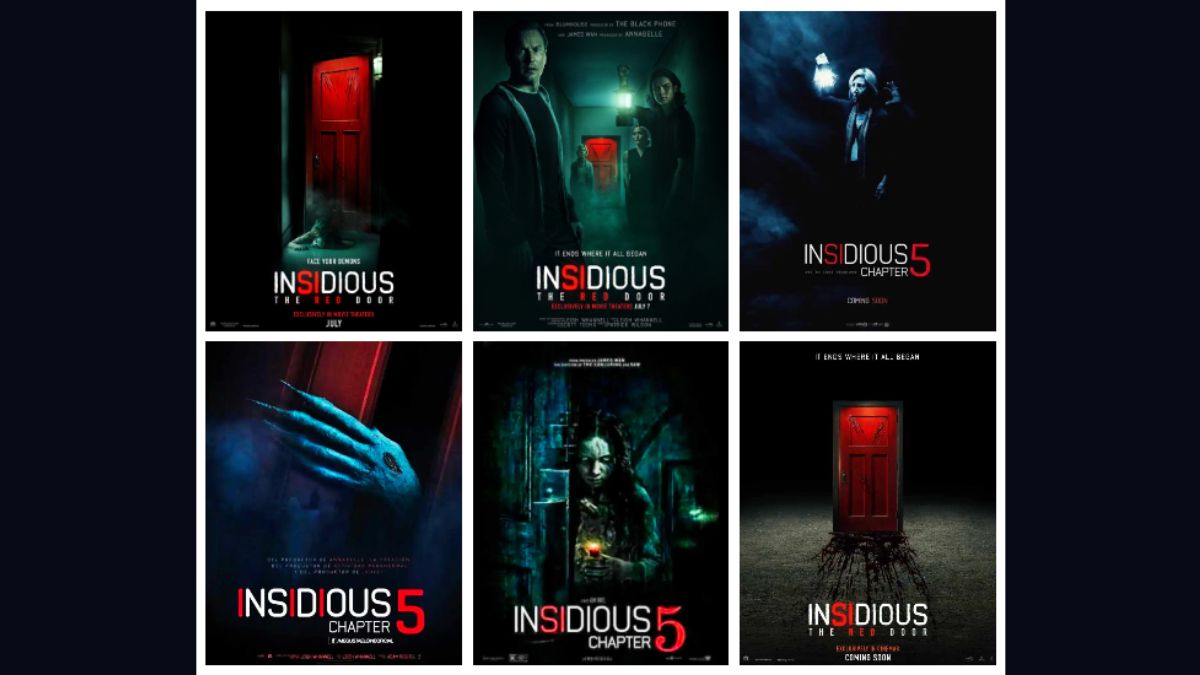
Where nightmares bleed into reality and the veil between worlds grows perilously thin, there exists a realm of unparalleled dread—the Insidious universe. Like a malevolent specter that refuses to be banished, this supernatural horror franchise has haunted audiences across the globe since its inception, weaving a tapestry of terror that spans dimensions both seen and unseen.
What is the Insidious Universe? A Global Horror Phenomenon

The Insidious universe stands as a monument to gothic horror in the twenty-first century, a sprawling nightmare conceived by the twisted minds of Leigh Whannell and James Wan. At its blackened heart lies a mythology so deeply disturbing that it has seeped into the collective unconscious of horror enthusiasts worldwide, transforming from mere entertainment into cultural phenomenon.
This dark cosmos revolves around the Further—an astral plane where malevolent entities dwell in perpetual hunger for human souls. It is a dimension of shadows and screams, where the laws of physics bow to the whims of ancient evils, and where the innocent become prey to creatures that have never known the warmth of mortal flesh. The franchise centers on the recurring characters who dare to traverse these infernal realms: the psychic medium Elise Rainier, whose gift becomes both blessing and curse; the Lambert family, forever marked by their encounters with the otherworldly; and the parade of spirits, demons, and possessed souls that populate this universe of unending terror.
Since 2010, five films have emerged from this gothic wellspring, each adding new layers of dread to an already suffocating atmosphere of supernatural horror. The franchise has become a global phenomenon, transcending cultural boundaries to deliver its particular brand of atmospheric terror to audiences in the USA, UK, India, Philippines, and beyond—proving that fear, indeed, speaks a universal language.
Insidious Movies in Release Order (2010–2025)
The chronological unveiling of the Insidious universe follows a deliberately labyrinthine path, much like navigating the twisted corridors of the Further itself. Each film serves as both standalone nightmare and integral piece of a larger, more terrifying puzzle.
Insidious (2010) – The genesis of terror, directed by James Wan with the serpentine screenplay by Leigh Whannell, introduces audiences to a family’s descent into supernatural hell when their comatose child becomes a bridge to malevolent entities in the astral realm.
Insidious: Chapter 2 (2013) – Wan returns to direct this immediate continuation of the Lambert family’s nightmare, delving deeper into Josh’s possession and revealing the true extent of the Further’s reach into our world.
Insidious: Chapter 3 (2015) – Leigh Whannell assumes the director’s chair for this prequel that focuses on psychic Elise Rainier’s earlier encounters with the supernatural, as she aids a teenage girl targeted by vengeful spirits.
Insidious: The Last Key (2018) – Directed by Adam Robitel but scripted by Whannell, this prequel excavates Elise’s tormented past and origins, revealing the childhood trauma that forged her connection to the otherworldly.
Insidious: The Red Door (2023) – In a surprising turn, Patrick Wilson makes his directorial debut while reprising his role, returning focus to the Lambert family years after their original encounters with cosmic horror.
An untitled sixth installment lurks in the shadows of production, with a reported release date of August 29, 2025, promising to extend this universe of dread into the future.

Insidious Universe Chronological Timeline Explained
To truly comprehend the gothic tapestry of the Insidious universe, one must abandon linear thinking and embrace the twisted chronology that mirrors the non-linear nature of the Further itself. The films weave through time like restless spirits, with prequels illuminating past tragedies while sequels explore their lasting consequences.
The Early Years – Elise’s Origins (The Last Key – 1950s-1960s)

The chronological journey begins in the suffocating atmosphere of 1953, where young Elise Rainier first discovers her psychic abilities in the most horrific circumstances imaginable. Growing up in Five Keys, New Mexico, in a house that serves as a portal to hell itself, Elise’s childhood becomes a gothic nightmare of abuse and supernatural terror. Her father, Gerald Rainier, represents the worst of human cruelty, while the entity known as KeyFace—a demon with keys for fingers—stalks the shadows, feeding on pain and fear.
The house on Mulholland Drive becomes a nexus of evil, where Elise’s psychic gifts manifest in the worst possible way. Her ability to communicate with spirits makes her a target for both her abusive father and the malevolent entities that hunger for innocent souls. The trauma of her childhood—witnessing her mother’s death, enduring her father’s brutality, and confronting KeyFace—forges Elise into the medium she will become, scarred but determined to help others facing similar supernatural torment.
Decades later, in the 2010s, an aged Elise returns to confront the demons of her past, both literal and metaphorical. The house calls to her like a siren song of damnation, and she must face KeyFace once more, this time to save her niece and break the cycle of supernatural horror that has plagued her family for generations. The revelation that her childhood home has become a prison for tortured souls adds layers of gothic tragedy to an already nightmarish scenario.
Chapter 3 – The Medium’s Calling (2010s)
Set several years before the Lambert family’s first encounter with the Further, Chapter 3 explores Elise’s reluctant return to psychic work after a devastating encounter with a particularly malevolent entity. Still reeling from the supernatural assault that nearly destroyed her, Elise has withdrawn from the world of the living and the dead alike, haunted by visions of darkness and doubt about her own abilities.
Enter Quinn Brennan, a teenager desperately seeking to communicate with her deceased mother. Quinn’s grief becomes a beacon for supernatural predators, particularly a grotesque entity known as the Man Who Can’t Breathe—a creature so vile that his very presence corrupts the air around him. This demon, trapped in a building that serves as a gateway between worlds, feeds on the despair of the living while collecting souls for his otherworldly masters.
The gothic atmosphere intensifies as Quinn becomes trapped between life and death, her physical body broken while her soul dangles precariously between dimensions. Elise must overcome her own trauma and fears to venture once more into the Further, navigating a landscape of perpetual night where the architecture of nightmares serves as hunting grounds for entities that have never known human compassion.
The film serves as both origin story and redemption tale, showing how Elise reconnects with her calling while establishing the psychic medium as a guardian against the forces of supernatural evil. Her partnership with Specs and Tucker begins here, forming a trinity of paranormal investigators who will stand as humanity’s last defense against the encroaching darkness.
The Lambert Saga – A Family’s Descent into Hell (Insidious & Chapter 2)
The Lambert family’s nightmare begins with what appears to be a simple accident but quickly reveals itself as something far more sinister. When young Dalton Lambert falls into an inexplicable coma after exploring the dusty corners of his family’s new home, his condition defies medical explanation. His body remains in the physical world, but his soul has become lost in the Further—that astral plane where demons hunt human consciousness like prey.
Josh Lambert, Dalton’s father, carries his own dark secret: a childhood ability to astral project that attracted the attention of a particularly obsessive entity—the Bride in Black. This parasitic spirit, trapped between male and female, life and death, has stalked Josh since childhood, waiting for the perfect moment to claim his body as its own. The gothic horror of generational trauma manifests as supernatural inheritance, with Dalton inheriting his father’s psychic abilities along with the curse that accompanies them.
Renai Lambert, meanwhile, becomes the witness to escalating supernatural activity—doors that creak open in the night, children’s laughter echoing from empty rooms, and the gradual transformation of her home into a hunting ground for otherworldly predators. Her maternal instincts become her greatest strength and weakness, driving her to fight for her son while making her vulnerable to the psychological warfare employed by malevolent spirits.
The family’s Victorian-era home becomes a character in itself, its creaking walls and shadowed corners serving as portals through which evil seeps into the physical world. Baby monitors pick up transmissions from hell itself, while the attic transforms into a gateway where the living and the dead collide in violent confrontation.
Elise Rainier enters this domestic nightmare as both savior and harbinger of greater terror. Her psychic abilities allow her to perceive the true extent of the family’s supernatural infestation, revealing that their home sits at the convergence of multiple dimensional rifts. The Further, she explains, is not merely another dimension—it is a realm of eternal hunger, populated by entities that feed on human fear, pain, and ultimately, human souls.
The rescue mission into the Further becomes a journey through the landscape of nightmares made manifest. Josh must navigate a realm where his childhood home exists in perpetual twilight, where the Bride in Black waits with decades of patient malevolence, and where the very act of saving his son threatens to damn his own soul. The Further reveals itself as a gothic hellscape where Victorian mansions float in seas of darkness, where demonic creatures wear the faces of innocence, and where time moves according to the whims of ancient evil.
Chapter 2 – The Possession’s Aftermath
The immediate sequel reveals that Josh’s journey into the Further has left him fundamentally changed—possessed by the very entity he sought to escape. The Bride in Black, through decades of manipulation and supernatural grooming, has finally achieved its goal of inhabiting a living human body. Josh’s possession becomes a masterclass in gothic horror, as his family watches helplessly while the man they love transforms into something monstrous.
The film expands the mythology by revealing the Bride in Black’s origins: Parker Crane, a disturbed individual whose mother’s psychological abuse and forced feminization created a serial killer who transcended death itself. This backstory adds layers of psychological horror to the supernatural terror, showing how human cruelty can birth demons that outlast mortal flesh.
Renai becomes the final girl in her own gothic nightmare, fighting not just for her family’s survival but for the soul of her husband. The domestic sphere—traditionally a place of safety and comfort—becomes a battleground where kitchen knives serve as weapons against supernatural evil and family photographs become windows into parallel dimensions of horror.
The timeline of the films interconnects through careful attention to detail, showing how past traumas echo through generations and how the Further serves as a realm where time itself becomes fluid. Elise’s death in the first film becomes a catalyst for the events of the second, as her spirit continues to aid the Lambert family from beyond the grave, proving that in the Insidious universe, death is merely another form of existence rather than an ending.

The Red Door – Legacy of Terror (2023)
A decade after their initial encounters with the supernatural, the Lambert family attempts to rebuild their lives, but the Further never truly releases its grip on those it has touched. Patrick Wilson’s directorial debut explores the long-term psychological effects of supernatural trauma, showing how Josh and Dalton’s shared experience with astral projection continues to haunt them years later.
The film serves as both sequel and meditation on trauma, revealing how the events of the first two films have left lasting scars on the Lambert family psyche. Josh, now divorced from Renai, struggles with memory gaps and psychological instability that hint at his continued connection to otherworldly forces. Dalton, now a college student, discovers that his artistic abilities serve as another gateway to the Further, with his paintings becoming windows into the realm of the dead.
The gothic atmosphere of the film emerges through the exploration of generational trauma and the price of psychic gifts. The red door of the title becomes a metaphor for the threshold between worlds, a barrier that the Lamberts must choose to close forever or risk losing themselves to the endless hunger of the Further. The film suggests that some doors, once opened, can never be fully sealed, and that the price of touching the supernatural realm extends far beyond a single terrifying encounter.
Key Characters of the Insidious Universe (Elise, Lamberts & More)
Elise Rainier – The Gothic Heroine
Lin Shaye’s portrayal of Elise Rainier stands as one of the most compelling characters in modern horror cinema. Elise embodies the gothic heroine tradition—a woman gifted with supernatural abilities who serves as a bridge between the world of the living and the realm of the dead. Her character arc spans decades and multiple films, revealing a complex portrait of a woman shaped by childhood trauma but dedicated to protecting others from the very forces that nearly destroyed her.
Elise’s psychic abilities make her both powerful and vulnerable. Her gift of communication with spirits attracts the attention of malevolent entities that view her as either a valuable tool or a dangerous threat. Throughout the films, she navigates the treacherous landscape of the Further with a combination of courage, compassion, and hard-won experience, often sacrificing her own well-being to save others from supernatural damnation.
Her relationship with the supernatural world reflects the gothic tradition of the cursed protagonist—blessed with abilities that isolate her from normal human relationships while binding her to a life of supernatural service. Her eventual death and continued assistance from beyond the grave reinforces the film’s themes about the permeability of the barrier between life and death.
The Lambert Family – Suburban Gothic
The Lambert family represents the gothic concept of the haunted family unit, where supernatural horror invades the sanctity of domestic life. Josh Lambert’s psychic abilities and traumatic childhood make him a magnet for otherworldly attention, while his wife Renai serves as the skeptical observer whose growing belief in the supernatural parallels the audience’s own journey into terror.
Dalton Lambert, the family’s eldest son, inherits both his father’s psychic gifts and the curse that accompanies them. His character represents the innocent corrupted by supernatural forces beyond his understanding or control. His artistic abilities in later films suggest that creativity itself can serve as a gateway to otherworldly realms, adding layers of meaning to the franchise’s exploration of the price of special gifts.
Specs and Tucker – Comic Relief with Purpose
Angus Sampson and Leigh Whannell’s characters serve multiple functions within the gothic narrative structure. While providing necessary comic relief to balance the intense supernatural terror, they also represent the amateur paranormal investigators whose bumbling enthusiasm contrasts with Elise’s professional competence.
Their loyalty to Elise and dedication to helping families in supernatural distress adds a note of human compassion to the otherwise dark universe. Their continued appearance across multiple films provides continuity and reinforces the idea that confronting supernatural evil requires a community of believers rather than solitary heroics.
The Antagonists – A Pantheon of Gothic Evil
The Insidious universe populates its dark corners with a memorable collection of supernatural antagonists, each representing different aspects of gothic horror tradition.
The Bride in Black embodies the gothic concept of the vengeful spirit whose earthly trauma transforms them into an otherworldly predator. The entity’s obsession with Josh Lambert spans decades, representing the persistent nature of supernatural evil and its ability to corrupt multiple generations.
The Lipstick-Face Demon serves as the franchise’s signature monster—a grotesque entity whose theatrical appearance masks profound malevolence. This creature represents the Further’s most aggressive inhabitants, beings that actively hunt human souls rather than waiting for victims to stumble into their domain.
KeyFace, the demon from The Last Key, represents trauma made manifest—a creature whose very appearance (keys for fingers, symbolic of locks and imprisonment) reflects the psychological damage inflicted by abuse and violence.
The Further: Exploring the Dark Dimension of Insidious
The Further stands as the franchise’s greatest achievement in gothic worldbuilding—a parallel dimension that serves as both setting and character within the larger narrative. This astral plane exists as a realm of perpetual twilight where the architecture of nightmares becomes physical reality and where human consciousness becomes prey for entities that have never known mortal limitations.
Where to Watch the Insidious Movies Worldwide
The global availability of the Insidious franchise reflects the modern landscape of digital distribution and streaming services. In the United States, the films rotate through various platforms including Netflix, Amazon Prime Video, Hulu, and Peacock, with availability changing based on licensing agreements and seasonal programming decisions.
Insidious: The Red Door (2023) — Global Reviews & Fan Response
Patrick Wilson’s directorial debut with The Red Door received mixed but generally positive responses from critics and audiences worldwide. The film’s focus on psychological horror and family trauma appealed to critics who appreciated its more introspective approach to the franchise’s established mythology.
Global box office performance demonstrated the franchise’s continued viability, though the film earned less than some previous installments, reflecting broader challenges facing theatrical horror releases in the post-pandemic marketplace. International markets showed strong support, particularly in regions where the franchise has built dedicated fan bases over more than a decade.
Upcoming Insidious Movie 2025: Release Date, Cast & Geo Impact
The untitled sixth Insidious film, currently scheduled for August 29, 2025, represents the franchise’s continued evolution and global expansion. While specific plot details remain shrouded in secrecy, industry reports suggest the film will explore new aspects of the Insidious mythology while potentially introducing fresh characters and supernatural threats.
Why the Insidious Universe Still Dominates Horror Worldwide
More than a decade after its inception, the Insidious universe continues to exert profound influence over the global horror landscape through its masterful blend of atmospheric terror, emotional resonance, and mythological depth. The franchise’s success stems from its ability to tap into universal fears about family, death, and the unknown while wrapping these themes in a distinctively gothic aesthetic that transcends cultural boundaries.
Similar Reads:

Leave a Reply