

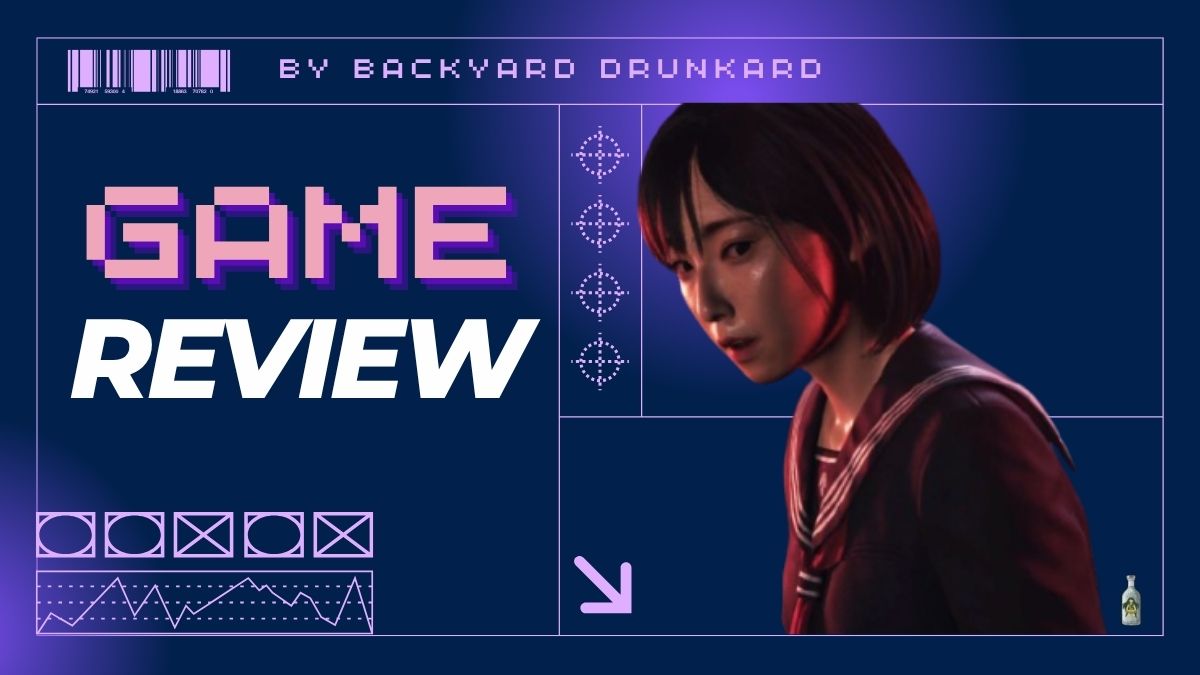
Note: This is a detailed review and analysis for Silent Hill f and includes mild SPOILERS for better story interpretation.
There’s a moment, maybe six hours in, when Silent Hill f finally reveals what it’s been hiding beneath all that frustration. The clumsy combat that made you consider quitting, the inventory system that felt designed by someone who genuinely hated you, the puzzles that insulted your intelligence…suddenly, they feel different. Not better, exactly, but purposeful. Like the game was testing whether you deserved to see what comes next.
I almost didn’t make it. I’ll be honest about that. The first half of Silent Hill f feels like wading through mud while something unseen whispers that you should turn back. But I kept going, partly out of stubbornness, partly because something about Ebisugaoka’s fog-drowned streets wouldn’t let me leave. And when the second half hit—when the narrative twisted and I finally understood what Ryukishi07 was building toward. And just like that, I forgave almost everything that came before.
Almost.
This is the most frustrating game I’ve loved in years.
It’s also the most beautiful horror experience I’ve had since I first walked through Silent Hill 2’s apartments as a teenager, convinced that fog and rust could somehow reach through my television screen. Silent Hill f doesn’t play by those rules. It creates its own language of dread, rooted in decay and flowers and the suffocating weight of being a young woman in a world that wants to decide who you’ll become.
It’s messy. It’s ambitious. It might be brilliant. I’m still not entirely sure.
In This Review:
When Beauty Becomes Horror
The game is guided by wabi-sabi, the Japanese aesthetic philosophy of finding beauty in imperfection, decay, and impermanence. I’d read about this concept before in an article I vaguely remembered, but I’d never felt it until Silent Hill f. This isn’t just a thematic flourish some designer threw into a press release. It’s baked into every visual choice, every environmental detail, every moment where you’re not sure if you should be horrified or transfixed.
Crimson flora consumes flesh here. Not quickly, not violently—slowly, inevitably, like watching time-lapse footage of rot. Traditional buildings surrender to organic invasion. The fog-shrouded town of Ebisugaoka feels both abandoned and desperately alive, watching you through paper doors and torii gates that lead nowhere good. I kept taking screenshots, which is probably a weird thing to admit about a horror game, but the grotesque beauty demanded documentation.
Visual & Audio Highlights:
- Monster designs by kera genuinely disturbed me in ways I wasn’t prepared for
- The art direction makes you want to pause and stare at things that should repulse you
- Environments shift from foggy alleys and farmlands to decayed schools and impossible temples
- The ambient sound design creates this persistent feeling of being watched
- I caught myself holding my breath during exploration more than once
The Otherworld feels fundamentally different from previous games—less traditionally scary, more persistently unnerving. It’s the difference between a jump scare and the creeping realization that something about your reflection in the mirror isn’t quite right.

The Weight of Combat and Consequence
Here’s where I have to be honest about my own struggle: the combat in Silent Hill f made me genuinely angry for the first several hours. It’s deliberate, weighty, and often just plain clunky. Despite surface comparisons to Soulslike games, this isn’t that. It’s something more cumbersome, more restrictive—like fighting underwater while someone criticizes your life choices.

Melee weapons degrade. Your stamina drains while you’re still winding up for a second swing. A sanity meter affects your combat awareness in ways that feel inconsistent. Dodging has this weird delay that got me killed more times than I care to admit. I spent entire combat encounters cursing at my screen, convinced the developers had never actually playtested this with human beings.
Combat System Breakdown:
- Melee-focused with degradable weapons (pipes, ceremonial daggers, naginata that feel appropriately heavy)
- Stamina and sanity mechanics create constant resource anxiety
- Dodging feels unreliable, especially in spaces clearly not designed for the combat they force on you
- Weapons break during exploration but stay intact during shrine encounters (at least they gave us that)
- Enemy variety is limited enough that repeated playthroughs expose how thin the bestiary really is
- Hinako gets a powerful arm upgrade later that genuinely transforms the experience
- Difficulty modes: Story, Normal, Hard, and “Lost in the Fog” (I played on Normal and still wanted to throw my controller)

The Burden of Carrying Everything
The inventory system is, without exaggeration, the worst I’ve encountered in a modern survival horror game. It’s not just tight—it’s actively punishing. You’re constantly discarding items that might matter later. Stack management is bafflingly poor. You need specific offerings for upgrades through the shrine system, which means hoarding certain items while abandoning others, and you won’t know which is which until it’s too late.

I spent so much time in menu screens. So. Much. Time. The enshrine/prayer system lets you convert items into “faith” for permanent upgrades or gamble for omanori charm passives, which creates interesting resource tension in theory. In practice, it meant I was terrified to use anything because what if I needed it for an upgrade I hadn’t discovered yet?
This ties thematically into the game’s focus on sacrifice and consequence—I get that, intellectually. But thematically appropriate doesn’t mean enjoyable. The execution feels inconsistent and often arbitrary. Multiple players I’ve talked to suggested that New Game+ should offer unbreakable weapons or expanded inventory, and honestly, that feels like it should’ve been the baseline.
Exploration suffers because of this. You find interesting items, environmental clues, optional story elements—but you can’t pick them up because your inventory is full of healing items and weapon materials and shrine offerings and you don’t know what you can safely discard. It’s the kind of system that makes you paranoid rather than engaged.
Puzzles That Don’t Challenge
I need to be blunt here: the puzzles in Silent Hill f are disappointingly simple. Coming from the series that gave us some of the most mind-bending riddles in gaming, this feels like a significant step backward. We’re talking “baby-level” challenges that resolve through basic observation or brute force. Scarecrows pointing directions. Locker codes hidden in obvious places. Poetry riddles that tell you the answer if you just read them twice.

I solved most puzzles on my first attempt without really trying. There were maybe two that made me pause and think for more than thirty seconds. For a series known for puzzles that made you feel genuinely clever when you figured them out, this was deflating.
That said—and I’m trying to be fair here—the puzzles do serve a narrative purpose. They reveal character backstory. They add environmental storytelling. They function as atmospheric breaks between horror sequences. The adjustable difficulty affects puzzle complexity, though even on harder settings, they’re not exactly challenging.
They’re fine. They’re functional. They’re just not memorable. And for Silent Hill, that feels like a missed opportunity.
Exploring the Spaces Between
This is where the game genuinely shines, where I felt that old Silent Hill magic creeping back. When Silent Hill f trusts its exploration and lets you wander through Ebisugaoka’s fog-drowned streets without forcing combat or puzzle solutions, it creates something special.

The town is large, non-linear, and rewards thorough investigation in ways that feel meaningful. Hidden documents flesh out family tragedies. Shrine discoveries add layers of folklore. Optional storylines change your understanding of what’s happening and why. I found Sakuko’s family shrine completely by accident, down an alley I almost skipped, and the environmental storytelling there genuinely unsettled me.
Accessibility Features:
- Colorblind modes (appreciated as someone with mild red-green deficiency)
- Extensive subtitle customization
- Camera toggle options
- No easy mode available (Story difficulty is the most accessible option)
The game captures that essential Silent Hill tension—the feeling of abandonment, yes, but also presence. Something is watching. The fog isn’t empty. Paper doors slide open behind you with no wind to explain it. These quieter moments of atmospheric exploration are where Silent Hill f feels most confident in its identity, before combat frustrations or inventory management interrupt the spell.
I spent probably a third of my playtime just exploring, poking into corners, reading every document, examining every shrine. The world-building is genuinely impressive. Ebisugaoka feels like a place with history, with secrets, with reasons for its decay beyond “fog showed up, bad things happened.”

The Heart of the Horror: Hinako’s World
Hinako is the first Silent Hill protagonist I’ve genuinely wanted to protect. Not because she’s helpless—though the game sometimes treats her that way—but because her struggles feel painfully, recognizably human beneath the supernatural horror.

She’s a teenage girl in 1960s rural Japan, navigating a world that’s already decided who she should become. Writer Ryukishi07 deliberately focused on the horror of coming of age as a woman in a traditionalist society, and it shows in every aspect of Hinako’s character. The fear of arranged marriage. The weight of family expectations. The bullying that teaches you to make yourself smaller. The slow realization that your future might not belong to you at all.
I’m not a woman, and I didn’t grow up in 1960s Japan, but something about Hinako’s internal conflict between obedience and selfhood resonated deeply. Maybe it’s universal, that feeling of being pushed toward a life that doesn’t fit. Her vulnerability feels genuine—not the video game version of vulnerability where characters monologue about their trauma, but the quiet kind, the kind that shows in how she hesitates before making decisions.
The Masked Man provides a charismatic, mysterious counterpoint. He’s deliberately designed to inspire both fascination and suspicion, and it works. I didn’t trust him. I wanted to trust him. I kept changing my mind about his intentions, which I suspect was exactly the point.
Thematic Elements:
- Gender discrimination and patriarchal pressure (handled with more nuance than I expected)
- Bullying and adolescent identity struggles
- Child abuse and family trauma (some scenes are genuinely difficult to watch)
- Drug-induced hallucinations with strong White Claudia parallels
- Torture and graphic violence (the game earns its M rating)
- Fear of marriage and loss of self
- Sacrifice and psychological twists that recontextualize earlier events
Some players found Hinako too much the “perfect victim,” lacking moral complexity. I understand that criticism—she doesn’t have James Sunderland’s guilt or Heather Mason’s anger. But I think that’s deliberate. Her horror isn’t about confronting past sins; it’s about confronting a future she never chose.
The Narrative That Divides
This is where Silent Hill f becomes genuinely controversial, where consensus breaks down and everyone’s experience diverges wildly.

The second half’s narrative shift is either the game’s greatest achievement or its most frustrating element depending entirely on how its themes resonate with you. I fell into the “greatest achievement” camp, but I completely understand why others bounced off hard.
You need 3-4 playthroughs to understand the full story. Five endings exist, including a UFO ending that honors series tradition (and made me laugh after hours of psychological torment).
The central ambiguity—whether events are literal supernatural horror or symbolic/drug-induced hallucination—fuels intense speculation. I’ve seen convincing arguments for both. The red spider lilies. The pills that might be White Claudia. The cult elements that feel both real and metaphorical. One interpretation suggests the entire game is Hinako’s internal struggle during or after her wedding, with the horror representing her psychological break from an unbearable reality.
I think it’s both. I think that’s the point. The meaning of the red “f” remains deliberately open to interpretation, and I’ve changed my mind about what it represents at least five times.
The story is bold, personal, and divisive in ways that make objective evaluation impossible. For many players, particularly women I’ve discussed it with, Hinako’s story resonates powerfully—a horror game that finally explores female-specific fears with confidence and subtlety. The arranged marriage trauma, the loss of identity, the pressure to perform femininity correctly—these themes hit hard for players who’ve lived adjacent to them.
Others found it melodramatic, “anime-like” in execution, surface-level compared to Silent Hill 2’s psychological depth. Some Western critics dismissed themes that remain genuinely resonant in Japanese cultural memory. Cultural context matters here more than most horror games.
Ryukishi07’s writing is layered and profoundly unsettling when it works. When it doesn’t, it feels overwrought. I experienced both versions across my playthroughs. The second half payoff made me forgive the first half’s struggle. The third playthrough made me question whether any of it needed to be this obtuse. The fourth playthrough—which I did voluntarily, for clarity—convinced me the obtuseness is part of the horror.
Your mileage will absolutely vary.
Does Silent Hill f Honors the Franchise?
I keep coming back to this question: is Silent Hill f actually a Silent Hill game?

It breaks from traditional design in fundamental ways. No radio static crackling warnings. No flashlight in the classic sense. Entirely new aesthetic language. The connection to the town’s established mythology feels tenuous at best—this isn’t Samael or the Order or Alessa’s nightmare bleeding through reality.
I’ve seen arguments that it’s essentially an original Ryukishi07 horror story wearing the Silent Hill name for marketing purposes. I’ve also seen passionate defenses that it captures what always mattered most: psychological trauma manifested as supernatural horror, cult elements, monsters born from inner fears.
Here’s my take after finishing it four times: Silent Hill was never really about the town. It was about what the town represents—guilt, trauma, grief, fear manifesting as tangible horror. Every protagonist’s Silent Hill looked different because it reflected their specific psychological wounds. James saw sexual horror and punishment. Heather saw religious trauma and body horror. Harry saw parental fear.
Hinako sees patriarchal control and loss of identity. Her Silent Hill blooms with flowers instead of rusting into industrial decay because that’s her psychological language. The horror feels different because her fears are different.
Does that make it a “real” Silent Hill game? I honestly don’t know. It expands my understanding of what the series can be, but I also understand fans who feel it strayed too far from what made the original trilogy essential.
The comparison to Silent Hill 2 purism versus embracing new directions feels inevitable. If you believe Silent Hill can only exist within specific parameters—American town, cult mythology, industrial Otherworld—this game will feel like a beautiful mistake. If you believe Silent Hill is a thematic framework that can be reinterpreted through different cultural lenses, this might be the most interesting thing the series has attempted.

Might Interest You: Return to Silent Hill Teaser Offers First Look at Upcoming Horror Adaptation
Flawed, Unforgettable, Necessary
Silent Hill f is both a return to form and a radical departure, and it’s too messy to be anything else.

The flaws are real and significant. Combat frustrates more than frightens for long stretches. Inventory management actively punishes exploration. Puzzles barely challenge. The replay requirements feel excessive for a story that could’ve been told in two playthroughs instead of four. These aren’t minor quibbles I’m obligated to mention for balance—they’re genuine design problems that will prevent some players from experiencing what makes the game special.
Final Assessment:
- For veterans seeking classic Silent Hill: Expect significant departures, but the psychological horror DNA is authentic
- For newcomers: Start on Story difficulty and be prepared for mechanical friction
- For those considering multiple playthroughs: The full narrative demands 3-4 runs; judge whether that investment appeals before starting
- For anyone who’s felt trapped by expectations: This might resonate more powerfully than you expect
Rating: 8.7/10
A flawed, beautiful, frustrating, unforgettable return that proves Silent Hill was always about more than just fog and rust.
More Gaming News & Reviews:


Leave a Reply