

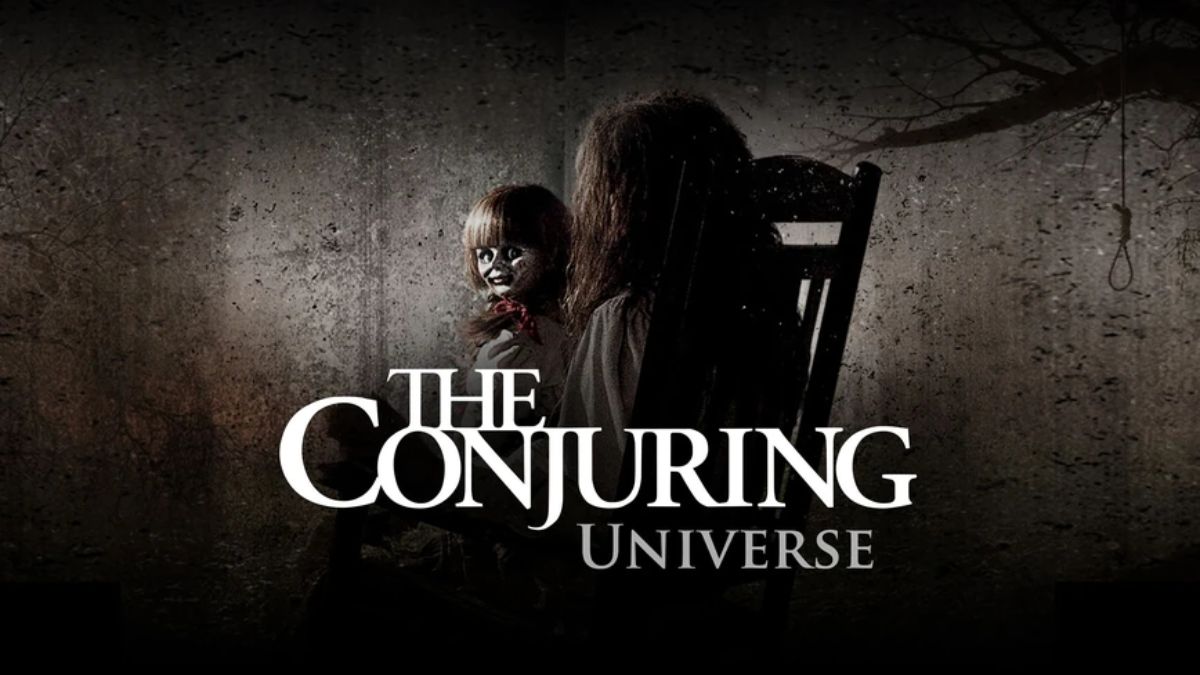
Where shadows dance with terror and the veil between worlds grows thin
In the hallowed halls of modern horror cinema, few franchises have captured the collective imagination quite like The Conjuring Universe. Born from the darkest corners of American paranormal folklore, this sprawling cinematic tapestry weaves together tales of demonic possession, cursed artifacts, and supernatural malevolence that have terrorized audiences across the United States and beyond. From the cobwebbed corners of Rhode Island farmhouses to the gothic spires of Romanian monasteries, this universe has become America’s premier supernatural horror franchise, establishing itself as the definitive modern ghost story collection.
The Genesis of Terror: How The Conjuring Universe Haunted American Cinema
The Conjuring Universe emerged from the shadows in 2013, birthed by director James Wan’s masterful vision and the real-life case files of paranormal investigators Ed and Lorraine Warren. What began as a single film has metamorphosed into a ten-film supernatural saga that has grossed over $2 billion worldwide, making it one of the highest-grossing horror franchises in cinematic history. Each installment draws from the authentic paranormal experiences documented across America’s most haunted locations, from New England’s colonial mysteries to the Southwest’s ancient curses.
The Main Conjuring Films: America’s Most Terrifying Paranormal Chronicles
The Conjuring (2013): The Harrisville Horror That Started It All
“In 1971, Roger and Carolyn Perron moved into a secluded farmhouse in Harrisville, Rhode Island, with their five daughters. What they discovered would become one of America’s most documented supernatural cases.”
The inaugural film transports audiences to the fog-shrouded landscapes of rural Rhode Island, where the Perron family’s dream home becomes their waking nightmare. Set against the backdrop of 1970s New England, the film follows paranormal investigators Ed and Lorraine Warren as they confront the malevolent spirit of Bathsheba Sherman, a 19th-century witch whose curse has plagued the property for generations.
The Harrisville farmhouse, with its creaking wooden floors and shadow-filled corners, becomes a character unto itself. Director James Wan masterfully employs the gothic architecture of New England colonial homes—low-hanging beams, narrow staircases, and basement root cellars—to create an atmosphere of claustrophobic dread. The film’s supernatural events escalate from mysterious clapping sounds in the night to full demonic possession, culminating in a terrifying exorcism that showcases the Warrens’ unwavering faith against otherworldly evil.
Bathsheba Sherman’s tragic backstory—a Salem-era witch who sacrificed her infant child to Satan and cursed all who would dare inhabit her land—establishes the gothic tradition that would define the entire franchise. Her spectral presence, manifested through biblical references carved into trees and the scent of rotting flesh, represents the dark underbelly of America’s Puritan heritage.
The Conjuring 2 (2016): The Enfield Poltergeist Crosses the Atlantic
“The terror that began in America finds new life in the fog-shrouded streets of North London.”
The sequel transports the Warrens from the familiar haunts of New England to the working-class borough of Enfield, London, where the Hodgson family endures one of Britain’s most infamous poltergeist cases. While geographically removed from American soil, the film maintains its gothic sensibilities through the dreary industrial landscapes of 1970s London and the cramped Victorian terrace houses that seem to trap supernatural energy within their walls.
The Enfield case introduces audiences to Janet Hodgson, an 11-year-old girl who becomes the focal point for violent supernatural phenomena. Furniture moves with malevolent purpose, voices speak through dimensions, and the spirit of Bill Wilkins—a deceased former resident—uses Janet as his earthly conduit. The film’s most chilling sequences occur in the family’s modest living room, where the boundaries between the living and the dead dissolve in spectacular fashion.
Ed Warren’s premonition of his own death, delivered through the demonic entity Valak (later revealed as the primary antagonist of The Nun films), adds a deeply personal stakes to the supernatural investigation. The gothic cathedral where Ed witnesses his prophetic vision becomes a recurring motif, representing both divine protection and impending doom.
The Conjuring: The Devil Made Me Do It (2021): America’s First Demonic Murder Trial
“In 1981, Arne Cheyenne Johnson became the first person in American legal history to claim demonic possession as a defense for murder.”
The third installment returns to American soil with a vengeance, exploring the notorious “Devil Made Me Do It” case in Brookfield, Connecticut. This film expands the gothic universe beyond traditional hauntings into the realm of occult murder and supernatural legal proceedings, drawing from one of the most controversial paranormal cases in American judicial history.
The story follows 19-year-old Arne Johnson, who becomes possessed by the same demon that had tormented 8-year-old David Glatzel during a botched exorcism. When Johnson brutally murders his landlord, claiming demonic influence, the Warrens must prove the existence of supernatural evil in a court of law. The film’s gothic atmosphere permeates the fog-laden forests of Connecticut, where ancient curses and modern skepticism collide in deadly fashion.
The investigation leads the Warrens through a labyrinth of occult practices, from hidden altars in dense New England woodlands to the cursed totems of a rogue satanist. The film’s climax, set in a waterlogged tunnel system beneath Connecticut’s countryside, showcases the franchise’s commitment to practical, location-based horror that draws from America’s hidden supernatural history.

The Conjuring: Last Rites (2025): The Warren Legacy Continues
“The final chapter in the Warren family saga promises to unlock the darkest secrets of America’s most famous paranormal investigators.”
The upcoming fourth installment, scheduled for release in 2025, is shrouded in gothic mystery. Early reports suggest the film will serve as a culmination of the Warren’s investigative career, potentially exploring their most dangerous case while providing closure to their cinematic journey. Industry insiders hint at a return to the franchise’s New England roots, with filming locations scouted throughout Massachusetts and Connecticut’s most historically significant haunted sites.
The Conjuring Universe Spin-offs: Expanding America’s Supernatural Mythology
The Annabelle Trilogy: The Curse of America’s Most Haunted Doll
Annabelle (2014): The Genesis of Evil
The first spin-off delves into the origin story of the Annabelle doll, revealing how an ordinary children’s toy became a conduit for demonic possession. Set in 1967 Santa Monica, California, the film follows newlyweds Mia and John Form as they encounter the cultist neighbors who use the doll in a satanic ritual. The Southern California setting—with its sun-drenched suburbs hiding dark secrets—establishes a new geographical dimension to the franchise’s gothic sensibilities.
Annabelle: Creation (2017): The Dollmaker’s Curse
This prequel transports audiences to 1955 rural California, where dollmaker Samuel Mullins and his wife Esther invite Sister Charlotte and six orphaned girls to their isolated farmhouse. Twelve years after losing their daughter in a tragic accident, the Mullins discover that their grief has opened doorways to demonic entities seeking earthly vessels. The film’s gothic mansion setting, complete with hidden passages and possessed children’s toys, creates an atmosphere reminiscent of classic American gothic literature.
Annabelle Comes Home (2019): The Warren Occult Museum Unleashed
The trilogy concludes in the basement of the Warrens’ Connecticut home, where their vast collection of cursed artifacts creates the ultimate haunted house experience. When the Annabelle doll is accidentally released from her sacred glass case, she awakens every malevolent spirit housed within the museum. The film serves as a love letter to classic American horror, featuring cursed pianos, haunted wedding dresses, and the infamous “Feeley Meeley” game.
The Nun Films: Gothic Horror in Sacred Spaces
The Nun (2018): Romania’s Darkest Abbey
While geographically set in 1952 Romania, The Nun expands the American-created universe by exploring the origins of Valak, the demonic entity that terrorized the Warrens in England. The film’s setting—a remote Romanian abbey shrouded in perpetual mist—represents the ultimate gothic horror environment, where ancient evil lurks within consecrated walls.
Father Burke and Sister Irene’s investigation into a nun’s mysterious suicide reveals centuries of demonic corruption hidden beneath layers of Catholic orthodoxy. The abbey’s gothic architecture, with its towering spires and labyrinthine catacombs, creates a claustrophobic atmosphere where faith battles primordial evil.
The Nun 2 (2023): The Demon Returns to Sacred Ground
The sequel follows Sister Irene as Valak’s influence spreads to a boarding school in 1956 France. While maintaining the European setting, the film’s themes of corrupted innocence and institutional horror resonate with American audiences familiar with similar gothic tropes in domestic cinema.
The Curse of La Llorona (2019): America’s Southwest Supernatural Heritage
Set in 1973 Los Angeles, this spin-off draws from Mexican-American folklore to expand the franchise’s cultural boundaries. Social worker Anna Tate becomes entangled with the legend of La Llorona, the “Weeping Woman” who drowned her children and now stalks others to replace them.
The film’s Los Angeles setting—from the sun-baked suburbs to the shadowy Los Angeles River—creates a unique gothic atmosphere that blends urban decay with supernatural horror. La Llorona’s tragic backstory, rooted in centuries-old Mexican folklore but adapted for American audiences, demonstrates the franchise’s ability to incorporate diverse cultural mythologies into its expanding universe.
The Gothic Architecture of Fear: Location-Based Horror Across America

The Conjuring Universe’s commitment to authentic American locations creates a gothic tapestry that spans the continent’s most haunted regions. From the colonial farmhouses of New England—with their hand-hewn beams and stone foundations that seem to trap supernatural energy—to the Spanish Colonial architecture of the Southwest, each film utilizes America’s diverse architectural heritage to enhance its supernatural storytelling.
The franchise’s New England settings draw heavily from the region’s Puritan heritage, where centuries-old homes become repositories for generational trauma and supernatural retribution. Connecticut’s colonial churches, with their white steeples piercing gray skies, serve as bastions of faith against otherworldly evil. Meanwhile, the franchise’s West Coast installations explore how Spanish missions and ranch-style homes can harbor their own unique forms of supernatural malevolence.

The Warren Legacy: Real American Paranormal Investigators
Ed and Lorraine Warren, the real-life paranormal investigators who inspired the franchise, investigated over 10,000 supernatural cases throughout their careers, primarily focused on haunted locations across the American Northeast. Their Connecticut home, which housed the infamous Occult Museum, became a pilgrimage site for paranormal enthusiasts seeking to understand America’s supernatural heritage.
The Warrens’ investigative methodology—combining Catholic faith with scientific skepticism—established a uniquely American approach to paranormal investigation that influenced generations of ghost hunters. Their case files, spanning from the 1950s through the early 2000s, document supernatural phenomena in small-town America, from haunted Colonial farmhouses to possessed suburban families.
Cultural Impact: How The Conjuring Universe Redefined American Horror
The Conjuring Universe’s success has revitalized interest in location-based supernatural horror, inspiring paranormal tourism across America’s most haunted sites. The original Harrisville farmhouse now operates as a bed-and-breakfast for horror enthusiasts, while the Warren Occult Museum (though currently closed to the public) remains a pilgrimage destination for franchise fans.
The franchise’s emphasis on faith-based solutions to supernatural problems resonates strongly with American audiences, reflecting the nation’s deep religious traditions while exploring the darker aspects of spiritual belief. This approach distinguishes The Conjuring Universe from more secular horror franchises, creating a uniquely American perspective on supernatural evil.
The Future of Fear: Expanding The Conjuring Universe
With multiple spin-offs in development and The Conjuring: Last Rites approaching its 2025 release, the franchise shows no signs of diminishing its grip on American horror consciousness. Rumored future projects include prequels exploring additional Warren cases and spin-offs featuring other cursed artifacts from their extensive collection.
The universe’s commitment to practical effects and authentic locations ensures that each new installment maintains the gothic atmosphere that has made it America’s premier supernatural horror franchise. As audiences continue to seek authentic scares rooted in real-world locations and historical events, The Conjuring Universe stands ready to explore the darkest corners of American paranormal folklore.
Conclusion: A Gothic Legacy Written in Shadow and Faith

The Conjuring Universe represents more than mere entertainment—it has become a modern mythology that explores America’s relationship with the supernatural, faith, and the unknown. Through its masterful blend of gothic atmosphere, authentic locations, and deeply personal storytelling, the franchise has established itself as the definitive voice in contemporary American horror cinema.
From the mist-shrouded farmhouses of New England to the sun-baked suburbs of California, The Conjuring Universe continues to remind audiences that evil can lurk in the most familiar places, waiting for the faithful few brave enough to confront it. As the Warren legacy lives on through film, their dedication to protecting the innocent from supernatural harm ensures that The Conjuring Universe will continue to terrify and fascinate audiences for generations to come.
In the words of Ed Warren: “The fairy tale is true. The devil exists. God exists. And for us, as people, our very destiny hinges upon which one we elect to follow.”
Similar Reads:


Leave a Reply