

When Konami unveiled Silent Hill f, the stylized lowercase letter immediately sparked curiosity. Unlike previous entries in the franchise that used clear subtitles—Homecoming, Downpour, Origins—this iteration presents just a single character: ƒ. That hooked, italic glyph carries no explicit explanation, and the developers have confirmed this ambiguity is intentional. Producer Motoi Okamoto stated the team embedded multiple meanings into the letter, leaving players to discover connections as they experience the game. This deliberate vagueness transforms the title from a simple label into an interpretive framework that deepens with each revelation.
f: A Letter That Refuses Definition
The absence of a canonical answer matters because Silent Hill f operates differently than its predecessors. Set in 1960s rural Japan and centered on protagonist Hinako Shimizu, the game establishes a self-contained narrative removed from the American town that defined earlier entries. The ƒ becomes a vessel for theme, chronology, and visual motif simultaneously, a compression of multiple vectors into one typographic mark.

Konami’s creative team has emphasized that the letter functions as an open question rather than a puzzle with a single solution. Studio creative director Al Yang echoed this sentiment during interviews, reinforcing that players should form their own conclusions. This approach aligns with Silent Hill‘s broader design philosophy: layers of meaning that resist tidy explanations, spaces where horror emerges from ambiguity rather than clarity.
The Environmental Constant: Fog
Fog has served as Silent Hill‘s visual signature since the original game, where technical limitations transformed into atmospheric genius. The obscuring mist became synonymous with the franchise—a physical manifestation of uncertainty, memory erosion, and the thin boundary between worlds. In Silent Hill f, fog returns as both environmental presence and thematic anchor.

Reading ƒ as “fog” connects the new entry to franchise DNA while allowing fresh interpretation. The 1960s Japanese setting frames fog differently than small-town America: morning mists rolling through rural valleys, the atmospheric weight of humidity in a fishing village, the way traditional beliefs attach spiritual significance to weather phenomena. Fog in Ebisugaoka doesn’t just limit visibility—it becomes the medium through which past and present blur, where Hinako’s reality fractures.
The Franchise Position: Five Without the Number
Calling a new entry Silent Hill 5 would carry significant baggage. The last numbered installment, Silent Hill 4: The Room, arrived in 2004, followed by multiple unnumbered sequels that divided fan reception. A straightforward “5” risks alienating newcomers who might assume they need to play four prior games, while also inviting comparisons to the Team Silent era that purists hold sacred.

Using ƒ allows Konami to signal this is a major installment without the pressure of traditional numbering. To longtime fans familiar with the series’ evolution, the letter reads as “fifth”—a nod to franchise continuity that remains subtle enough to avoid the weight of succession. It positions the game as both part of the lineage and free from its constraints, a fresh start that doesn’t erase what came before.
The Chronological Angle: First
The 1960s setting places Silent Hill f earlier in the timeline than most entries. While not explicitly marketed as a prequel, the story unfolds decades before Harry Mason’s search for his daughter in the original game. Reading ƒ as “first” acknowledges this chronological placement—the earliest moment in the series’ fictional history, even if it’s the latest in its development.

This interpretation adds temporal weight without requiring the game to function as an origin story. It’s a flavor note rather than a structural foundation, a way of situating the narrative in time without demanding it explain how everything began. The reading works alongside others rather than dominating them, contributing to the letter’s multivalent nature.
The Identity Layer: Feminity
Hinako Shimizu’s perspective drives the narrative. Early hours emphasize her position as the less-favored daughter compared to her elder sister Junko, her tomboyish demeanor that sets her apart from expectations, and the abuse she endures from her father. The game foregrounds gender dynamics, familial pressure, and the specific constraints placed on young women in 1960s Japan.

Reading ƒ as shorthand for “female” ties the title directly to protagonist and theme. It centers Hinako’s experience and suggests the horror emerges from gendered oppression as much as supernatural forces. However, this interpretation risks feeling reductive if treated in isolation—Silent Hill typically weaves identity into broader psychological and existential dread rather than reducing stories to single markers. The “female” reading gains strength when layered with other meanings rather than standing alone.
The Visual Motif: Flora and Fungal Growth
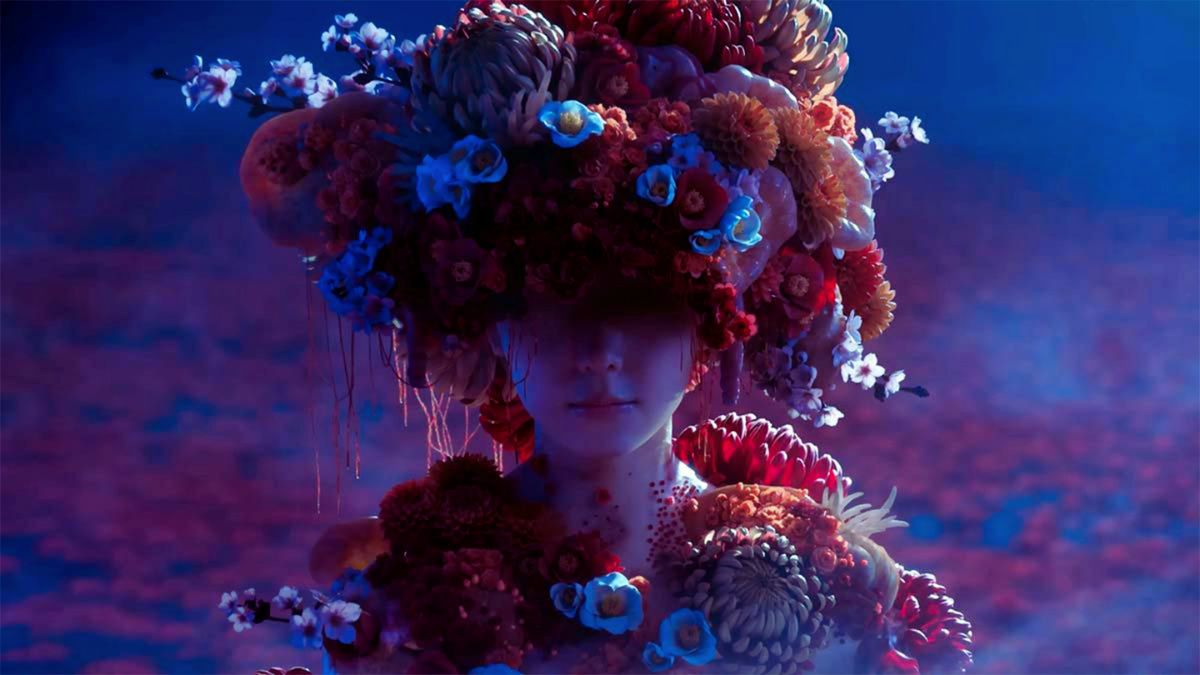
Trailers prominently feature invasive flowers overrunning bodies and spaces. Red spider lilies—higanbana in Japanese, symbols of death and transition—bloom throughout Ebisugaoka. Vegetation doesn’t just decorate; it consumes, spreads, and transforms. The otherworld in Silent Hill f manifests through organic overgrowth rather than rust and industrial decay.

Reading ƒ as “flora” connects the letter to this visual language. It’s a thematic marker for the game’s specific aesthetic, the way this iteration of Silent Hill manifests its horror through natural rather than mechanical corruption. The interpretation works particularly well in English-language contexts, where the pun between letter and word feels deliberate even if the connection is less direct in Japanese.
The Meta Reference: Mojibake
The ƒ character frequently appears in mojibake—the garbled text that results from character encoding mismatches. Anyone who has worked with Japanese text in English systems has likely encountered it: a string of characters that should read as kanji or hiragana but instead displays as nonsense, with ƒ appearing where something else should be.
The Japanese term mojibake translates literally as “character transformation.” This concept aligns perfectly with Silent Hill‘s themes of identity slippage, reality distortion, and the breakdown of meaning. It’s a meta-textual reference, one that operates at the level of language and localization rather than in-game narrative, but the fit feels too precise to dismiss. The reading adds a layer of self-awareness, acknowledging the act of translation and transmission that brings Japanese horror to a global audience.

Might be Helpful: Silent Hill f Altar Puzzle Guide – How to Solve the Shrine’s First Test?
The Visual Pun: Long S
Historically, the long s (ſ) resembled an f in certain typefaces. As a visual joke, ƒ could evoke “Silent Hills”—the canceled P.T. collaboration between Hideo Kojima and Guillermo del Toro that still haunts franchise discourse. It’s an extremely inside reference, more wink than thematic statement, but the possibility hovers over fan discussions. Whether intentional or not, the echo adds another dimension to the letter’s significance for those attuned to the series’ tumultuous development history.
How the Meanings Converge
Silent Hill titles have always operated through compression. Downpour simultaneously describes weather, emotional state, and the overwhelming nature of trauma. Homecoming functions as plot descriptor, thematic through-line, and ironic commentary on what “home” means when built on violence. The ƒ follows this tradition by refusing to resolve into a single definition.
The typographic form anchors the forte interpretation—the visual match is too precise to ignore. Series context expands it: five frames franchise position while first situates the chronology. Story elements deepen it: floral overgrowth, forma‘s taxonomic implications, and the female protagonist’s centrality all emerge from narrative choices. Meta layers like mojibake and the long s add textual playfulness that suits a series comfortable with self-reference.
When these readings layer together, the letter suggests escalation (forte), variation (forma), and invasive growth (flora) within a story that arrives early in the timeline (first) while spotlighting a young woman (female) under the umbrella of a franchise that’s both familiar and mutating (five without the commitment of numbering).

What the Silence Leaves Open
Given the developers’ stated intention, expecting an in-game codex entry that definitively explains ƒ would miss the point. The letter isn’t a puzzle to solve but a lens through which to experience the game. It frames how players interpret the spaces they navigate, the sounds that punctuate silence, and the transformations—bodily, spatial, temporal—that define horror in this iteration.
The ambiguity serves a purpose. By refusing definition, the ƒ invites ongoing interpretation rather than closure. It becomes a conversation rather than a statement, a question that each player answers through their experience rather than a fact delivered by the narrative. This openness mirrors how Silent Hill has always functioned best: not as a series that explains its monsters, but one that lets players confront what the monsters mean.
More Trending Game News:


Leave a Reply