

Introduction: Is There Really an Ancient Dragon Skull?
Searches for an “ancient dragon skull discovered in China” often spark excitement, mystery, and viral speculation. Images circulate online showing massive skulls with dragon-like shapes, leading many to wonder whether mythical dragons once roamed the Earth.
However, while there are no verified discoveries of a literal dragon skull from a mythical creature, the phrase is frequently used to describe remarkable scientific finds in China that resemble dragons due to their dramatic appearance or cultural associations. These discoveries include ancient human fossils and prehistoric reptiles whose forms evoke dragon imagery.
Verified information comes from paleontological and anthropological studies, and there is no evidence supporting the existence of actual dragons as described in folklore. Instead, these discoveries may have inspired ancient myths—or later interpretations of fossils may have been shaped by those myths.
To understand where legend ends and science begins, we must explore the key discoveries often linked to the idea of a “dragon skull,” examine their evidence and historical context, and then dive into the rich world of Chinese dragon mythology.
In This Post:
The Famous “Dragon Man” Skull: The Harbin Cranium Explained
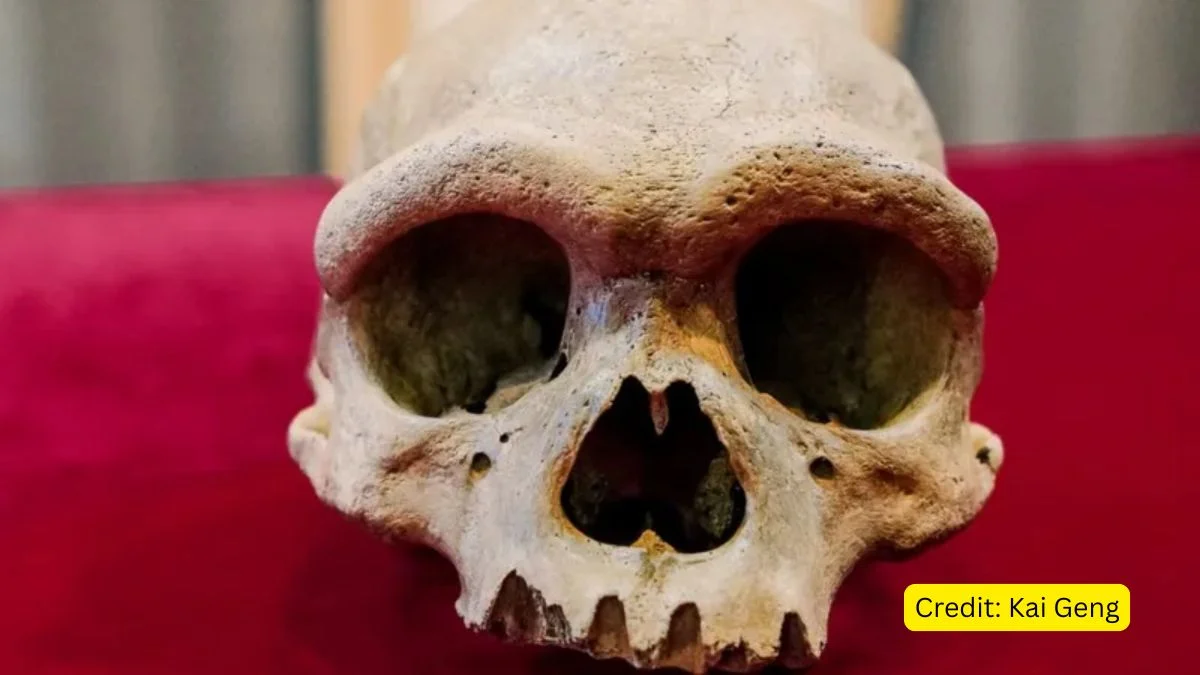
One of the most talked-about discoveries connected to the term ancient dragon skull is the Harbin cranium, often nicknamed “Dragon Man” (Homo longi). The name does not refer to a reptilian dragon but comes from the Long Jiang, meaning “Dragon River,” in Heilongjiang Province where it was found.
This fossil is one of the most complete archaic human skulls ever discovered in East Asia and has reshaped how scientists understand human evolution.

Discovery History of the Harbin “Dragon Man” Skull
Location and Timeline
The skull was unearthed in 1933 by a Chinese laborer during bridge construction over the Songhua River in Harbin City. At the time, the region was under Japanese occupation. Fearing confiscation, the laborer secretly hid the skull in a well.
It remained concealed for more than 80 years until the family finally donated it to scientists in 2018. Today, the fossil is officially cataloged as HBSM2018-000018(A).
Age of the Skull
Geochemical analysis, including uranium-series dating and sediment studies, places the skull between 138,000 and 309,000 years old, with a precise estimate of around 146,000 years. This dates it to the Middle Pleistocene era, a crucial period for human migration in East Asia.
What Makes the “Dragon Man” Skull Unique?
The Harbin cranium is massive and striking.
It has:
- A long, low braincase
- A prominent brow ridge
- A broad nose
- Large eye sockets
- A wide mouth
- A brain size comparable to modern humans (Homo sapiens)
- Archaic traits such as thick ridges and an unusually large molar
Measurements show similarities with other Middle Pleistocene Chinese fossils, including those from Yunxian and Xiahe.
Its dramatic appearance is part of why people online casually label it as a “dragon skull,” even though it is purely human.

Scientific Verification and the Denisovan Breakthrough
Initial Classification
In 2021, researchers led by Qiang Ji of Hebei GEO University proposed that the skull represented a new species, Homo longi. Morphological comparisons were made with Neanderthals, Denisovans, and other archaic humans.
Phylogenetic analysis suggested it might be a sister lineage to Homo sapiens, possibly even closer than Neanderthals.
Major Discoveries in 2025
In 2025, two major studies published in Science and Cell changed everything. Using advanced DNA and protein analysis from fossilized dental plaque, scientists confirmed the Harbin skull belongs to the Denisovans—a mysterious extinct human group previously known mostly from fragments in Siberia and Tibet.
This identification suggests Denisovans originated much earlier, possibly one million years ago, and diverged in Asia rather than Africa.
The skull helps resolve the long-standing problem scientists call the “Muddle in the Middle” of human evolution, linking fossils like Yunxian 2 (1 million years old) to Denisovans.
No DNA extraction from the bone itself has been attempted yet, but the plaque proteins match Denisovan markers.
The “dragon” nickname, therefore, is geographical and cultural, not mythical.
The “Chinese Dragon” Fossil: Dinocephalosaurus orientalis
Another discovery often called an ancient dragon fossil is Dinocephalosaurus orientalis, a long-necked aquatic reptile whose serpentine shape closely resembles Chinese dragon artwork.
Unlike the Harbin skull, this is not human—it is a prehistoric marine reptile from deep geological time.
Discovery and Age of the Dinocephalosaurus Fossil
Location
Fossils were found in Guizhou Province, southern China, in ancient marine deposits. The species was first described in 2003 from partial remains.
In 2024, an international team including researchers from Scotland’s National Museums revealed a nearly complete specimen.
Age
The fossil dates to about 240 million years ago, during the Middle Triassic period, shortly after the Permian–Triassic mass extinction, when life was rebounding in Earth’s oceans.
What Did This “Dragon-Like” Creature Look Like?
Dinocephalosaurus orientalis measured about 16 feet (5 meters) long and had:
- An extraordinarily elongated neck with 32 vertebrae
- A neck longer than its body and tail combined
- Flipper-like limbs
- Sharp teeth for catching fish
- A snake-like body
- Preserved embryos showing live birth
The fossil reveals it hunted fish in shallow seas, coiling its neck like a mythical dragon before striking prey.
Scientific Classification and Importance
Scientists classify it as an archosauromorph reptile, related to crocodiles and dinosaurs, though it is not a true dinosaur.
The 2024 study published in Earth and Environmental Science Transactions of the Royal Society of Edinburgh used CT scans and comparative anatomy to confirm its unique structure.
Its dragon-like silhouette explains why ancient people encountering similar fossils may have imagined real dragons.

“Dragon Bones” in Ancient Chinese History
Long before modern paleontology, fossils in China were known as “dragon bones” (long gu).
Villagers collected dinosaur and mammal fossils and ground them into medicine for ailments such as:
- Fever
- Paralysis
- Cramps
This practice dates back to the Shang Dynasty (1600–1046 BCE). Oracle bones used in divination also referenced dragons as rain-bringers.
In the 19th century, historians documented villagers collecting fossils from places that later became dinosaur quarries.
Misinterpretations even led to hoaxes, such as a supposed “60-foot dragon skeleton” assembled from mixed bones, which fooled observers before being exposed.
These practices blended science, folklore, and medicine, shaping how dragons became linked to real fossil remains.
Chinese Dragon Mythology: Origins of the Legend

Unlike Western dragons, Chinese dragons (long or loong) are benevolent, wingless beings symbolizing:
- Power
- Prosperity
- Rain
- Imperial authority
They appear in art, festivals, astrology, and the zodiac, with the Year of the Dragon (such as 2024) considered especially auspicious.
Where Did Chinese Dragons Come From?
Theories of Origin
Scholars believe dragons evolved from totem worship around 3000 BCE, combining features of animals such as:
- Snakes
- Tigers
- Eagles
- Carp
- Chinese alligators
Others link dragons to thunder and nature worship, since dragons control water and weather.
Chinese emperors even claimed descent from dragons. The legendary Yan Emperor was said to be born from a dragon encounter.

What Does a Chinese Dragon Look Like?
Traditional depictions include:
- Camel head
- Stag horns
- Hare eyes
- Ox ears
- Snake neck
- Clam belly
- Carp scales
- Eagle claws
- Tiger paws
They fly without wings, moving through clouds and expelling wind.
Types of Chinese Dragons in Mythology
Ancient texts describe four major types:
| Type | Description | Role |
| Celestial Dragon (Tianlong) | Guards heavenly palaces | Protector of gods |
| Spiritual Dragon (Shenlong) | Controls rain and winds | Brings fertility |
| Earth Dragon (Dilong) | Manages rivers | Oversees waters |
| Treasure Dragon (Fuzanglong) | Guards hidden wealth | Symbol of prosperity |
Other famous figures include the Azure Dragon (Qinglong), one of the Four Symbols guarding the East.
Legendary Stories of Chinese Dragons

The Four Dragons
Four dragons lived in the Eastern Sea and saw humans suffering from drought. They secretly brought rain against the Jade Emperor’s orders. Punished, they were turned into mountains, but later transformed into China’s four great rivers—the Yangtze, Yellow, Heilongjiang, and Pearl Rivers—so they could forever help people.
The Dragon Kings (Longwang)
Each sea has a Dragon King—East, South, West, and North—who governs weather and protects sailors. Temples honor them, and dragon dances are performed for rain and good fortune.
In Journey to the West, the East Sea Dragon King aids the Monkey King.
The Dragon and the Pearl
A dragon guards a magical pearl symbolizing wisdom and power. When stolen, disasters follow until the pearl is restored, bringing prosperity.
Imperial Dragon Legends
The first emperor Huang Di was said to ascend as a dragon. Dragons symbolized the emperor’s mandate from heaven, and the famous Nine Dragon Sons represent virtues such as endurance and protection.

Final Thoughts: Science Behind the Dragon Myth

There has never been a verified discovery of a real dragon skull in China. What exists instead are astonishing fossils like the Harbin Denisovan skull and the 240-million-year-old Dinocephalosaurus, whose dramatic forms echo the dragons of legend.
Combined with ancient practices of using “dragon bones,” these discoveries show how science and mythology intertwine. Fossils inspired stories, and stories shaped how fossils were understood.
The ancient dragon skull is not a monster from fantasy—but a powerful reminder of how human imagination, culture, and scientific discovery evolve together.


Leave a Reply