

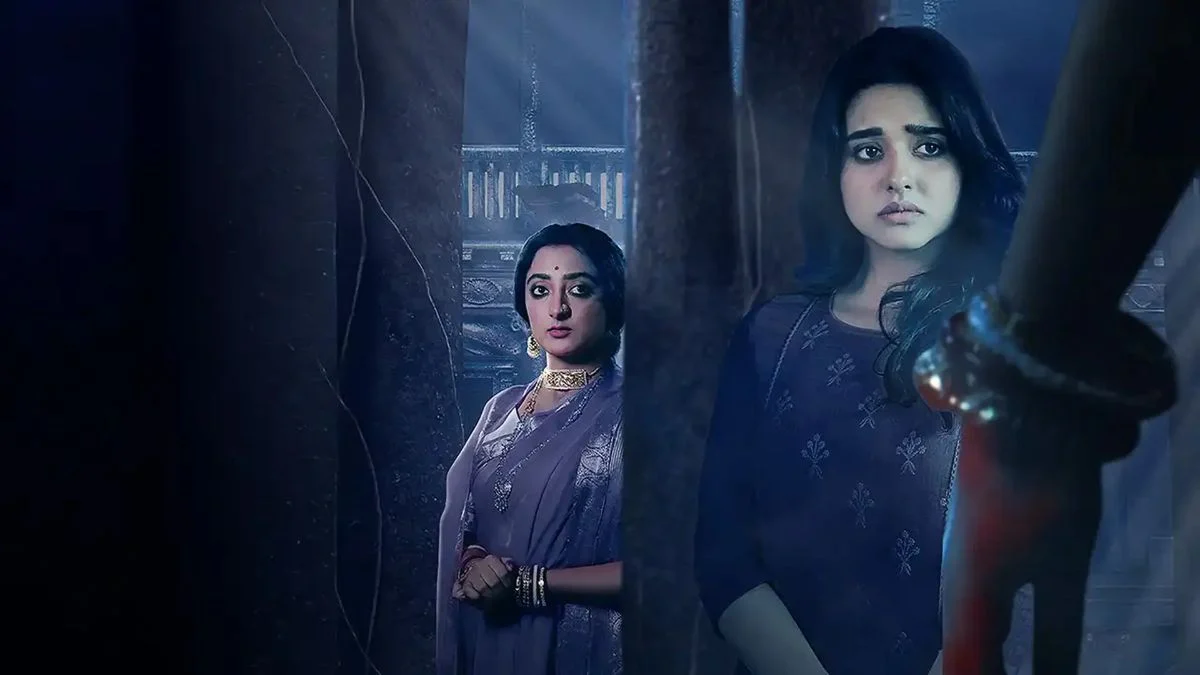

Bengali horror has found a haunting new voice in 2025, and it calls from the darkness of Sonamukhi village. Hoichoi’s latest supernatural thriller Nishir Daak premiered on October 17, 2025, bringing with it chilling folklore, vengeful spirits, and a curse that has lingered for 85 years. But what makes this series stand out in the crowded landscape of Indian horror web series? More importantly, what really happened in that shocking finale? Let’s decode everything from the ancient Bengali folklore to that rushed but redemptive ending.
In This Post:

Read Detailed Folklore Here:
Nishi Daak Folklore Origins: The Terrifying Bengali Legend of the Call of the Night
What Is Nishir Daak? Hoichoi Horror Series Overview
Nishir Daak (translated as “Call of the Night”) is a 6-episode Bengali supernatural horror thriller that runs approximately 20-24 minutes per episode, making it a perfectly binge-able experience for horror enthusiasts. Directed by Joydeep Mukherjee, the series carries a U/A 13+ rating due to its supernatural violence, possession sequences, and disturbing murder themes.
What sets this Hoichoi original apart is its ambitious blend of folk horror with academic mystery. The premise follows six PhD students researching a forgotten classical singer once praised by Rabindranath Tagore himself. Their academic curiosity leads them to Sonamukhi, a village where night brings terror, singing invites death, and the past refuses to stay buried.
The series draws heavily from authentic Bengali folklore while weaving in themes of jealousy, betrayal, reincarnation, and redemption through music. Set against the culturally rich backdrop of Durga Puja, Nishir Daak attempts to elevate regional horror beyond jump scares into something more atmospheric and culturally grounded.
Nishir Daak Meaning Explained – The Bengali Folklore of Nishi
Before diving into the story, understanding the folklore is crucial. In Bengali tradition, Nishi Daak refers to a malevolent spirit that calls out to people during the night, mimicking the voices of loved ones—mothers, siblings, friends. The folklore warns that if you respond to this call or follow the voice, you invite death. The spirit lures victims away from safety, often resulting in their mysterious demise.
This isn’t just creative fiction; rural Bengal has generations of stories about people who disappeared after responding to familiar voices in the darkness. The series takes this foundation and amplifies it with a revenge narrative, transforming the Nishi from a random malevolent entity into a wronged woman seeking justice from beyond the grave.
The show’s portrayal of Nishi as a red-saree-clad woman with specific targets (descendants of her killers) adds a personal vendetta layer to the traditional folklore, making the horror more psychological than purely supernatural.
Nishir Daak Season 1 Story – What Happens in Sonamukhi Village?

The core premise is deceptively simple: six PhD students arrive in the remote village of Sonamukhi to research Nishigandha, a classical singer who was supposedly praised by Rabindranath Tagore but has mysteriously vanished from historical records. Why would such a talented artist be forgotten?
Their research destination is the abandoned Goshal Mansion, Nishigandha’s former home, now decaying and avoided by terrified locals. The villagers live by strict rules—nobody ventures out after dark, and singing is absolutely forbidden. The students dismiss these as superstitious nonsense. That dismissal costs lives.
What makes Nishir Daak compelling initially is how it layers its mysteries. The students aren’t just dealing with random supernatural attacks; they’re uncovering a deliberate curse targeting specific bloodlines. The series alternates between present-day investigations and 1940 flashbacks, slowly revealing that this isn’t about a random haunting—it’s about unfinished business, a silenced voice demanding to be heard, and a song that was never completed.
The role of music becomes central to both the curse and its resolution. Nishigandha wasn’t just murdered; she was strangled mid-performance, her artistry brutally silenced at its peak. The curse manifests through tanpura strings (a classical instrument) strangling victims, and the resolution requires completing her interrupted song during Durga Puja—the very festival where her life ended.
Nishir Daak Season 1 Episode-Wise Breakdown
Episode 1 – Obhishaap (The Curse): How the Terror Begins
The series opens in 1940 with Narayan, a sitar player, performing at Durga Puja. Walking home through the forest, he hears a woman’s voice calling him “Bhabhi” (sister-in-law). Despite his confusion—he has no sister-in-law—he follows the voice. His body is discovered hanging from a tree, tanpura strings embedded in his neck.
Fast forward to the present: our six protagonists—Titli, Neel, Meghla, Arun, Rito, and Onir—arrive at Sonamukhi for their research. They meet resistance from locals and warnings from Bhola Kaka, the caretaker, but academic ambition overrides caution. They settle into the Goshal Mansion despite its obvious abandonment and eerie atmosphere.
Titli begins experiencing strange visions, including a broken Durga idol that appears to speak to her. While Neel sweetly proposes to Titli, creating a brief moment of normalcy, Arun makes a fatal mistake. After visiting his mother, who cryptically mentions family deaths tied to a curse, Arun hears his mother’s voice calling him at night. He follows it and encounters a woman in a red saree.
The episode ends with the group’s first casualty: Titli discovers Arun’s body hanging at the mansion door, vines wrapped around his neck. The curse has claimed its first descendant.

Episode 2 – Notun Didi (New Sister): The Pattern Emerges
The 1940 timeline continues showing us the systematic elimination of Narayan’s musician friends. Mahendra, a flute player, hears the call next and is strangled by the mysterious red-saree woman, his body dumped in a river. The pattern becomes clear: the musicians are being hunted.
In the present, police involvement brings little comfort. Arun’s mother reveals the curse’s origin—six musicians committed a terrible sin during a Durga Puja event involving the assault of a small girl. A city constable assigned to protect the group becomes another victim after hearing a call and singing despite warnings, dying of a heart attack.
Titli’s supernatural experiences intensify. She sees the bleeding woman in the red saree outside a window and hears singing from a locked room. In a genuinely unsettling moment, her reflection in the mirror whispers, “It was a murder.” An old woman named Panna appears, warning them to leave.
The students begin piecing together that Nishi has systematically killed six musicians in the past and is now targeting their descendants. But they don’t yet understand the full truth.

Episode 3 – Shoi (Friend): Possession and Connections
The 1940 flashbacks show Deepankar attempting to protect himself by locking himself away, but the spirit finds him anyway. She mimics “Kamalabai’s” voice, luring him out. He’s killed, continuing the vengeful spirit’s methodical revenge.
In the present, Titli’s nightmares blur reality and supernatural vision—she dreams of herself as the red-saree figure. The constable’s body is discovered, and villagers begin blaming the students themselves, adding social pressure to supernatural terror.
The group explores a locked piano room containing crucial clues: a portrait of a woman in a saree and a “Gomsi” cloth. Titli feels an inexplicable connection to the room, as if she’s been there before. Then comes the chilling moment—Onir hears his mother’s voice, walks to the piano, and while addressing Titli, says, “My friend, I am Nishi.”
Possession has entered the equation, and the spirit is communicating through the living.
Episode 4 – Ashalata (True Vine): The Reincarnation Reveal
The 1940 timeline shows the brutality escalating. Hemchandra, finding Kashinath’s body, plans to burn down the mansion but is decapitated by invisible tanpura strings—the spirit’s weapon of choice.
The possessed Onir leads Titli to the piano room, asking why she doesn’t recognize him. Neel intervenes before things escalate, but they discover something extraordinary under the piano: a box containing letters written in Titli’s handwriting. This shouldn’t be possible—these letters are from Nishigandha’s friend Ashalata, discussing sarees and marriage arrangements.
Panna, the old woman, urgently tells Titli to flee, revealing she was a child maid in the mansion during the 1940 events. Onir falls down the stairs and dies with tanpura strings around him—another descendant claimed. Titli experiences a flashback to Nishigandha’s murder and embraces Panna, beginning to understand the impossible: she is Ashalata reincarnated, Nishigandha’s best friend, returned to finally set things right.
Episode 5 – Porichoy (Introduction): Preparing for Resolution
The flashbacks reveal more context: Nishigandha married Rajshekhar, and her extraordinary talent caught Rabindranath Tagore’s attention. He praised her publicly and insisted she perform at Durga Puja, even sending her a tanpura and letter. But this recognition planted seeds of jealousy in her husband. Nishigandha discovers she’s pregnant, unaware of the danger brewing. Panna, the young maid, prays desperately to save the mansion and her mistress.
In the present, Titli searches for Panna in the jungle, and they reunite. Together, they decide to hold a Durga Puja—the key to resolution. Rudrashekhar, Rajshekhar’s son and current descendant, arrives at the mansion. The surviving students commit to ending the curse once and for all.
Episode 6 – Shubho Bijoya (Happy Victory): The Truth and the Curse Breaking
The finale delivers the full horrifying truth through 1940 flashbacks. Rajshekhar, consumed by jealousy over his wife’s superior talent and Tagore’s praise, commits the unthinkable. While Nishigandha performs during Durga Puja, pregnant with his child, he strangles her mid-song. He hides the remains of her body under a Durga idol.
His six musician friends witness the crime but remain silent, complicit through their cowardice. Nishigandha’s spirit awakens as Nishi, systematically hunting them down. The child maid Panna, wearing a veil, briefly fakes Nishigandha’s survival to protect herself.

In the present, Titli channels Ashalata’s memories and performs Nishigandha’s incomplete song. Villagers, initially fearful, become mesmerized by the music—the same music that was silenced 85 years ago. Rudrashekhar arrives and admits his father’s crime, but as he attempts to lead them to the body’s location, Nishi claims her final victim, killing him en route.
Titli completes the Durga Puja, finishes the song that was interrupted for 85 years, and the villagers respectfully cremate Nishigandha’s remains with proper rituals. The curse lifts. The surviving students—Titli, Neel, Meghla, and Rito—leave Sonamukhi carrying Nishigandha’s tanpura, promising to honor her memory annually.
Nishir Daak Main Characters & Cast – Who’s Who in the Horror
Titli (Sweta Mishra) serves as our protagonist and the reincarnation of Ashalata, Nishigandha’s best friend from 1940. Her character experiences the most significant arc, from skeptical researcher to someone who must literally complete unfinished business from a past life. Titli’s visions aren’t random supernatural experiences—they’re memories bleeding through from Ashalata’s life.
Neel (Satyam Bhattacharya) is Titli’s supportive boyfriend, providing emotional grounding throughout the supernatural chaos. His early proposal adds personal stakes—he’s not just helping solve a mystery; he’s protecting his future wife.
Nishigandha (Sreeja Dutta in flashbacks) is the heart of the tragedy. A classical singer praised by Rabindranath Tagore himself, she represented artistic excellence that threatened her husband’s fragile ego. Her murder while pregnant and mid-performance makes her one of horror’s more sympathetic vengeful spirits. She’s not evil—she’s seeking justice and the completion of what was stolen from her.
Rajshekhar Goshal (Mainak Banerjee) emerges as the true villain. His jealousy transforms love into murder, and his crime creates generational trauma. He represents toxic masculinity threatened by female excellence—a theme that resonates beyond the horror genre.
Panna (Chhandak Choudhury) provides the crucial link between past and present. As a child maid in 1940 who survived to old age, she carries the truth but is initially too afraid to speak it fully. Her reunion with Titli (Ashalata reincarnated) creates one of the series’ more emotional moments.
The possession arcs of Onir and the deaths of Arun and others demonstrate how the curse mechanically functions—targeting bloodlines of the silent witnesses, using their own senses against them through mimicked voices.
Nishir Daak Ending Explained – Why the Curse Lasted 85 Years

The ending operates on the “unfinished business” horror trope but adds cultural specificity that elevates it. Nishigandha wasn’t just murdered—her artistry was silenced at its peak during a sacred festival. Three elements kept her spirit restless:
The incomplete song: She was strangled mid-performance, leaving her artistic expression unfinished. In classical Indian music, there’s spiritual significance to completing a raga properly. Her interrupted performance became a metaphysical anchor.
Improper death rituals: Her body was burned and hidden under a Durga idol without proper cremation rites. In Hindu tradition, correct death rituals are essential for the soul’s journey.
Silenced truth: The six musicians knew what happened but said nothing, allowing Rajshekhar’s crime to go unpunished. Their silence extended the injustice.
The curse lifts when all three elements are addressed: Titli completes the song, Nishigandha receives proper cremation, and the truth is publicly acknowledged. It’s redemptive horror—the spirit isn’t defeated through exorcism or violence but through restoration of what was stolen: voice, dignity, and memory.
Critics note the ending feels rushed, compressing significant emotional and narrative resolution into limited runtime. The series would have benefited from exploring the final confrontation and ritual in greater depth.

Is Nishir Daak Based on a True Story or Real Bengali Folklore?
The Nishi Daak folklore is absolutely real in Bengali tradition, with countless rural stories about people disappearing after responding to familiar voices at night. However, the specific story of Nishigandha, Rajshekhar, and the Sonamukhi curse is fictional.
The Rabindranath Tagore connection adds historical weight but is creative liberty—there’s no historical record of a singer named Nishigandha that Tagore praised. The series uses Tagore’s real reputation for recognizing talent (particularly female artists) to ground its fictional narrative in cultural authenticity.
What the series does effectively is use real folklore as a framework for exploring timeless themes: jealousy destroying love, patriarchal violence against women’s achievement, and how silence enables evil. The supernatural elements serve as metaphor for how patriarchal crimes echo through generations.
Nishir Daak Psychological Meaning – Beyond the Supernatural

Strip away the supernatural elements, and Nishir Daak explores how talented women are punished for excellence that threatens the male ego. Rajshekhar cannot tolerate that his wife is more gifted than he and receives external validation (from Tagore, no less). Rather than celebrating her, he destroys her.
The curse targeting descendants represents how unaddressed violence creates generational trauma. The six musicians’ silence makes them complicit, and their families pay the price. It’s a meditation on accountability—crimes unpunished don’t simply fade; they fester.
Titli’s reincarnation arc suggests that witnessing violence without acting creates karmic debt. Ashalata, who presumably knew Nishigandha was in danger but couldn’t or didn’t prevent the murder, returns to complete what she failed to do: honor her friend’s memory and talent.
Will There Be Nishir Daak Season 2 on Hoichoi?
The ending provides closure—the curse is lifted, Nishigandha is at peace, and the surviving students leave with their lives. However, the series establishes Sonamukhi as a location rich with history and supernatural potential.
A second season could explore:
- Other folklore-based curses in different Bengali villages
- The tanpura itself becoming a haunted object
- The surviving characters encountering new supernatural phenomena during their promised annual visits
Hoichoi has been building a horror universe with series like Parnashavarir Shaap and Bhutu. Nishir Daak could become an anthology series exploring different aspects of Bengali folklore, with Titli and Neel as recurring investigators.
As of now, no official announcement has been made, but the series’ reception will likely determine if Hoichoi commissions additional seasons.

Final Verdict – Should You Watch Nishir Daak Web Series?
Nishir Daak succeeds where many regional horror series stumble: it respects its folklore roots while crafting a coherent narrative. The first three episodes deliver genuine atmospheric dread, excellent sound design, and intriguing mystery-building. The performances, particularly Sweta Mishra as Titli and the flashback sequences, effectively sell both the present danger and historical tragedy.
However, the series falters in its second half. Episodes 4-6 become predictable, relying heavily on familiar possession and jump-scare tropes rather than maintaining the folkloric tension that made the opening compelling. The rushed finale doesn’t give adequate space to what should be an emotionally powerful resolution.
Watch it if you: Enjoy folk horror, appreciate Bengali culture and language, want atmospheric horror over gore, or are interested in how regional folklore translates to web series format.
Skip it if you: Demand consistently high tension throughout, dislike reincarnation plots, or expect elaborate creature effects and big-budget scares.
At approximately 2.5 hours total runtime, Nishir Daak is worth experiencing for horror enthusiasts and those interested in how Indian OTT platforms are exploring regional supernatural traditions. It’s not perfect, but it’s a meaningful addition to Bengali horror that honors both its folkloric roots and the very real horror of silenced women finally finding their voice—even from beyond the grave.


Leave a Reply