

Old gear stacks up fast in Where Winds Meet, and before long your bag begins to feel like a travelling museum. Some items turn into quick gold, others deepen your lore collection, and a few remain useful long after they fall behind in stats. Your job becomes choosing what to keep, what to recycle, and what to slot into the systems that extend your build. This guide walks you through every practical choice you can make, so your inventory feels purposeful instead of cluttered.
Understanding the Two Types of Old Gear
As you progress, you meet two broad categories: ordinary outdated gear and antique gear. Ordinary pieces exist only for tuning and recycling. Antique pieces tell a story of the world itself. They carry tags that hint at their uncoverable history and often read as Past: Traceable. These antiques fill out your compendium and expand the lore you discover as you explore the open world.
If you recycle everything without checking for those tags, you risk losing fragments of the world’s narrative. When you look through your gear, take an extra moment to identify anything with historical significance. You keep these not for stats, but for the living record they create.
How Recycling Works and When You Should Do It
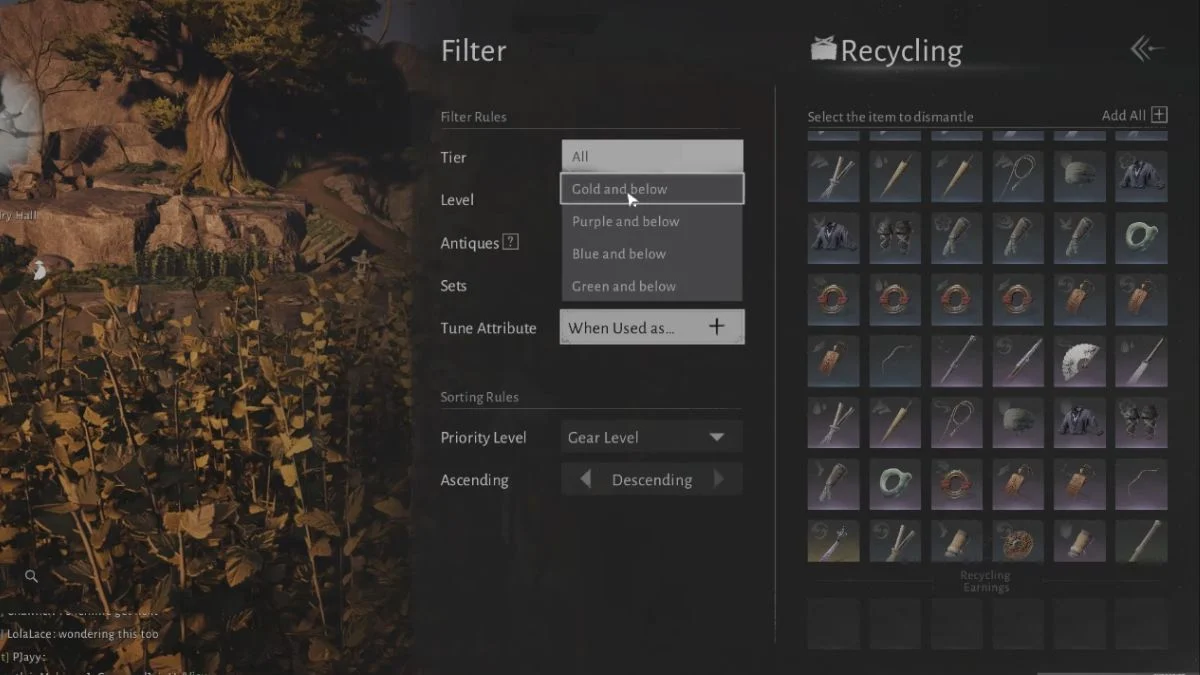
Recycling is the most direct way to clear space and earn gold coins. You open your bag, head to the gear section, and choose the recycling option. Filters help you sort quickly, and you can dismantle items in batches or individually.
Batch recycling feels smooth but ignores confirmations. Because of this, a single careless click can erase something you later wish you still had. When you want to clear many items at once, set your filters first. Exclude antiques, exclude gear at levels you still use for tuning, and only confirm after you know the selection looks clean.
Anything below level 41 becomes fully disposable once you reach midgame. These pieces cannot tune your higher gear and hold no further value outside of basic gold return.
How Tuning Influences What You Keep
Tuning links items of the same level. A level 31 piece cannot tune a level 41 piece, and the pattern repeats as you climb. Because of this, you only keep gear that matches your current tuning tier or sits one tier below if you plan to fine-tune another set soon. Purple and yellow items offer stronger random effects, so they remain useful longer. Still, if their level trails too far behind you, you eventually let them go.

Antique Gear and Why You Should Not Recycle It
Antique gear has no combat stats or set bonuses, which leads many players to dismiss it. Yet its value hides in the compendium. These pieces link to collectible readables scattered across the world, each contributing a thread of history. When you add antiques to your compendium, you claim their lore permanently.
The global version of the game still improves its guide systems, so not every location or connection appears clearly. Because of this, you protect antiques until the game introduces the complete “put into compendium” feature for all regions. They take space, but they also enrich your journey.
The Arsenal at Level 51 and How Old Gear Gains New Purpose
Reaching level 51 unlocks the Arsenal. This system lets you place old gear along specific paths that grant attribute bonuses aligned with your chosen combat style. Each Arsenal path supports something different: power, speed, control, or hybrid builds. When you follow the path that fits your martial approach, even weaker items grow meaningful.
What you place in the Arsenal no longer needs high rarity or top-tier rolls. You simply tune them to match the Arsenal’s requirements, then let them passively strengthen you. This gives your older gear a purpose far beyond its original use.
Repairing Gear for Set Effects
Some sets offer bonuses strong enough to keep old gear relevant. If you want to preserve these effects, you repair instead of dismantle. Set bonuses influence how you move through encounters, how you maintain pressure in combat, and how you capitalize on your martial arts. Repairs keep these effects intact even when gear power falls behind.
This route suits players who enjoy weaving unique playstyles more than chasing pure damage numbers. If a set bonus shifts the way you solve combat, you may want to preserve it a while longer.
A Simple Path to Keep Your Inventory Under Control
When you feel adrift, follow this flow:
- Identify antiques. Keep all of them until the compendium system updates fully.
- Remove anything below level 41 once you progress past early midgame.
- Recycle outdated gear that cannot tune your current pieces.
- Save purple and yellow items only if they remain within your current tuning level.
- Reserve a few pieces for the Arsenal once you reach level 51.
- Keep set gear only if the bonus still influences your build.
This approach keeps your inventory lean without sacrificing progress or lore.
More Trending Game Guides:


Leave a Reply