
हिंदी में पढ़ें: भानगढ़ किले के ऐतिहासिक तथ्य और भूतिया किंवदंतियां, राजस्थान
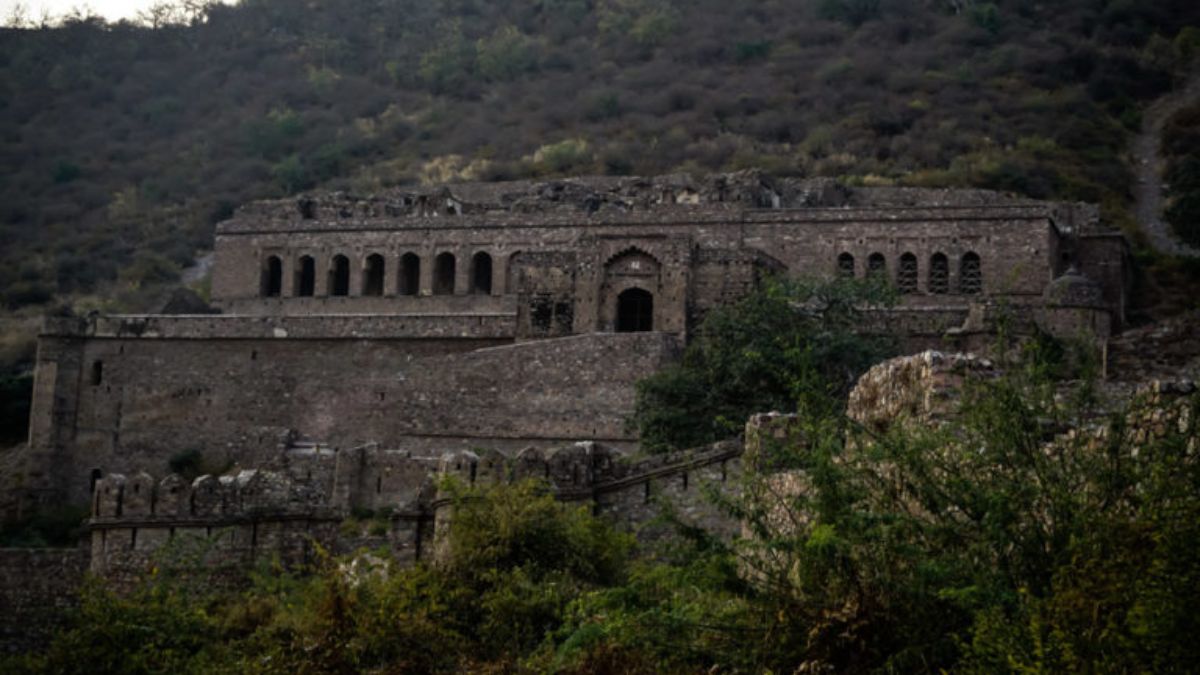
Deep in the rugged landscape of Rajasthan lies one of India’s most mysterious and feared archaeological sites – Bhangarh Fort. This 16th-century fortress has earned the dubious distinction of being the country’s most haunted location, with the Archaeological Survey of India imposing strict nighttime restrictions that have only fueled its ominous reputation. But what are the real historical facts behind this abandoned citadel, and how did it transform from a thriving kingdom into a symbol of supernatural terror?
In This Article:
Construction and Founding of Bhangarh Fort (1573 AD)
The story of Bhangarh Fort begins in 1573 AD with Raja Bhagwant Das, a prominent Kachwaha Rajput ruler of Amber. This powerful monarch, whose family would later become integral to the Mughal court, constructed the fortress as a gift for his younger son, Madho Singh. The choice of location was strategic – positioned to overlook the surrounding valleys while providing natural defensive advantages.

What makes this construction historically significant is its connection to the Mughal era’s most influential families. Raja Bhagwant Das was not just any regional ruler; he was the father of Man Singh, one of Emperor Akbar’s most trusted generals and a member of the legendary Navratnas (Nine Jewels) of Akbar’s court. This royal pedigree meant that Bhangarh Fort was built with considerable resources and architectural expertise.
The fort complex was designed as more than just a military installation. It was intended to be the heart of a thriving town, complete with temples, markets, residential quarters, and administrative buildings. The Kachwaha rulers envisioned Bhangarh as a prosperous settlement that would serve as a power center for generations to come.
Bhangarh Fort Location: On the Edge of Sariska Reserve

Bhangarh Fort’s location in present-day Rajasthan places it on the border of the Sariska Tiger Reserve, adding to its mystique and isolation. This positioning in the Aravalli hills provided the original builders with natural fortification advantages, but it also means that today’s visitors encounter the ruins in a setting that feels remarkably untouched by modern development.
The fort’s proximity to the wildlife reserve has contributed to its eerie atmosphere. Dense forests surround the ruins, and the sounds of wildlife create an otherworldly ambiance, especially during dawn and dusk hours when most visitors are present. This natural setting has undoubtedly enhanced the supernatural folklore surrounding the site.
The geographical isolation also meant that when the town was eventually abandoned, nature quickly began reclaiming the structures. Today, visitors find ruins partially consumed by vegetation, creating a haunting landscape that perfectly complements the ghost stories associated with the location.
Decline, Curse, and Abandonment of Bhangarh
The prosperity that Bhangarh enjoyed under Madho Singh’s rule was not destined to last. After Madho Singh’s death, his son Chatr Singh inherited the kingdom, but the golden age of Bhangarh was already beginning to fade. Historical records indicate that Chatr Singh met a violent death, marking the beginning of the end for this once-flourishing settlement.
The final blow came with the devastating famine of 1783. This natural disaster, which affected large parts of northern India, proved to be too much for the already weakened settlement. The combination of political instability following Chatr Singh’s death and the harsh realities of famine forced the remaining inhabitants to abandon their homes and seek survival elsewhere.
What makes the abandonment of Bhangarh particularly striking is how complete it was. Unlike other historical towns that experienced gradual decline, Bhangarh seems to have been abandoned suddenly and entirely. No new construction occurred after the late 18th century, leaving the site frozen in time like a historical snapshot of Rajput architecture and urban planning.
The local population that survived these hardships chose to resettle away from the original fort complex, establishing new communities at a safe distance from the ruins. This physical separation between the living and the abandoned has contributed significantly to the supernatural folklore that surrounds Bhangarh today.

Might Interest You: The Most Haunted Stories of the Himalayas: When Mountains Whisper
ASI Rules and Entry Timings of Bhangarh Fort
The Archaeological Survey of India (ASI) has implemented specific regulations for Bhangarh Fort that have become almost as famous as the fort itself. The site is open to visitors between 6:00 AM and 6:00 PM, following standard ASI protocols for protected monuments. However, these timing restrictions have taken on supernatural significance in popular culture.

Local legends claim that the ASI restrictions exist because anyone who stays in the fort after sunset never returns. While this makes for compelling storytelling, the reality is that these are standard safety and security measures applied to archaeological sites across India. The isolated location, potential for accidents among ruins, and lack of lighting infrastructure make nighttime visits genuinely dangerous for practical reasons.
The ASI has classified Bhangarh as a protected monument, ensuring that the ruins are preserved for future generations while allowing controlled public access. Professional archaeological work continues at the site, with researchers studying the architectural features, historical artifacts, and urban planning elements that make Bhangarh significant beyond its supernatural reputation.
Visitors to Bhangarh Fort will find well-maintained pathways, informational signage, and basic facilities that make the historical exploration both safe and educational. The official approach treats Bhangarh as what it truly is – an important archaeological site that offers insights into 16th-century Rajput civilization.
Haunted Legends of Bhangarh Fort
While historical facts explain the rise and fall of Bhangarh Fort, it’s the supernatural legends that have made it internationally famous. These stories, passed down through generations of local communities, have transformed a historical site into India’s most notorious haunted location.
The Princess Ratnavati and Tantric Singhia Story
The most widely circulated legend revolves around Princess Ratnavati, described as a woman of extraordinary beauty who was the pride of Bhangarh. According to this story, a tantric (practitioner of occult arts) named Singhia became obsessed with the princess and attempted to win her affections through black magic.

The legend tells of how Singhia tried to enchant a perfume or oil that the princess would purchase from the local market. However, Princess Ratnavati discovered the magical plot and threw the enchanted substance onto a large boulder. The rock then supposedly rolled toward the tantric, crushing him to death.
As he died, Singhia is said to have cursed the entire town of Bhangarh, prophesying that it would be destroyed and remain uninhabitable forever. According to local belief, this curse led to the battles and disasters that eventually caused the abandonment of the settlement.
This story, while lacking historical verification, has become so embedded in local culture that many people genuinely believe it explains the fort’s abandonment and current reputation.
The Hermit Balu Nath and the Shadow Curse
An alternative legend focuses on a hermit named Balu Nath who lived in meditation in a cave near the proposed construction site of Bhangarh Fort. According to this story, King Madho Singh sought the hermit’s permission before beginning construction, showing respect for the holy man’s spiritual practice.

Balu Nath allegedly agreed to the construction but imposed a crucial condition: no structure in the new town should be built tall enough to cast a shadow on his meditation cave. The hermit warned that if his dwelling was ever shadowed by the fort’s buildings, he would destroy the entire settlement.
The legend continues that as Bhangarh grew and prospered, ambitious builders eventually constructed towers and walls that violated the hermit’s restriction. When shadows from these structures fell across Balu Nath’s cave, he fulfilled his terrible prophecy, bringing destruction and abandonment to the town.
This story resonates with traditional Indian beliefs about respecting holy men and the consequences of breaking promises made to spiritual figures. It also provides a supernatural explanation for architectural choices and the ultimate fate of the settlement.

Another Interesting Read: The Churel: When the Dead Refuse to Rest
Current Status of Bhangarh Fort: Ruins, Myths, and Tourism
Today, Bhangarh Fort exists in a unique space between historical preservation and supernatural tourism. The ruins are remarkably well-preserved, offering visitors a genuine glimpse into 16th-century Rajput architecture and urban planning. The main palace, temples, step wells, and residential areas remain largely intact, making it a valuable archaeological site.

The fort complex includes several notable structures: the main palace with its multi-story construction, various temples dedicated to different deities, a marketplace area, and residential quarters that housed the town’s population. These ruins provide insights into how medieval Indian cities were planned and how different social classes lived in proximity to each other.
From a tourism perspective, Bhangarh has become a major attraction for both history enthusiasts and paranormal investigators. Domestic and international visitors come to experience both the historical significance and the supernatural atmosphere that surrounds the site. The combination of genuine historical importance and ghostly reputation makes it a unique destination in India’s tourism landscape.
The local economy has adapted to this unusual form of tourism, with guides who can share both historical facts and supernatural stories. However, the community maintains a respectful distance from the ruins themselves, continuing the tradition of avoiding the abandoned town that began with their ancestors.
Is Bhangarh Fort Really Haunted? Separating Facts from Myths
The question of whether Bhangarh Fort is actually haunted requires a careful examination of evidence versus folklore. From a scientific perspective, there is no verifiable evidence of supernatural activity at the site. The stories of curses, ghosts, and mysterious disappearances fall into the category of local legends rather than documented facts.

However, the psychological impact of these stories is very real. The isolated location, the eerie atmosphere created by ruins in a wilderness setting, and the weight of centuries-old legends create an environment where visitors genuinely experience fear and unease. This psychological response is further amplified by the expectation created by Bhangarh’s reputation.
The ASI’s timing restrictions, while practical in nature, have been interpreted as validation of the supernatural stories. This official acknowledgment, even though it’s for safety rather than paranormal reasons, lends credibility to the haunted reputation in the public mind.
What makes Bhangarh particularly interesting is how historical tragedy and supernatural folklore have merged to create a modern myth. The real disasters that befell the town – political violence, famine, and abandonment – provide a foundation of genuine misfortune that supernatural stories have built upon.
The fort’s status as India’s most haunted location ultimately reflects the power of storytelling in Indian culture, where historical events are often interpreted through spiritual and supernatural frameworks. Whether or not ghosts actually walk the ruins of Bhangarh, the site serves as a powerful reminder of how the past continues to influence the present through collective memory and cultural tradition.
For visitors interested in experiencing Bhangarh Fort, the recommendation is to approach it with an appreciation for both its historical significance and its cultural role as a repository of supernatural folklore. The ruins offer genuine insights into medieval Indian civilization, while the legends provide a window into how communities make sense of historical tragedy and the passage of time.
Similar Guides That Will Keep You Awake At Night:


References
- Archaeological Survey of India – Protected Monuments Database
- Rajasthan Tourism Department – Historical Sites Documentation
- “Rajasthan: A Historical Survey” – Various Archaeological Publications
- Local Historical Records – Jaipur State Archives
- Tourism and Cultural Heritage Studies – Rajasthan University Research
- “Haunted Places of India: Folklore and Reality” – Cultural Anthropology Studies
- ASI Monument Guidelines and Visitor Information
- Regional Historical Surveys – Kachwaha Dynasty Documentation
Note: While the historical facts about Bhangarh Fort’s construction, decline, and current status are well-documented, the supernatural stories represent local folklore and cultural traditions rather than verified historical events.

Leave a Reply