

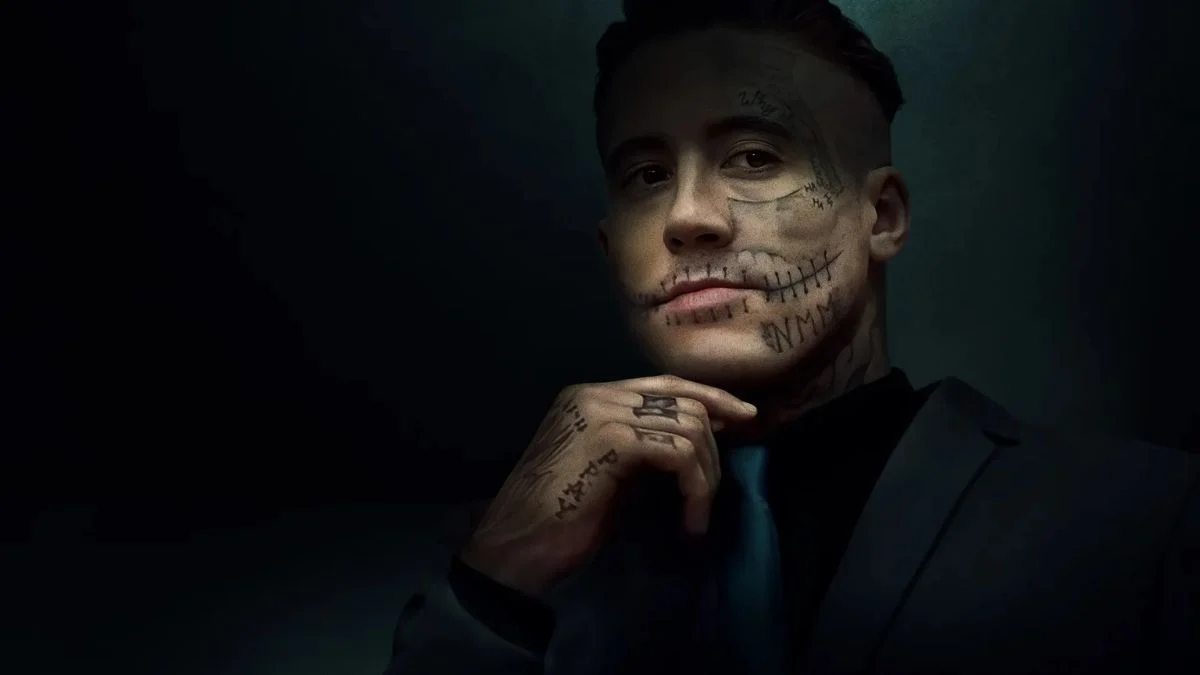
The rise of true-crime documentaries has conditioned audiences to expect disturbing stories, but Handsome Devil: Charming Killer (2026) pushes that discomfort into a new and unsettling territory. This three-part documentary miniseries does more than recount a double murder—it exposes how violence, charisma, and internet culture collided to transform a convicted killer into a viral obsession.
Released on January 20, 2026, the series examines the real-life case of Wade Steven Wilson, a Florida man sentenced to death for the 2019 murders of Kristine Melton and Diane Ruiz. Directed by Brian Ross and Rhonda Schwartz, the documentary methodically reconstructs the crimes, the investigation, Wilson’s 2024 trial, and the disturbing social media phenomenon that followed his arrest.
Streaming exclusively on Paramount+, with availability also on Apple TV, the series arrived with all three episodes released simultaneously—inviting binge-watching while confronting viewers with uncomfortable questions about attraction, notoriety, and moral boundaries.
In This Post:

What Is “Handsome Devil: Charming Killer” About?
At its core, Handsome Devil: Charming Killer is a true-crime documentary that explores how charm and violence can coexist, and how modern digital culture can amplify that contradiction. While the series meticulously details the facts of the case, it also examines a broader psychological and cultural phenomenon: hybristophilia, the attraction to individuals who commit violent crimes.
The documentary features interviews with:
- The families of Kristine Melton and Diane Ruiz
- Law enforcement officers involved in the investigation
- Wilson’s ex-girlfriend Mila Montanez (also referred to as Melissa Montanez in some reports)
- Wilson’s biological father
- Experts in criminal psychology and online fame culture
Rather than glamorizing Wilson, the series repeatedly juxtaposes his public image with the consequences of his actions, revealing how perception can dangerously diverge from reality.
Episode 1: “The Manhunt” — The Night That Changed Everything
Wade Steven Wilson’s Background: Charm, Volatility, and Control
Episode one opens by tracing Wade Steven Wilson’s early life, establishing a pattern of instability that predates the murders. Born in 1994, Wilson was adopted as a child and later reconnected with his biological father. The series documents his history of drug abuse, including methamphetamine and other substances, alongside repeated incidents of domestic violence and petty criminal behavior.
Friends and acquaintances describe him as charismatic yet volatile, a man capable of switching between charm and aggression without warning. His Joker-inspired tattoos, including the phrase “Why so serious?” etched onto his face, later became a disturbing focal point of his viral notoriety.
October 6–7, 2019: A Night of Escalation in Florida
The documentary carefully reconstructs the events of October 6–7, 2019, beginning at Buddah LIVE bar in Fort Myers, Florida.
Wilson arrived at the bar with his on-again, off-again girlfriend Mila Montanez. Tensions escalated when Wilson expressed a desire to use drugs. An argument followed. Wilson left the bar in Montanez’s car, abandoning her there.
What initially appears as a relationship dispute soon becomes the first domino in a sequence of irreversible events.

Meeting Kristine Melton: The Start of a Fatal Chain
At the bar, Wilson met Kristine Melton, a 35-year-old woman described by friends as vibrant, fun-loving, and fiercely independent. She was with her best friend Stephanie Sailors (also referred to in some accounts as Stephanie Johnson). A man named Jayson Shepard joined the group.
The night continued at Shepard’s home, where the documentary confirms that Wilson and Melton had consensual sex. Nothing in the interactions suggested what would follow.
Later, Wilson, Melton, and Sailors traveled to Melton’s home in Cape Coral. In the early morning hours—around 4 to 5 a.m.—Sailors left, leaving Wilson alone with Melton.
The Murder of Kristine Melton
According to the documentary, Wilson strangled Kristine Melton to death while she slept. He later claimed the act was impulsive, part of a drug-fueled “rampage.” However, forensic evidence presented in the series contradicts this portrayal.
Investigators identified:
- Ligature marks
- Defensive wounds
These details strongly suggested premeditation, undermining Wilson’s attempt to frame the killing as spontaneous.
Wilson attempted to dispose of Melton’s body by wrapping it in bedsheets, but abandoned the effort. Instead, he stole her car, setting the stage for the second murder.
The Assault on Mila Montanez and a Missed Arrest
Driving Melton’s stolen vehicle, Wilson went directly to Montanez’s spa business. In broad daylight, he assaulted her, busting her lip and attempting to force her into the car.
Neighbors intervened, and Montanez called the police. Body-camera footage, shown in the documentary, captures officers arriving at the scene. Despite their presence, Wilson managed to flee before officers could safely pursue him.
This moment becomes one of the documentary’s most haunting turning points—a narrow window where intervention might have prevented what came next.
Diane Ruiz: A Second Life Taken

Still on the run, Wilson encountered Diane Ruiz, a 43-year-old mother of two who worked as a bartender. She was walking to work when Wilson approached her.
Using deception, Wilson asked for directions to a school, convincing Ruiz to enter the car. Once inside, he strangled her.
When Ruiz survived the initial attack and attempted to escape, Wilson ran her over multiple times with the vehicle. Autopsy findings revealed shattered bones and severe internal injuries. He then dumped her body in a wooded area.
The documentary presents these events with restraint, allowing the facts themselves to convey the gravity of the crime without sensational framing.
Beyond the Crimes: Trial, Sentencing, and Internet Obsession
While Episode 1 focuses on the manhunt and murders, the series as a whole expands into the 2024 trial, where Wilson was convicted and sentenced to death. Courtroom testimony, forensic analysis, and victim impact statements are interwoven to show the lasting devastation inflicted on two families.
Equally unsettling is the exploration of Wilson’s rise as a viral “heartthrob.” Social media users circulated his mugshots, fixating on his appearance while minimizing or ignoring the violence behind the image. Experts interviewed in the series connect this phenomenon to hybristophilia, highlighting how internet culture can distort moral judgment.
Why “Handsome Devil: Charming Killer” Leaves a Lasting Impact

Unlike many true-crime documentaries, Handsome Devil: Charming Killer refuses to let viewers remain passive. It forces an examination of:
- How charm can mask danger
- How online fame can override empathy for victims
- How easily narratives shift when violence intersects with appearance
By centering the voices of victims’ families and grounding every revelation in verified evidence, the series maintains a clear moral anchor—never losing sight of the lives that were stolen.

Final Thoughts: A Necessary but Uncomfortable Watch
Handsome Devil: Charming Killer (2026) is not an easy series to watch, nor is it meant to be. Its power lies in its restraint, its structure, and its refusal to separate crime from consequence. By unfolding information gradually and confronting viewers with both facts and cultural reflection, it ensures the story lingers long after the final episode ends.
For audiences seeking a deep, responsible true-crime documentary that challenges rather than entertains, this series stands as one of the most unsettling releases of the year.


Leave a Reply