

Warning: Complete Spoilers Ahead!
Garden of Words ending explained – if you’ve watched Makoto Shinkai’s emotionally complex anime and left confused about what really happened, you’re not alone. This 46-minute film explores an unconventional relationship between two people seeking refuge from their struggles. Here’s the complete Garden of Words story summary with full spoilers and the meaning behind its bittersweet ending.
Garden of Words: Main Characters
Takao is a 15-year-old high school student with dreams of becoming a shoemaker. He lives with a dysfunctional family and often skips morning classes on rainy days to practice his craft.

Yukari Yukino is a 27-year-old woman dealing with severe personal issues that prevent her from functioning normally in public life. She experiences physical anxiety that manifests in an unusual symptom: she can only taste chocolate and beer.

How Takao & Yukari Meet?
On rainy mornings, Takao visits Shinjuku Gyoen National Garden to sketch shoe designs and escape his home life. During one of these visits, he encounters Yukino sitting in a pavilion, drinking beer and eating chocolate for breakfast.

They begin meeting regularly at the same spot, but only on rainy days. Crucially, they don’t exchange names or personal information at first. Their conversations remain casual and private, creating a bubble separate from their regular lives where they can be themselves without judgment.
The Developing Relationship
Throughout their rainy-day meetings, Garden of Words Takao and Yukari form a deep connection. Takao finds in Yukino an adult who treats him as an equal rather than looking down on him like a child. He shares his passion for shoemaking with her, and she becomes his inspiration.

Yukino, meanwhile, finds comfort in Takao’s presence. His passionate approach to life and his respect for her provide warmth she’s been missing. She appreciates that he doesn’t pity her like others do, including her ex-boyfriend.
The Garden of Words rain metaphor serves as a central theme throughout the film. It creates their private world, separating them from reality and their everyday limitations. Rain also symbolizes love in the story because neither can be stopped once it starts pouring.
The Turning Point in Garden of Words
The turning point comes when Takao discovers where Yukino works. She is actually a teacher at his own high school, though not one of his teachers directly.
The film reveals that Yukino has been absent from work due to workplace bullying. Female students spread malicious rumors about her having an affair with a male colleague, which caused her severe emotional trauma. This incident is why she developed her taste disorder and anxiety about returning to normal public life.
When Takao learns the truth, the dynamic between them shifts dramatically. What was once an equal relationship in their private garden sanctuary becomes complicated by the reality of their age difference– a 12-year gap that makes their connection problematic.

Garden of Words: Shoes Symbolism and Walking Again
Throughout the film, Takao works on making a pair of shoes specifically for Yukino. The Garden of Words shoes symbolism is central to understanding the film’s deeper meaning.

The shoemaking process represents their relationship: not fully confident, still developing, and requiring patience. In Japanese culture, shoes are removed when entering private spaces like homes, so they represent tools for navigating the public world. Takao creating shoes for Yukino symbolizes him helping her learn to walk through society again after her trauma.
At the same time, through this process, Takao himself learns how to walk forward in life. Both characters are social outcasts, learning to cope with what they have.
The Climactic Confrontation
Near the end of the film, Takao confesses his feelings to Yukino. He tells her he wants to be with her and support her.
Yukino, recognizing the impossibility of their situation due to their age gap and her role as a teacher, rejects him. She explains that she must return to work and face her problems rather than hiding.
Takao, feeling hurt and betrayed, lashes out. He shouts at her, saying that if they had known more about each other earlier, their relationship would have turned out differently. He accuses her of using him for emotional support while never intending to reciprocate his feelings.
His outburst reflects his frustration at discovering that she never saw him as an equal after all, that she still viewed him as a child despite their connection.
Garden of Words Emotional Ending – The Resolution
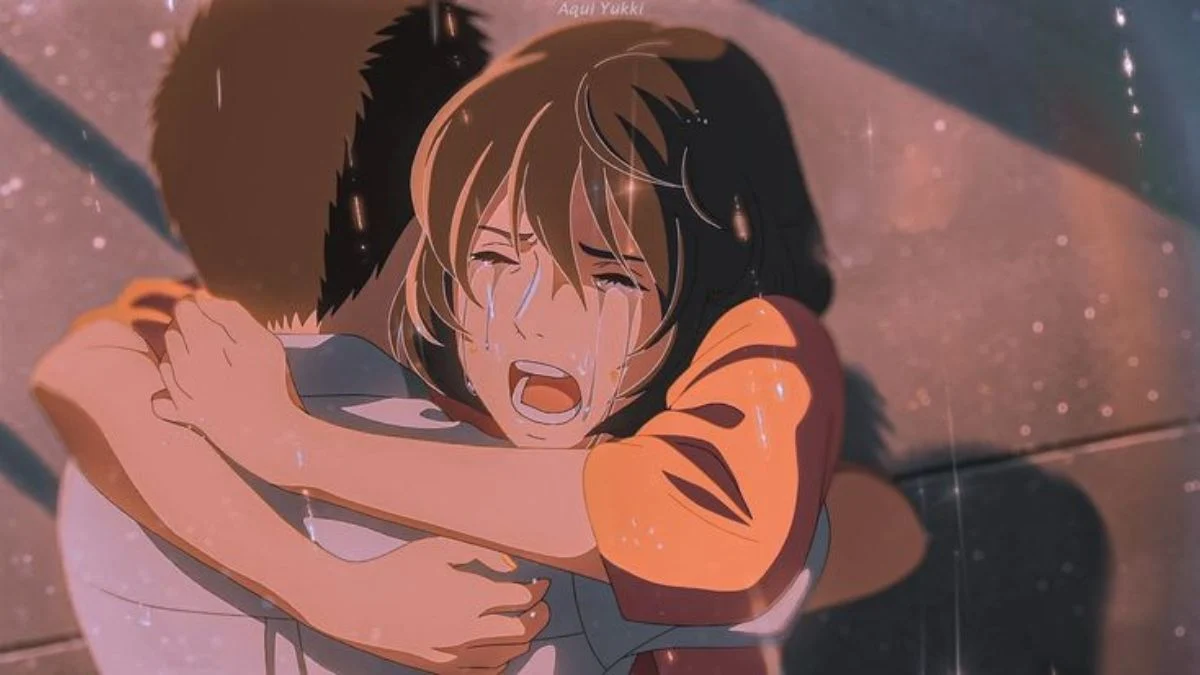
After Takao leaves in anger, Yukino runs after him in the rain. When she catches up to him on the stairs, she breaks down completely – creating one of the most emotionally charged ending moments in Shinkai anime.
Through tears, she reveals her true feelings. She tells him that she wanted to be with him too, that their meetings meant everything to her, and that he helped her more than he knows. She admits she was falling in love with him, but couldn’t act on those feelings because of their circumstances.
This vulnerable confession proves to Takao that she did see him as a peer and that her rejection came not from viewing him as a child but from recognizing the unsustainable nature of their relationship, given their life stages and societal expectations.
They embrace while crying together, acknowledging the deep impact they’ve had on each other’s lives while accepting that they cannot be together romantically at this time.

What Happens at the End of Garden of Words – Ending Explained
The anime ending concludes with both characters moving forward separately, having healed each other through their time together. Yukino returns to work at the school in her hometown in Shikoku, wearing the shoes Takao made for her. This shows she has found the strength to walk through public life again and stopped hiding in the shadows, literally wearing his support as she steps back into society.
Takao continues pursuing his dream of becoming a shoemaker with renewed determination, having learned from their relationship how to navigate his own path forward. The way they carried each other in their memories became a source of motivation for both to pursue their respective journeys.
The Garden of Words post-credits scene implies they may reconnect in the future when their circumstances are different. The Garden of Words epilogue meaning suggests hope without guaranteeing a romantic reunion, leaving their ultimate fate open to interpretation.
Garden of Words Forbidden Love – Why They Part Ways
Understanding the Garden of Words forbidden love aspect is key to grasping why they separate. The relationship between Takao and Yukino had served its purpose – they had healed each other during their darkest moments and were now ready to move on with their lives.
For Takao, this meant pursuing his dream of becoming a shoemaker with the confidence and maturity he gained from knowing Yukino. For Yukino, it meant finally stepping out of the shadows where she had been hiding and returning to face her work and life with courage.
The 12-year age gap, combined with her position as a teacher at his school, creates an impossible situation for the present moment. Makoto Shinkai takes a realistic approach to this age-gap relationship, showing that even genuine feelings and mutual benefit don’t make every connection viable at every moment in time.
They needed to separate not because their relationship was destructive, but because they had given each other what was needed – the strength to walk forward independently. The memory of their time together and how they supported each other became the foundation that motivated them to pursue their individual journeys with hope.
Garden of Words Rain Metaphor and Symbolism Explained
The Garden of Words rain metaphor: Creates a private bubble separating them from reality and their everyday limitations. Rain cannot be controlled, just like their growing feelings for each other. The rain also represents the temporary nature of their meetings – beautiful and necessary, but not meant to last forever.
Garden of Words shoes symbolism: Represent learning to walk through life again, both literally for Yukino returning to public society and metaphorically for both characters moving forward after trauma. The completed shoes symbolize their completed healing process.
The Garden: Shinjuku Gyoen serves as a sanctuary from societal expectations where two social outcasts can exist authentically without judgment.
Garden of Words poetry meaning: The film’s title references ancient Japanese poetry (tanka) about unspoken emotions and longing, reflected in how the characters communicate through subtext rather than direct confession.
Not Sharing Names Initially: Reflects how people connect anonymously on a human level, revealing what they choose rather than being defined by their social roles.

Garden of Words Loneliness Theme
The Garden of Words loneliness theme is central to understanding this Makoto Shinkai film. He intended it for people suffering from loneliness or feeling socially incomplete. However, the story doesn’t treat loneliness as something that must be fixed immediately.
Instead, it serves as a healing phase. The film shows that sometimes we need these private connections to heal and grow stronger before we can face the public world again. Both characters were sheltering from their problems, and their relationship gave them the strength to eventually confront reality. They carried the warmth of their connection as motivation to keep moving forward even after parting ways.
Garden of Words Review Analysis – Final Thoughts
Our Garden of Words review analysis reveals why this remains one of the most discussed Shinkai anime films. Available on Netflix in many regions, the film stands out as one of Makoto Shinkai’s most visually stunning works, with breathtaking animation of rain, gardens, and Tokyo scenery. The 46-minute runtime keeps the story focused and emotionally intense.
The film’s greatest strength is its authentic portrayal of human connection. By limiting introspective monologues and focusing on natural conversation, Shinkai creates realistic interactions that let viewers insert themselves into the story. You know only what the characters know, creating genuine suspense about their relationship.
The ending, while bittersweet, feels honest rather than manipulative. Not every meaningful connection results in a traditional happy ending, and the film respects its characters enough to acknowledge this reality. Instead of presenting their separation as tragic, the film shows it as a natural conclusion to a healing relationship that served its purpose.
The symbolism runs deep without becoming heavy-handed. The rain, shoes, and seasonal changes all reinforce the themes without requiring explanation, rewarding viewers who pay attention to visual details.
Some viewers may find the age difference uncomfortable, which is intentional. The film doesn’t romanticize this aspect but rather presents it as the core obstacle that makes their relationship impossible despite their genuine feelings.
The main weakness is the short runtime. While the concise storytelling works overall, certain character motivations could have been explored more deeply. Yukino’s workplace situation and Takao’s family life feel somewhat underdeveloped.
Final Verdict on the Garden of Words Ending
Garden of Words is a mature, beautifully crafted exploration of connection, loneliness, and healing. It’s a film that trusts its audience to understand complex emotions without spelling everything out, making it one of Shinkai’s most artistically ambitious works.
The Garden of Words ending may not satisfy those seeking traditional romance, but it offers something more valuable: an honest portrayal of two people helping each other learn to walk through life again, carrying each other’s memories as motivation to pursue their individual dreams.


Leave a Reply