

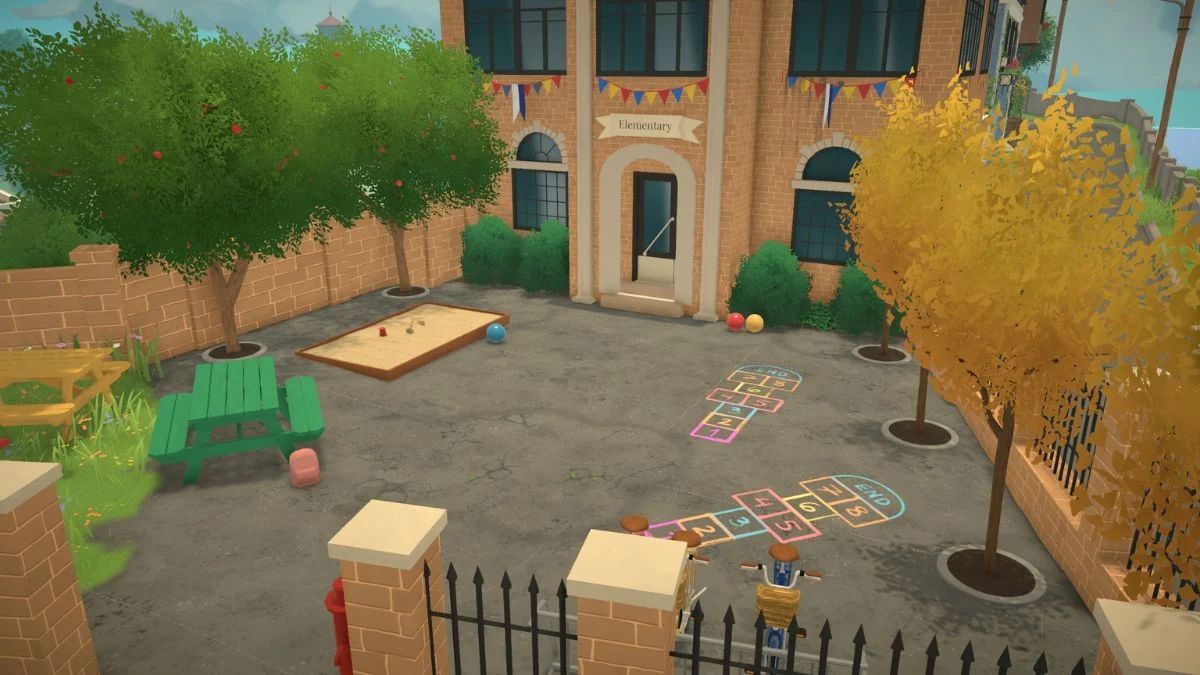
Paralives launched on Steam in Early Access on May 25, 2026, and its school system for young Parafolks is already one of the most talked-about features. If you have child or teen Paras in your household and cannot figure out how homework works, you are not alone. Here is everything confirmed so far about how the homework system functions, what subjects your Paras study, and how school performance actually affects them.
Which Parafolks Go to School in Paralives?
Not every Para in your household needs to worry about homework. School is only available to Child, Preteen, and Teenager Parafolks in Live Mode. Adults follow the standard Career system instead. So if you are managing a mixed household, only your younger Paras will have school obligations to track.
It is also worth knowing upfront that schools currently function as rabbit holes. This means your Paras will leave the lot, attend school off-screen, and return home afterwards. There is no active school gameplay in the current Early Access build, but this is expected to develop further as the game grows.

How the School Day Works
Enrolled Paras follow a structured daily routine tied to school hours. Paras automatically leave for school in the morning when their schedule requires it, so you do not need to manually send them off each day. School runs during set daytime hours, and your young Paras return home afterwards, sometimes bringing homework or even a virus with them.
How to Make Your Para Do Homework
This is the question that has tripped up a large number of players since launch, and the answer is simpler than most expect.
You access homework through the computer. You do not need to check the household inventory or click on desks and bookcases. Simply click on a computer in your household and the option to do homework appears there directly.
Key points to remember:
- Homework is not assigned every day. Paras typically receive it a few times per week rather than daily.
- When homework is available, the computer is where you access and complete it.
- Clicking furniture like desks or bookcases will not trigger the homework interaction.
- Completing homework gives small boosts to grades and overall school performance, so it is worth staying on top of whenever it appears.
So if you are playing with a child Para like Eli and he needs to complete his science homework, head straight to any computer in the household and look for the homework option in the interaction menu.
School Subjects in Paralives
Students attend classes across multiple subjects, and each subject follows an A/B/C/D/F grading model. Subjects can be either mandatory or optional, though the process for picking elective subjects has not been fully revealed yet.
Here are the confirmed subjects for Elementary School so far:
| Subject | School Level | Type |
| Art | Elementary School | Mandatory |
| Math | Elementary School | Mandatory |
| Music | Elementary School | Mandatory |
| Parli | Elementary School | Mandatory |
| Physical Education | Elementary School | Mandatory |
| Science | Elementary School | Mandatory |
The developers have confirmed that details about how subjects influence personality, Skills, Knowledges, and Career prospects are still being finalised during Early Access and much of this remains unconfirmed.
School Obligations Your Paras Must Meet
The school system in Paralives comes with real consequences if you neglect it. Your Para has three core obligations to stay on top of:
- Getting to school on time in the morning. However, being late currently has no in-game repercussion, as punctuality consequences are a planned feature for a future update.
- Maintaining good grades across subjects.
- Completing homework whenever it is assigned.
Failing to meet these obligations can get Child Services involved, so it is worth keeping a close eye on your young Para’s performance, especially during the early stages of a playthrough.
How School Performance Works
School performance in Paralives functions similarly to job performance for adult Parafolks. Two key factors influence how well a student performs:
- Mood plays a direct role in school performance. A Para who is happy and well-rested will perform better than one who is stressed or unwell.
- Completing homework also contributes positively to overall performance.
If a Para’s performance drops and stays low, they will receive a strike. The system builds pressure gradually rather than punishing players immediately, which gives you time to course-correct before things escalate.

Why Grades Actually Affect Gameplay in Long-Term
Grades are not just a short-term concern. Low grades can reduce future Career opportunities and limit social perks as your Para grows older, particularly for Teenagers who are closer to entering adult life. This means that neglecting school performance in the early Lifestages can have a knock-on effect on the kind of adult your Para becomes. Keeping grades healthy from the start is a solid investment in your Para’s long-term story.
School Perks: Daily Cards That Shape Your Para’s Future
One of the more interesting features of the school system is the School Perks mechanic. At the end of every school day, your student Para receives 3 perk cards to choose from. You must pick one.
These cards can:
- Improve a grade in a specific subject
- Boost overall learning abilities
- Shape your Para’s broader school experience over time
This mechanic adds a light strategy layer to managing school-age Paras, because the choices you make each day can gradually build a stronger or weaker student over time.
Can Teenagers Work Alongside School?
Yes, but only Teenagers. Among all underage Paras, only Teenagers can hold a job at the same time as attending school. However, these are not traditional part-time jobs. Instead, they are occupations where the work schedule happens to be compatible with school hours, using the same Career system that adults use.
Child and Preteen Paras cannot work at all, so their focus stays entirely on school performance, homework, and grades.
Getting Sick at School
It is also worth knowing that Paras can catch a virus at school and come home unwell. That virus can then spread to other household members who stay in close proximity. Being sick directly affects both learning speed in class and school performance, so it is worth addressing quickly.
If a young Para catches the digestive system virus specifically, they can ask a household member with the Good at Taking Care of Others Social Perk to prepare chicken noodle soup, or visit the hospital for treatment. Notably, it does not currently appear possible to call in sick.
Storyteller Mode and School Settings
If you want more control over how demanding the school system feels in your playthrough, Storyteller Mode lets you adjust school-related settings directly. This includes options like strike thresholds and how strictly the game enforces school obligations. It is a useful tool for players who want a more relaxed experience or, on the other hand, a more challenging one without jumping straight into the deep end of consequences.

What Is Still Being Developed
The developers have been transparent about the fact that much of the school system is still being refined during Early Access. A few things confirmed as planned or subject to change include:
- Currently, all lifestages share the same homework, but this will change in future updates.
- Active school gameplay is not in the launch build. Schools are currently rabbit holes, with on-lot school experiences planned for later.
- Private schools are not available at launch, with all current schools being public. Private schools are being considered for later updates.
- Two school types are expected at launch: Elementary and High School. However, this list may still evolve.
- The punctuality system for late arrivals is planned but not yet active.


Leave a Reply