


A powerful earthquake measuring between magnitude 6.8 and 7.1 struck Kumamoto Prefecture on Japan’s southern island of Kyushu on 28 July 2026, leaving at least 13 people dead, hundreds injured, and others still missing or trapped beneath collapsed structures. While Japan is one of the world’s most earthquake-prepared nations, this disaster once again demonstrated how rapidly a single seismic event can escalate into multiple life-threatening emergencies.
The tragedy unfolded beyond the initial shaking. A devastating explosion and partial collapse at Aeon Mall Kumamoto, widespread structural failures, landslides, transport disruption, and continuous aftershocks turned an already dangerous situation into an ongoing rescue operation. As of 29 July 2026, emergency crews continued searching through rubble while authorities warned residents that the danger had not yet passed.
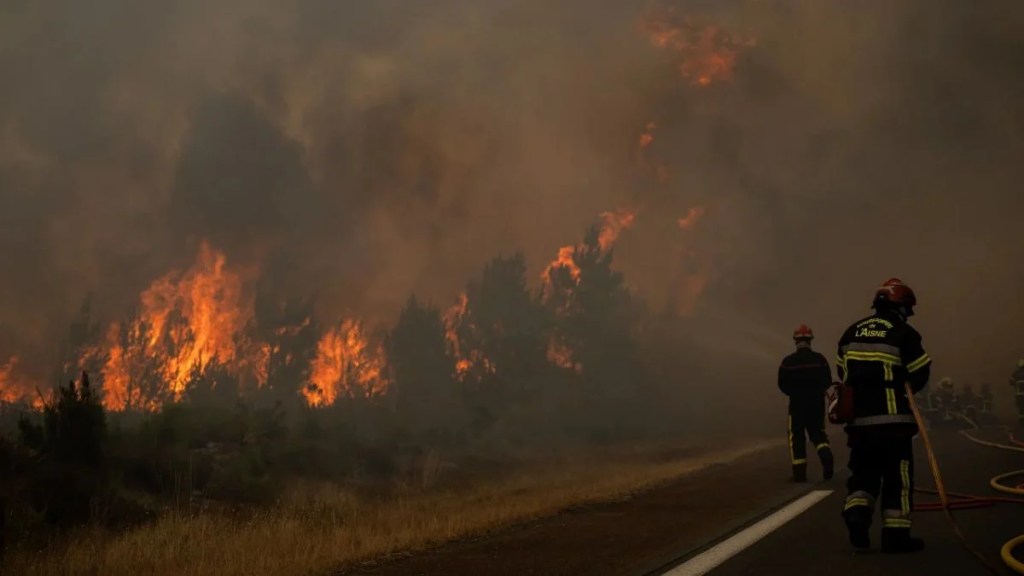
Natural disasters have tested emergency responders across the world this summer, including a wildfire crisis in Europe that has already displaced more than 300,000 people. To know more, read our article Europe’s Wildfire Emergency Explained: Why More Than 300,000 People Have Been Forced to Flee France and Spain
A familiar fault line delivers another devastating blow
The earthquake struck at 16:27:15 JST (07:27:15 UTC) on Tuesday, 28 July 2026. According to the Japan Meteorological Agency (JMA), it registered magnitude MJMA 7.1 at a depth of around 10 km, while the U.S. Geological Survey (USGS) measured it at Mw 6.8, locating the epicentre approximately 5 km east of Uto in Kumamoto Prefecture. The intense shaking lasted about 16 seconds.
Authorities identified it as a strike-slip earthquake, most likely involving the southern section of the Hinagu Fault, part of the same fault system that ruptured during the devastating 2016 Kumamoto earthquakes. The USGS reported a bilateral rupture across an estimated 40 × 15 km fault segment, with maximum slip approaching 2 metres at depth.
The JMA officially named the event the 2026 Kumamoto earthquake (令和8年熊本地震).
Maximum shaking reached Shindo 7, the highest level on Japan’s seismic intensity scale, in Uki City and Hikawa Town, while Shindo 6+ was recorded across parts of Kumamoto City (Minami Ward), Yatsushiro, Uto, Misato, and Mashiki.
The shaking extended well beyond Kyushu. Strong tremors were felt across neighbouring prefectures including Ōita, Fukuoka, Nagasaki, Kagoshima, Saga, and Miyazaki, while residents in South Korea, particularly Busan, and parts of China including Shanghai, Ningbo, and Suzhou also reported feeling the earthquake.
Despite concerns, a tsunami advisory for the Ariake and Yatsushiro seas was later cancelled after no significant waves were recorded, and authorities confirmed no abnormalities at the nearby Sendai and Genkai nuclear power plants.

Extreme weather has also been forcing large-scale precautions closer to home this week, with a Gulf Coast state bracing for a tropical storm’s landfall. For more on that, read our post Tropical Storm Bertha Nears Louisiana: Beaches Close, Sandbags Fill as Gulf Coast Braces for Flooding and Powerful Winds
Timeline: How the disaster unfolded
| Time / Event | Official Details |
| 16:27:15 JST (28 July) | Magnitude 6.8–7.1 earthquake strikes Kumamoto Prefecture. |
| Duration | Approximately 16 seconds of intense shaking. |
| Maximum intensity | Shindo 7 recorded in Uki City and Hikawa Town. |
| About one hour later | Explosion at Aeon Mall Kumamoto followed by partial second-floor collapse. |
| Evening of 28 July | At least 61 aftershocks (Shindo 1+) recorded, including a notable M6.1 event. |
| 29 July | Rescue teams continue searching collapsed buildings while casualty figures continue to evolve. |
The mall explosion became one of the disaster’s defining tragedies
Among the hardest-hit locations was Aeon Mall Kumamoto in Kashima Town, where an explosion—widely reported as possibly gas-related—occurred roughly one hour after the main earthquake. Rescuers reported smelling gas as they searched the scene, although investigators have not yet confirmed the cause.
The blast partially collapsed the mall’s second floor, blew away exterior walls, and exposed the building’s steel framework. Dashcam footage and other videos captured the powerful explosion and rising smoke.
Initial reports suggested 20–30 employees were unaccounted for. Authorities later confirmed at least three deaths, including two women in their twenties, while several people were rescued, including reports that eight individuals were pulled from the rubble, one in cardiopulmonary arrest. The mall operator later stated that around four people remained missing or trapped.
The shopping complex employed approximately 2,700 workers across nearly 200 shops and services. Police bodycam footage revealed scenes filled with crushed debris, hanging electrical cables, and shop interiors that had become virtually unrecognisable.

Firefighters battling dangerous conditions have also faced heavy losses elsewhere this year, with a fourth crew member recently succumbing to injuries from a Colorado wildfire burnover. To learn more, check out our article Fourth Firefighter Dies Weeks After Colorado Burnover as Massive Oregon Wildfire Threat Grows: What Happened to Nathan Matthews?
Elsewhere, tragedy unfolded across Kumamoto Prefecture. At the Nippon Paper Industries factory in Yatsushiro, a collapsing chimney killed two people and initially trapped several others. Authorities also reported collapsed houses, bridge failures, ceiling collapses including at Aeon Mall Uki, landslides in the Mount Mayuyama area facing Shimabara, fires, and a freight train derailment near Yatsushiro Station.
Additional fatalities included one Vietnamese national killed by a falling crane, while Kumamoto Castle, still undergoing restoration after the 2016 earthquakes, sustained further damage. At a local kindergarten, a teacher shielded students after a wall partially collapsed, with no serious injuries reported.
Wildfires closer to the US have also caused injuries to first responders in recent days, with a fast-moving blaze near Pleasanton, California, growing past 1,000 acres. To see the details, read our article Firefighter Injured as California’s Little Fire Explodes Past 1,000 Acres Near Pleasanton, Triggering Urgent Evacuations
Expert and official reaction
Prime Minister Sanae Takaichi established an emergency operations centre soon after the disaster and expressed condolences to victims’ families. Stressing the urgency of rescue operations, she stated that “every second counts” and described efforts to reach survivors as a “race against time”.
Approximately 3,600 Self-Defense Forces personnel, alongside police, firefighters, and emergency responders, were deployed to assist rescue operations. Evacuation centres opened across affected communities while crews continued working overnight at the mall, factory, collapsed homes, and other damaged sites.
Authorities also warned residents that dozens of aftershocks had already occurred, including at least 61 measurable tremors by the evening of 28 July, with long-period ground motion reaching the highest Class IV in the Kumamoto region.

American travellers abroad have also been urged to stay alert this month, after the US State Department issued a global advisory tied to rising Iran-linked tensions. To know more, read our article US State Department Issues Global Travel Warning After Deadly Iran-Linked Attack: What Americans Abroad Need to Know
What’s next?
The confirmed death toll stands at at least 13, although officials noted that some cases remain under investigation to determine whether they were directly linked to the earthquake. Hundreds of people have been injured, with reported figures exceeding 387, while the number of missing persons continues to change as rescue operations progress.
Power outages affected approximately 40,000–48,300 households, hospitals struggled with electricity shortages and extreme summer heat, transport services remained heavily disrupted, sections of the Kyushu Expressway were closed, JR Kyushu, Shinkansen, and local rail services were suspended, and Kumamoto Airport’s runway also experienced disruption.
For many residents, the earthquake reopened painful memories of the 2016 Kumamoto earthquakes, which claimed around 278 lives across the region. International condolences, including a message from Taiwan’s president, underscored the global concern surrounding the unfolding disaster.
As rescue operations continue through 29 July 2026, authorities emphasise that casualty figures, missing persons, injury totals, and the exact cause of the Aeon Mall Kumamoto explosion remain subject to change as investigations and recovery efforts continue.

Wildfire smoke has also created hazardous conditions well beyond fire zones this year, drifting across the US and triggering widespread air quality alerts. To see the details, read our article Why Are Skies Across the US Turning Orange? Canadian Wildfire Smoke Triggers Widespread Air Quality Alerts
Disclaimer
This article has been prepared following thorough research based on the verified information provided from official agencies and widely reported updates available as of 29 July 2026. Because this remains a developing event, casualty figures, missing persons, injury totals, rescue operations, and the cause of the Aeon Mall Kumamoto explosion may change as authorities continue investigations and release updated information.
Sources:
Image Credit:
- Tomohiro Ohsumi / Getty Images


Leave a Reply