

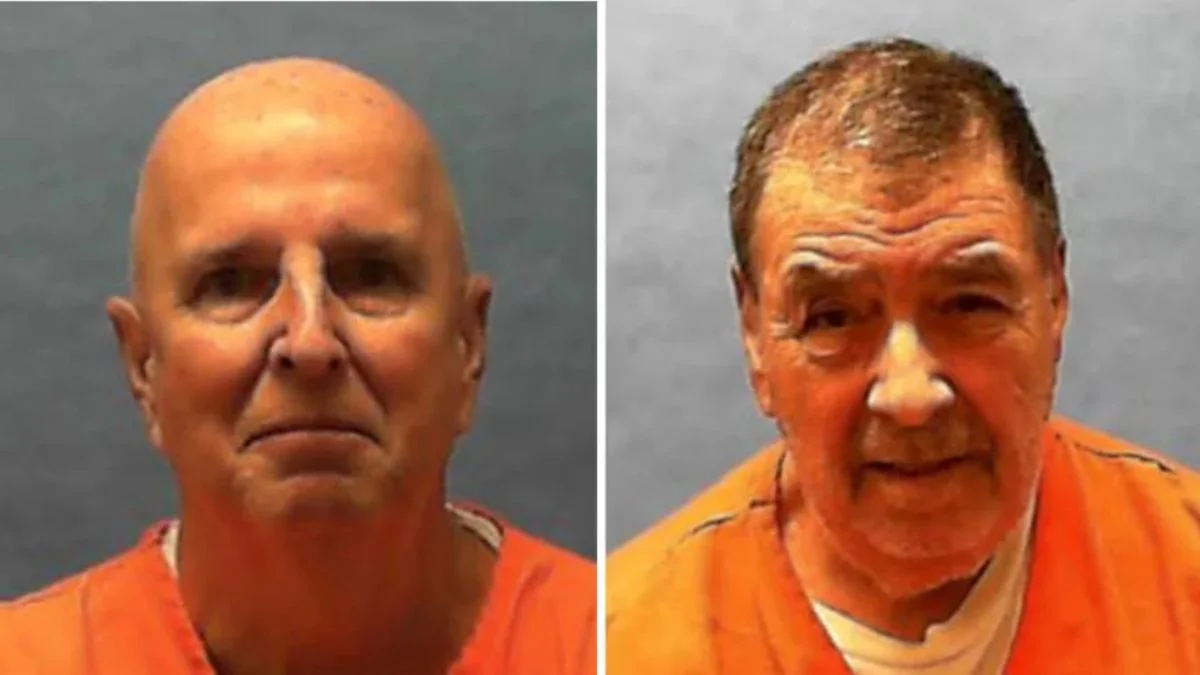
Florida carried out its first modern-era double execution on Tuesday, July 28, 2026, marking one of the most significant developments in the history of the American death penalty since capital punishment was reinstated in 1976. Within just a few hours, James Aren Duckett, 68, and Dominick Anthony Occhicone Jr., 80, were executed by lethal injection at Florida State Prison near Starke after decades on death row.
The unprecedented schedule made history for several reasons. It was Florida’s first time executing two inmates on the same day since May 12, 1964, when Emmett C. Blake and Sie Dawson were executed in the electric chair. It also became the first double execution by any U.S. state since Arkansas in 2017 and only around the 10th instance of multiple same-day executions by a single state in the modern death penalty era.
The executions also underscored Florida’s accelerated use of capital punishment under Gov. Ron DeSantis, with the state now leading the nation in executions.

Cases involving violence against children have continued to draw painful scrutiny elsewhere this year as well, including a school shooting case that recently concluded with a guilty plea. To know more, read our article Apalachee High School Shooting: The Chilling Evidence Colt Gray Left Behind Before Pleading Guilty to All 55 Charges
Two Different Crimes, Two Decades-Long Death Row Cases
Although the executions occurred on the same day, the two men arrived there through entirely separate cases spanning nearly four decades.
| Time (ET) | Name | Age | Execution Details |
| 1:19 p.m. | James Aren Duckett | 68 | Pronounced dead following a three-drug lethal injection. |
| 6:13 p.m. | Dominick Anthony Occhicone Jr. | 80 | Pronounced dead after a three-drug lethal injection, becoming the oldest person executed in Florida’s modern history and the second-oldest executed in the modern U.S. death penalty era. |
Questions over how a death is examined and explained have remained central in other ongoing cases as well, including one hiking death that took investigators months to resolve. To read more on that investigation, see our article Big Sur Hiker Death Mystery Finally Solved: Why Joanna Ruth Shields’ Case Took Months to Reach a Shocking Conclusion
James Aren Duckett: Former Police Officer Convicted in the Murder of an 11-Year-Old Girl
Duckett, born September 4, 1957, was a Mascotte, Florida police officer and the only officer on patrol on the night 11-year-old Teresa Mae McAbee disappeared on May 11, 1987.
Teresa had left home to buy a pencil from a convenience store. Witnesses later testified they saw Duckett place her into his patrol car after questioning her and a 16-year-old boy near the store.
Her body was discovered the following day in Knight Lake, less than a mile away. She had been sexually assaulted, strangled and drowned.
The prosecution’s case was largely circumstantial, relying on evidence including a pubic hair on the victim’s clothing that an FBI examiner testified matched Duckett, palm prints from both Duckett and Teresa on the hood of his patrol car, matching tire tracks, a period of unexplained radio silence, and Duckett’s handling of the missing-person report. Three teenage girls also testified that Duckett had previously made sexual advances toward them or offered them rides.
Duckett was convicted in 1988 of first-degree murder and sexual battery, with the jury recommending the death penalty.
He maintained his innocence throughout his life.
In March 2026, his execution was temporarily stayed for DNA testing, including testing related to underwear evidence. The results proved inconclusive, the stay was lifted, and his execution was rescheduled for July 28 alongside Occhicone’s already scheduled execution.
Some advocates and a retired detective continued raising innocence concerns regarding the disputed hair evidence and other aspects of the investigation. Prosecutors maintained the overall circumstantial evidence established guilt. Duckett had also been considered a suspect—though never charged—in two other unsolved Florida killings involving young women and girls during 1986–87.
When offered a final statement before execution, Duckett simply replied:
“No sir.”
He was pronounced dead at 1:19 p.m. ET.

Families coping with violence in their own homes have also been part of the news cycle recently, including a case in which the wife of an NFL coach was shot at their family residence. For more on that case, read our article Eric Bieniemy Leaves Chiefs Training Camp After Wife Mia Is Shot at Family Home—What Authorities Say Happened Next
Dominick Anthony Occhicone Jr.: Nearly 40 Years on Death Row
Dominick Anthony Occhicone Jr., born August 29, 1945, in Carmel, New York, lived a troubled life marked by alcoholism, anger, and failed relationships.
On June 10, 1986, after heavily drinking, he went to the Holiday, Florida home of his former fiancée Anita Gerrety’s parents, Raymond Artzner (66) and Martha Artzner (62), blaming them for the end of his engagement.
After disconnecting the home’s telephone lines, Occhicone returned armed. He shot Raymond Artzner in the face, forced his way inside and fatally shot Martha Artzner multiple times, including in the chest. Raymond identified Occhicone before later dying in hospital, while Anita Gerrety and her daughter escaped.
Occhicone admitted carrying out the shootings but argued they were not premeditated, citing intoxication, depression and emotional distress.
A jury convicted him in 1987 on two counts of first-degree murder and recommended death by a 7–5 vote. The judge imposed death for Martha’s murder and life imprisonment for Raymond’s murder. Under current Florida law, which requires at least eight jurors to recommend death, that same jury vote would no longer support a death sentence.
His attorneys later argued that his advanced age, kidney and prostate problems, frailty and dependence on assistance for daily activities made execution unconstitutional. The U.S. Supreme Court ultimately rejected his final appeal only hours before the execution.
His final meal reportedly included eggplant parmesan, garlic bread, salad and a Pepsi.
After spending time with his daughter the previous day, Occhicone’s final statement included thanks to Christian visitors over the years before saying:
“I know it don’t mean much, but I’m sorry. I never meant to do what I did.”
He was pronounced dead at 6:13 p.m. ET.

Families of the missing have also pressed for independent answers in other unresolved cases this year, including one where new autopsy findings were recently shared as an investigation continued. To see those developments, read our article Nolan Wells Independent Autopsy Update: Ben Crump Reveals New Findings as Mississippi Investigation Enters Critical Phase
Timeline: How Florida’s Historic Double Execution Came Together
- May 11, 1987: Teresa Mae McAbee is murdered.
- 1988: Duckett is convicted and sentenced to death.
- June 10, 1986: Raymond and Martha Artzner are attacked.
- 1987: Occhicone is convicted; receives death sentence for Martha’s murder.
- March 2026: Duckett receives a temporary stay for DNA testing.
- DNA testing returns inconclusive, and the stay is lifted.
- July 28, 2026: Florida schedules and carries out both executions after the Florida Supreme Court and U.S. Supreme Court reject final appeals and stay requests.
Expert and Public Reaction to Florida’s Double Execution
The historic schedule immediately reignited the national debate over capital punishment.
Critics, including the Death Penalty Information Center and anti-death-penalty organisations, questioned the decision to conduct two executions in one day, highlighting Duckett’s contested evidence and innocence claims, Occhicone’s advanced age, the fact that his death sentence stemmed from a 7–5 jury recommendation, the nearly 40-year delays, and the broader pace of executions in Florida.
Supporters and state officials argued the executions reflected the seriousness of the crimes, the extensive appeals process afforded over decades, and the importance of providing closure for victims’ families.
Lawyers also unsuccessfully argued that conducting two executions on the same day increased the risk of procedural errors during lethal injection.
What’s Next for Florida’s Death Penalty?
The July 28 executions further establish Florida as the nation’s busiest death penalty state under Gov. Ron DeSantis. Both men had been housed on death row at facilities including Union Correctional Institution before being transferred for their execution warrants at Florida State Prison.
The events are expected to remain a major point of discussion in the ongoing national debate over capital punishment, particularly concerning elderly death row inmates, innocence claims, non-unanimous jury recommendations under older laws, and the state’s increasing pace of executions.

One such case still in its earlier stages involves newly revealed forensic evidence tied to the tragic death of a 14-year-old girl. To read more on that ongoing investigation, see our article D4vd Murder Case: Prosecutors Reveal Chilling Forensic Evidence They Say Links David Anthony Burke to the Death of 14-Year-Old Celeste Rivas Hernandez
Disclaimer
This article is based on thorough research compiled from verified public records, court documents, official execution records, and reporting from multiple credible news organisations. Every effort has been made to present the available facts accurately and in context. Ongoing legal, historical, or investigative developments may provide additional information after publication.
Sources:
Image Credit:
- Florida Department of Corrections


Leave a Reply