

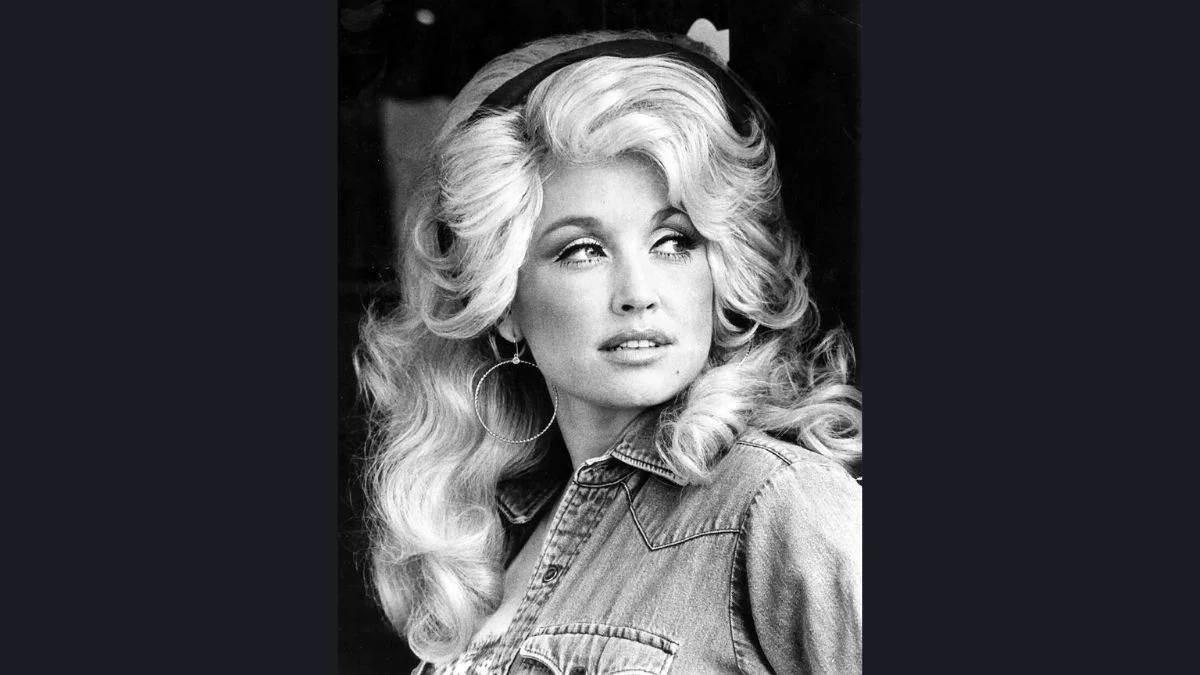
Long before Dolly Parton became one of the most universally beloved entertainers in the world, she had already learned how to handle people who underestimated her. One unforgettable example came during her interview with Barbara Walters, when the country star faced blunt questions about her Appalachian roots, appearance, marriage and whether the public saw her as little more than a joke.
The interview has resurfaced repeatedly over the years and drew renewed attention following Parton’s death at age 80 on August 25, 2026. What still makes the exchange hit decades later is not just Walters’ direct questioning, but the way Parton refused to become defensive. Instead, she calmly turned assumption after assumption into an explanation of exactly who she was.
More Celebrity News A New Chapter in Nashville: Before her passing, Dolly Parton had opened up about her recovery alongside a major new hometown expansion. For more, read our report on Dolly Parton’s Health Update and Nashville Expansion.
Dolly Parton’s Barbara Walters Interview: Was It 1977 or 1978?
The date of the famous interview has caused some confusion online. It is frequently described as a 1978 Barbara Walters interview, but archival material identifies the conversation with December 6, 1977.
ABC News has preserved portions of the interview, including Parton discussing life on the road and her ambition to become a superstar, while CNN has also described the footage as part of a 1977 interview. Recent reporting suggests the simplest explanation: the conversation was conducted in December 1977 and material from it was broadcast in 1978.
| Time | Event |
| December 6, 1977 | Archival material identifies the Dolly Parton interview |
| 1978 | Some versions and reporting associate material with the broadcast |
| Age 31 | Dolly Parton’s age during the interview |
At the time, Parton was still in the earlier stages of the career that would eventually make her an international superstar. Walters was already one of America’s most prominent television journalists, known for asking deeply personal and direct questions.
And this conversation was anything but a standard celebrity interview.
Celebrity Updates Her Final Wish: Dolly Parton’s family has shared where she’ll be laid to rest and the resting wishes she left behind. For more, read our story on Dolly Parton’s Funeral Plans.
Barbara Walters Asked Dolly Parton About Her “Hillbilly” Background
One of the most striking moments came when Walters asked about Parton’s Appalachian upbringing:
“Dolly, where I come from, would I have called you a hillbilly?”
Parton answered with her trademark humor:
“If you had have, it would have been something very natural, but I would have probably kicked your shins or something. No, actually.”
But she quickly turned the question into something bigger. Parton explained that people from her community were similar to the kinds of characters represented by Little Abner and Daisy Mae, but she refused to accept the stereotypes attached to them.
“But we were very proud people, people with a lot of class. It was country class, but it was a great deal of class.”
She also acknowledged that many people from her community had limited formal education while making an important distinction:
“And most of my people were not that educated, but they are very very intelligent. Good common sense, horse sense we called it.”
Parton did not simply reject the word “hillbilly.” She challenged the negative assumptions people could attach to it.
More From Hollywood A Painful Battle, Bravely Shared: Joe Manganiello has opened up about years of chronic pain that ultimately led to a life-saving amputation. For more, read our feature on Joe Manganiello’s Health Journey.
“Do You Ever Feel That You’re a Joke?” Dolly Parton Had the Perfect Answer
Walters also questioned Parton about her deliberately exaggerated appearance, including her blonde wigs and extravagant clothing. Parton made clear that her image was never accidental.
“It’s certainly a choice. I don’t like to be like everybody else.”
She added:
“I’ve often made the statement that I’d never stoop so low as to be fashionable. That’s the easiest thing in the world to do.”
Parton explained that the exaggerated image attracted attention before allowing audiences to discover there was more beneath it.
“I’m very real where it counts — and that’s inside.”
Then came the interview’s most famous question:
“But do you ever feel that you’re a joke, that people make fun of you?”
Parton did not pretend people never mocked her.
“Oh, I know they make fun of me.”
But her next response completely flipped the conversation:
“But actually, all these years, the people have thought the joke was on me, but it’s actually been on the public. I know exactly what I’m doing, and I can change it at any time.”
She added:
“I make more jokes about myself than anybody because I enjoy it.”
And underneath all the humor was unmistakable confidence:
“I am sure of myself as a person. I’m sure of my talent.”
Dolly Parton Knew Exactly What She Was Doing
Parton later explained why she could play with makeup, clothes and her public image without losing herself.
“I am very content. I like the kind of person that I am.”
She continued:
“So I can afford to piddle around and do diddle around with makeups and clothes and stuff because I am secure with myself.”
Walters also questioned Parton about her marriage to Carl Dean, the time she spent away from him while travelling, and even whether her famously large breasts were real. At one point, the question was attributed to an assistant, and Walters asked Parton to stand up and display her body.
Yet Parton continued handling the intensely personal questioning with humor and self-possession. ABC News’ retrospective specifically notes questions about her body, marriage and whether she considered herself a joke.
Stories Making Headlines Living With an Invisible Illness: Bella Hadid has shared an emotional update on her ongoing struggle with Lyme disease and severe exhaustion. For more, read our post on Bella Hadid’s Health Update.
The Fairy Tale Moment That Revealed Dolly Parton’s Real Story
Another memorable exchange came when Walters suggested Parton lived in her “imagination” and began a fairy tale:
“I want to try a fairy tale on you. Once upon a time, there was a little girl. Her name was Dolly Parton and…”
Parton continued:
“She lived in a small town in the mountains, which she loved because it was a comfort because she knew there was love and security there in her family.”
Again, Parton took the framing of the conversation and made it her own.
Dolly Parton Later Said People Warned Her About Barbara Walters
In her 1994 memoir Dolly: My Life and Other Unfinished Business, Parton recalled being warned against doing the interview:
“When I decided to do my first Barbara Walters special, a lot of people warned, ‘Oh, you’re crazy to do that! She’ll chew you up and spit you out,”
But Parton said:
“Nothing could have been further from the truth.”
She later described Walters positively:
“Barbara is a very insightful person. Once she realized I was real, that my insides weren’t as phony as my outsides, she got completely into it.”
That detail matters. While modern viewers may consider parts of Walters’ questioning patronizing or invasive by contemporary standards, Parton herself did not ultimately describe the experience as hostile.
The lasting power of the interview comes from something deeper than a viral comeback. Dolly Parton understood that people could have opinions about her, laugh at her appearance or misunderstand where she came from — but they did not get to decide who she was.
She did not deny her roots. She did not apologize for her appearance. And she never allowed someone else’s assumptions to become her identity.
Nearly half a century later, that may be the real lesson behind the famous Barbara Walters interview: sometimes the strongest way to take control of a conversation is simply to define yourself before anyone else gets the chance.
One Last Story Sharing His Truth: Danny Glover has revealed his Alzheimer’s diagnosis, offering a candid message about life, legacy and hope. For more, read our interview recap on Danny Glover’s Alzheimer’s Diagnosis.
Disclaimer
This article is based on thorough research from archival interview material, published reporting and Dolly Parton’s own retrospective account of her experience with Barbara Walters, including ABC News, CNN, People, The Ringer, The Guardian, The Atlantic and Dolly: My Life and Other Unfinished Business. The distinction between the December 1977 interview/recording date and references to a 1978 broadcast has been retained to reflect the differing dates used in available sources. Interpretive descriptions of the exchange reflect the context of the interview and should not be understood as claims about Barbara Walters’ personal intentions beyond what is supported by the available material.
Sources
- ABC News — “On the road with Dolly Parton in 1977”
- ABC News — “Dolly Parton shares desire to become a superstar in 1977 interview”
- ABC News — “Was Dolly Parton a feminist? She wouldn’t say it, but fans heard it”
- People — “Dolly Parton Told Her Early Life Story as a Fairy Tale After Barbara Walters Asked Her About Her ‘Hillbilly’ Upbringing”
- People — “How Dolly Parton Handled Painful 1977 Barbara Walters Interview with Grace and Class”
- The Guardian — Dolly Parton obituary and career retrospective
Featured Image Credit: RCA Records / Wikimedia Commons


Leave a Reply