

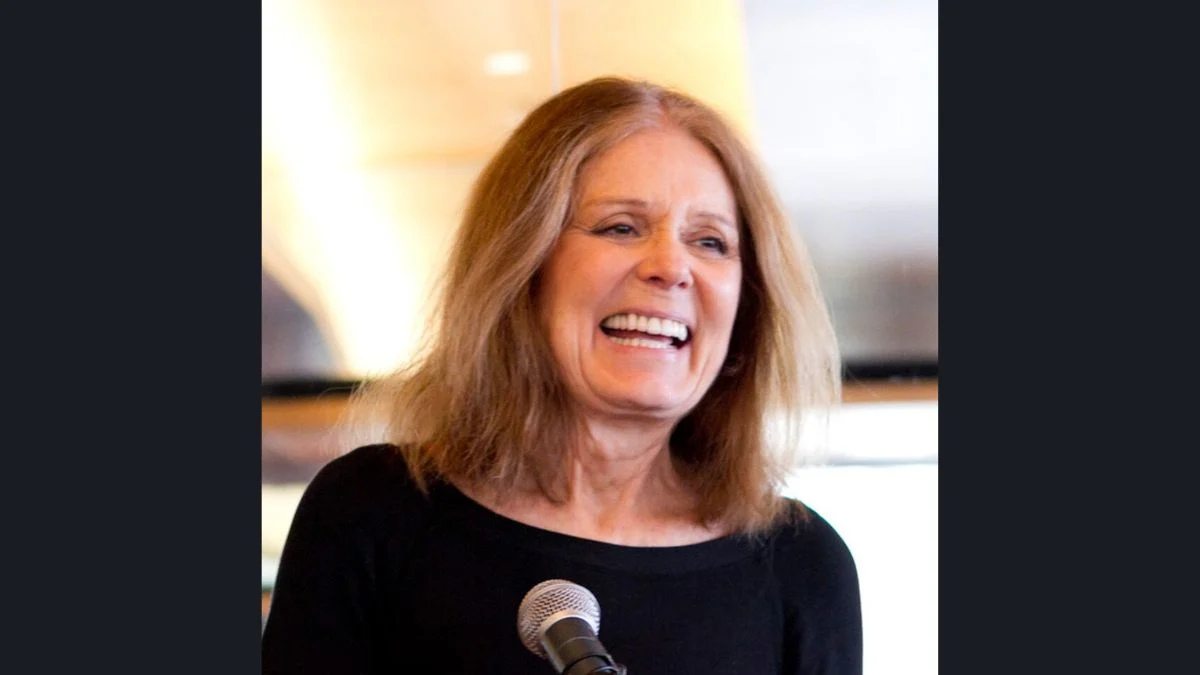
Gloria Steinem, the journalist, author and feminist activist whose name became inseparable from the modern American women’s movement, has died at 92. She died on Wednesday, September 2, 2026, at her home in New York City, surrounded by people who loved her. Her death was announced Thursday through her official social media presence and Gloria’s Foundation. No cause of death was disclosed.
For more than six decades, Steinem pushed gender equality, reproductive freedom, workplace rights, domestic violence awareness and women’s political participation into the centre of America’s national conversation. But her story was never simply about protest signs or political speeches. It was also about journalism, personal experiences, institutions she helped build and a determination to keep working for equality almost until the very end.
Another Long-Fought Battle Ends: A different kind of decades-long fight — this one against illness — closed out with the same quiet resolve. For more, read our story on Randolph Mantooth, the Emergency! star who inspired paramedics, dead at 80.
Gloria Steinem’s Death Confirmed at 92 as Feminist Leaders Lose One of Their Most Defining Voices
The statement announcing Steinem’s death said she “passed away peacefully at her home in New York City, surrounded by some of the many who loved her.”
It added that, “Gloria’s near-century on earth were years well-lived, and she continued working for equality until the very end.”
The statement also described Steinem as someone who “lived true to her independent spirit, always with curiosity and a great sense of humor.” It highlighted her ability to bring people together, particularly through gatherings at her New York home where hundreds of people took part in what she called “Talking Circles.”
Her representatives asked supporters to light a candle in her honour and encouraged donations to Gloria’s Foundation.
Her death closes a remarkable chapter in the history of the modern American women’s movement. Steinem’s influence stretched far beyond public demonstrations. She wrote, organized, founded institutions, supported younger activists and used journalism to bring subjects that were often dismissed or treated as private concerns into the national spotlight.
A Family Grieves Publicly Too: Public tributes often reveal how private loss ripples through even the most recognizable families. Catch the full story in our piece on Steve Harvey mourning father-in-law James A. Bridges Sr..
Gloria Steinem’s Childhood in Ohio Helped Shape Her Understanding of Women’s Lives
Steinem was born on March 25, 1934, in Toledo, Ohio, to Leo and Ruth Steinem. Her childhood was unusual from the beginning. Along with her older sister, Susanne, she spent much of her early life travelling around the country because her parents worked in the antiques business.
Eventually, her parents divorced, and Steinem returned to Ohio with her mother. She did not attend school regularly until she was 11.
Her relationship with her mother became particularly important in shaping how she understood women’s lives and the absence of institutional support available to them. Ruth Steinem struggled with mental health problems, and Gloria later explained that watching doctors dismiss her mother’s needs affected her deeply.
Steinem also connected that experience to her eventual decision not to have children.
“I’d already been the very small parent of a very big child — my mother,” she told People magazine in 1992. “I didn’t want to end up taking care of someone else.”
That personal history would become one of the many experiences that influenced the worldview she carried into adulthood.
Voices That Shaped a Generation: Early hardship often forges the resilience behind a defining career, as it did for another beloved performer. Read the full story in our article on Brenda Fricker, the Oscar winner who endured unimaginable tragedy.
From Smith College to India: How Gloria Steinem Entered Journalism
Steinem graduated from Smith College in 1956 with a degree in government, a field that was uncommon for women at the time. After college, she spent two years in India on a fellowship before moving to New York and beginning her journalism career.
The professional world she entered was hardly welcoming to women who wanted to cover serious political and social subjects. Many publications still largely directed female writers toward lifestyle and so-called women’s-interest stories.
Steinem increasingly pushed beyond those boundaries, seeking stories about politics, society and inequality.
Her major breakthrough arrived in 1963 when she went undercover as a Playboy Bunny and investigated working conditions at Hugh Hefner’s Playboy Clubs.
For the two-part investigation, Steinem adopted a false identity and worked at a Playboy Club for several weeks. She reported on the pressure women faced to maintain a cheerful appearance, the demands placed on them by management and the financial arrangements affecting the Bunnies.
The assignment gave her national recognition and established a distinctive approach to reporting: rather than simply observing an environment from the outside, she was willing to enter it herself.
Trailblazers Behind the Music Too: Fearless reinvention wasn’t limited to journalism — it defined careers in music as well. Dive into the full story in our piece on Lauren Bennett, the voice behind “Party Rock Anthem” and G.R.L. star, dead at 36.
The Abortion Experience That Changed Gloria Steinem’s Activism
One of the most personal chapters of Steinem’s life involved an experience that would later become deeply connected to her activism for reproductive freedom.
At 22, while she was in London, Steinem discovered that she was pregnant. Abortion was illegal at the time, but she eventually found a doctor who directed her to another physician secretly performing abortions.
Years later, she spoke publicly about what the experience meant to her.
“I had all the usual fantasies — maybe if I go horseback riding, maybe if I throw myself down the stairs,” she recalled to NPR in 2021.
Steinem did not publicly reveal that she had undergone an abortion until 1969. She later dedicated her 2015 memoir, My Life on the Road, to the doctor who helped connect her with the physician who performed the procedure.
That experience became one of the personal foundations of her decades-long campaign for reproductive rights.
In 2019, while discussing abortion politics, Steinem also objected to framing the debate simply as a conflict between “pro-choice” and “pro-life.”
“Nobody would choose one if they didn’t have to,” she said.
A Different Kind of Personal Reckoning: Private struggle shaping public purpose is a thread that runs through many defining lives. For more, read our story on Michael Wright’s battle with heart failure and a rare neurological disease.
How Gloria Steinem Went From Journalist to a Major Feminist Organizer
By the late 1960s and early 1970s, Steinem’s journalism and activism were increasingly becoming intertwined.
In 1968, she became a founding editor and political columnist at New York magazine. Her 1969 article “After Black Power, Women’s Liberation” helped establish her as a major figure in the emerging women’s liberation movement.
Then came another major step.
In 1971, Steinem became one of the founders of the National Women’s Political Caucus. The organization was created to increase women’s participation in political life and help women gain greater representation in political office while influencing public policy.
The organization emerged after a gathering of hundreds of women representing states across the country.
Steinem’s activism expanded across a wide range of issues, including reproductive freedom, workplace discrimination, domestic violence, child abuse and women’s political representation.
She also became involved in organizations intended to turn feminist ideas into lasting political and social institutions. These included the Women’s Action Alliance, the Ms. Foundation for Women, Voters for Choice and, later, the Women’s Media Center.
Building Institutions That Outlast a Career: Legacy-building often means creating platforms others can carry forward. Explore the full journey in our article on Dave Kendall, the MTV 120 Minutes visionary who introduced Nirvana to millions.
How Ms. Magazine Became One of Gloria Steinem’s Biggest Feminist Achievements
Among all of Steinem’s accomplishments, Ms. magazine stands out as one of the institutions most closely associated with her name.
In 1971, Steinem and a collective of feminist journalists began developing what would eventually become Ms.. A preview issue appeared as an insert in New York magazine in December of that year.
The idea was initially a test: was there really a national audience for a publication built around feminist issues?
The answer arrived almost immediately.
The preview issue sold all 300,000 test copies nationwide within eight days. It also generated approximately 26,000 subscription orders and more than 20,000 reader letters.
The first regular issue followed in July 1972.
Ms. tackled subjects mainstream women’s magazines had often avoided, including abortion, domestic violence, political equality and broader social structures affecting women’s lives.
Steinem’s involvement helped transform the experiment into a major feminist journalism institution.
The magazine eventually became a standalone publication and continued providing a platform for feminist reporting and political analysis.
Then, in 1976, Ms. made another historic statement by becoming the first national publication to put domestic violence on its cover. It was another example of Steinem and her colleagues helping move issues traditionally treated as private matters into the public debate.
When Art Becomes a Statement: Bold reinvention of an entire medium isn’t unique to journalism — it’s shaped visual art too. Read the full legacy in our story on Yayoi Kusama, the avant-garde art icon, dead at 97.
Why Reproductive Rights and Women’s Equality Became Central to Her Legacy
Steinem became one of the most recognizable advocates for reproductive rights in the United States.
Her activism unfolded alongside a broader movement that ultimately helped reshape American law and public policy surrounding women’s reproductive autonomy.
But reproductive rights were only part of her agenda.
She campaigned for equality in employment, stronger political representation for women and greater protections against domestic violence and child abuse.
One of the defining ideas of her career was the argument that subjects traditionally dismissed as “women’s issues” were actually questions of public policy, civil rights and economic equality.
That framing helped change how those subjects were discussed nationally.
A Legacy That Shaped an Entire Genre: Just as Steinem redefined what counted as “serious” subject matter, other trailblazers redefined entire art forms. Catch the full tribute in our piece on Tim Curry, the Rocky Horror legend who believed it “wasn’t worth doing unless you took a risk”.
Gloria Steinem Faced Criticism Even Within the Feminist Movement
Steinem’s prominence inevitably brought criticism, including from people inside the feminist movement.
Some critics argued that her appearance and media appeal distracted from the seriousness of feminist goals. She was sometimes criticized as being “too pretty” for the message she represented, while her television appearances and even the miniskirts she sometimes wore during the 1970s became subjects of discussion.
Her 1992 book Revolution From Within: A Book of Self-Esteem also received criticism. Some reviewers believed its focus on individual self-esteem represented a departure from the structural activism that had defined her earlier career.
Steinem disagreed with the idea that personal development and political transformation were separate.
Her argument was that individuals needed inner strength if they were going to help transform society.
Reinvention Under Public Scrutiny: Facing criticism head-on while staying true to a message is a hallmark of enduring careers. For the full account, read our story on Chuck Russell’s legacy and Jim Carrey’s emotional tribute.
Gloria Steinem’s Political Views Remained Blunt and Unfiltered
Steinem remained heavily involved in American politics throughout her life.
Her political activism emphasized women having an independent voice in government and electoral politics rather than simply participating through established political structures.
She was also an outspoken critic of Donald Trump.
In a 2020 interview with The New York Times, she offered a characteristically blunt assessment:
“The most painful criticism or attacks come from people who share your values, not people who don’t share your values,” she told The New York Times in 2020. “If Trump spoke well of me, I would shoot myself.”
The comment became one of the memorable examples of Steinem’s direct political humour.
Sharp Wit as a Signature: A quick, unfiltered sense of humor often becomes as memorable as the work itself. Discover the full personality behind the legend in our article on Sam Neill, the Jurassic Park star and cancer survivor, dead at 78.
Gloria Steinem Married David Bale at 66 — and Had a Surprising Answer About Marriage
Steinem’s personal life also challenged assumptions surrounding her views on marriage.
She married lawyer and entrepreneur David Bale in 2000, when she was 66. Bale was the father of actor Christian Bale.
The marriage surprised many followers because Steinem had spent years criticizing traditional marriage as an institution. She had argued that women historically lost legal and economic independence through marriage.
Bale died of lymphoma in 2003.
When Steinem was later asked why she had changed her position on marriage, her response was characteristically concise:
“I didn’t change. Marriage changed.”
She expanded on that explanation:
“If I had married when I was supposed to get married, I would have lost my name, my legal residence, my credit rating, many of my civil rights,” she added. “That’s not true anymore. It’s possible to make an equal marriage.”
Love and Legacy Intertwined: Marriage late in life, and the loss that can follow, often reveals a softer side of larger-than-life figures. Read the full story in our piece on Dolly Parton’s private Nashville funeral beside Carl Dean.
Breast Cancer Did Not Stop Gloria Steinem From Working
Steinem was diagnosed with breast cancer at age 52. She was diagnosed early and successfully treated.
The health challenge did not bring her public career to an end. She continued writing, speaking and organizing for decades.
Her longevity also allowed her to become a bridge between generations of feminist activists. Rather than stepping away from public life as she grew older, she remained involved in conversations surrounding equality, politics, reproductive rights and social justice.
In 2020, she reflected on how little time even a long life ultimately leaves.
“Even if I live to 100, which I have every intention of doing, it’s not that long left,” she told The New York Times in 2020. “I just hope that I don’t die saying, ‘But! Wait!’”
Resilience in the Face of Illness: Continuing to work through a health battle is a theme that echoes across many remarkable careers. See the full journey in our story on Michael Wright’s fight against heart failure and neurological disease.
Presidential Medal of Freedom Honoured Gloria Steinem’s Lifetime of Work
Steinem’s achievements eventually received one of America’s highest official recognitions.
In November 2013, President Barack Obama awarded her the Presidential Medal of Freedom, the highest civilian honour in the United States. She received the honour alongside prominent figures from politics, journalism, science, entertainment and civil rights.
Her inclusion recognized the national impact of her work as a journalist, organizer and advocate for women’s equality.
Her career also earned numerous journalism honours, including the Lifetime Achievement in Journalism Award from the Society of Professional Journalists.
Her influence reached popular culture as well. Her life and work were dramatized in the 2020 FX miniseries Mrs. America, which portrayed conflicts surrounding the women’s movement and the Equal Rights Amendment.
Honoured in Life and Song: Recognition can come through awards or through the cultural anthems that outlive their creators. Explore the full story in our article on Victor Willis, the Village People frontman behind “Y.M.C.A.,” dead at 74.
Gloria Steinem’s Legacy Stretches Across Generations of Feminist Activists
Steinem’s influence cannot be reduced to a single organization, political campaign or publication.
She helped establish or support a network of organizations working on women’s political participation, journalism, reproductive rights, social justice and international human rights.
She worked with activists from different generations and supported international organizations including Equality Now. Her advocacy increasingly recognized the connections among gender, race, class and national boundaries.
Her work also helped normalize women’s presence as political commentators, journalists, organizers and public intellectuals.
For many supporters, one of her most significant achievements was helping transform feminism from a collection of individual grievances into an organized political and cultural movement.
A Voice That Carried Across Decades: Some legacies are defined not by a single moment but by decades of consistent influence. Catch the complete story in our piece on Peter Cullen, the voice of Optimus Prime and Eeyore, dead at 85.
Gloria Steinem Was Still Working in Her Final Years
Perhaps the most striking detail about Steinem’s final chapter is that she remained active well into her 90s.
Ms. magazine, the publication she helped launch more than five decades ago, continued to publish her work and reflections.
On September 3, 2026, the magazine published a piece featuring a foreword Steinem had written for the 2023 book 50 Years of Ms.: The Best of the Pathfinding Magazine That Ignited a Revolution.
In that work, she reflected on the unlikely beginnings of Ms. and the feminist movement it helped amplify.
After her death, the magazine’s editors said she had continued working for equality until the end of her life.
That may ultimately be one of the clearest ways to understand Steinem’s legacy. Her story did not end with the major victories associated with second-wave feminism. It continued through the institutions she helped build, the journalists and activists she influenced and the generations of women who entered public life in a landscape dramatically different from the one Steinem encountered when she began her career.
Still Performing, Still Teaching: Staying active and mentoring others until the very end is a mark shared by many enduring careers. For more, read our story on Josh Grisetti, Broadway star and beloved musical theatre professor, dead at 44.
Gloria Steinem Dies at 92, But the Movement She Helped Build Continues
Gloria Steinem died on September 2, 2026, at her New York City home. She was 92.
Her death marks the end of one of the most influential chapters in modern American feminism. Yet the organizations, publications and movements she helped create continue to carry parts of that work forward.
From her unconventional childhood and early journalism career to her undercover Playboy investigation, reproductive-rights activism, creation of Ms., political organizing and decades of advocacy, Steinem’s life was defined by a willingness to challenge institutions and assumptions.
Her legacy ultimately exists in more than awards, headlines or historical milestones. It lives in the conversations she helped force into public view — and in the people and organizations continuing those conversations after her death.
A Legacy Larger Than the Headlines: The truest measure of a life’s work is often what it leaves behind for others to carry. Discover the full impact in our story on Fantan Mojah’s final days before his sudden death at 49.
Disclaimer
This article is based on information confirmed by Gloria Steinem’s foundation and cross-checked against established news organizations and relevant institutional sources. Her foundation did not publicly disclose a cause of death at the time of publication. Historical details have been included only where supported by the available reporting and archival material.
Sources
- NBC News — Gloria Steinem obituary and death report
- Reuters — Feminist activist Gloria Steinem dies at 92
- Associated Press — Gloria Steinem dies at 92
- Ms. Magazine — Rest in Power: Gloria Steinem, Ms. Cofounder and Feminist Visionary
- Ms. Magazine — Gloria Steinem on Ms. and the feminist movement
- Ms. Magazine — About Ms. Magazine
- The White House Archives — President Obama Honors 2013 Presidential Medal of Freedom Recipients
Featured Image Credit: Jewish Women’s Archive / Creative Commons Attribution-Share Alike 2.0


Leave a Reply