

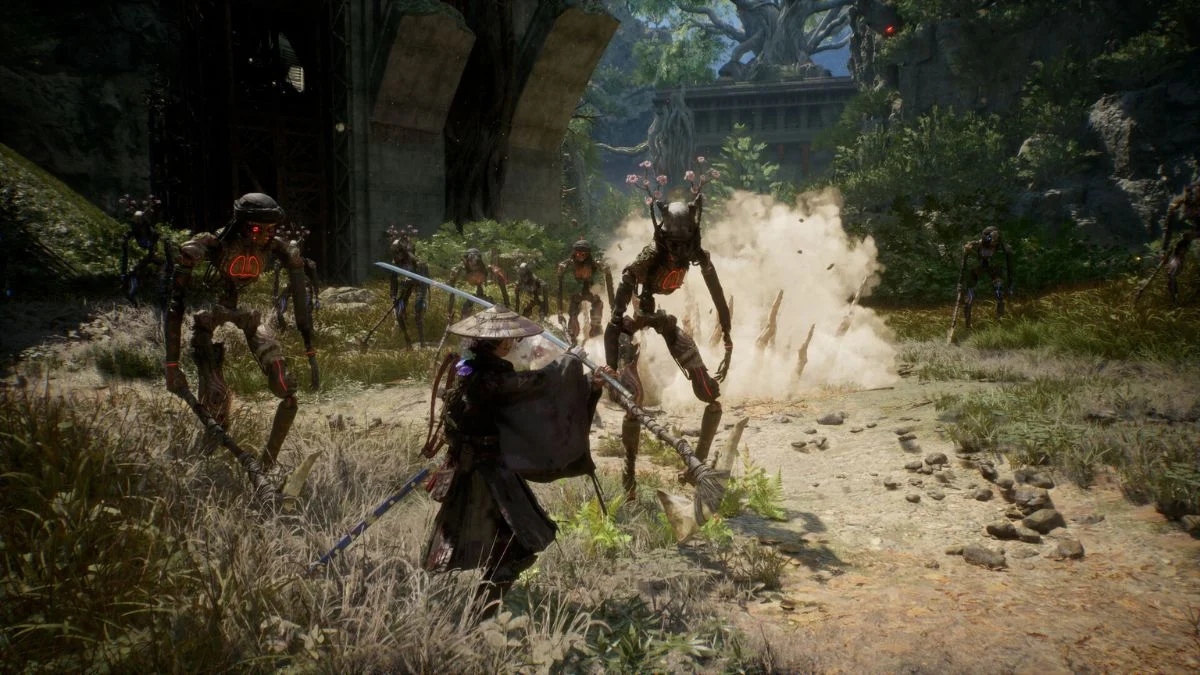
When Beast of Reincarnation was first revealed, one of the biggest questions players started asking was simple: Is it an open-world game? The gorgeous landscapes, ruined cities, giant monsters, and cinematic gameplay instantly drew comparisons to heavyweights like Elden Ring and The Legend of Zelda: Tears of the Kingdom. At first glance, it certainly looks like another massive world waiting to be explored.
But once Game Freak began pulling back the curtain, it became clear that the studio is taking a very different path.
Instead of throwing players into one enormous map and letting them roam wherever they want, Beast of Reincarnation focuses on carefully crafted regions that combine freedom with a stronger sense of progression. Think less “wander endlessly across one continent” and more “embark on an unforgettable journey through a living, changing world.” It’s a design philosophy that feels refreshing, especially for players who prefer meaningful exploration over checking icons off a giant map.
And honestly? After seeing everything revealed so far, this approach might end up being one of the game’s biggest strengths.
This isn’t the only RPG facing the exact same open-world question. To know more, read our post Is Echoes Of Aincrad Truly Open World?, and it turns out the answer there is just as nuanced.
Beast of Reincarnation Isn’t a Traditional Open-World Game
If you’re expecting a completely seamless world where every destination is accessible from the start, Beast of Reincarnation isn’t built that way.
Director Kota Furushima has explained that the game isn’t designed as one gigantic interconnected map. Instead, the adventure unfolds across around ten large stages or districts, with each one representing a different part of post-apocalyptic Japan.
Rather than comparing it to an open-world RPG, Furushima described the experience as “a long and very wide road.” That comparison perfectly captures the game’s philosophy. Instead of dropping you into one endless sandbox, the story continuously pushes Emma and her companion Koo toward their next destination while giving players plenty of freedom to explore every stop along the way.
It’s essentially a road trip through a devastated Japan, where every new destination introduces fresh environments, dangerous enemies, hidden discoveries, and unforgettable boss encounters.
Another recent action game has been drawing that exact same “open field versus open world” distinction. To know more, read our post Is Nioh 3 Truly Open World? What ‘Open Field’ Means & How It Differs, worth a read if that line still feels a little fuzzy.
Every Region Feels Like Its Own Massive Adventure
Just because the game isn’t fully open world doesn’t mean exploration is limited.
Once the more linear opening section is complete, each district opens into a sizeable handcrafted environment packed with optional paths and rewarding detours. Instead of racing directly toward the next objective, players can spend time uncovering hidden loot, collecting upgrade materials, piecing together environmental storytelling, and challenging enemies that aren’t required for the main story.
Every major region is also ruled by a terrifying Nushi, an enormous boss that acts as the area’s ultimate challenge before Emma’s journey continues.
That structure creates an experience where progression stays story-focused, but exploration never feels restricted. You’re constantly encouraged to wander off the beaten path because there’s almost always something valuable waiting to be discovered.
Rather than filling the map with repetitive objectives, Game Freak appears to be emphasizing handcrafted discoveries that reward curiosity.
A different title has fans asking the exact same question about its own design. To know more, read our post Is Arknights Endfield An Open World Game?, here’s how that one stacks up.
Emma’s Traversal Abilities Make Exploration Feel Fresh
One of the coolest parts of exploration is that movement itself becomes part of the adventure.
Emma’s unique plant-like hair isn’t just a visual design choice—it completely changes how players interact with the environment.
Throughout the journey, Emma can:
- Grapple across large gaps.
- Grow temporary vine bridges.
- Reach elevated platforms.
- Climb to otherwise inaccessible locations.
Instead of gradually unlocking dozens of traversal mechanics over time, the game encourages players to become more creative with the abilities they already possess.
That creativity extends beyond exploration and directly into combat.
Imagine spotting enemies from above, creating a vine bridge overhead, then using that elevated position to launch an aerial stealth attack instead of charging straight into battle. It’s a clever system that naturally blends movement, exploration, and combat into one fluid experience.
Because the same abilities can be used in multiple ways, discovering alternate routes and hidden locations feels far more rewarding than simply unlocking another movement upgrade later in the game.
Playing with a partner raises its own set of questions for other RPGs too. To know more, read our post Does Echoes Of Aincrad Have Co-Op?, a quick answer for anyone curious.
Koo Is More Than a Companion
Emma may be the protagonist, but she never travels alone.
Her loyal canine companion Koo isn’t just there for emotional support or combat assistance. During exploration, Koo actively helps players uncover things they might otherwise miss.
As you travel through the world, he’ll bark whenever danger is nearby, warning you before enemies ambush you. At other times, he’ll sniff out hidden resources, point toward valuable items tucked away off the main path, or even retrieve nearby loot himself.
It’s a subtle mechanic, but it makes exploration feel much more natural.
Instead of relying on glowing objective markers or constantly opening a map, players are encouraged to pay attention to Koo’s behavior. His reactions become part of the exploration loop, making discoveries feel earned rather than handed to you.
This companion-focused design also strengthens the relationship between Emma and Koo, turning exploration into a shared adventure instead of a lonely trek through ruined landscapes.
Cross-platform play remains a hot topic across the gaming world right now. To know more, read our post Is Palworld Crossplay in 2026? Full Cross-Platform Guide for PC, PS5, and Xbox, a handy breakdown by platform.
The World Doesn’t Stay the Same
One of the most fascinating mechanics revealed so far is how the world itself reacts to what’s happening around you.
Across post-apocalyptic Japan, colossal beings known as Nushi spread a mysterious corruption called Blight. Wherever these creatures settle, dense Blighted Forests begin consuming the surrounding environment.
The transformation isn’t simply background storytelling.
As Emma ventures deeper into infected territory, ruined cities and abandoned landscapes can shift in real time as forests rapidly overtake everything around them. At the same time, dangerous creatures known as Malefacts emerge to defend the corrupted region, making every step deeper into the Blight increasingly dangerous.
These environmental changes make each region feel alive, unpredictable, and constantly under the influence of the world’s ongoing corruption rather than existing as static levels waiting to be cleared.
Even after defeating a powerful Nushi, the danger doesn’t magically disappear. The Blight continues to exist as a persistent force throughout the adventure, reinforcing the idea that Emma isn’t simply saving isolated areas—she’s surviving inside a world that remains fundamentally broken.
The deeper you travel, the more that living, reactive world becomes part of the experience, and that’s where the game’s exploration philosophy continues to reveal even more surprises…
Another release has been fielding similar platform questions from fans. To know more, read our post Does Mistfall Hunter Have Crossplay? Here’s What Bellring Games Has Confirmed, worth a look if it’s on your radar.
Can You Return to Previous Areas?
If you’re worried that progressing through the story means permanently leaving earlier regions behind, there’s some good news.
Yes, you can revisit previous areas—but there are some important limitations.
Unlike traditional open-world games where you can freely bounce between locations whenever you want, Beast of Reincarnation keeps its story moving forward from one district to the next. The overall structure remains focused on Emma and Koo’s journey, so unrestricted backtracking isn’t the game’s main design philosophy.
That said, director Kota Furushima has confirmed that returning to earlier regions is absolutely possible, and doing so isn’t just for sightseeing.
Players who revisit older districts can uncover hidden items they previously missed, discover optional routes, and experiment with Emma’s traversal abilities from entirely different perspectives. Rather than locking valuable secrets behind brand-new movement powers later in the game, exploration rewards players who become more creative with the tools they’ve had all along.
It’s a smart approach that encourages curiosity instead of forcing players to revisit areas simply because they finally unlocked a specific ability.
Crossplay questions keep popping up across completely different genres too. To know more, read our post Is Ready or Not Crossplay?, here’s where that one currently stands.
A Mobile Hub Keeps the Adventure Moving
Between dangerous expeditions, Emma and Koo don’t return to a fixed village or permanent town.
Instead, the game features a mobile base of operations that travels alongside the story, becoming your safe haven no matter where the journey takes you.
Early hands-on previews have compared this moving headquarters to the DHV Magellan from Death Stranding 2, giving players a familiar space to prepare before heading back into the unknown.
Inside this mobile hub, you’ll be able to:
- Rest and save your progress.
- Manage equipment and customize your loadouts.
- Craft upgrades for future encounters.
- Cook meals before setting out.
- Clean Koo after difficult battles.
- Experience story scenes and playable flashbacks that reveal more about Emma, Koo, and the catastrophic events that reshaped the world.
Because the headquarters moves with the adventure instead of staying in one location, it creates a comforting rhythm throughout the game. Every time you finish exploring a dangerous region, you’re welcomed back into a familiar space before setting off toward the next destination.
That traveling hub also reinforces the game’s core theme—this isn’t a story about settling down. It’s about constantly moving forward through a world that never stops changing.
Even older, more established titles are still getting asked the crossplay question. To know more, read our post Is Hunt: Showdown 1896 Crossplay?, the answer might surprise you.
Early Hands-On Impressions Praise the Exploration
One thing that’s stood out across nearly every preview is how focused the exploration feels.
Rather than building an oversized map packed with repetitive activities and endless icons, Game Freak has chosen to fill each handcrafted region with meaningful discoveries.
Many journalists and early players have compared the game’s structure to titles like NieR: Automata and Stellar Blade, where exploration revolves around dense environments hiding secrets, optional encounters, and environmental storytelling instead of overwhelming players with sheer scale.
That design choice has generated plenty of positive reactions within the gaming community.
While some fans initially hoped Beast of Reincarnation would be a fully open-world RPG, many have changed their perspective after seeing more gameplay. The regional structure appears to complement the game’s companion-driven adventure, narrative pacing, and handcrafted level design far better than one massive uninterrupted map.
Instead of stretching content across a huge world, every area seems built with purpose, making exploration feel consistently rewarding.
Crossplay questions keep popping up across completely different genres too. To know more, read our post Is Ready or Not Crossplay?, here’s where that one currently stands.
So, Is Beast of Reincarnation Open World?
Technically, no—but that’s not a bad thing.
Rather than following the familiar formula of one seamless sandbox, Beast of Reincarnation takes players through roughly ten expansive, interconnected regions, each offering plenty of freedom before the journey naturally moves forward.
Within those regions, there’s no shortage of reasons to explore. Emma’s versatile traversal abilities make movement feel creative, Koo constantly helps uncover hidden secrets, dynamic environmental changes keep every area feeling alive, and the mobile hub ties the entire adventure together between major story beats.
Instead of chasing endless scale, Game Freak seems focused on creating a world where exploration has real purpose.
So if you’re expecting another Elden Ring, you’ll probably notice the difference immediately.
But if you love discovering handcrafted environments, uncovering hidden paths, experimenting with vertical traversal, and progressing through a story that never loses its momentum, Beast of Reincarnation looks ready to deliver an experience that sits comfortably between linear storytelling and open-ended exploration.
Sometimes, bigger doesn’t mean better—and based on everything revealed so far, Game Freak may have found the sweet spot.
Disclaimer
Information is based on official director interviews, hands-on previews, and publisher statements available as of August 2026. Some details (such as the exact degree of backtracking between regions) have received slightly varying descriptions across different interviews and previews. Final gameplay structure may still see minor adjustments before or after launch.
- Xbox Wire – Beast of Reincarnation: A One-Person, One-Dog Action RPG (Developer Direct)
- Fictions Official Game Page
- IGN
- GameSpot
- Game Informer
Images Credit:
- Fictions
- GAME FREAK inc.


Leave a Reply