

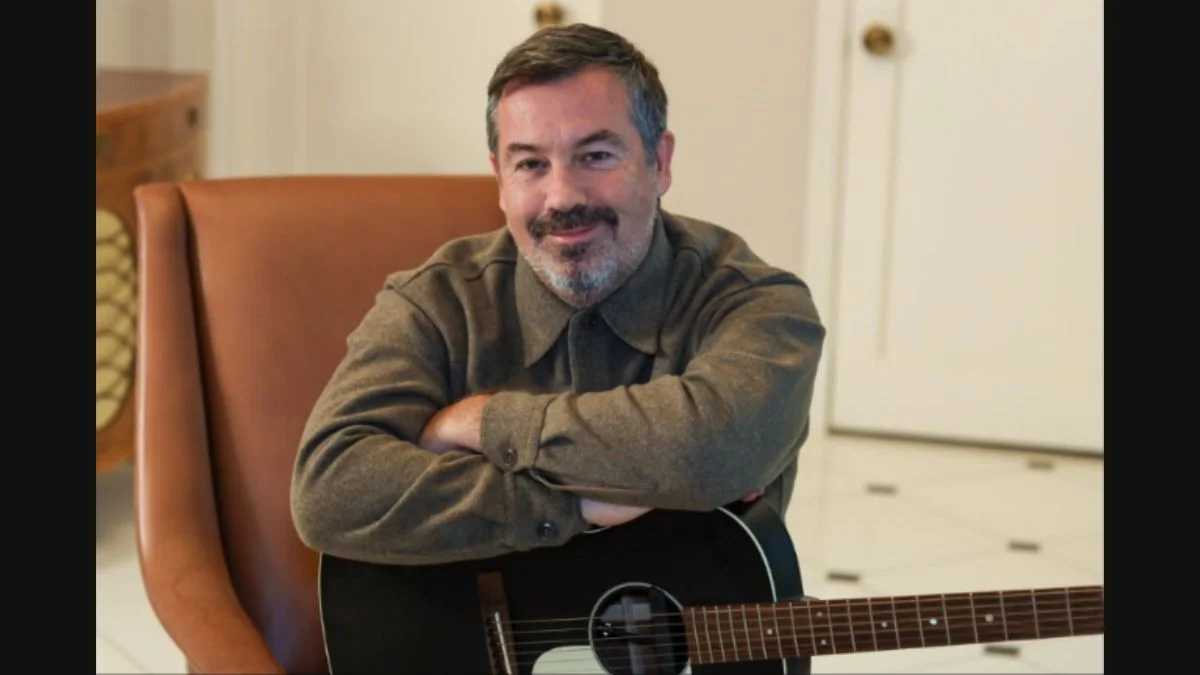
For millions of listeners, Duncan Sheik was the unmistakable voice behind “Barely Breathing.” For Broadway audiences, he became something much bigger: the composer who helped push contemporary rock and pop sounds into a story about adolescence, fear, desire and confusion.
Now, at 56, Sheik’s career has come to a heartbreaking end just as the stage was preparing to hear his work again. His death leaves behind a musical legacy that stretched from a defining 1990s pop hit to the Tony-winning Spring Awakening, American Psycho and several other theatrical projects.
Another Loss Felt Deeply Across Music: Sheik’s passing comes during a difficult stretch for the wider music community. For more, our tribute to Sway DaSafo, the British rap pioneer who died at 44, reflects on a similarly enduring creative legacy.
Duncan Sheik dies at 56 as family confirms heartbreaking news
Duncan Sheik died Thursday night, September 17, 2026, in Manhattan, according to his family and his mother, Suzanne Sheik, who confirmed his death to The New York Times.
The news was announced through Sheik’s official Instagram account on Friday.
“The world has a lost a singular talent, and deeply influential voice in music and theater. His musical legacy will continue to inspire generations to come.”
His family later remembered him as a father, husband, son, brother and friend, describing him as someone known for his sensitivity, wit, intelligence and depth of spirit.
Suzanne Sheik told The New York Times that her son died after suffering cardiac arrest in Manhattan.
The timing made the news even more painful. Only days earlier, his family had announced that he was receiving medical care and was in critical but stable condition. They had asked for privacy while he was being treated.
Sheik was 56.
When Grief Touches a Career Cut Short: A defining early hit followed by a life ended too soon is a painful pattern seen elsewhere too. Read our coverage of Tay Keith’s cause of death and the troubling details behind the Grammy-nominated producer’s passing at 29 for more.
A career that was still moving forward
His death came at a particularly poignant moment because his theatrical work was not simply part of the past.
More than a decade after Spring Awakening transformed his career and became one of Broadway’s defining contemporary musicals, the production was preparing to return to New York later in 2026.
Sheik was also expected to have new work reach the stage through Memoirs of Amorous Gentlemen. His death therefore arrived while the theater community was still preparing to experience more of the work he had spent years creating.
That unfinished feeling now hangs over a career that had already crossed two very different musical worlds.
Documentaries Reframing How We See a Story: Bold storytelling choices, whether on stage or on screen, can completely change how audiences understand a subject. For more, our piece on Nathan Fielder’s Elizabeth Holmes documentary “You Can See Everything” turning the Theranos story upside down explores that same idea.
‘Barely Breathing’ made Duncan Sheik a 1990s pop star
Before Broadway, Sheik had already created the song that would permanently attach his name to an era of pop music.
“Barely Breathing,” from his self-titled 1996 debut album, became an instantly recognizable hit and one of the defining successes of the 1990s.
The song spent 55 weeks on the Billboard Hot 100, eventually reaching No. 16. It also earned Sheik a Grammy nomination for Best Male Pop Vocal Performance.
His debut album received a four-star review from Rolling Stone, which described it as “a defiant debut — beautiful and benevolent of spirit.”
Sheik’s musical path had begun much earlier. Growing up between South Carolina and New Jersey, he learned guitar as a child and received his first synthesizer when he was 12. His influences included Talk Talk, David Sylvian and Nick Drake.
“Barely Breathing” later received another burst of attention through television series including Glee and Girls. The song also earned its Grammy nomination in 1998 for Best Male Pop Vocal Performance.
Yet the success of the song did not define where Sheik would ultimately take his career.
For an artist who had unexpectedly become a pop star, that mainstream success could sometimes feel disconnected from the music he wanted to create. His next major chapter would take him away from conventional pop and into musical theater.
A Different Kind of Milestone Celebration: Not every anniversary this year has been touched by loss. For more, read our story on Beyoncé marking 45 with a 31-track B’Day anniversary reissue, complete with an unreleased Pharrell track, a much lighter kind of career reflection.
How Spring Awakening changed Duncan Sheik’s Broadway legacy
In 2006, Spring Awakening arrived on Broadway with music by Duncan Sheik and lyrics by playwright Steven Sater.
The musical was adapted from German playwright Frank Wedekind’s 19th-century play and followed young people confronting the pressures and confusion of adolescence. Its themes were deliberately challenging, while Sheik’s score deliberately brought contemporary rock and pop sounds into a story set in 19th-century Germany.
Sheik and Sater had begun developing the project while working together on Sheik’s third album, Phantom Moon. Neither had previously written a musical.
Sheik remembered setting an important condition when agreeing to the project:
“I said to Steven, ‘I’m happy to do this musical, but I only want to do it if the music in the play is the kind that I and my peers can get behind stylistically and relate to and enjoy.’”
That philosophy became central to Spring Awakening.
Instead of making the score sound traditionally theatrical, Sheik and Sater created a deliberate contrast. The characters remained inside their 19th-century world while the music suddenly shifted into a contemporary sound.
As Sater described the idea:
“breaking into pop-contemporary when they sing.”
The result became one of Broadway’s most distinctive musicals of the 2000s.
A Life Remembered With Deep Respect: Long, boundary-pushing careers often leave behind legacies that reach far beyond one field of work. For more, read our tribute to Gloria Steinem’s life at 92 and why the feminist icon’s legacy still matters.
Eight Tony Awards and a Grammy
The musical’s impact became unmistakable at the 2007 Tony Awards.
Spring Awakening won eight Tony Awards, including Best Musical.
Sheik personally won for Original Musical Score and Orchestrations, while Sater received the Tony for Book of a Musical.
The original cast included Jonathan Groff, Lea Michele, Lilli Cooper, Jennifer Damiano, Gideon Glick, John Gallagher Jr., Lauren Pritchard and Krysta Rodriguez.
Several of those performers later became major names. Groff went on to win a Tony for Merrily We Roll Along, while Michele became widely known through Glee.
The recognition continued beyond Broadway’s biggest awards night. Spring Awakening also won the 2008 Grammy Award for Best Musical Theater Album, with the official Grammy record listing Sheik and Sater as winners for the original Broadway cast recording.
The New York Times captured the atmosphere of Sheik’s contribution by writing that his music “embodies the shadowy air of longing that infuses the show, the excitement shading into fear, the joy that comes with a chaser of despair.”
But awards were never the entire point for Sheik.
In 2015, he told the Los Angeles Times:
“I don’t mean to be disrespectful to more traditional theater composers. I love Stephen Sondheim. But it’s my mission to make sure that the theater is paying attention to what the rest of the world is listening to.”
That mission would continue to shape his work.
A Health Battle Cut Short Too Soon: Sudden losses following a period of declining health are a painful reality that touches many families. Read our story on Amber Eggers’ final hospitalization and the health battle before her death at 41 for another such account.
Duncan Sheik wanted musical theater to reach new audiences
Sheik increasingly saw theater as a place where contemporary music could exist naturally rather than remaining separated from the sounds audiences were already hearing elsewhere.
In 2016, he explained that ambition to the Associated Press:
“I feel like it’s become my project to kind of drag different people who might not normally go to musical theater pieces to come see a piece of musical theater.”
That philosophy followed him into his next major stage project.
Unanswered Questions Behind a Sudden Death: Some losses leave families and fans grappling with far more difficult circumstances. For more, our report on Alphonso Smith Jr.’s death at 40, his final Facebook message and the troubling questions surrounding it covers one such case.
American Psycho revealed another side of Sheik’s theater work
After Spring Awakening, Sheik turned toward another unconventional literary adaptation: a musical based on Bret Easton Ellis’ American Psycho.
The 1991 novel had previously been adapted into a controversial 2000 film starring Christian Bale. For the stage version, Sheik supplied music and lyrics while again working with material far removed from conventional musical theater.
One song, “You Are What You Wear,” drew on his memories of late-1980s Manhattan nightlife and fashion. Sheik even contacted former girlfriends to ask what they had actually worn during that period.
Producer Jesse Singer praised his approach:
“Duncan is really a genius and an intellectual and brings something both uniquely his but importantly of this period to the stage.”
Sheik also spoke about the unusual demands of writing songs for theater. A song could not simply function as a standalone pop track. It had to work inside a larger dramatic story.
“There’s definitely an art to be able to write a song that on one level is a pop song and one that also has to tell a story and keep an audience engaged in terms of a larger narrative arc.”
He added:
“When you’re writing a song for the theater, it has to accomplish all this other stuff. It has to work in tandem with all these other agendas and creative impulses.”
American Psycho premiered in London in 2013 before reaching Broadway in 2016. The Broadway production closed after fewer than 90 performances.
Sheik had defended the production’s darker material before its Broadway opening, explaining that the work needed to fully commit to what it was trying to say.
“We were all sort of worried that it might be too violent for people and it might seem too misogynist. But, in fact, the truth is this piece is a critique of a certain way of thinking about things. So in truth it’s better to go all-in.”
His work continued far beyond Spring Awakening
Sheik’s theatrical career did not end with Spring Awakening or American Psycho.
His body of work included Whisper House, a ghost-story album and musical that received a production at San Diego’s Old Globe Theatre in 2010, as well as Alice by Heart and other theatrical projects.
He also continued recording music.
His final album was 2022’s Claptrap, adding another chapter to a recording career that had begun with “Barely Breathing” and continued even as theater became increasingly central to his artistic identity.
That progression made Sheik difficult to place inside a single musical category.
He began as a pop singer-songwriter, but his career increasingly became about challenging the separation between contemporary music and theater.
Spring Awakening was preparing to return to New York
Perhaps the most difficult detail surrounding Sheik’s death is what was waiting just ahead.
Spring Awakening is scheduled to return in a new Off-Broadway production at Studio Seaview, with previews beginning November 27, 2026, and an opening scheduled for December 17.
The production arrives nearly two decades after the original Broadway musical premiered in 2006.
Danya Taymor is directing the revival, which features a young cast and continues the musical’s connection with stories about adolescence, identity and the pressures placed on young people.
The production was already being prepared before Sheik died.
That means his music is set to return to a New York stage while the theater community mourns the person who created its score.
His other upcoming theatrical project, Memoirs of Amorous Gentlemen, was also set to receive an Off-Broadway production.
For a career that spent years building bridges between pop music and theater, the timing is striking. Sheik was still creating and preparing work for audiences when his life came to an end.
Duncan Sheik’s legacy now stretches across two musical worlds
Sheik never fit neatly into one category.
He became a pop star through “Barely Breathing,” a song that spent more than a year on the Billboard Hot 100. He then moved into theater and helped create a musical that demonstrated how rock and contemporary pop could become the musical language of a major Broadway production.
Spring Awakening connected with younger audiences while telling a story set in 19th-century Germany. Its eight Tony Awards and Grammy win established the scale of its impact, while several members of its original cast went on to major careers.
But perhaps Sheik’s own words offer the clearest explanation of what he was trying to achieve:
“I feel like it’s become my project to kind of drag different people who might not normally go to musical theater pieces to come see a piece of musical theater.”
That idea followed him from Spring Awakening to American Psycho and through the theatrical projects that came afterward.
Duncan Sheik’s final chapter
From “Barely Breathing” to Spring Awakening, American Psycho, Whisper House, Alice by Heart, Claptrap and the work that was still waiting to reach the stage, Sheik spent his career moving between worlds rather than remaining comfortably inside one.
He died at 56 in Manhattan after suffering cardiac arrest, according to his mother Suzanne Sheik.
And now, as Spring Awakening prepares to return to New York and Memoirs of Amorous Gentlemen was also set for an Off-Broadway production, his music is poised to continue speaking to audiences without the man who created it being there to hear it.
That may be the most painful part of Duncan Sheik’s final chapter.
The songs will continue.
The stages will still go dark and then light up.
The audiences will still listen.
But the artist who spent his life trying to bring those audiences together will not be there to hear the applause.
Conclusion
Duncan Sheik leaves behind a career that began with a defining 1990s pop hit and grew into an influential body of theatrical work. His Grammy-nominated music, Tony-winning Spring Awakening, American Psycho and later projects established a lasting connection between contemporary music and musical theater. At 56, his life has ended, but the work he created is still preparing to return to the stage.
Disclaimer: This article has been prepared from the publicly available information and sources provided in the original verified material, including statements from Duncan Sheik’s family and official social media account, the Associated Press, The New York Times, The Recording Academy, the Tony Awards, Reuters, CNN, The Washington Post, the Los Angeles Times and information concerning the Spring Awakening Off-Broadway production. The article reflects the information available in those provided sources as of September 19, 2026. Details surrounding Sheik’s death and forthcoming productions may be updated as additional information is released.
Sources
- Associated Press — Duncan Sheik, ‘Spring Awakening’ composer and ‘Barely Breathing’ singer, dies at 56
- The Recording Academy — Duncan Sheik profile and Grammy history
- Tony Awards — Spring Awakening winners and Duncan Sheik’s 2007 awards
- Reuters — Duncan Sheik dies at 56
- CNN — Duncan Sheik, Tony- and Grammy-winning ‘Spring Awakening’ composer and pop star, dies at 56
- The Washington Post — Duncan Sheik obituary and career retrospective
- Los Angeles Times — Duncan Sheik dies at 56
- Spring Awakening Off-Broadway production information
Featured Image Credit:


Leave a Reply