

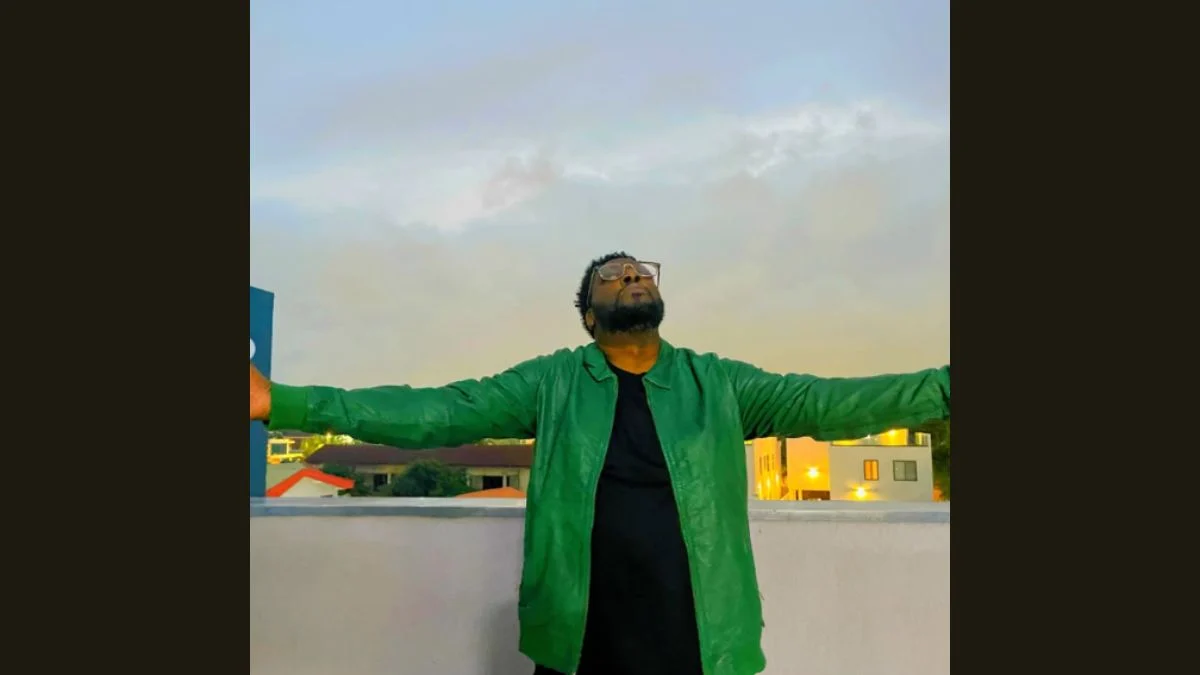
For more than two decades, Sway DaSafo was one of those artists whose influence stretched far beyond the songs attached to his name. From London’s pirate-radio scene to major award stages, the British-Ghanaian rapper built a career that refused to follow an obvious route. Now, at 44, that journey has come to an unexpected end.
Sway, born Derek Andrew Safo, died at his home in Ghana, according to his friend Kash Ahmad, who confirmed his death to the BBC. The MOBO organisation was the first to publicly share news of his passing. A cause of death has not been announced, leaving the circumstances surrounding his death undisclosed.
Another Loss Still Shrouded In Uncertainty: Grief can be harder to process when the circumstances behind a death remain unclear. For more, read our story on Tay Keith’s cause of death finally being revealed three months after his sudden passing at 29.
Sway DaSafo’s death marks the loss of a defining UK rap voice
Sway occupied a distinctive place in British music for more than 20 years.
He rose from London’s pirate-radio culture during the early development of grime, became the first unsigned artist to win a MOBO Award, earned a Mercury Prize nomination for his debut album, reached the UK Top 10 with “Level Up”, and worked with artists including Mark Ronson, Ed Sheeran, Akon and Childish Gambino.
But his legacy was never limited to his own records.
Through his label Dcypha, Sway helped develop younger artists, including Tiggs Da Author and KSI. His career therefore became part of a much larger story — one about British rap moving from specialist underground scenes into the mainstream.
A Mystery That Still Lingers: Not every sudden loss comes with an easy explanation for those left behind. Our report on Taiwanese actor Wang Kai being found dead at 43 amid unresolved questions about his final hours covers a similarly painful situation.
A North London beginning shaped by pirate radio
Sway’s story began in London, although his arrival in the city was somewhat accidental.
His mother was passing through London during a stop-over between Amsterdam and her native Ghana when he was born. After spending part of his early life in Ghana, he was raised in north London.
It was there that music began to take shape around him.
Like many British rappers of his generation, pirate radio became important to his development. He later credited BBC Radio 1Xtra with giving him his first major break in 2002.
The timing mattered. The first wave of grime was beginning to emerge, with artists such as Dizzee Rascal and Lethal Bizzle helping establish a distinctly British sound and identity.
Sway, however, was carving out something different.
His music placed particular emphasis on wordplay, wit and lyrical storytelling. He was not interested in simply reproducing American rap conventions, and he made his philosophy clear as his career gathered momentum.
“I’m a positive person. The positivity comes out in my music,” he told The Guardian.
He was equally direct about why he did not want to imitate violent imagery associated with some forms of rap:
“I don’t go round holding guns to people’s heads so I won’t rap about holding guns to people’s heads.”
That independent voice would remain one of the defining characteristics of his career.
Remembering Another Broadcasting Pioneer: The people who shaped a genre from behind the scenes deserve to be remembered too. Take a look at our tribute to Dave Kendall, the MTV 120 Minutes visionary who introduced Nirvana and alternative music to millions.
The unsigned rapper who shocked the 2005 MOBO Awards
Sway’s breakthrough on the national stage arrived in 2005.
Still unsigned and without a debut album, he won Best Hip-Hop Act at the 2005 MOBO Awards, beating major American names including 50 Cent and The Game.
The achievement was significant because Sway had reached one of British music’s major award stages largely on his own terms. At a time when major-label backing was still closely associated with mainstream success, he had built enough recognition independently to compete with some of the biggest names in hip-hop.
The victory became one of the landmark moments of his career and helped establish him as an important figure in the development of British rap.
Rather than immediately abandoning that independence, Sway continued releasing music through his own label. He also sold mixtapes through markets and independent record shops despite significant interest from the wider music industry.
A Career Cut Short On The Eve Of A Tour: Losing an artist just as they were preparing to perform again for fans only deepens the sense of loss. Our story on Fantan Mojah’s final days and how the reggae legend died suddenly at 49 while preparing for a European tour reflects a similarly heartbreaking timeline.
This Is My Demo brought critical acclaim
In 2006, Sway released his debut album, This Is My Demo.
The record reached number 78 on the UK Albums Chart, but its commercial position did little to diminish its critical impact. It earned a nomination for the Mercury Prize, placing Sway alongside artists including Arctic Monkeys and Muse.
The album also produced “Little Derek”, a track reflecting on his unusual journey into the music business and celebrating how he had “ended up in HMV instead of HMP”.
His career was no longer confined to London’s underground circuit.
In 2006, Sway supported The Streets on a UK tour and appeared alongside Mike Skinner on the Mitchell Brothers’ single “Harvey Nicks”.
For an artist who had started on pirate radio, the progression was striking. Sway had become part of a much wider British musical conversation.
A Life Devoted To Teaching And The Stage: Some performers leave behind not just a body of work but generations of students they mentored along the way. Read our tribute to Josh Grisetti, the Broadway star and beloved musical theatre professor who died at 44.
The cancer diagnosis that changed Sway’s life
Then came one of the most difficult chapters of his story.
In 2010, Sway was diagnosed with Hodgkin lymphoma.
He later described the shock of receiving the diagnosis:
“It felt like I had been dropped in the middle of the sea with no lifejacket.”
He continued:
“I didn’t have time to think about how I was going to get to the other side, I just had to deal with it.”
Sway underwent chemotherapy and radiotherapy and subsequently went into remission.
And remarkably, his musical career continued.
Strength Through A Similar Fight: Facing a serious illness and continuing to work through it takes a resilience that fans often only learn about later. Our story on Sam Neill, the Jurassic Park star and cancer survivor who passed away suddenly at 78 shares a comparable journey.
Sway DaSafo returned with some of his biggest hits
In 2012, Sway released “Still Speedin’”, which sampled Black Box’s “Ride on Time”.
That same year, “Level Up”, featuring Kano, became a UK Top 10 hit and gave Sway one of his biggest mainstream successes.
The period demonstrated that his career had survived one of its most difficult chapters.
His catalogue continued to expand through projects including Deliverance and Verses from the Vault. His collaborations also crossed genres and generations, with credits involving Mark Ronson, Ed Sheeran, Akon and Childish Gambino.
A Legacy Defined By Perseverance: Illness rarely stops a true artist from continuing to create until the very end. Our feature on Michael Wright, the Five Heartbeats star who died at 70 from heart failure and a rare neurological disease tells a similarly moving story.
From rapper to mentor: Sway’s work with younger artists
Sway’s contribution to British music cannot be measured only through his own discography.
Through Dcypha, his record label, he signed and developed artists including Tiggs Da Author and KSI.
KSI appeared alongside Sway and Tiggs Da Author on the 2013 single “No Sleep”. He would later build a huge career as a YouTuber before becoming an established figure in music and entertainment.
That part of Sway’s career became another important element of his legacy.
He was not simply an artist who benefited from the rise of UK rap. He also helped create opportunities for artists who came after him.
A Legacy Built Through Hardship And Grace: Some careers carry as much personal struggle behind the scenes as they do professional triumph. Take a look at our tribute to Brenda Fricker, the Oscar winner who endured unimaginable tragedy and leaves behind an unmatched legacy.
Sway’s career moved beyond music
His creativity eventually reached beyond recording studios and live performances.
Sway appeared in two episodes of the British crime drama Top Boy and in the 2012 film The Grind.
By then, his career had expanded across performing, songwriting, artist development and acting, while he remained connected to the British rap culture from which he had emerged.
A Director Remembered By Those He Shaped: Tributes from collaborators often reveal just how far an artist’s reach extended behind the camera. Our story on Chuck Russell’s death at 74 and Jim Carrey’s emotional tribute honoring the director’s legacy behind The Mask captures a similar outpouring.
Sway was still making music before his death
Perhaps one of the most striking details of Sway’s final chapter is that he had not simply become a figure from an earlier era of UK hip-hop.
He was still working on new music at the time of his death.
His final Instagram post, shared in the week before his death, marked his 44th birthday.
According to his friend Kash Ahmad, Sway had continued to live and work in Ghana, where he was raising his four children as a single parent.
He is survived by his two sons, Jalil and Ammar-Joseph, and his twin daughters, Queen-Inaya and Queen-Imara.
His death therefore leaves behind more than a musical catalogue. It leaves a family who knew him away from the stages, awards ceremonies and recording studios that defined so much of his public life.
A Loss That Followed Failing Health: Learning about the difficult final chapter before a death can bring its own kind of closure to grieving fans. Read our coverage of Amber Eggers’ final hospitalization before her death at 41.
Key details surrounding Sway DaSafo’s death
| Detail | Verified information |
| Full name | Derek Andrew Safo |
| Stage name | Sway DaSafo |
| Age | 44 |
| Place of death | His home in Ghana |
| Death confirmation | Friend Kash Ahmad confirmed his death to the BBC |
| First public announcement | MOBO organisation |
| Cause of death | Not publicly announced |
| Children | Jalil, Ammar-Joseph, Queen-Inaya and Queen-Imara |
| Final Instagram post | Shared in the week before his death to mark his 44th birthday |
Artists remember Sway’s penmanship and influence
The news of Sway’s death brought tributes from across British music and beyond.
Kash Ahmad, who confirmed the death to the BBC, said:
“It was an honour and a pleasure to have known and worked with him, and my thoughts and prayers are with his family.”
The Mitchell Brothers, who had worked with Sway during his career, wrote:
“We were privileged to have worked with you”
They also praised his:
“true penmanship level and delivery”
Rapper and record label executive Kardinal Offishall described the news as:
“This hit me like a ton of bricks,”
He added:
“Rest in eternal peace and God cover your babies. Til we meet again my friend.”
So Solid Crew’s Megaman shared a simple:
“RIP”
The MOBO Awards also remembered an artist who had become part of the organisation’s history, saying it was:
“proud to have him as part of our history”
The organisation added:
“Our love goes out to his family, loved ones and fans.”
Singer Lemar paid tribute to Sway’s abilities:
“Your talent knew no bounds. Blessed to have shared the stage with you.”
Rapper Baby Blue reflected on their friendship and the significance of the loss:
“In my heart I worried this day was coming but I wasn’t prepared for the reality of losing Sway.”
He continued:
“He was my confidante and he guided me through so much of my life musically and personally… I will miss you forever my friend. I am lost.”
Questions That Remain Unanswered: Families are sometimes left waiting far too long for clarity about how a loved one was lost. Our story on Alphonso Smith Jr.’s death at 40 and the troubling questions still surrounding it reflects a comparable struggle for answers.
BBC Radio 1Xtra remembers a UK rap pioneer
The loss was particularly felt at BBC Radio 1Xtra, the station that had played an important role in Sway’s early career.
Broadcaster Remi Burgz broke the news to her listeners and described it as a:
“sad day for British music”
She called Sway a:
“UK Rap pioneer”
and remembered him as:
“One of north London’s finest”
Burgz explained what Sway meant to an earlier generation of listeners:
“he was mine and many others first experience of UK rap [and] hip-hop in mainstream media”.
She added:
“He was a literal example of paving the way and showing that UK rap can take up space in music.”
She concluded:
“Rest in perfect peace to Sway.”
Those words capture the place Sway occupied in British music.
He emerged when UK rap was still establishing its identity and fighting for mainstream recognition. He then demonstrated that an artist could come from the underground, maintain an independent identity and still reach major award ceremonies, national charts and mainstream audiences.
A Voice Gentle Enough To Be Unforgettable: The warmest tributes often come from those who knew a beloved figure’s softer side. Our feature on Peter Cullen, the voice of Optimus Prime and Eeyore, and his legacy of being “strong enough to be gentle” offers a fitting companion read.
Remembering Sway DaSafo’s legacy
Sway’s career cannot be separated from the development of UK hip-hop and grime.
He belonged to a generation that helped move British rap from pirate radio and specialist scenes into the mainstream. But his contribution was about more than commercial success.
He won a major award while unsigned. He released a critically recognised debut album. He continued building music independently. And later, he used his own platform to help other artists develop their careers.
His influence also crossed generations.
He was part of the early wave that helped establish modern British rap, yet he continued working with and supporting artists who would become major figures in a very different digital era.
That ability to remain connected to changing forms of music and entertainment was central to his longevity.
A Life Defined By Taking Risks: Some of the most memorable careers belong to performers who refused to play it safe. Our tribute to Tim Curry’s legacy at 80 and his belief that it “wasn’t worth doing unless you took a risk” explores a similarly bold spirit.
Conclusion
Sway DaSafo’s story began with pirate radio in north London and eventually carried him to MOBO stages, the Mercury Prize shortlist, the UK singles chart and television screens.
He survived a serious cancer diagnosis, returned to music, continued creating, collaborated across genres and helped younger artists develop their own careers.
Away from the spotlight, he was also a father raising four children and, according to those close to him, remained actively involved in music until the end.
The full measure of Sway’s influence will be seen not only in the songs he recorded or the awards he won, but in the artists he encouraged and the space he helped create for British rap.
For a generation that watched UK hip-hop move from the margins toward the centre of popular music, Sway was one of the artists who helped make that journey possible.
He was 44.
An Artist Who Turned Pain Into Purpose: A legacy sometimes grows out of the very struggles an artist chose to transform into their work. Take a look at our tribute to Yayoi Kusama, the global art icon who died at 97 believing “it feels good to be an outsider”.
Disclaimer
This obituary has been prepared from thorough research of the sources provided with the original verified material, including BBC News, The Guardian, Sky News, the MOBO organisation and Sway DaSafo’s Instagram. It reflects the information available from those sources as of September 18, 2026. Sway DaSafo’s cause of death has not been publicly announced, and no cause has been attributed to his death in this article. Details may be updated if further information is officially confirmed.
Sources
- BBC News – British rapper Sway dies aged 44
- The Guardian – Sway, MOBO-winning British rapper, dies aged 44
- Sky News – MOBO-winning rapper and Top Boy star Sway DaSafo dies at 44
- Sway DaSafo – Instagram
Featured Image Credit:
- Instagram @swaydasafo


Leave a Reply