

2026 has been absolutely stacked for indie gaming. While massive publishers continue to fill release calendars with huge-budget blockbusters, some of the year’s most memorable experiences have come from much smaller teams taking big creative swings.
We’ve already seen everything from ambitious roguelikes and retro-inspired adventures to chaotic multiplayer experiments, farming sims, climbing survival games and deeply personal coming-of-age stories. The best part? These games aren’t simply smaller versions of AAA releases. They’re doing things that often feel completely different from the usual blockbuster formula.
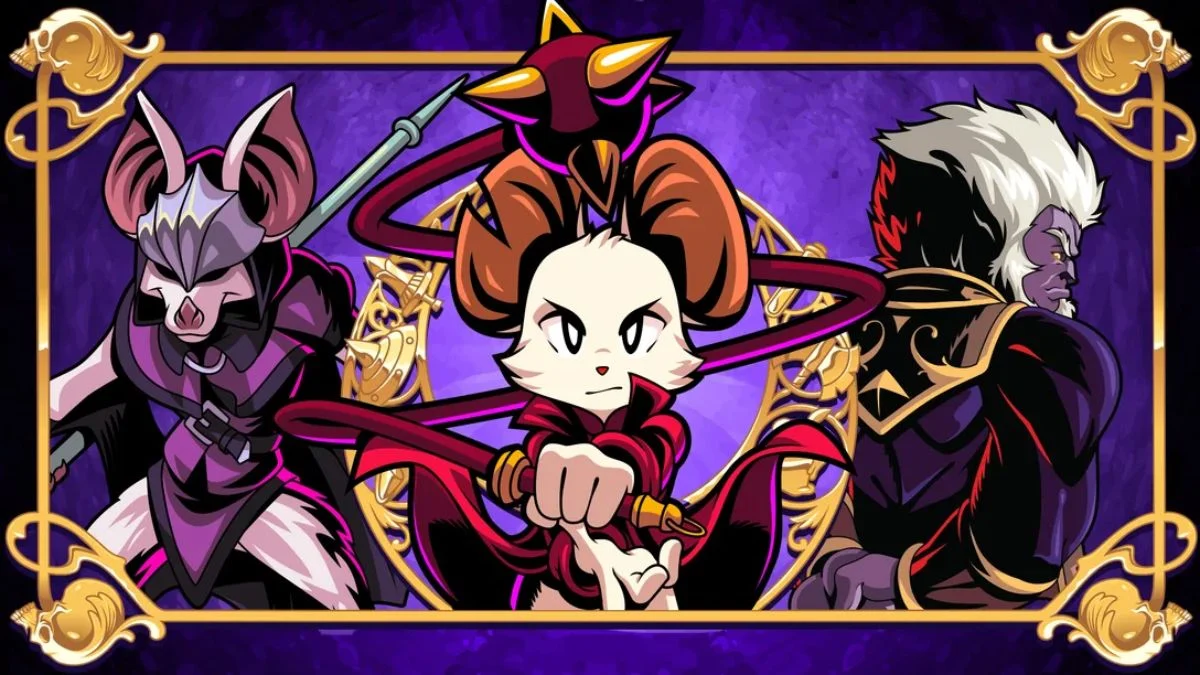
From the long-awaited Slay the Spire 2 and Yacht Club Games’ gorgeous Mina the Hollower to surprise hits such as MECCHA CHAMELEON, Big Walk and ReStory: Chill Electronics Repairs, there is a ridiculous amount of variety to explore.
So, if you’re trying to figure out which indie games of 2026 deserve your attention, here’s the player-focused guide to 11 standout indie games you shouldn’t miss so far this year.
More Game Guides Worth Bookmarking: If character-driven picks are more your thing, we’ve got another list for that. For more, check out our guide to the 11 best games where you play as the villain.
The Big Indie Standouts
1. Slay the Spire 2 — The Roguelike Deckbuilder You Can’t Ignore
Let’s start with the sequel that had an almost impossible job.
Slay the Spire 2 follows one of the defining games of the modern roguelike deckbuilding genre. Mega Crit’s original Slay the Spire set an enormous standard, so expectations for its sequel were always going to be intense.
The sequel entered Early Access on March 5, 2026, and Mega Crit has expanded the formula with new and returning characters, cards, enemies, environments, events, relics and systems.
And there’s one especially important addition: cooperative multiplayer.
Up to four players can climb the Spire together, giving the familiar deckbuilding formula an entirely new dimension.
At its core, the loop remains brilliantly straightforward. You build a deck, make strategic choices, react to unpredictable encounters and attempt another climb after eventually getting defeated.
That basic structure is still the magic.
The sequel gives veteran players plenty of new systems and mechanics to learn, while newcomers can jump straight in without having played the original.
Mega Crit has also made it clear that Early Access is part of the game’s development process. More cards, events, environments, enemies and other content are planned as the team continues balancing and expanding the experience.
That means Slay the Spire 2 isn’t simply trying to copy its predecessor. It’s taking an already proven formula and expanding it while maintaining the design philosophy that made the original so influential.
What makes Slay the Spire 2 worth playing?
- Roguelike deckbuilding gameplay
- New and returning characters
- New cards, enemies, relics, environments and events
- Cooperative multiplayer for up to four players
- High replayability through unpredictable encounters
- Early Access development with additional content planned
Best for: Players who love strategy, deckbuilding, roguelikes, difficult decisions and replayable runs.
More Achievement & Completion Guides: Chasing the right run in a deckbuilder isn’t so different from chasing every ending in a narrative game. For more, see our full Heart of the Forest achievement walkthrough covering all endings.
2. Mina the Hollower — Retro Zelda Energy With Modern Difficulty
If you’ve ever looked at a classic Game Boy Color adventure and thought, “This looks incredible, but I want something more demanding,” Mina the Hollower deserves your attention.
Developed by Yacht Club Games, the studio behind Shovel Knight, Mina the Hollower launched on May 29, 2026, following more than six years of development.
The first thing you’ll notice is its visual identity.
The game deliberately channels the look and feel of Game Boy Color-era adventures, but this isn’t simply a nostalgia project. Underneath that retro presentation is a modern action-adventure built around exploration, demanding combat, interconnected environments and character progression.
You play as Mina, a renowned Hollower who ventures onto a cursed island filled with monsters, secrets and dangerous bosses.
And Mina has some seriously useful tools.
She can burrow underground, use her whip, and equip different weapons, Sidearms and Trinkets to customize how she approaches the game’s challenges.
The adventure is also considerably bigger than its 8-bit-inspired presentation might suggest.
Yacht Club Games has packed the game with dozens of regions, more than 25 bosses and mini-bosses, 60 Trinkets, a level-up system, New Game Plus and numerous gameplay modifiers.
That’s a lot more than a simple retro throwback.
The result is a game that feels familiar immediately while still having enough modern mechanical depth to stand on its own.
After launch, Yacht Club Games highlighted the game’s exceptionally strong critical reception, describing Mina the Hollower as the highest-rated game of the year on Metacritic at the time.
For players who grew up with classic Zelda-style adventures but want something tougher, Mina is one of the year’s most obvious indie games to check out.
What makes Mina the Hollower worth playing?
- Game Boy Color-inspired presentation
- Action-adventure exploration
- Challenging combat
- Interconnected environments
- Underground burrowing
- Whip-based combat
- Weapons, Sidearms and Trinkets
- Dozens of regions
- More than 25 bosses and mini-bosses
- 60 Trinkets
- Level-up system
- New Game Plus
- Gameplay modifiers
Best for: Players who love retro adventures, Zelda-style exploration, challenging combat and nostalgic visuals with modern mechanics.
More Atmospheric Adventure Breakdowns: A haunting, moody journey isn’t unique to Mina’s cursed island. For more, read our Little Nightmares III ending explained, covering Low and Alone’s fate.
3. Mewgenics — The Cat-Breeding Roguelike That Shouldn’t Work This Well
Some game concepts sound completely ridiculous until you actually see them in action.
Mewgenics is one of those games.
Created by The Binding of Isaac creator Edmund McMillen and developer Tyler Glaiel, Mewgenics combines tactical combat, roguelike progression and genetic breeding with an army of cats.
Yes. Cats.
But underneath the absurd premise is a surprisingly deep system-driven game.
Released on February 10, 2026, Mewgenics lets players breed cats, manipulate their genetics, develop abilities and send increasingly bizarre feline creations into dangerous turn-based adventures.
The breeding system is a huge part of the experience.
Instead of simply collecting increasingly powerful characters, you’re effectively building an entire lineage. You experiment with combinations of traits, abilities and mutations, creating cats that can become dramatically stronger—or considerably stranger.
That unpredictability works perfectly with the roguelike structure.
Every run gives you opportunities to develop your team differently, encouraging experimentation rather than forcing you to follow one fixed strategy.
And when a run fails, that failure becomes part of the process.
That’s exactly what makes the concept so effective. Mewgenics takes an idea that sounds like a joke and builds sophisticated systems around it.
A major publisher might spend years trying to explain why a tactical roguelike about genetically engineered cats deserves to exist.
Mewgenics simply exists.
What makes Mewgenics worth playing?
- Tactical turn-based combat
- Roguelike progression
- Cat breeding
- Genetic manipulation
- Traits, abilities and mutations
- Lineage-building
- Highly unpredictable team development
- Experimental gameplay possibilities
Best for: Players who enjoy roguelikes, tactical combat, experimentation, weird concepts and games with deep systems.
Sci-Fi Fate Game Guides: Wondering what happens to a beloved character after a run ends isn’t limited to feline experiments. For more, find out whether Hugh dies in Pragmata, with all endings explained.
4. Cairn — When Climbing Becomes Survival
Cairn takes something we normally think of as a simple real-world activity—climbing—and turns it into an intense survival experience.
Developed by The Game Bakers, the studio behind Furi and Haven, Cairn launched on January 29, 2026.
You play as Aava, a professional climber attempting to reach the summit of Mount Kami, a peak that nobody has successfully conquered.
But Cairn doesn’t treat climbing as a background activity.
Climbing is the game.
You have to search for holds, manage your balance, position your hands and feet, place pitons and carefully manage resources while deciding exactly how you want to approach the mountain.
And yes, mistakes matter.
One bad move can send Aava tumbling down the cliff.
But Cairn isn’t simply a difficult climbing simulator. The physical journey is connected to Aava’s personal story, exploring themes including ambition, sacrifice, relationships, regret and the psychological cost of pursuing an obsession.
That creates a fascinating rhythm.
One moment you’re quietly taking in the mountain and planning your next move. The next, you’re desperately searching for the next safe handhold while trying not to fall.
The combination of physical simulation, exploration and narrative makes Cairn one of the year’s most unusual indie experiences.
What makes Cairn worth playing?
- Realistic-feeling climbing mechanics
- Route planning
- Hand and foot positioning
- Balance management
- Piton placement
- Resource management
- Exploration
- A personal narrative centered on Aava
- Themes of ambition, sacrifice, relationships and regret
Best for: Players who want something tense, atmospheric, physical and dramatically different from conventional action games.
More Cairn Guides: If the summit’s got you stuck, we’ve mapped out every possible outcome. For more, check our complete narrative guide to reaching every ending in Cairn.
Indie Games Built Around Friends, Choices and Memories
5. Big Walk — The Co-Op Game Where Friendship Is the Real Mechanic
Sometimes you don’t need a giant combat system, complicated progression tree or 100-hour story to make a game memorable.
Sometimes you just need a bunch of friends, a strange world and enough freedom to cause absolute chaos.
That’s basically Big Walk.
Developed by House House, the creators of Untitled Goose Game, Big Walk launched on August 4, 2026.
It’s a cooperative adventure focused on exploration, communication, puzzles and spending time with friends.
The premise is deliberately loose.
You and your friends head into a huge world, solve challenges, experiment with objects and tools, discover strange situations and generally get lost.
And honestly, getting lost is part of the fun.
Big Walk doesn’t constantly push players toward one rigid objective. Instead, it creates a playground where cooperation and improvisation become the main mechanics.
The game supports two to 12 players, with different versions of its world adapting to the number of people in the session. It also supports crossplay between platforms.
The puzzles matter, but the stories you create while solving them can be even better.
A challenge might be interesting on its own. But when three friends somehow transform a simple objective into complete chaos, that’s the moment you’ll probably remember.
If you’re looking for an indie game to play with friends, Big Walk is absolutely one to put on the list.
What makes Big Walk worth playing?
- Cooperative adventure gameplay
- Exploration
- Communication-based gameplay
- Puzzles
- Objects and tools to experiment with
- Two-to-12-player support
- Different world versions based on player count
- Crossplay
- Improvisational gameplay
Best for: Groups of friends who want a relaxed, funny and unpredictable co-op experience.
More Big Walk Guides: Want to see every corner of that chaotic world? There’s a full roadmap for that. For more, read our Big Walk all endings guide, including the true ending, White Key and Big Game achievement.
6. Esoteric Ebb — Bring Tabletop Chaos Into a CRPG
Remember those tabletop RPG sessions where one completely ridiculous dice roll could derail an entire adventure?
Esoteric Ebb understands that feeling.
Released on March 3, 2026, this single-player CRPG from developer Christoffer Bodegård and publisher Raw Fury combines tabletop-style freedom with a hand-drawn fantasy world filled with political intrigue, eccentric characters and consequential decisions.
The game revolves around a political conspiracy, but you’re given considerable freedom in deciding how to approach different situations.
And then come the dice.
Dice rolls play an important role, meaning success and failure can sometimes depend on circumstances outside your direct control.
That’s intentional.
Instead of giving you a neat list of correct answers, Esoteric Ebb embraces the unpredictability of tabletop role-playing.
A disastrous roll can completely change the story you thought you were going to experience.
Its humor, unusual fantasy setting and focus on player choice make it particularly memorable among this year’s CRPGs.
What makes Esoteric Ebb worth playing?
- Single-player CRPG
- Hand-drawn fantasy world
- Political conspiracy
- Political intrigue
- Eccentric characters
- Consequential decisions
- Tabletop-inspired dice mechanics
- Player freedom
- Unpredictable outcomes
- Humor and unusual fantasy elements
Best for: Tabletop RPG fans and players who enjoy choices, dice-driven chaos and stories that can go in unexpected directions.
More Weighty Story Choices: A single decision reshaping the whole narrative isn’t unique to dice rolls. For more, read our guide on whether to release or destroy Elpis in the Resident Evil Requiem ending.
7. Mixtape — A Coming-of-Age Story Told Through Music
Some games impress you because their mechanics are incredibly deep.
Mixtape hits differently.
Developed by Beethoven & Dinosaur, the studio behind The Artful Escape, Mixtape launched on May 7, 2026.
The story follows three friends during their final night together before graduating from high school.
Instead of presenting that coming-of-age story as a conventional linear adventure, Mixtape transforms memories into playable experiences.
A carefully assembled playlist pulls the characters into dreamlike recreations of moments from their adolescence.
From there, the game explores friendship, romance, mischief, uncertainty and the complicated emotions surrounding the end of an era.
And the soundtrack isn’t just decoration.
It features artists including DEVO, Roxy Music, Lush, The Smashing Pumpkins, Iggy Pop, Siouxsie and the Banshees, and Joy Division.
The gameplay also moves beyond a traditional adventure structure. You can skate, explore, take photographs, play mini-games and experience other activities woven directly into the narrative.
Mixtape is relatively short compared with many modern games, but that’s arguably part of its identity.
It feels deliberately structured more like a piece of music or a coming-of-age film than a game designed to occupy dozens of hours.
If you’re looking for something emotional, stylish and genuinely different, Mixtape is one of 2026’s most memorable indie releases.
What makes Mixtape worth playing?
- Coming-of-age narrative
- Three friends on their final night before graduation
- Memories turned into playable experiences
- Dreamlike sequences
- Friendship, romance and adolescence
- Skating
- Exploration
- Photography
- Mini-games
- Major licensed music soundtrack
- Relatively short, deliberately structured experience
Best for: Players who want emotional storytelling, music-driven experiences and a coming-of-age adventure rather than a massive 50-hour game.
More Nostalgic Slice-of-Life Stories: Dreamlike memories and a bittersweet sense of nostalgia aren’t exclusive to one final high school night. For more, dive into our breakdown of Tomodachi Life: Living the Dream’s secret ending, final ending and Outer Space Tour.
8. MECCHA CHAMELEON — Hide-and-Seek, Except You Have to Paint Yourself
Here’s one of the year’s simplest—and weirdly brilliant—multiplayer ideas.
MECCHA CHAMELEON turns hide-and-seek into a competitive game where hiding requires actual artistic improvisation.
Released on June 9, 2026, the game divides players into Hiders and Seekers.
The Hiders have to paint their white characters so they blend into the surrounding environment.
Meanwhile, the Seekers have to find them before the timer runs out.
Simple, right?
But once you actually play, there’s a surprising amount to think about.
You aren’t just deciding where to hide. You have to decide how convincingly you can reproduce the colors and patterns around you.
A clever disguise can keep you hidden.
A terrible position can make you instantly obvious.
The game supports public matches and streaming, with two to 10 players recommended depending on the host’s network environment.
It’s inexpensive, easy to understand and instantly watchable, which helps explain why it became one of 2026’s more unexpected indie multiplayer hits.
MECCHA CHAMELEON is a great reminder that one genuinely clever mechanic can sometimes carry an entire multiplayer experience.
What makes MECCHA CHAMELEON worth playing?
- Competitive multiplayer
- Hider versus Seeker gameplay
- Paint-based camouflage
- Environmental color matching
- Public matches
- Streaming support
- Two-to-10-player recommended sessions depending on host network conditions
- Simple rules with room for creative strategies
Best for: Players who want quick, funny multiplayer matches with friends, viewers or online opponents.
More Online Multiplayer Picks: Clever, watchable multiplayer concepts aren’t limited to one platform. For more, browse our list of the 11 best horror games on Roblox in 2026, from DOORS to psychological nightmares.
Farming, Movement and the Most Relaxing Repair Shop Ever
9. Fields of Mistria — A Fantasy Farming Sim With Plenty to Do
Not every great indie game needs to make your heart race.
Sometimes you just want to farm, explore, make friends and slowly build something beautiful.
That’s where Fields of Mistria comes in.
Developed by NPC Studio, the game officially launched into version 1.0 on August 5, 2026, following its Early Access period.
It combines farming, romance, exploration, crafting and magic with a deliberately nostalgic visual style.
The setup begins with you inheriting an overgrown farm in Mistria.
But there’s a bigger problem.
An earthquake has caused destruction throughout the surrounding town and triggered strange magical changes.
From there, you help restore the town while building your own life.
One of the game’s biggest strengths is how many different systems you can combine.
You can farm, mine, catch bugs, build relationships, craft items, explore the world and progress through magical systems.
There’s no requirement to force yourself into one particular routine.
The game openly draws inspiration from classic farming and life-simulation RPGs while establishing its own visual identity and fantasy setting.
Its move from Early Access into version 1.0 also makes 2026 an important year for Fields of Mistria. What began as an Early Access farming sim has grown into a considerably more complete experience.
If you love the social and farming elements of games such as Stardew Valley but want something with a stronger fantasy identity, Fields of Mistria is worth checking out.
What makes Fields of Mistria worth playing?
- Farming
- Romance
- Exploration
- Crafting
- Magic
- Mining
- Bug-catching
- Relationship systems
- Town restoration
- Fantasy setting
- Nostalgic visual style
- Version 1.0 launched August 5, 2026 after Early Access
Best for: Players who want a cozy farming and life-simulation experience with fantasy, relationships and exploration.
More Multiplayer Ending Rundowns: Wrapping up a cooperative or competitive game cleanly is its own kind of satisfying finish. For more, see our Splatoon Raiders all endings explained, covering the good, bad, secret and post-credits outcomes.
10. Denshattack! — Skate, Grind and Ride a Train Through a Japanese Dystopia
There are plenty of indie games with unusual concepts.
But Denshattack! might have one of the easiest concepts to understand immediately:
Ride a train. Skate on it. Do ridiculous tricks. Chase high scores.
Developed by Undercoders, Denshattack! launched on July 15, 2026.
The game combines train riding, skating-inspired movement, platforming and score chasing within a colorful Japanese dystopian setting.
Players flip, grind and perform tricks on a train while moving through environments featuring cities, meadows, volcanoes and oceans.
The goal isn’t simply to reach the end of a level.
You need to master movement, maintain momentum and chase increasingly impressive scores.
There’s also a larger story involving rival gangs and a shady megacorporation, giving the movement system a bigger narrative context.
What really makes Denshattack! stand out is how confidently it commits to the idea.
The train isn’t merely transportation.
It’s basically one enormous moving playground.
For anyone who loves movement-based games, score chasing and mastering increasingly difficult routes, Denshattack! is one of 2026’s most refreshing indie experiments.
What makes Denshattack! worth playing?
- Train-based movement
- Skating-inspired gameplay
- Platforming
- Tricks and flips
- Grinding
- Momentum-based movement
- Score chasing
- Japanese dystopian setting
- Cities, meadows, volcanoes and oceans
- Rival gangs
- Shady megacorporation
- Increasingly challenging routes
Best for: Players who love stylish movement systems, score chasing, tricks and games built around mastering mechanics.
More Character Secrets Revealed: A stylish surface can hide a deeper story detail, and that’s true well beyond skating trains. For more, read our story on whether Leon is married in Resident Evil Requiem and the wedding ring secret.
11. ReStory: Chill Electronics Repairs — The Cozy Y2K Repair Game
And finally, we have perhaps the most relaxing game on this entire list.
ReStory: Chill Electronics Repairs was developed by Mandragora and published by tinyBuild, launching on August 6, 2026.
The premise is wonderfully specific.
You operate an electronics repair shop in a nostalgic Y2K-inspired setting, where your job involves taking apart old devices, cleaning components, replacing broken parts and putting everything back together.
But there’s more here than a repair simulator.
The shop is populated by characters with their own stories, and the game includes narrative choices and multiple endings alongside its hands-on restoration mechanics.
That gives the experience a combination of shop management, repair simulation and character-driven storytelling.
And the nostalgia is a huge part of the appeal.
Old electronics, forgotten gadgets and the tactile satisfaction of taking something apart and getting it working again are at the center of the experience.
Steam currently lists the game with an overwhelmingly positive English-language reception, reinforcing its position as one of 2026’s successful smaller-scale surprises.
It is exactly the kind of game that sounds incredibly niche until you actually play it.
Then suddenly, cleaning a component, replacing a broken part and watching an old piece of technology come back to life becomes weirdly satisfying.
What makes ReStory: Chill Electronics Repairs worth playing?
- Electronics repair
- Shop management
- Y2K-inspired setting
- Taking apart old devices
- Cleaning components
- Replacing broken parts
- Reassembling electronics
- Character-driven stories
- Narrative choices
- Multiple endings
- Nostalgic gadgets and technology
- Overwhelmingly positive English-language Steam reception
Best for: Players who want a relaxing, nostalgic and hands-on game with light management and character-driven storytelling.
More Lore & Ending Deep-Dives: Cozy on the surface doesn’t mean a story can’t have layers underneath. For more, check out our Reanimal story explained, covering plot, lore and all endings.
Why These 11 Indie Games Stand Out in 2026
The biggest thing to understand about the 2026 indie scene is that its strength isn’t just the number of good games arriving.
It’s the variety of ideas.
Look at Slay the Spire 2. Mega Crit is expanding a genre-defining roguelike deckbuilder with new systems and cooperative multiplayer while continuing development through Early Access.
Then there’s Mina the Hollower, which takes the visual language of classic Game Boy Color adventures and combines it with modern exploration, progression and demanding combat.
Cairn takes climbing and turns it into an entire physical survival system.
Big Walk takes communication and friendship and makes them central to the gameplay.
Mewgenics proves that a ridiculous concept involving genetically manipulated cats can support surprisingly sophisticated tactical and roguelike systems.
Esoteric Ebb brings tabletop-style uncertainty and dice-driven chaos into a modern CRPG.
Mixtape uses music and memories to build a coming-of-age story rather than treating its soundtrack as simple background decoration.
And then there are games such as MECCHA CHAMELEON, Denshattack!, Fields of Mistria and ReStory: Chill Electronics Repairs, each of which demonstrates just how much creative space exists outside traditional AAA design.
That’s ultimately what makes this year’s indie scene so interesting.
These aren’t simply smaller versions of blockbuster games.
They’re experimenting with ideas that might never receive the green light in a conventional AAA production.
A game about genetically engineered cats sounds strange.
A game about painting yourself to hide in the environment sounds incredibly simple.
A game about repairing old electronics sounds ridiculously niche.
A game about climbing one impossible mountain sounds like it shouldn’t work unless climbing itself is the entire point.
And yet, these games are exactly what makes the indie scene so exciting.
With several months of 2026 still remaining, this list could change before the year ends. New releases and major updates could introduce entirely new contenders.
For now, though, these 11 indie games represent some of the most distinctive, memorable and worthwhile indie experiences of 2026 so far.
Whether you’re looking for a brutally replayable roguelike, a nostalgic adventure, a tactical cat experiment, a co-op game for your friends, a cozy farming world, a movement-focused challenge or something completely unexpected, there’s a very good chance one of these games has exactly the kind of experience you’re looking for.
More Seasonal Game Lists: If variety is what drew you to this list, there’s a whole seasonal roundup waiting too. For more, check out our guide to the 11 best horror games to play on Halloween 2026, including Silent Hill 2, REANIMAL and Halloween: The Game.
Quick Guide: Which 2026 Indie Game Should You Try?
| Game | Best For | Core Experience |
| Slay the Spire 2 | Strategy and roguelike fans | Deckbuilding, combat and replayability |
| Mina the Hollower | Retro adventure fans | Exploration, combat and progression |
| Mewgenics | Tactical roguelike fans | Cat breeding, genetics and turn-based combat |
| Cairn | Immersive challenge seekers | Climbing, survival and narrative |
| Big Walk | Friend groups | Co-op exploration, puzzles and chaos |
| Esoteric Ebb | Tabletop RPG fans | Choices, dice and unpredictable storytelling |
| Mixtape | Narrative-focused players | Music, memories and coming-of-age storytelling |
| MECCHA CHAMELEON | Multiplayer players | Hide-and-seek and creative camouflage |
| Fields of Mistria | Cozy-game fans | Farming, relationships, crafting and magic |
| Denshattack! | Movement fans | Train riding, tricks and score chasing |
| ReStory: Chill Electronics Repairs | Relaxation and nostalgia | Electronics repair, management and storytelling |
Disclaimer
This is an editorial selection of standout indie games of 2026 so far, based on a combination of critical reception, player response, originality, design quality and overall impact. The selection is subjective and may change as additional games release or receive major updates later in the year.
Sources
- Mega Crit Games — Slay the Spire 2 Early Access Launch
- Mega Crit Games — Slay the Spire 2 Press Kit
- Yacht Club Games — Mina the Hollower Press Kit
- Yacht Club Games — Mina the Hollower Launch Information
- Steam — Mewgenics
- PlayStation — Cairn
- House House — Big Walk Official Site
- Big Walk — Official FAQ
- Steam — Esoteric Ebb
- Annapurna Interactive — Mixtape
- Steam — MECCHA CHAMELEON
- Fields of Mistria — Official Press Kit
- Paralives — Official Development Updates
- Steam — Denshattack!
- Steam — ReStory: Chill Electronics Repairs
Featured Image Credit:
- Yacht Club Games


Leave a Reply