

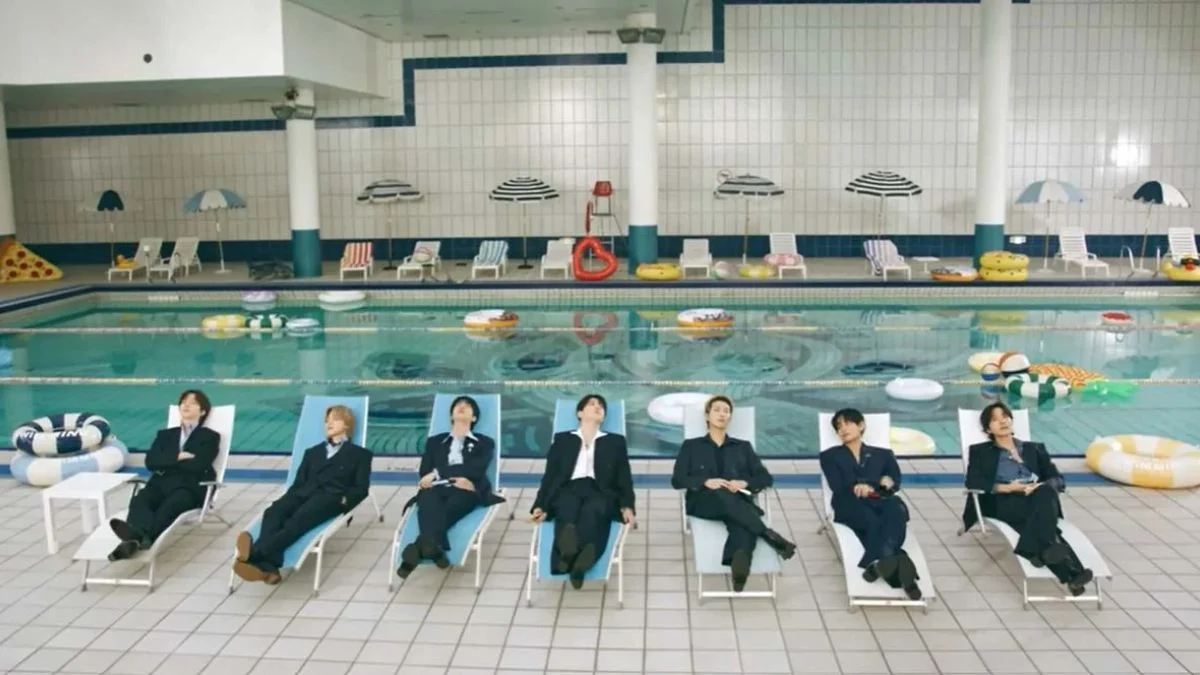
BTS’ “SWIM” faced a copyright challenge that raised questions about songwriting credits, access to unreleased music and the ownership of creative work. Three songwriters claimed that the group’s 2026 comeback single shared substantial similarities with an unreleased composition they had written under the same title, turning the track into the subject of a U.S. legal dispute.
But before the allegations could be tested in court, the case took an unexpected turn. The litigation, which involved HYBE, Big Hit Music and several credited songwriters, ended after the plaintiffs took steps to withdraw their claims, leaving an important question unanswered: what did the dismissal actually establish about BTS’ “SWIM”?
BTS ‘SWIM’ Copyright Lawsuit Filed Against HYBE in July 2026
The copyright dispute began on July 8, 2026, when songwriters Steve Cooper, Jon Sandler and Greylyn Johnson filed a lawsuit in the U.S. District Court for the Central District of California.
Registered as case number 2:26-cv-07412, the action alleged that BTS’ “SWIM”, the lead single from the group’s fifth full-length album ARIRANG, reproduced elements of an unreleased composition created by the plaintiffs.
According to their complaint, the three songwriters had completed their own “SWIM” demo in March 2025. They subsequently circulated the recording to contacts in the music industry, allegedly including representatives connected with Artist Publishing Group (APG).
The plaintiffs claimed that their earlier recording eventually became accessible to individuals involved in creating BTS’ version of the song.
This was a significant part of their argument. Rather than relying solely on similarities between two compositions, the lawsuit also attempted to establish a possible chain of access connecting their unreleased demo to the songwriting team behind BTS’ track.
However, these allegations remained claims made by the plaintiffs and were never established through a judicial finding.
Following the Geonwoo-WAKEONE Contract Dispute
K-pop legal disputes can involve very different issues, from copyright claims to contracts between artists and agencies. See our Geonwoo WAKEONE lawsuit report for another recent K-pop legal dispute.
What Did the Songwriters Claim Was Similar Between the Two ‘SWIM’ Songs?
The central issue in the lawsuit was the alleged substantial similarity between the plaintiffs’ unreleased composition and BTS’ commercially released track.
Cooper, Sandler and Johnson argued that the two works shared several musical elements, including:
- Melodic material
- Harmonic progressions
- Rhythm
- Lyrics
- Other similarities between the compositions
The plaintiffs maintained that these similarities went beyond what could reasonably be explained by coincidence or independent creation.
They also pointed to the alleged circulation of their demo before BTS’ “SWIM” was released.
According to the complaint, the recording had been sent to representatives associated with Artist Publishing Group. A listening record from the music-sharing platform Disco was also attached to the lawsuit as an exhibit.
The plaintiffs further alleged that the demo subsequently became accessible to Derrick Milano, one of the credited writers of BTS’ “SWIM” and a songwriter associated with APG.
These details formed part of the plaintiffs’ proposed argument about access to their work. Importantly, the court never determined whether the demo actually reached the people responsible for BTS’ composition.
Musicologist Alexander Stewart Provided an Analysis of the Songs
Another important element of the complaint was an analysis prepared by musicologist Alexander Stewart.
According to the plaintiffs, Stewart produced a preliminary report comparing their unreleased composition with BTS’ “SWIM”. They cited his assessment in the lawsuit to support their allegation that the similarities were not coincidental.
The complaint quoted his conclusion:
“In my expert opinion, independent creation of BTS can be ruled out and copying is the inescapable conclusion.”
The statement attracted attention because it presented a particularly strong opinion about the relationship between the two musical works.
However, there is an important distinction: Stewart was an expert retained by the plaintiffs, and his conclusion was quoted in their complaint. It was not a finding made by the court.
Since the litigation ended before the evidence could be fully examined, the court never adopted or rejected his analysis.
HYBE, Big Hit Music and Seven Songwriters Were Named in the Lawsuit
Although the dispute centred on BTS’ “SWIM”, the lawsuit was directed primarily at the companies and individuals allegedly involved in creating and exploiting the song.
The original complaint named the following corporate defendants:
- HYBE Co., Ltd.
- HYBE America Inc.
- HYBE Music Services, LLC
- Big Hit Music
- Artist Publishing Group
It also named seven credited writers associated with the track:
| Name | Professional identity |
| James Essien | Credited songwriter |
| Sean Foreman | Credited songwriter |
| Tyler Spry | Credited songwriter |
| Ryan Tedder | OneRepublic frontman and credited songwriter |
| Kirsten Spencer | Credited songwriter |
| Derrick Gray | Professionally known as Derrick Milano |
| Jamison Baken | Professionally known as Le Clair |
Ryan Tedder, best known as the frontman of OneRepublic, was among the individuals named in the proceedings.
An important detail concerns BTS member RM. Although he is credited as one of the songwriters on “SWIM”, neither RM nor any other BTS member was named as an individual defendant in this lawsuit.
HYBE is the parent company of Big Hit Music, while HYBE America operates as its U.S. subsidiary.
Big Hit Music Rejected the Copyright Allegations
When the lawsuit became public in July, Big Hit Music firmly rejected the accusations.
The company disputed the plaintiffs’ claims and maintained that BTS’ “SWIM” had been independently created.
In its response, Big Hit Music stated:
“The allegations in the lawsuit are unilateral and unsubstantiated.”
The company also made its position on the song’s creation clear:
“‘SWIM’ is an independent creation. We will respond firmly through the appropriate legal process.”
These statements represented Big Hit Music’s response to the allegations.
The company’s position and the plaintiffs’ accusations were never tested through a final judicial decision. Consequently, the eventual dismissal did not establish which side was legally correct.
What Compensation and Legal Remedies Did the Plaintiffs Seek?
The lawsuit sought financial compensation and other remedies connected to the alleged use of the plaintiffs’ composition.
Cooper, Sandler and Johnson requested an injunction that would prevent the continued use or exploitation of BTS’ “SWIM”.
They also sought monetary damages and a share of the profits generated by the track.
In addition, the plaintiffs presented an alternative claim seeking recognition as co-writers of nearly all of BTS’ “SWIM”, together with a corresponding share of the song’s profits.
These requests were part of the remedies sought in the original complaint. None was granted because the litigation ended before a court reached the merits.
BTS ‘SWIM’ Copyright Case Ends With Voluntary Dismissal on November 4
After several months of litigation activity, the most significant development arrived on November 4, 2026.
The plaintiffs’ attorney, Clair G. Burrill, filed a notice stating that the action was being dismissed in its entirety.
The filing did not explain why the three songwriters had decided to withdraw their lawsuit.
U.S. District Judge Otis D. Wright II dismissed the action without prejudice on the same day. The court also vacated the remaining dates and deadlines and directed the clerk to close the case.
The docket recorded the development as a voluntary dismissal under Federal Rule of Civil Procedure 41(a)(1).
This brought the U.S. litigation to an end less than four months after the original complaint was filed on July 8.
The case did not proceed to trial, and the court never issued a substantive decision on the alleged copyright infringement.
Timeline of the BTS ‘SWIM’ Copyright Lawsuit
| Date | Development |
| March 2025 | Plaintiffs say they completed their unreleased “SWIM” demo. |
| July 8, 2026 | Cooper, Sandler and Johnson filed their copyright lawsuit. |
| September 28, 2026 | A party was voluntarily dismissed from the case. |
| November 4, 2026 | Plaintiffs requested dismissal of the entire action. |
| November 4, 2026 | Judge Otis D. Wright II dismissed the case without prejudice and ordered the case closed. |
The November dismissal followed earlier procedural developments, including extensions and scheduling activity.
According to reporting based on the court record, the plaintiffs withdrew the action before the defendants had filed a substantive answer addressing the allegations.
As a result, the parties never reached a full proceeding in which the competing evidence could be assessed.
Does the Dismissal Mean BTS Won the Copyright Dispute?
The legal distinction surrounding the November 4 decision is particularly important.
The case was dismissed without prejudice, meaning the dismissal did not amount to a judicial determination that BTS’ “SWIM” was non-infringing.
At the same time, it did not establish that the plaintiffs’ accusations were correct.
There was no trial examining whether the compositions were substantially similar, whether the earlier demo had reached members of BTS’ songwriting team, or whether the similarities described in the complaint were sufficient to establish copyright infringement.
In other words, the court did not rule on the underlying copyright allegations.
The dismissal also did not categorically prevent the plaintiffs from bringing the same claims again, because the case ended without prejudice. However, there is currently no verified indication that they intend to refile the lawsuit.
For now, the original case is closed, with no judicial finding of copyright infringement arising from this action.
Was There a Settlement Between HYBE and the Songwriters?
Another question surrounding the withdrawal concerns whether the parties reached a private settlement.
The November 4 court filings did not identify a settlement agreement or state that the dispute had been resolved through a financial compromise.
Reports published following the dismissal also noted that the court documents did not disclose a settlement.
HYBE separately addressed the situation through a representative who spoke to Korean outlet Dispatch.
According to the report, the representative described the development by saying the plaintiffs had “unilaterally withdrew the suit” and stated that HYBE had not agreed to a settlement or compromise.
This was HYBE’s characterization of the situation, rather than a judicial finding.
Based on the available filings and statements, the most accurate description is that the plaintiffs voluntarily withdrew the lawsuit, the court dismissed it without prejudice, and no settlement was identified in the dismissal documents.
The reason behind the plaintiffs’ decision has not been established by the court record.
‘SWIM’ Was One of BTS’ Biggest Releases of 2026
The legal dispute involved a track that had already achieved major commercial success.
Released in March 2026 as the lead single from BTS’ fifth full-length album ARIRANG, “SWIM” became one of the group’s significant comeback releases.
The song debuted at No. 1 on the Billboard Hot 100, giving BTS its seventh chart-topping single.
The album also made a major impact in the United States, entering the Billboard 200 at No. 1.
The track’s commercial performance was relevant to the plaintiffs’ requested remedies, which included damages and a share of profits generated through its exploitation.
However, despite the song’s success and the allegations surrounding its creation, the copyright lawsuit ended without a judicial assessment of the claims.
November Dismissal Is Separate From Other BTS Copyright Disputes
The lawsuit filed by Cooper, Sandler and Johnson concerned a specific allegation involving BTS’ “SWIM” and their earlier unreleased composition of the same title.
It should not be confused with other copyright disputes involving BTS, HYBE or artists connected to the company.
Other cases may involve different plaintiffs, allegations, defendants and procedural histories. Their outcomes do not determine the legal position in this particular action.
The November 4 dismissal therefore needs to be understood on its own terms: it closed the lawsuit concerning the alleged similarities between the two “SWIM” compositions without a ruling on infringement.
Tracking the Kang Jong Hyun Bithumb Case
Korean entertainment coverage sometimes intersects with broader legal and financial proceedings involving prominent figures. For another major case see our Kang Jong Hyun Bithumb trial prosecution report.
Conclusion: BTS ‘SWIM’ Lawsuit Closes Without Resolving the Copyright Claims
The U.S. copyright lawsuit over BTS’ “SWIM” has ended after Steve Cooper, Jon Sandler and Greylyn Johnson voluntarily withdrew their claims against HYBE, Big Hit Music and the other named defendants.
The November 4, 2026 dismissal brought the case to a close without prejudice, but it did not establish whether the plaintiffs’ composition had been copied or whether BTS’ track was independently created.
Big Hit Music had rejected the allegations from the beginning, while the plaintiffs had relied on claimed musical similarities, an alleged chain of access and a preliminary musicological analysis.
Ultimately, none of those competing positions received a final judicial ruling.
The case is closed for now, and there is no verified indication of a planned refiling or an identified settlement. The most important distinction remains that the lawsuit was withdrawn, but the court never decided the underlying copyright dispute.
Source and Research Disclaimer: This article has been prepared based on research of the sources provided, including Music Business Worldwide, Yonhap News Agency, Korea JoongAng Daily, Dispatch and the U.S. District Court case record. It reflects the information and statements available in those sources at the time of writing. Allegations, expert opinions and statements attributed to the parties are presented as such and should not be interpreted as independent judicial findings.
Sources
- Music Business Worldwide: BTS ‘SWIM’ copyright lawsuit against HYBE dropped by songwriters
- Music Business Worldwide: Big Hit Music rejects ‘SWIM’ copyright claim
- Yonhap News Agency: U.S. copyright lawsuit over BTS song ‘Swim’ dropped
- Korea JoongAng Daily: BTS ‘Swim’ copyright suit dropped
- U.S. District Court case record: Steve Cooper et al. v. HYBE Co., Ltd. et al.
- Dispatch: BTS ‘SWIM’ copyright lawsuit concluded
Featured Image Credit: Big Hit Music / HYBE


Leave a Reply