

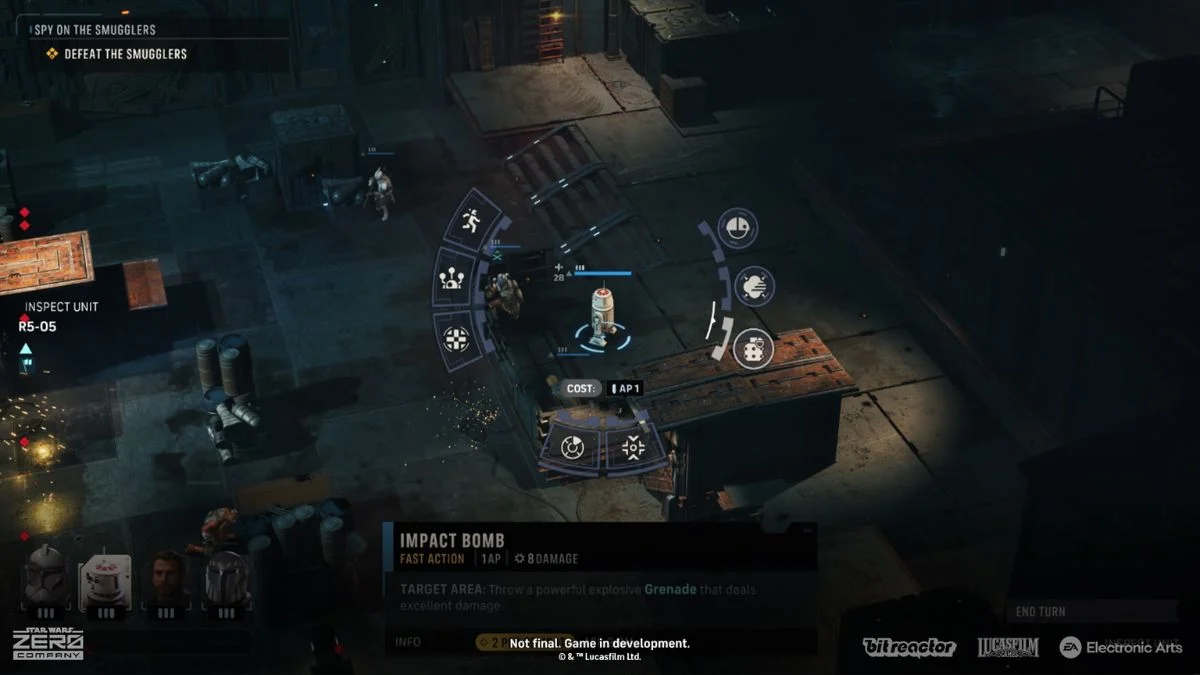
Star Wars Zero Company is shaping up to be a tactical playground where the right class combination can completely change how a mission unfolds. Developed by Bit Reactor and published by Electronic Arts, the turn-based strategy game features 12 Specializations in total: eight standard classes and four exotic classes connected to specific characters or droids.
The really exciting part is that Zero Company does not force every operator into one permanent battlefield role. Most operators can eventually take a Secondary Specialization, allowing two standard classes to be combined into one character. That opens the door to builds that can heal, disrupt, flank, tank, snipe or chain attacks in ways that go far beyond a traditional class system.
This guide breaks down all 12 Star Wars Zero Company classes, what each Specialization does, which abilities have been confirmed, who can use the exotic classes and how the dual-Specialization system can turn a four-person squad into a tactical nightmare for your enemies. The game is scheduled to launch on August 27, 2026, so some abilities, upgrade values, progression details and the identity of the fourth exotic class may still change before or after release.
New Releases Worth Tracking: Zero Company isn’t the only tactical newcomer worth getting ahead of before launch day hits. To learn more, read our guide on the Mistfall Hunter fatal error crash fix.
How the Star Wars Zero Company Class System Works
Every operator’s combat setup is built from several separate pieces: a Talent, Weapon Specialization, Primary Specialization and eventually a Secondary Specialization. The four weapon types are Longarm, Repeater, Rifle and Pistol, while Talents provide additional abilities that exist separately from an operator’s chosen class.

The Primary Specialization establishes the operator’s main tactical identity. Standard Specializations can be changed through the Personnel facility in the Den, giving players considerable freedom when experimenting with squad compositions.
The Secondary Specialization arrives midway through the campaign. Once unlocked, it lets an operator combine two different standard Specializations, creating a much larger pool of possible builds. An operator can therefore carry abilities from two different class kits instead of being locked into a single battlefield role.
Every Specialization also has its own Ultimate, Standard ability and Passive abilities. Ultimates use the squad’s shared Advantage resource rather than simply costing Action Points, so deciding when to spend that resource becomes another major tactical decision.
That flexibility is a huge part of what makes the system interesting. You are not merely choosing “the healer” or “the sniper.” You are building an operator whose Talent, weapon and two Specializations can work together as one complete loadout.
More Squad-Building Breakdowns: If class systems built around stacking specializations are your thing, another recent tactical roster is worth sizing up before you commit to a build. To learn more, read our guide on the Mistfall Hunter class tier list.
The 8 Standard Star Wars Zero Company Classes Explained
The eight standard Specializations are Assault, Gunslinger, Heavy, Medic, Scoundrel, Scout, Sharpshooter and Soldier. They form the core of the game’s customizable tactical system and are available to Hawks and customizable recruits. Each one is designed around a different battlefield job, so building a squad is really about deciding which roles you want covered and which combinations can create the strongest synergies.
Assault
Assault is made for players who hate sitting still.
This frontline Specialization focuses on mobility, flanking and medium- to close-range combat. Assault operators are especially effective against enemies hiding behind cover because their abilities help them maneuver into positions where they can finish targets at close range.
The confirmed Ultimate is Sweeping Salvo, while Bull Rush allows an operator to charge an enemy and shove them backward. That ability can become especially brutal around environmental hazards. Knocking an enemy into a void can result in an instant kill.
Assault therefore is not simply a “run forward and shoot” class. Positioning is part of its damage strategy, and the battlefield itself can become a weapon.
Best for: Aggressive players who want to flank, close distance and use enemy positioning against them.
Gunslinger
Gunslinger turns blaster combat into a potential kill chain.
Rather than concentrating entirely on one target, this Specialization specializes in multi-target blaster attacks and fast strikes. Its Ultimate is Open Fire, reinforcing the class’s ability to spread damage across multiple enemies.
One of Gunslinger’s most exciting mechanics is its ability to refresh an Action Point after securing a kill with the appropriate ability. That creates the possibility of chaining finishing blows together when the rest of the squad has already weakened several enemies.
The setup matters, though. Gunslingers need vulnerable targets within reach, so weakening enemies before their turn can turn an ordinary attack into a devastating sequence.
Best for: Players who love rapid-fire offense, multiple targets and chaining one kill into another.
Heavy
Heavy is basically your squad’s walking fortress.
This heavily armored frontline class specializes in surviving enemy fire and absorbing attacks while operating in exposed positions. That makes it an ideal anchor when the rest of your squad needs space to maneuver.
Its Ultimate is Bulwark, which can taunt enemies and increase the Heavy’s defenses. Heavy also has an additional defensive passive compared with the other standard Specializations, giving it an especially strong survivability focus.
Pairing Heavy with a Medic can create a durable frontline capable of taking pressure while teammates attack from safer positions.
Best for: Players who want a dependable tank, a strong frontline anchor and a more forgiving option while learning the game’s tactical systems.
Medic
Every tactical squad eventually learns the same painful lesson: keeping people alive matters.
Medic specializes in healing, preventing Injuries and improving allies both physically and psychologically. Its Ultimate is Morale Boost, making the class a dedicated support option rather than simply another source of damage.
That becomes especially important because Zero Company uses permadeath mechanics for custom operators and most story companions. A Medic can help prevent injuries and recover from mistakes before those mistakes become permanent campaign disasters.
Medic also has offensive utility. Combat Stim can increase an ally’s health and damage, creating some nasty combinations with classes that can make multiple attacks.
One especially strong example is Medic plus Gunslinger, where Combat Stim can boost the Gunslinger’s offensive output across its attacks.
Best for: Players who want dependable healing, injury prevention and powerful team support.
Scoundrel
Scoundrel is the wildcard of the standard roster.
This class is built around exploiting opportunities rather than following one rigid battlefield formula. Its Ultimate is Easy Mark, while abilities such as Identify Weakness can prepare an enemy for an attack from another member of the squad.
That makes Scoundrel particularly dangerous when you plan your turns around teamwork. Instead of simply damaging an enemy, the Scoundrel can create the opening that lets another operator deliver the knockout blow.
The most obvious example is Scoundrel + Sharpshooter. Identify Weakness can apply Vulnerable to a target, setting that enemy up for a guaranteed critical hit from the Sharpshooter’s next attack.
Best for: Players who enjoy setting traps, creating openings and letting teammates capitalize on them.
Scout
Scout is the squad’s information and planning specialist.
This tactical operator focuses on reconnaissance, timing and creating opportunities for the entire team. Its Ultimate is Ambush, and Scout abilities can generate Advantage while helping reveal threats.
That means Scout is not necessarily the character you bring because you want the biggest damage number on the screen. Its real value comes from improving the conditions under which the entire squad fights.
In a game where positioning and timing can decide a turn before the first shot is fired, that kind of support can be enormous.
Best for: Players who enjoy planning ahead, gathering information and setting up advantageous turns.
Sharpshooter
Sharpshooter is the precision killer.
This Specialization is built around long-range engagements and eliminating carefully selected high-value targets before they become major threats. Its Ultimate is Precision Shot, a calculated attack designed around reliable precision.
Where Gunslinger spreads attacks across multiple enemies, Sharpshooter focuses on selecting one important target and making that target disappear.
It also works beautifully with setup classes. Scoundrel’s Identify Weakness, for example, can create a Vulnerable target that the Sharpshooter can exploit with a critical hit.
The game’s lack of traditional Fog of War also gives long-range operators an interesting advantage because targets can be identified without requiring another character to reveal them first.
Best for: Players who want to delete dangerous enemies from a distance before those enemies get a chance to act.
Soldier
Soldier is the “I can handle it” class.
This all-rounder operates from close to medium range and has access to a broad collection of tools, including melee attacks, grenades, heavy blaster fire and a rocket launcher at higher ability tiers.
Its Ultimate is Rocket Strike, which launches an explosive projectile capable of damaging multiple targets.
Soldier does not specialize as aggressively as Heavy, Sharpshooter or Medic. That is exactly why it works so well as a flexible option. When a mission throws something unexpected at your squad, Soldier can help cover the gap without completely abandoning its offensive role.
Best for: New players and anyone who wants a flexible operator capable of handling several combat situations.
Ranking Rosters Like This One: Eight classes is a lot to weigh against each other, and it’s not the only recent lineup worth ranking from top to bottom before you lock in a loadout. To learn more, read our guide on the Mortal Shell 2 shells tier list.
The 4 Exotic Classes Are Where Zero Company Gets Really Wild
The standard eight classes provide the tactical foundation, but the exotic Specializations are where Zero Company goes full Star Wars.

These classes are restricted to specific story characters or droid types rather than being freely assignable to ordinary custom recruits. Three have been identified: Jedi Padawan, Mandalorian Warrior and Astromech. A fourth exotic Specialization is confirmed but remains unrevealed.
Jedi Padawan
The Jedi Padawan Specialization belongs exclusively to Tel-Rea Vokoss.
This class revolves around Force abilities and dual-lightsaber combat, immediately making Tel-Rea one of the most distinctive operators in the game.
Confirmed abilities include Force Push, which can move enemies out of cover and potentially push them into a friendly Overwatch zone. Shockwave can push nearby enemies away from Tel-Rea, creating additional opportunities for the squad to punish their movement.
Tel-Rea’s Specialization is permanently locked. She cannot simply be respecced into another class, and a custom Jedi recruit cannot replace her.
There is also a major permadeath consequence. When Tel-Rea dies under the game’s permadeath rules, the Jedi Padawan Specialization is lost for that campaign run.
Mandalorian Warrior
The Mandalorian Warrior Specialization belongs to Cly Kullervo.
Her class revolves around jetpack mobility, specialized armor and Mandalorian combat equipment. The jetpack is tied to her unique Combat Jump Talent.
Cly is different from Tel-Rea because she can be respecced into a standard Specialization. Her Mandalorian-specific Talent remains part of her kit after that change, meaning her mobility can continue influencing her battlefield role.
That makes Cly particularly interesting for players who want to experiment. You can move her into another standard class while retaining an important part of what makes her feel like a Mandalorian.
Best for: Players who want a highly mobile operator capable of reaching unusual positions and attacking from unexpected angles.
Astromech
Astromechs are the unusual members of the exotic roster because the class is not tied to one named character.
Instead, the Astromech Specialization is connected to droids created through the Den’s droid builder. That means multiple Astromechs can be available depending on how you build your squad.

These little droids focus heavily on support and utility, but they are not helpless in combat. They can use offensive tools such as grenades or flamethrowers, scan enemies to reduce their defenses and provide Action Points to allies.
Astromechs also have access to the exclusive Built-In Comlink Talent, which can grant an ally an Action Point.
So yes, the tiny droid can potentially be the reason your heavy hitter gets another move.
Best for: Players who love utility characters, support mechanics and squeezing additional actions out of a squad.
The Fourth Exotic Class Is Still a Mystery
There is one more exotic Specialization, but its identity has not been revealed.
Bit Reactor has confirmed that the fourth exotic class exists while keeping its associated character or droid type, abilities and exact battlefield role secret. It could be revealed before launch, or players could discover it once the game is available.
For now, there is no confirmed name to give you, and guessing would only create a misconception.
Living on Unconfirmed Details: Zero Company isn’t the only big release keeping fans guessing right up to launch — some reveals are still purely speculation at this point too. To learn more, read our guide on the GTA 6 trailer 3 speculation.
The Best Class Combinations Could Decide Your Squad
The real fun begins once Secondary Specializations enter the picture.
Midway through the campaign, operators can add a second standard Specialization. That means you can combine two different tactical identities and create a character capable of pulling abilities from both kits.
Scoundrel + Sharpshooter is one of the clearest examples. Identify Weakness can make a target Vulnerable, setting up a guaranteed critical hit from the Sharpshooter’s next attack. Suddenly, one operator is creating the opening while another delivers the punishment.
Medic + Gunslinger is another strong pairing. Combat Stim can increase an ally’s health and damage, and putting that boost on a Gunslinger can make its multi-attack turns even more threatening.
Heavy and Medic naturally complement one another too. Heavy can absorb pressure at the front while Medic keeps the operator healthy and helps manage injuries.
Assault can also benefit from Scoundrel’s disruption tools. The Assault wants enemies positioned badly, while Scoundrel is excellent at creating the opportunities needed to exploit those situations.
Gunslinger can also become especially dangerous when paired with allies who weaken targets first, allowing its kill-based Action Point mechanics to turn prepared enemies into a chain reaction.
The bigger point is that there does not appear to be one universal “best” squad. Zero Company is designed around synergy, and the strongest four-person team will depend on your preferred playstyle, the operators you want to keep alive and the kind of battlefield solutions you enjoy creating.
Gear and Build Optimization: Getting the most out of a combo isn’t just about class pairings — the right equipment can push a build even further, the same way finding the right weapon does in other tactical or action titles. To learn more, read our guide on the Mortal Shell 2 Axatana weapon location.
Star Wars Zero Company Classes FAQ
How many classes are in Star Wars Zero Company?
There are 12 Specializations in total: eight standard Specializations and four exotic classes.
What are the eight standard classes?
The eight standard Specializations are Assault, Gunslinger, Heavy, Medic, Scoundrel, Scout, Sharpshooter and Soldier.
Can you change an operator’s class?
Standard Specializations can be changed at the Personnel facility in the Den. Tel-Rea Vokoss is the major exception because her Jedi Padawan Specialization is permanently locked. Exotic classes cannot simply be reassigned to ordinary recruits.
When does the Secondary Specialization unlock?
The Secondary Specialization becomes available midway through the campaign. It allows an operator to combine two different standard Specializations.
Can custom recruits use exotic classes?
No. Exotic Specializations are restricted to their associated story characters or droid types. Custom recruits cannot simply be assigned Jedi Padawan or Mandalorian Warrior.
Which class is best for beginners?
Soldier is the most forgiving choice for new players based on the supplied guide. Its close-to-medium-range combat options, melee attacks, grenades, heavy blaster fire and rocket launcher give it enough flexibility to handle different situations without forcing a highly specialized playstyle.
Quick Answers, Fast: If you came here for fast, no-fluff answers, we’ve got the same format ready for players chasing time-limited rewards elsewhere. To learn more, read our guide on the Clash of Critters codes
Why the Zero Company Class System Looks So Promising
The biggest strength of Star Wars Zero Company‘s class system is not simply the number of Specializations. It is how those Specializations interact.
You can build a durable frontline around a Heavy and Medic. You can have a Scoundrel create a vulnerable target before a Sharpshooter lands a devastating critical hit. You can supercharge a Gunslinger with Medic support and potentially turn one kill into another. Assault can manipulate positioning, Scout can create opportunities and Soldier can fill whatever tactical hole the squad needs.
Then the exotic classes throw even more Star Wars flavor into the mix. Tel-Rea brings Force powers and lightsabers. Cly brings Mandalorian jetpack mobility and gear. Astromechs bring their own weird little brand of support and utility. And one final exotic class is still hiding behind the curtain.
That combination of flexibility and risk matters even more because Zero Company uses permadeath. The operator you spend hours developing can potentially be lost, and exotic characters can carry unique Specializations that disappear from that campaign when they die.
With 12 Specializations, dual-class builds, separate Talents and weapon types, Star Wars Zero Company is giving players plenty of room to create their own tactical identity. The battlefield may be turn-based, but the possibilities are anything but predictable.
The game launches on August 27, 2026, and that is when these builds will truly get put to the test.
Before You Squad Up, Keep Exploring: Rosters, companions and collectibles are a running theme across a lot of these games, and there’s plenty more to dig into while you wait for launch day. To learn more, read our guide on how many Pals are in Palworld after the 1.0 update.
Image Credit:
- Featured Image: Lucasfilm, EA, Bit Reactor
- Image 2: Lucasfilm, EA, Bit Reactor
- Image 3: Lucasfilm, EA, Bit Reactor
- Image 4: Lucasfilm, EA, Bit Reactor


Leave a Reply