

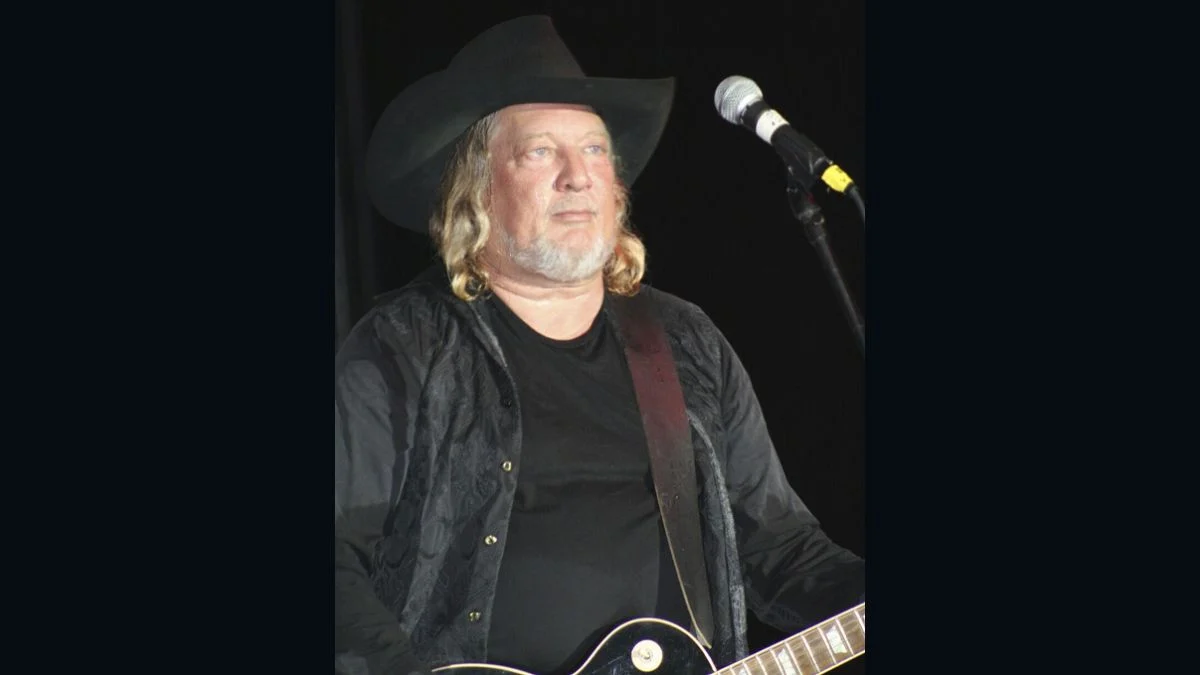
John Anderson’s final public appearance at the Country Music Hall of Fame’s Medallion Ceremony in Nashville on October 18, 2026, was a moment of celebration for country music. Just three days later, the legendary singer was gone, leaving fellow musicians and fans reflecting on a career that spanned nearly five decades.
Anderson’s death, announced by his family on Wednesday, October 21, has prompted emotional tributes from Tim McGraw, Blake Shelton, Reba McEntire, Jason Aldean and other country stars. Behind his unmistakable voice and celebrated catalogue was an artist whose influence extended across generations, from traditional country music’s New Traditionalist era to younger performers who continued to draw inspiration from his work.
John Anderson Dies at 71 as Family Shares Heartbreaking Announcement
Anderson’s family announced his passing through his official social media accounts on October 21, describing him as a beloved husband, father, grandfather and best friend.
“It is with the heaviest of hearts that we share the passing of our beloved husband, father, grandfather, and best friend,” the family said.
The statement remembered Anderson as a gifted country singer whose music had touched countless lives, while making clear that his importance to his family went far beyond his professional achievements. They described him as “the heart of our family” and said they were completely heartbroken.
The family also asked people to keep them in their thoughts and prayers as they navigated their loss.
Representatives said Anderson died peacefully in his sleep. However, no cause of death has been publicly disclosed, and no further medical details have been released. Reports said he died at his home in Smithville, Tennessee, although the family’s announcement concentrated on his passing and his place within the family rather than describing his final hours.
His death at 71 marks the end of a remarkable chapter in country music, but the tributes that followed quickly showed how deeply he had connected with fellow artists.
Another Loss in the Entertainment World
Celebrity deaths often prompt fans to revisit the lives and legacies of performers across different fields. For another reported celebrity death and the reaction it prompted, explore the Amber Siyavus death and tribute report.
Tim McGraw Remembers Seeing John Anderson Days Before His Death
Among the most poignant reactions came from Tim McGraw, who had seen Anderson just days before his death.
The two met at the Country Music Hall of Fame’s 2026 Medallion Ceremony in Nashville on October 18. McGraw was one of three artists inducted during the event, alongside Paul Overstreet and the Stanley Brothers. Anderson attended as an existing member of the institution.
Looking back on their conversation, McGraw wrote:
“I was talking with John Sunday night at the HOF ceremony. He was in such good spirits.”
McGraw recalled that they talked, laughed and sang Anderson’s songs together. He also described the late singer as “one of the defining voices in country music” and said he was devastated by his passing.
The timing gave the encounter an especially emotional significance. What had been a gathering celebrating country music’s legacy became, only days later, a final meeting that McGraw and others would remember while mourning a respected colleague.
Blake Shelton Pays Tribute to His Musical Hero and Friend
Blake Shelton also shared an emotional tribute, reflecting on a relationship that had grown from musical admiration into personal friendship.
Shelton had long considered Anderson a musical hero. Their professional connection eventually led to a collaboration on Anderson’s 2020 album Years, where the two performed “Tuesday I’ll Be Gone.”
Following Anderson’s death, Shelton wrote that he was “sick” and “stunned.” He reflected on what it meant to move from admiring an artist’s work to knowing that person personally.
Shelton captured the change in their relationship with a simple statement:
“John was my friend.”
He also said he had seen Anderson the previous Sunday and had told him that he loved him. That meeting took place at the October 18 Hall of Fame ceremony, just three days before Anderson died.
Shelton’s tribute highlighted the personal connections behind Anderson’s musical legacy, showing how an artist admired from a distance could become an important presence in another musician’s life.
Reba McEntire, Jason Aldean and John Rich Remember Anderson
The tributes extended across country music, with several artists sharing memories of Anderson’s influence and the relationships they had developed with him.
Reba McEntire remembered him as “one of my favorite people in this business”, expressing her affection for both Anderson and his music.
Jason Aldean also reflected on the singer’s impact. Aldean said he grew up listening to Anderson’s records and learning to play guitar from his father’s John Anderson albums. He later had opportunities to meet and perform with Anderson during his own career.
John Rich of Big & Rich shared memories of an especially longstanding connection. He said he had called Anderson “Uncle John” for about 20 years and described him as his favorite country artist.
Rich also credited Anderson as a major influence and expressed his love for the singer and his family following the announcement.
Together, the reactions reflected Anderson’s standing among performers who had grown up with his music, as well as those who had worked alongside him and developed close personal relationships with him.
John Anderson’s Early Life and Rise in Country Music
Born on December 13, 1954, in Orlando, Florida, Anderson grew up in nearby Apopka. According to the Country Music Hall of Fame, he had decided by the age of 12 that he wanted to become a professional musician.
His early musical influences included Merle Haggard and George Jones, two country artists whose work helped shape his musical direction.
After finishing high school, Anderson moved to Nashville to pursue his ambitions while working various jobs. He eventually secured a recording deal with Warner Bros. Records, beginning a career that would establish him as one of country music’s distinctive voices.
His early recordings attracted attention from established performers. Merle Haggard, George Jones and Willie Nelson were among the artists who gave Anderson opportunities to open their shows.
His first significant success arrived with “Your Lying Blue Eyes,” which became his first Top 20 country hit. From late 1980 onward, he began building a steady run of Top 10 records.
Anderson became associated with the New Traditionalist movement, which helped bring more traditional country sounds back into prominence during the early 1980s. His distinctive vocal style and recording catalogue made him an important figure in that period.
How “Swingin’” Became One of John Anderson’s Biggest Hits
Anderson reached a major career milestone in 1983 with “Swingin’.”
The song became a million-selling hit and earned him two major honours that year: the CMA Horizon Award and CMA Single of the Year.
Other important recordings from the period included:
- “Wild and Blue”
- “Black Sheep”
- “I’m Just an Old Chunk of Coal”
- “1959”
- “Chicken Truck”
- “I Just Came Home to Count the Memories”
Between 1981 and 1995, Anderson accumulated 20 Top 10 country singles, including five No. 1 hits. Those achievements helped establish his place among the recognisable voices of his generation.
However, his career also experienced difficult periods. By the late 1980s, his chart performance had declined. He left Warner Bros. in 1987 following a dispute concerning the label’s support, and subsequent periods with other labels did not immediately reproduce his earlier commercial success.
Even so, Anderson’s catalogue continued to find an audience, and his career would experience another significant revival in the following decade.
“Straight Tequila Night” and “Seminole Wind” Revitalise His Career
The early 1990s brought renewed commercial success, demonstrating that Anderson’s career extended well beyond his initial breakthrough.
His fortunes improved with “Straight Tequila Night” and “Seminole Wind.” Other successful songs included “When It Comes to You,” “Money in the Bank” and “I Wish I Could Have Been There.”
The renewed run helped reaffirm his place in country music after the challenges of the late 1980s. Although his major chart successes eventually slowed, Anderson continued recording and touring.
In 1993, he received the Academy of Country Music Career Achievement Award.
The following year, he participated in Common Thread: The Songs of the Eagles, an album that won the CMA Award for Album of the Year.
His body of work ultimately became associated with both commercial success and the continued influence of traditional country music.
John Anderson Continued Collaborating With Younger Artists
Anderson remained active well into the 21st century, working with musicians from different generations.
John Rich produced Anderson’s 2007 album Easy Money. Later, Dan Auerbach of The Black Keys and producer Dave Ferguson worked with Anderson on his 2020 album Years.
That album included his collaboration with Blake Shelton on “Tuesday I’ll Be Gone,” bringing Anderson’s traditional country sound together with a younger generation of performers.
Auerbach subsequently assembled Something Borrowed, Something New: A Tribute to John Anderson, featuring artists including Luke Combs, Ashley McBryde and Eric Church.
The tribute project further demonstrated Anderson’s influence on performers who followed him, while his continued collaborations showed that his music remained relevant beyond the period of his biggest chart hits.
John Anderson’s Hall of Fame Honours Cement His Legacy
Anderson received significant recognition for his songwriting and recording career over the years.
In 2014, he was inducted into the Nashville Songwriters Hall of Fame, honouring his contribution to country music songwriting.
His highest-profile recognition followed in 2024, when he entered the Country Music Hall of Fame alongside James Burton and Toby Keith. The class was formally inducted during the institution’s Medallion Ceremony in Nashville, with Anderson recognised in the Veterans Era Artist category.
The Hall of Fame highlighted his distinctive singing style, commercial achievements and influence on later generations of performers.
His record of 20 Top 10 country hits and five No. 1 singles formed a central part of a career that had taken him from his early ambitions in Florida to one of country music’s most respected institutions.
John Anderson’s Final Public Appearance Came on October 18, 2026
Anderson’s final known public appearance was at the Country Music Hall of Fame’s 2026 Medallion Ceremony on October 18.
The event welcomed Tim McGraw, Paul Overstreet and the Stanley Brothers into the Hall of Fame. They became its 159th, 160th and 161st members, respectively.
Anderson attended as a Hall of Fame member, meeting with fellow musicians, including McGraw and Shelton. Both artists subsequently recalled their encounters as they paid tribute to him following his death.
Three days after the ceremony, Anderson’s family announced that he had died at 71.
His final public appearance has consequently become an important part of the story surrounding his passing, connecting his final days with an event celebrating the music and artists that shaped his life.
Remembering a Beloved Television Actor
Tributes to familiar performers also show how strongly audiences connect with the people behind their favourite shows. Readers interested in another entertainment-industry loss can find the RJ Mitte death and Bryan Cranston tribute coverage.
Conclusion: John Anderson Leaves a Lasting Mark on Country Music
John Anderson’s death at 71 marks the loss of a major figure in country music, but his influence remains visible in his catalogue, his professional honours and the artists who continue to celebrate his work.
From “Swingin’” and “Wild and Blue” to “Straight Tequila Night,” “Seminole Wind” and “Money in the Bank,” his songs helped define multiple periods of his career. His inductions into the Nashville Songwriters Hall of Fame in 2014 and the Country Music Hall of Fame in 2024 recognised his lasting contribution to the genre.
The tributes from Tim McGraw, Blake Shelton, Reba McEntire, Jason Aldean and John Rich have also highlighted the personal connections behind that legacy.
While his family grieves a beloved husband, father, grandfather and best friend, country music remembers an influential singer whose work reached far beyond his own generation. The cause of his death has not been publicly disclosed, but his musical achievements and the memories shared by those who knew him remain central to his story.
Source disclaimer: This article has been prepared based on thorough research of the sources provided, including the Country Music Hall of Fame, the Associated Press, CBS News, Billboard and Country Now. It reflects the information available in those sources and the supplied reporting as of October 22, 2026. Details concerning Anderson’s death may be updated if additional verified information becomes available.
Sources
- Country Music Hall of Fame — John Anderson biography and career record
- Country Music Hall of Fame — 2026 Medallion Ceremony
- Associated Press — John Anderson dies at 71
- CBS News — John Anderson dies at 71
- Billboard — John Anderson dies at 71
- Country Now — Tributes from Tim McGraw, Blake Shelton and others
Featured Image Credit: eagle102.net / CC BY 2.0 via Wikimedia Commons


Leave a Reply