

Introduction: A Viral Image That Sparked Outrage—But Was It Real?
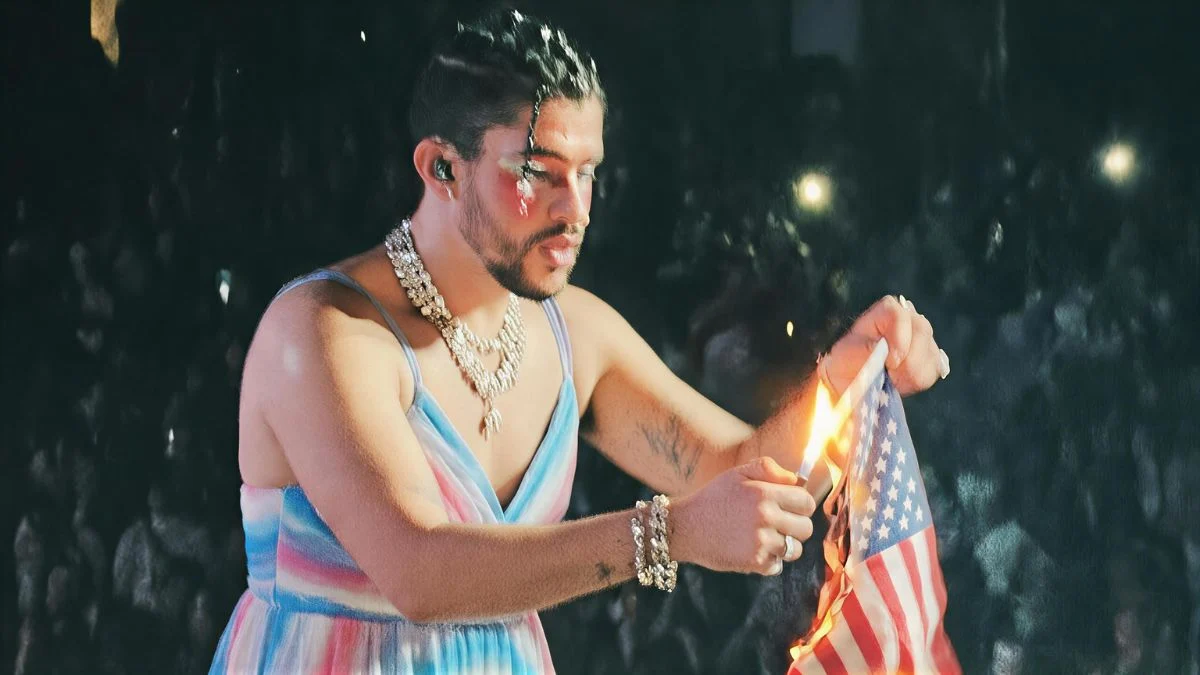
In the days leading up to Super Bowl LX, social media erupted with a shocking claim: global music superstar Bad Bunny had burned an American flag during rehearsals for the halftime show. The alleged proof? A viral image showing the Puerto Rican artist in a pink, white, and blue striped dress—resembling transgender pride flag colors—lighting a US flag on fire.
The image spread rapidly across Facebook, X (formerly Twitter), and other platforms, triggering intense political and cultural backlash. Some users condemned him as anti-American, while others defended his artistic expression.
But as millions reacted, one critical question remained unanswered: Was the image real?
The truth is far more revealing—and highlights a growing problem in the AI era.
The Viral Claim: What Social Media Alleged About Bad Bunny
The viral post claimed that Bad Bunny was “caught on stage” preparing for his Super Bowl LX halftime performance while burning a US flag. The post framed the alleged act as a political protest and referenced his past comments about immigration policies and ICE.
This narrative quickly spread among politically polarized communities, with some framing it as evidence of anti-American sentiment, while others accused critics of misinformation.
However, no credible evidence supported the claim.

Confirmed Hoax: The Image Was AI-Generated

Multiple reputable fact-checking organizations and mainstream media outlets unanimously confirmed that the viral image was fake.
Origin of the Hoax
- The image first appeared in a Facebook post on February 8, 2026 (or shortly before).
- The account that posted it openly described its content as satire, parody, or “AI funny Content & Master Meme Maker.”
- The post tied the image to Bad Bunny’s upcoming Super Bowl halftime show and included inflammatory commentary designed to provoke outrage.
Key AI Indicators in the Fake Image
Experts and online communities identified several signs that the image was artificially generated:
- SynthID watermark: A marker from Google’s AI tools confirming AI generation.
- Mismatched tattoos: Bad Bunny’s tattoos in the image didn’t match his real ones.
- Unnatural lighting and flames: The fire and lighting effects appeared inconsistent with real photography.
- Odd proportions and artifacts: Subtle distortions typical of AI-generated images.
Communities like Reddit’s r/isthisAI and analyses by Google’s Gemini AI also flagged the image as synthetic.
No Evidence of Any Flag-Burning Incident
Importantly:
- No real photos or videos exist showing Bad Bunny burning a US flag.
- No credible reports from rehearsals, concerts, or the actual halftime show mention any such act.
- No mainstream media outlets confirmed the incident—because it never happened.

Instead, the image was a classic example of AI-generated misinformation designed to go viral.
How the Hoax Spread and Why It Went Viral
The misinformation gained traction due to several factors:
1. Pre-Existing Backlash
Bad Bunny’s selection as the Super Bowl halftime performer had already sparked criticism from some conservative and MAGA-aligned commentators. They referenced:
- His past anti-ICE comments
- Gender-fluid fashion choices
- A viral clip of him sitting during an anthem at a separate event
The fake image was weaponized to reinforce existing narratives.
2. Culture War Amplification
The image was framed as a symbol of cultural and political conflict, making it perfect for outrage-driven engagement on social media.
3. AI Realism
With modern AI tools producing highly realistic images, many users assumed the picture was real—especially when it aligned with their beliefs.
Debunking by Major Fact-Checking Sources
Several trusted outlets debunked the claim:
- Mashable (February 8, 2026): Called the image a right-wing hoax targeting the Grammy-winning Puerto Rican artist.
- Lead Stories: Confirmed it originated from a satire account and was AI-generated.
- Yahoo News and USA Today/For The Win: Explicitly labeled the image fake.
- Hindustan Times and DW.com: Reported on the misinformation spread and its political context.
Every major fact-checker reached the same conclusion: The image was fake and designed to inflame division.
What Actually Happened at the Super Bowl LX Halftime Show
While the hoax dominated social media, the real halftime show told a completely different story.
Bad Bunny delivered a vibrant, culture-focused performance that celebrated Latin music and unity.
Highlights of the Performance
- Medleys of hits like “Tití Me Preguntó” and “Yo Perreo Sola”
- Guest appearances by Lady Gaga (salsa version of “Die With a Smile”) and Ricky Martin
- Puerto Rican cultural elements such as prop plants, power lines, and piragua stands
- Celebrity cameos and dancers including Pedro Pascal, Jessica Alba, and Cardi B
- A powerful closing message on a billboard:
“The only thing more powerful than hate is love.”
No protests, stunts, or flag-burning occurred.
Coverage described the show as energetic, historic, and focused on celebration rather than controversy.

Official Super Bowl LX Event Details
| Date | Event | Location | Performer | Notes |
| February 8, 2026 | Super Bowl LX Halftime Show | Levi’s Stadium, Santa Clara, California | Bad Bunny | First solo Spanish-language halftime headliner |
| February 8, 2026 | Viral AI Hoax Image Spread | Social media platforms | — | Confirmed fake by multiple fact-checkers |
Why This Hoax Matters: AI Misinformation in 2026
The Bad Bunny flag-burning hoax is part of a growing trend of AI-generated misinformation designed to exploit high-profile events.
Common Characteristics of AI Hoaxes
- Timed around major cultural moments (Super Bowl, elections, celebrity events)
- Emotionally provocative content (national symbols, politics, identity)
- Rapid spread through partisan communities
- Realistic visuals that bypass skepticism
This case shows how AI tools can be weaponized to manipulate public perception and deepen cultural divisions.
How to Spot AI-Generated Viral Images
To avoid falling for similar hoaxes:
- Reverse image search on Google or TinEye
- Check for watermarks like SynthID
- Look for visual inconsistencies (hands, tattoos, lighting, text)
- Verify with fact-checking websites
- Confirm through official news outlets or event footage
If an image seems designed to provoke outrage, skepticism is essential.

Conclusion: A Manufactured Outrage That Never Happened
The viral claim that Bad Bunny burned a US flag was entirely false—an AI-generated hoax designed to inflame political and cultural tensions during one of the world’s biggest sporting events.
In reality, his Super Bowl LX halftime performance focused on music, culture, and unity, ending with a message emphasizing love over hate.
This incident serves as a warning: in the age of AI, viral images can be weaponized in seconds, and misinformation can spread faster than truth. Verifying content before sharing is no longer optional—it’s essential.


Leave a Reply