

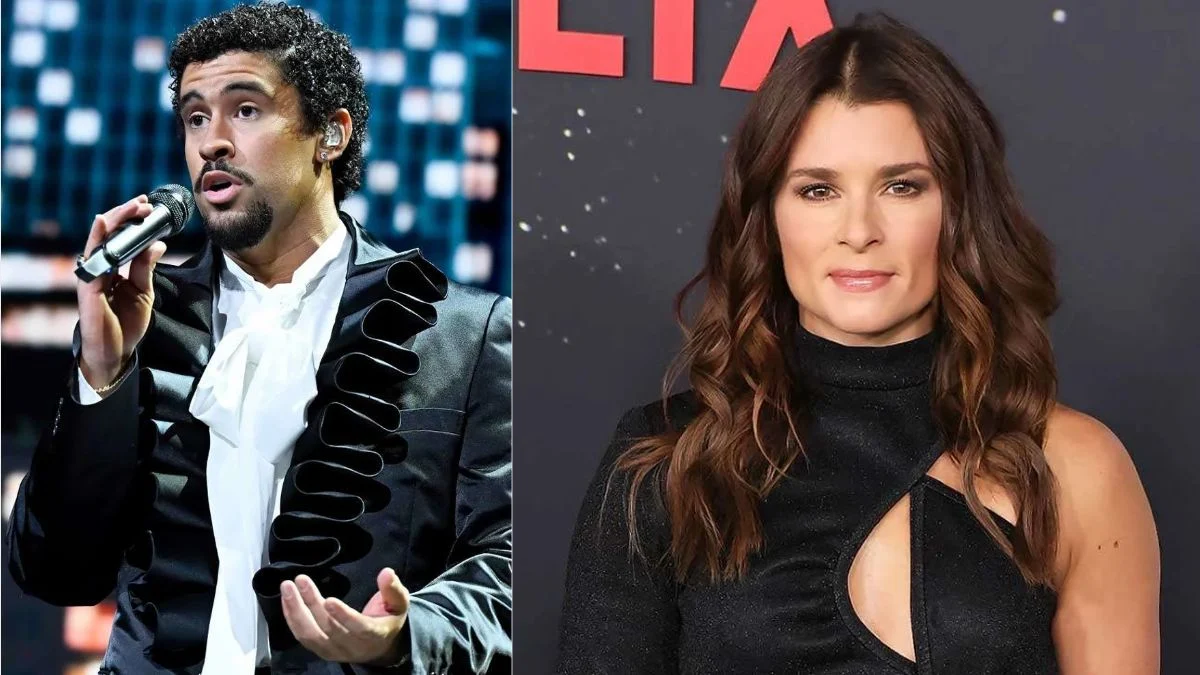
When the NFL unveils a Super Bowl halftime performer, the announcement usually sparks excitement. Occasionally, it sparks history. And sometimes, it ignites a cultural firestorm that refuses to fade. That is exactly what happened after Puerto Rican superstar Bad Bunny was revealed as the headliner for the Apple Music Super Bowl LX Halftime Show, and former NASCAR and IndyCar driver Danica Patrick publicly pushed back.
What began as a single social media reply in late September 2025 has now evolved into one of the most talked-about controversies heading into Super Bowl LX on February 8, 2026, at Levi’s Stadium in Santa Clara, California. With debates over language, culture, politics, and national identity, the story continues to unfold as millions prepare to watch one of the biggest television events of the year.
Super Bowl LX 2026 Halftime Show: Why Bad Bunny’s Selection Made History
The NFL officially announced Bad Bunny (real name Benito Antonio Martínez Ocasio) as the Super Bowl LX halftime performer on September 28, 2025. The choice instantly made headlines for several reasons:
- He became the first all-Spanish-language solo headliner in Super Bowl history.
- He became the first Latin artist to headline alone.
- The move reflected the growing global influence of Latin music and the massive Spanish-speaking audience in the United States.
Bad Bunny, 31 as of 2025, is one of the most-streamed artists on Spotify for multiple years running. His album Un Verano Sin Ti (2022) shattered streaming records, and his reggaeton and Latin trap sound dominates charts worldwide. While most of his catalog is in Spanish, he has collaborated on English-featured tracks with artists like Drake and Cardi B and uses English phrases in some songs.
The NFL and Apple Music defended the pick by highlighting diversity, cultural reach, and Bad Bunny’s enormous U.S. fan base, including millions of bilingual and Spanish-speaking viewers.
But not everyone was pleased.

Danica Patrick’s Verified X Posts That Sparked the Super Bowl Backlash
Danica Patrick, born March 25, 1982, is a retired professional race car driver, former IndyCar and NASCAR competitor, podcast host of Pretty Intense, and public figure known for conservative-leaning views and her past relationship with Aaron Rodgers.
Her criticism began between September 29–30, 2025, on X (formerly Twitter). She replied directly to conservative commentator Benny Johnson (@bennyjohnson), who labeled Bad Bunny a “massive Trump hater,” “anti-ICE activist,” and pointed out he has “no songs in English.”
Patrick’s verified reply stated:
“Oh fun. 😏 No songs in English should not be allowed at one of America’s highest rated television events of the year… not just for sports.”
The phrasing suggested that performers without English-language songs “should not be allowed” at the Super Bowl, framing the game as a uniquely American event requiring broad linguistic accessibility for sing-alongs and cultural unity.
She further amplified the controversy by engaging with posts calling Bad Bunny a “demonic Marxist” and implying his selection fit a larger political agenda. In follow-up commentary reported by outlets, Patrick doubled down, saying her concern was not about nationality (noting Bad Bunny is a U.S. citizen via Puerto Rico) but about audiences being unable to “sing along.”
She added that a fully Spanish-language performance could “divide America once again” on a night meant to unite the country.

Bad Bunny’s Political Background and Cultural Influence
Bad Bunny has never separated music from activism. His politics include:
- Criticism of U.S. policy toward Puerto Rico
- Support for LGBTQ+ rights
- Public anti-Trump stances and endorsements of opponents in 2020
- Canceling tour dates in prior years citing concerns over ICE presence at concerts
These actions fueled conservative backlash long before the Super Bowl announcement. Still, his popularity remains massive across both English- and Spanish-speaking audiences in the U.S.
The NFL reiterated that the halftime show is about entertainment, reach, and evolving American culture, not language purity.
Timeline Table: Super Bowl LX Halftime Controversy
| Date | Event | Name(s) Involved | Official Details |
| Sept 28, 2025 | Bad Bunny announced | NFL, Apple Music, Bad Bunny | First all-Spanish-language solo headliner in Super Bowl history |
| Sept 29–30, 2025 | Patrick criticizes selection | Danica Patrick, Benny Johnson | “No songs in English should not be allowed…” posted on X |
| Late 2025 | Social backlash explodes | Fans, media outlets | Accusations of xenophobia and hypocrisy go viral |
| Feb 6, 2026 | Media resurfaces story | Yahoo Sports, Page Six, Us Weekly | Debate intensifies days before Super Bowl |
| Feb 8, 2026 | Super Bowl LX | NFL, Bad Bunny | Halftime show proceeds as planned |

Social Media Turns on Danica Patrick Ahead of Super Bowl LX
Patrick’s comments quickly went viral, pulling in millions of views. By February 2026, sentiment online remained heavily critical.
Key backlash themes included:
Comparisons to Past Performers
Fans noted that Shakira, Jennifer Lopez, and J. Balvin performed Spanish-heavy sets at Super Bowl LIV, with no similar outrage.
Hypocrisy Claims
Users found Patrick previously using Bad Bunny music in a 2024 Instagram skiing video, triggering viral comments like:
“You bash Bad Bunny yet use his music 😂 truly dumb as s–t.”
Mockery and Culture Arguments
Popular replies included:
- “Learn Spanish!”
- “America is a melting pot.”
- “It’s giving ‘I don’t understand him, so I’m scared.’”
Racing Record Jabs
Critics referenced her NASCAR Cup Series stats: 0 wins in 191 starts, joking she shouldn’t decide Super Bowl performers.
Political Framing
Supporters of Bad Bunny argued over 40 million Spanish speakers live in the U.S., making his presence representative, not divisive.
Positive reactions toward Patrick mostly came from conservative circles insisting halftime shows should prioritize English-language “American” music for unity.

Why This Super Bowl LX Debate Won’t Fade Before Kickoff
As of early February 2026, media outlets like Yahoo Sports revived the story with headlines such as “Former Racer Danica Patrick Slams NFL Over Bad Bunny Halftime Show — Social Media Isn’t Having It.” Bad Bunny himself has not directly responded.
Additional noise came from debunked rumors, fake boycott claims, and speculation that Bad Bunny may touch on Puerto Rico or immigration themes during the show.
What remains certain is that Patrick’s comments have cemented her role as a culture-war figure, while Bad Bunny’s halftime show is now one of the most anticipated — and debated — in Super Bowl history.
When Bad Bunny finally steps onto the stage at Levi’s Stadium on February 8, 2026, millions won’t just be watching a performance. They’ll be watching the outcome of a cultural argument that began with one sentence — and grew into a national conversation about language, identity, and what the Super Bowl really represents.


Leave a Reply