

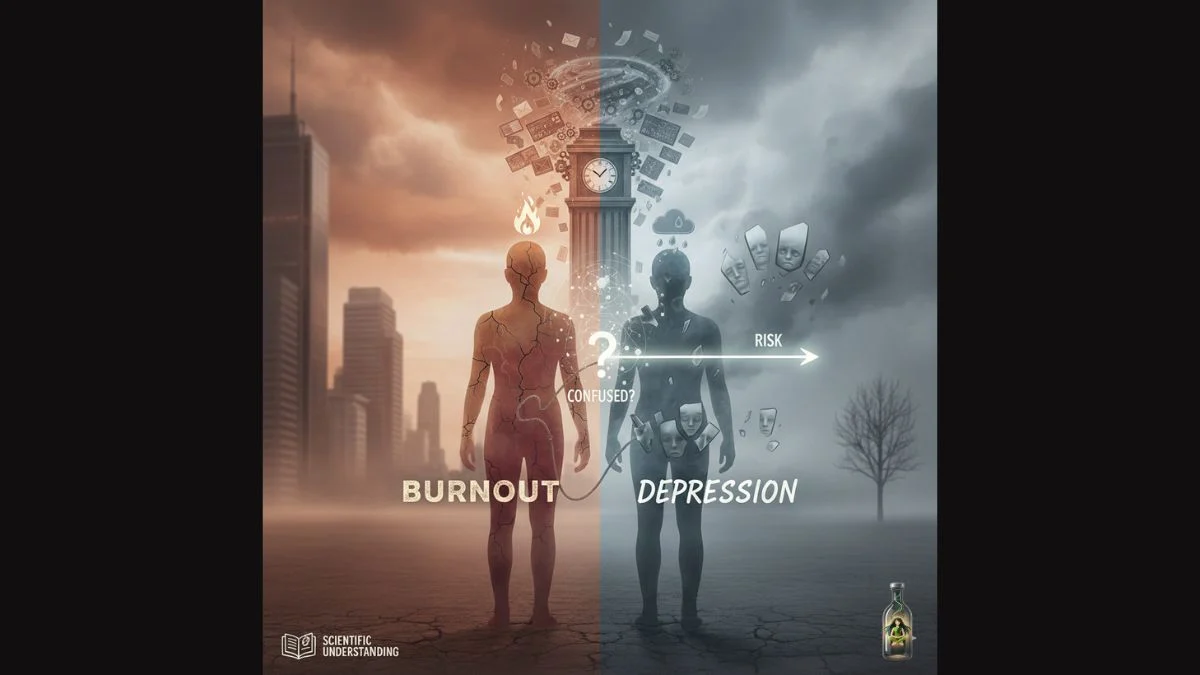
Introduction: Why Burnout and Depression Are Often Confused
In today’s fast-paced world—where long work hours, constant connectivity, and high expectations are often normalized—many people in the US, UK and all over the world find themselves feeling exhausted, disengaged, and emotionally drained. Two terms frequently used to describe this experience are burnout and depression. Although they share overlapping symptoms, they are not the same condition, and understanding the difference is essential for getting the right kind of support.
Burnout is most commonly linked to chronic, unmanaged stress in a specific area of life, such as work, caregiving, or academic pressure. Depression, on the other hand, is a clinically diagnosable mental health condition that affects mood, thinking, behavior, and physical health across multiple life domains.
Scientific research shows that while burnout and depression are closely related, they are distinct psychological constructs. Burnout can sometimes increase the risk of depression if left unaddressed, but depression does not typically cause burnout. This article explains their definitions, symptoms, causes, and treatments using established scientific theories—while keeping the language simple, supportive, and practical.
In This Post:
What Is Burnout? (WHO-Defined, Not a Medical Diagnosis)
Burnout Definition (World Health Organization)
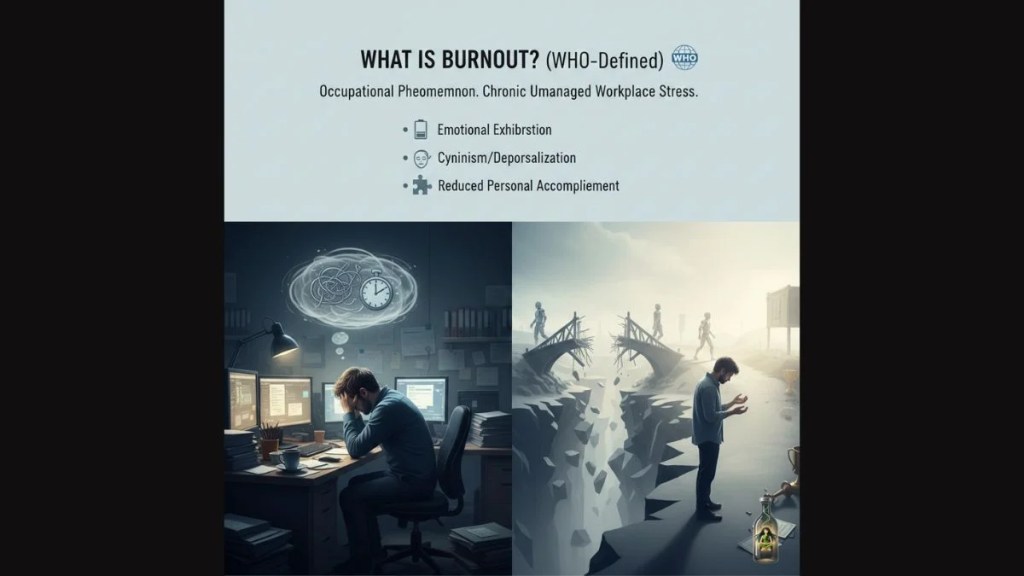
The World Health Organization (WHO) defines burnout as an occupational phenomenon, not a medical condition. According to the International Classification of Diseases (ICD-11), burnout results from chronic workplace stress that has not been successfully managed.
Burnout has three core dimensions:
- Emotional exhaustion – feeling depleted, overwhelmed, or unable to cope
- Cynicism or depersonalization – emotional distancing, negativity, or detachment from work or responsibilities
- Reduced personal accomplishment – feeling ineffective, unproductive, or incapable
Although originally defined in the context of work, research now recognizes that burnout can also occur in caregiving, parenting, healthcare, education, and high-stress roles.

Key Scientific Insight
Burnout is situational and context-dependent. When the stressor is removed or managed, symptoms often improve.
What Is Depression? (A Clinical Mental Health Disorder)
Depression Definition (DSM-5)
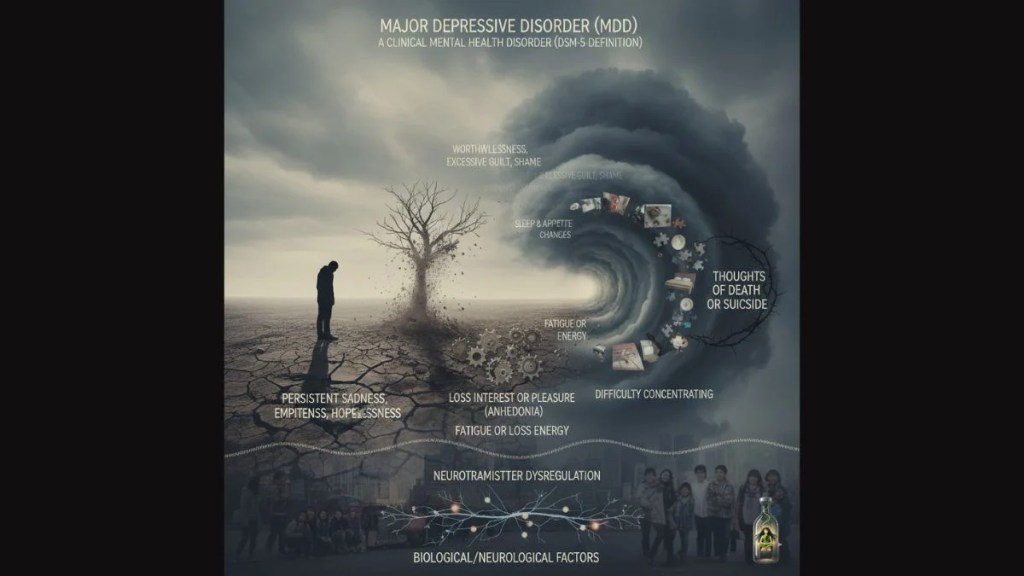
Major Depressive Disorder (MDD) is a diagnosable mental health condition defined in the Diagnostic and Statistical Manual of Mental Disorders (DSM-5). It involves persistent low mood or loss of interest, lasting at least two weeks, and significantly impairing daily functioning.
Core Symptoms of Depression
- Persistent sadness, emptiness, or hopelessness
- Loss of interest or pleasure (anhedonia)
- Feelings of worthlessness, excessive guilt, or shame
- Fatigue or loss of energy
- Sleep and appetite changes
- Difficulty concentrating or making decisions
- Thoughts of death or suicide
Unlike burnout, depression is pervasive, meaning it affects multiple areas of life, regardless of circumstances.
Key Scientific Insight
Depression can occur with or without obvious external stressors and often involves biological and neurological factors, including neurotransmitter dysregulation.
Burnout vs Depression: Symptoms Compared
Although burnout and depression can look similar on the surface, research consistently highlights important differences.
Emotional Symptoms
- Burnout: Emotional numbness, irritability, frustration, cynicism—often focused on work or responsibilities
- Depression: Deep sadness, hopelessness, guilt, and sometimes suicidal thoughts
👉 Key difference: Burnout rarely includes pervasive guilt or suicidal ideation, which are hallmark features of depression.
Physical Symptoms
Both conditions may involve:
- Chronic fatigue
- Sleep disturbances
- Headaches or body aches
However:
- Burnout: Fatigue improves with rest or time away from the stressor
- Depression: Fatigue persists regardless of rest or environment

Cognitive and Behavioral Symptoms
- Burnout: Reduced productivity, mental fog, work-specific disengagement
- Depression: Loss of interest in nearly all activities, slowed thinking or movement, impaired functioning across life
Duration and Scope
| Aspect | Burnout | Depression |
| Scope | Domain-specific (e.g., work) | Global and pervasive |
| Duration | Gradual onset, stress-linked | Persistent (≥2 weeks) |
| Reversibility | Often improves with changes | Usually requires treatment |
What Causes Burnout?
Primary Causes of Burnout (Evidence-Based)
Research identifies several key contributors:
- Excessive workload and long hours
- Lack of control or autonomy
- Poor work-life balance
- Inadequate support or recognition
- High emotional labor (common in healthcare, teaching, caregiving)
Burnout develops when demands consistently exceed available resources, a concept explained by the Job Demands–Resources Model, a widely accepted occupational psychology theory.
Important Note
Burnout is not a personal failure. It is a response to systemic and environmental stressors.
What Causes Depression?
Multifactorial Origins of Depression
Depression arises from a complex interaction of factors, including:
- Genetics and family history
- Neurochemical changes (serotonin, dopamine, norepinephrine)
- Chronic stress or trauma
- Major life events (loss, illness, relationship breakdown)
- Psychological vulnerability (e.g., rumination, negative thinking patterns)
Meta-analyses confirm that burnout and depression do not completely overlap, supporting the idea that they are related but distinct conditions.
Can Burnout Turn Into Depression?
What the Science Says
Yes—burnout can increase vulnerability to depression, especially when:
- Stress remains unresolved
- Emotional exhaustion becomes chronic
- Self-esteem and sense of purpose erode
Longitudinal studies suggest burnout may act as a precursor or risk factor for depressive episodes, particularly in high-stress professions.
However:
- Depression does not typically cause burnout
- Many people experience burnout without developing depression
Treatment and Management: What Actually Helps
Burnout Recovery Strategies (Evidence-Based)
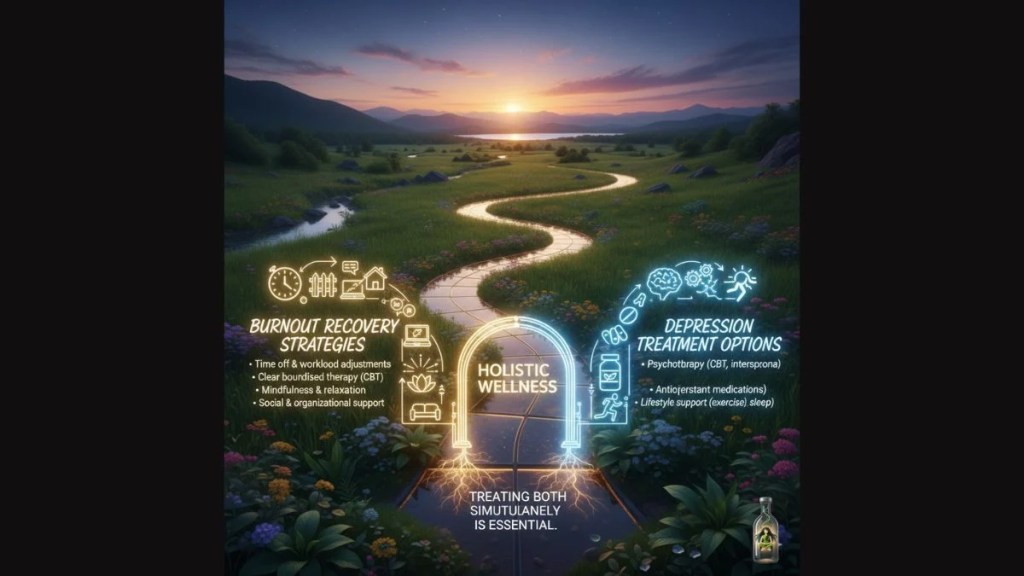
Burnout is often addressed through environmental and behavioral changes, including:
- Time off and workload adjustments
- Clear boundaries between work and personal life
- Stress-focused therapy (such as CBT for work stress)
- Mindfulness and relaxation techniques
- Social and organizational support
Medication is not usually required unless depression is also present.
Depression Treatment Options
Depression typically requires professional intervention, including:
- Psychotherapy (CBT, interpersonal therapy)
- Antidepressant medications (e.g., SSRIs)
- Lifestyle support (exercise, sleep, social connection)
For individuals experiencing both burnout and depression, treating both simultaneously is essential.
When Should You Seek Help?
Consider reaching out to a healthcare professional if:
- Symptoms persist beyond a few weeks
- Exhaustion affects daily functioning
- You feel hopeless, numb, or disconnected
- You experience thoughts of self-harm or suicide
Early support can prevent burnout from evolving into more severe mental health conditions.
Why Accurate Diagnosis Matters
Because burnout is not a formal medical diagnosis, some clinicians may diagnose depression when symptoms overlap. While this can still lead to helpful treatment, understanding the root cause ensures more targeted, effective care.
Final Thoughts: Compassion Over Labels
Whether you’re experiencing burnout, depression, or a mix of both, your experience is valid. These conditions are not signs of weakness—they are signals that something needs care, adjustment, or support.
Understanding the difference empowers you to take the right next step, whether that means setting boundaries, seeking therapy, or getting medical care.
You are not alone—and help is available.
Disclaimer
This article is for educational purposes only and does not replace professional medical advice, diagnosis, or treatment. If you or someone you know is experiencing persistent distress, worsening symptoms, or thoughts of self-harm, please seek immediate help from a qualified healthcare provider or emergency services. In the US, contact 988 (Suicide & Crisis Lifeline). In the UK, contact Samaritans at 116 123.


Leave a Reply