

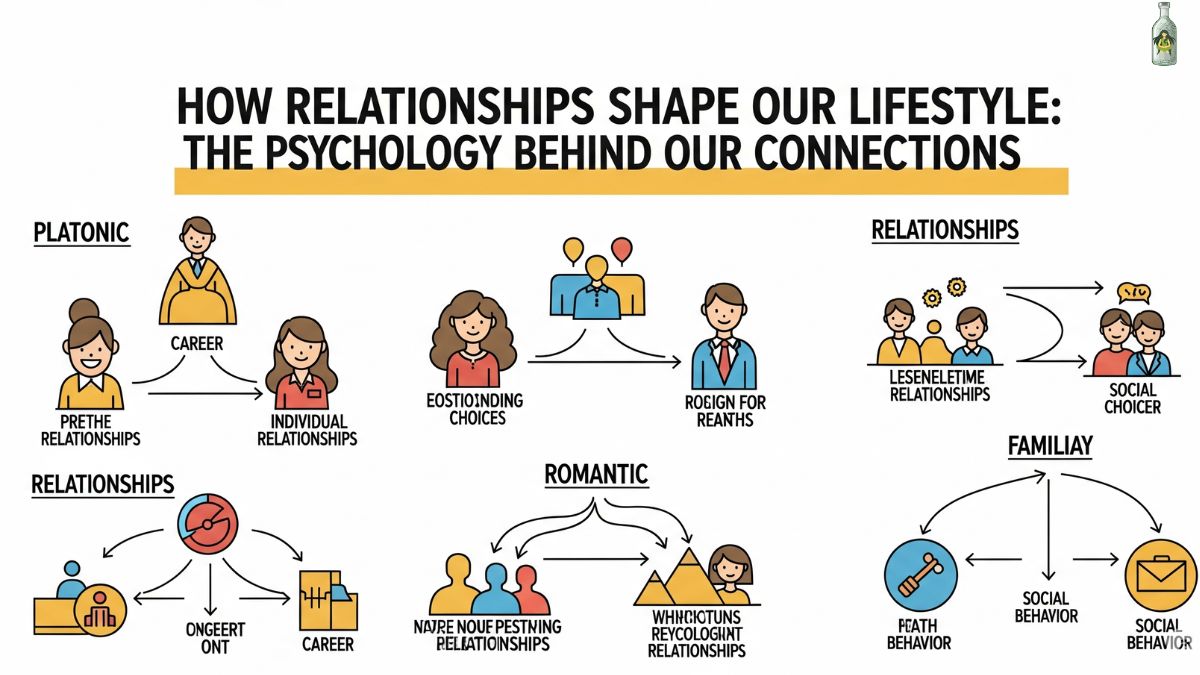
In just one small life from birth to death, we create so many bonds. Some bonds are god gifted like our parents, while others are chosen over the lifetime. Slowly, each thread webbed meticulously, and a sphere of love is created between the humans.
Having a lovely family, partner, and friends is a blessing for all humankind. But the underlying truth about how all these webs of relationships influence us in our day-to-day life. How our anger, frustration, happy moments, success, and failure are shaping us and subconsciously altering our behaviour patterns. Relationships aren’t just the soundtrack to your life—they’re actually the DJ mixing all your lifestyle choices together!
The Mirror Effect: How We Become Mini-Mes of Our Loved Ones
Have you ever noticed how couples start looking eerily similar after a while? (And no, it’s not just because they’re shopping for matching outfits!) Scientists have a fancy name for this: “behavioral synchrony,” and it’s happening to you right now without you even realizing it. When you spend quality time with someone, your brain sneakily starts copying their behaviors, the way they talk, and yes—even their lifestyle choices.

Here’s the mind-blowing part: research shows we actually adopt the habits of our closest people within just a few months. Got a best friend who’s obsessed with 6 AM runs? Congratulations, you’re probably going to catch the jogging bug too! Dating a total foodie? Wave goodbye to your go-to takeout rotation because you’re about to become an aspiring chef. This isn’t some weird coincidence—it’s your brain’s clever way of building stronger bonds through shared experiences.
Dr. Nicholas Christakis and James Fowler discovered something incredible—behaviors spread through our social networks like wildfire. Their research showed that happiness, weight changes, smoking habits, and even loneliness can ripple through three degrees of separation. Translation? Your friend’s friend’s friend might be influencing what you had for lunch today, even though you’ve never met them. Wild, right?
The Comfort Zone Explosion
Think of relationships as your personal cheerleading squad, constantly nudging you to try things you’d normally chicken out of doing alone. When someone you care about suggests hiking that intimidating trail, signing up for salsa classes, or planning a spontaneous weekend getaway, you’re way more likely to say “yes!” than if you had to psych yourself up solo.

This magical phenomenon is called “social facilitation,” and it explains why people in relationships are always posting about their latest adventures, new hobbies, and fresh discoveries. Having that emotional support creates a psychological safety net that makes taking risks feel totally doable.
Take Sarah, for example—she’d never set foot outside her home country until her college roommate basically dragged her backpacking through Europe. That one friendship completely transformed her world, igniting a passion for travel that became the heart of who she is. Years later, she still says that friendship unleashed her inner adventurer and opened her eyes to the world.
The Accountability Trap (In the Best Way Possible!)
Here’s where relationships become your secret superpower: they create these invisible accountability systems that actually work. Share your dreams with others, and boom—you’ve just created invisible contracts that motivate you to follow through. This isn’t about pressure; it’s about tapping into our natural drive to stay consistent when people are cheering us on.

Fitness enthusiasts have cracked this code: having workout buddies makes sticking to exercise routines so much easier. The same magic works for career goals, saving money, and personal growth. When someone casually asks, “Hey, how’s that novel coming along?” or “Still practicing guitar?” they’re giving you that gentle nudge that keeps you moving forward.
Psychologist Robert Cialdini’s research backs this up: when we make public commitments, we’re way more likely to stick to them than private ones. Tell your friends about your goals, and you’re basically using social psychology as your personal success coach.
The Stress Shield and Energy Injection
Quality relationships are like having a personal stress-busting superhero team. When you feel truly supported and understood, amazing things happen: your stress hormones chill out, your immune system gets stronger, and your energy levels shoot through the roof. This incredible biochemical makeover influences everything—how well you sleep, what you choose to eat, and how eager you are to socialize.

The famous Harvard Study of Adult Development has been following people for over 80 years, and guess what they keep finding? Strong relationships are the ultimate secret sauce for happiness and health. People with solid social connections live longer, sleep like babies, and stay active well into their golden years.
The Identity Makeover
Here’s the really fascinating part: relationships gradually help you become a richer, more interesting version of yourself. As you naturally absorb bits and pieces of your loved ones’ personalities, values, and interests, your lifestyle evolves to match this expanded version of who you’re becoming.
This identity transformation explains those major lifestyle shake-ups that happen after relationship milestones—moving in together, getting married, having kids, or forming deep friendships. Each meaningful connection adds another layer to your identity, creating a more vibrant, complex lifestyle that weaves together elements from all your special relationships.
Choosing Your Influences Like a Pro
Understanding how relationships reshape your lifestyle puts you in the driver’s seat when it comes to choosing your social connections. This doesn’t mean you should calculate every friendship like a chess move, but it’s worth recognizing that your social circle will naturally influence your daily choices, long-term dreams, and overall life direction.
The most amazing relationships create positive feedback loops: they encourage you to become your absolute best self while loving you exactly as you are right now. These connections don’t just change your lifestyle—they help you create a life that truly reflects your values and dreams.
The Beautiful Truth

At the end of the day, we’re not lone wolves making all our life choices in isolation. We’re beautifully interconnected beings whose lifestyles are constantly shaped by the wonderful, complex web of relationships surrounding us. And honestly? That’s exactly how it should be—because life is so much richer when we’re sharing it with the people who matter most.
References
- Christakis, N. A., & Fowler, J. H. (2007). The spread of obesity in a large social network over 32 years. New England Journal of Medicine, 357(4), 370-379.
- Christakis, N. A., & Fowler, J. H. (2009). Connected: The surprising power of our social networks and how they shape our lives. Little, Brown and Company.
- Cialdini, R. B. (2006). Influence: The psychology of persuasion. Harper Business.
- Chartrand, T. L., & Bargh, J. A. (1999). The chameleon effect: The perception-behavior link and social interaction. Journal of Personality and Social Psychology, 76(6), 893-910.
- Vaillant, G. E. (2012). Triumphs of experience: The men of the Harvard Grant Study. Little, Brown and Company.
- Zajonc, R. B. (1965). Social facilitation. Science, 149(3681), 269-274.
- Holt-Lunstad, J., Smith, T. B., & Layton, J. B. (2010). Social relationships and mortality risk: A meta-analytic review. PLoS Medicine, 7(7), e1000316.
- Festinger, L. (1957). A theory of cognitive dissonance. Stanford University Press.

Leave a Reply