

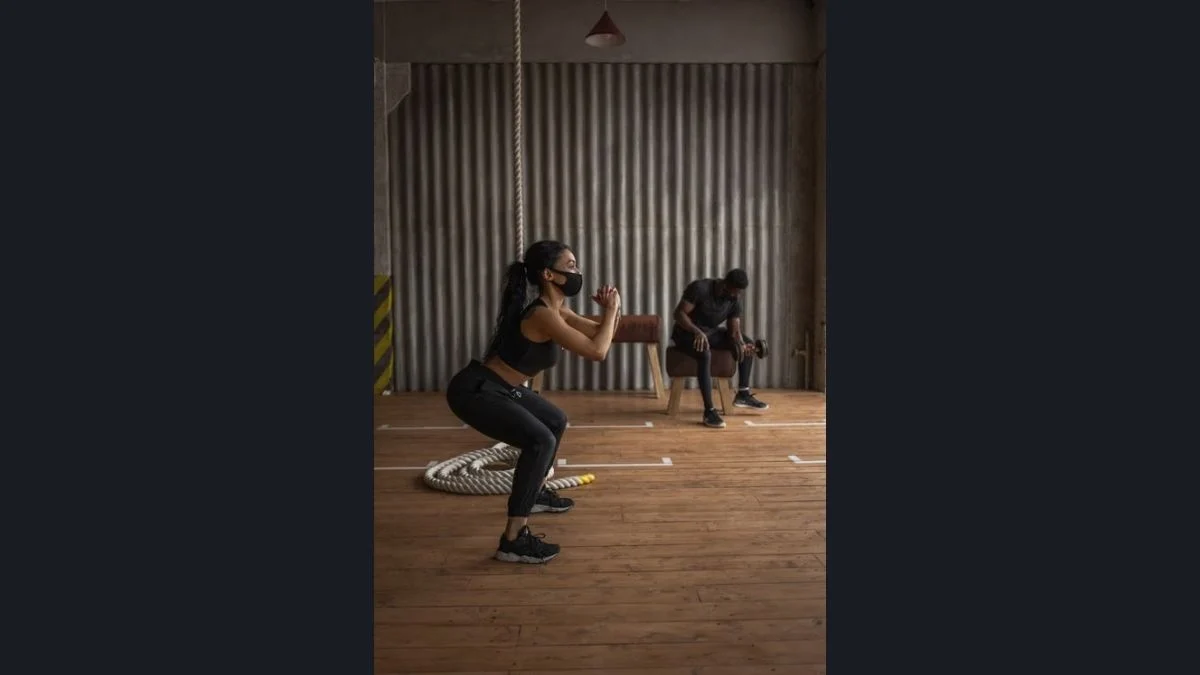
A 29-year-old woman in Hangzhou, China, was hospitalized with severe rhabdomyolysis after her manager ordered her to perform 200 squats as punishment for missing two workplace performance targets. The woman, identified by her surname Yang, said she chose the physical punishment because she could not afford the alternative financial penalty.
Yang had started working as a financial consultant at a loan-assistance company in Hangzhou, Zhejiang province, in June. Although her job title was financial consultant, her work was primarily telephone sales. She earned a reported monthly salary of 4,500 yuan.
Her case has drawn attention after she sought help through a local television programme dealing with disputes and subsequently complained to labour authorities. Her manager, surnamed Zhang, acknowledged that imposing physical punishment on an employee violated labour law, although he disputed her compensation demands and argued that sales work required pressure to meet financial targets.
More Trending News
Workplace disputes with serious consequences keep making global headlines. For more, read our story on an Ohio principal choosing a homeless student over his career.
Yang was required to meet multiple daily sales targets
According to reports, Yang’s team manager required employees to meet several daily performance goals.
Workers were expected to make 200 telephone calls, invite at least one client, and secure one prospective client expressing an intention to cooperate with the company each day.
On July 28, Yang failed to meet two of those targets.
Instead of simply receiving a conventional workplace warning or performance review, she said Zhang imposed physical punishment. She was reportedly given a choice between performing 100 squats for each unfinished target or paying 50 yuan for each missed target.
Because Yang had missed two targets, the punishment amounted to 200 squats.
Yang said she could not afford the financial alternative.
“I have no money,” Yang said.
She therefore chose to perform the squats.
More Workplace Rights and Labor Disputes
Employees facing unusual demands keep exposing gaps in workplace protections. For more, read our story on an Ohio manufacturer suing a reviewer for over $25,000 over a 1-star Google post.
She filmed the punishment as proof
Yang recorded herself completing the punishment in batches at different locations around the office building and sent the videos to her supervisor as evidence that she had completed the required number of squats.
Footage cited in reports showed her struggling physically toward the end of the punishment. After completing the final repetitions, she reportedly had difficulty standing and staggered while attempting to walk.
She subsequently developed severe pain in both legs.
Despite the pain and difficulty walking, Yang did not immediately seek medical treatment. She said her financial circumstances prevented her from going to hospital immediately.
Five days later, after her urine became dark, she sought medical attention.
Doctors diagnosed her with rhabdomyolysis, a serious condition in which damaged muscle tissue breaks down rapidly and releases substances into the bloodstream. Severe cases can cause complications including acute kidney injury and can become life-threatening.
Yang’s creatine kinase (CK) level was reported at approximately 160,000 U/L, an extremely elevated level consistent with severe muscle injury.
Fortunately, she did not develop kidney failure. Doctors advised her to rest and avoid strenuous physical activity while recovering.
More Health Scares From Unexpected Situations
Serious medical emergencies keep arising from the most unusual circumstances. For more, read our story on a West Bengal teen who has spent five years in ponds as doctors search for the cause of his severe burning skin pain.
Yang spent about 1,400 yuan on treatment
Yang said her medical treatment cost approximately 1,400 yuan.
Her health problems also affected her ability to continue working. She subsequently resigned from the company.
Yang later sought reimbursement for her medical and transportation expenses and demanded 15,000 yuan in compensation. She said the compensation was intended to address the consequences of the injury and the period during which she was unable to work and look for another job.
Zhang rejected the compensation demand and reportedly told Yang to pursue the matter through legal channels if she disagreed.
The manager also acknowledged that he had contributed more than 300 yuan toward her medical expenses after the incident.
More Compensation Disputes and Legal Fallout
Financial disputes following workplace incidents keep escalating into public battles. For more, read our story on Laura Owens pleading guilty to four felonies in the Clayton Echard case.
Manager admits physical punishment violated labour law
The dispute was subsequently discussed through a local television programme that assists with resolving disputes.
During the discussion, Zhang acknowledged that he knew physical punishment of employees was unlawful.
His reported statement included:
“I also know that it violates labour law.”
He nevertheless argued that sales companies needed to place pressure on employees in order to generate revenue.
Zhang also acknowledged responsibility for failing to properly consider Yang’s physical condition.
The manager’s comments are significant because they establish that he was aware that the disciplinary method was not legally permissible, even though he continued to defend the use of pressure as part of sales management.
The available reporting does not establish that the company had formally adopted physical punishment as an official company-wide disciplinary policy. The punishment has instead been attributed specifically to Yang’s manager, Zhang.
More Accountability Stories in the Workplace
Managers admitting fault keeps raising bigger questions about oversight. For more, read our story on an Ohio manufacturer suing a reviewer over a 1-star Google review, calling it a “personal vendetta”.
Yang complains to labour authorities
After the dispute failed to produce an agreement, Yang reported the matter to the labour-inspection authority responsible for the company.
Officials reportedly told her that they would investigate the complaint.
At the time of the latest reports, there was no confirmed final finding or announced punishment against Zhang or the company from the labour authorities.
That distinction is important: while Zhang himself acknowledged that the physical punishment violated labour law, the investigation was still pending and no final regulatory penalty had been reported.
More Ongoing Investigations and Regulatory Reviews
Formal complaints keep triggering slow-moving but significant investigations. For more, read our story on the FBI’s most wanted COVID fraud fugitive finally caught after allegedly hiding behind a fake identity.
What does Chinese labour law say about physical punishment?
Chinese labour law prohibits employers and responsible personnel from subjecting workers to physical punishment or other abusive treatment.
China’s Labour Law provides penalties for employers or responsible personnel who insult or physically punish workers. The law can provide for administrative penalties in applicable circumstances, while more serious conduct may potentially result in criminal liability depending on the facts.
The Labour Contract Law also contains provisions concerning employers’ liability when workers are subjected to insulting, physical or other abusive conduct and suffer harm.
However, there is no evidence that Zhang had already been sentenced to detention or otherwise punished in connection with Yang’s case. Reports that mention possible penalties under Chinese law should not be interpreted as confirmation that such a penalty has been imposed.
More International Labor Law Explainers
Legal frameworks protecting workers keep varying widely across countries. For more, read our story on an Ohio principal choosing a homeless student over his career.
A case that has raised questions about workplace punishment
Yang’s case has attracted attention because of the unusual disciplinary method and the severity of the resulting medical condition.
The incident also highlights the distinction between demanding workplace performance and using physical punishment to enforce sales targets. Although employers may establish performance requirements, the use of physical punishment against employees can create separate legal and safety issues.
In Yang’s case, the immediate consequence was severe muscle damage requiring medical treatment and leaving her unable to continue working.
The case remains subject to the labour investigation, and the final outcome of any administrative or legal proceedings has not been publicly established in the reports currently available.
More International Stories Raising Global Attention
Workplace practices abroad keep sparking conversations about fairness and safety. For more, read our story on the West Virginia couple who raised 37 children, 32 of them adopted.
Disclaimer
This article is based on reporting from Chinese media and subsequent coverage by established international news organisations. The allegations concerning the workplace punishment are attributed to Yang and the underlying media reports, while Zhang’s responses and admissions are presented separately. The labour authorities’ investigation was ongoing at the time of the latest available reports, and no final legal finding or penalty should be inferred unless subsequently confirmed by the relevant authorities.
Sources
- South China Morning Post — “Chinese worker develops severe muscle breakdown after manager punishes her with 200 squats”
- VnExpress International — “Punished with 200 squats for missing her sales quota, saleswoman suffers muscle breakdown”
- Need To Know — “Woman hospitalised after ‘being made to do 200 squats’ over MISSED targets”
- China Ministry of Human Resources and Social Security — Labour Law of the People’s Republic of China
- China Ministry of Human Resources and Social Security — Labour Contract Law of the People’s Republic of China
Featured Image Credit: Monstera Production on Pexels


Leave a Reply