

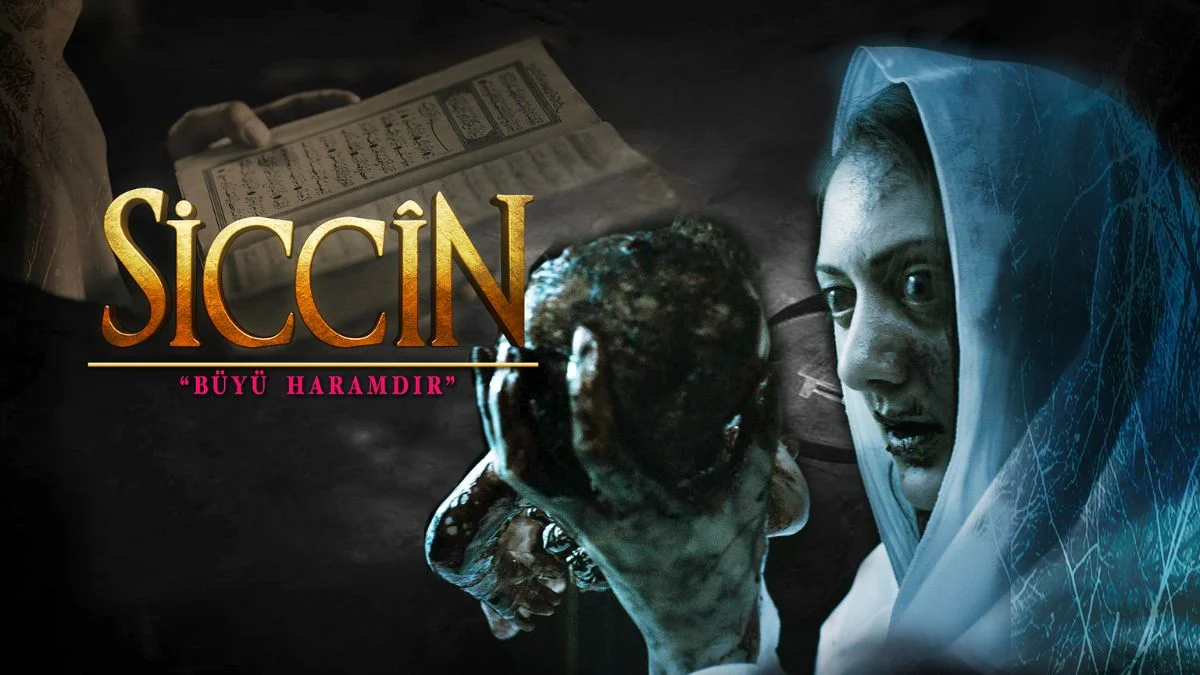
Turkish horror cinema has carved out a deeply unsettling identity by blending supernatural terror with religion, folklore, and cultural taboos that many mainstream horror films avoid. Among the most disturbing and influential entries in this genre is Siccin (2014), the first film in director Alper Mestçi’s infamous Siccin franchise. Unlike Western possession movies that rely on spectacle, jump scares, or fictional demonology, Siccin grounds its horror in Islamic theology, jinn mythology, and the very real fear of black magic (sihr).
What makes Siccin (2014) so terrifying is not just what happens on screen, but what it implies: evil is not summoned accidentally—it is invited. The film presents black magic not as a shortcut to love or revenge, but as a spiritual crime that triggers consequences beyond human control. At its core, Siccin is not merely a horror story—it is a moral warning, one that unfolds slowly, mercilessly, and without mercy for those who cross forbidden lines.
This article provides a complete, spoiler-heavy explanation of Siccin (2014), carefully unfolding the narrative layer by layer to reveal how obsession, jealousy, and forbidden desire open the door to unimaginable horror—and how black magic ultimately destroys everyone it touches, including the person who dares to wield it.

In This Post:
Siccin (2014): A Horror Film Built on Islamic Jinn Beliefs
Unlike conventional supernatural horror films, Siccin does not portray possession as a vague paranormal event. Instead, it treats jinn possession as a religious reality, governed by strict spiritual laws. In Islamic belief, jinn are beings created from smokeless fire, living in a parallel world alongside humans. While they usually remain unseen, they can influence humans—but only when humans commit sins that invite them.
The film repeatedly emphasizes that jinn cannot harm people arbitrarily. Every supernatural event in Siccin is a consequence of a human action, particularly acts considered haram, such as adultery, incestuous desire, and black magic.
At the center of this nightmare is Öznur, a woman whose obsession leads her to abandon faith, morality, and humanity itself.
The Opening Scene: A Ritual That Sets the Tone
Siccin opens not with exposition, but with dread. A man is shown performing deeply disturbing ritualistic acts, the purpose of which is initially unclear. The imagery is unsettling, hinting at something unnatural being summoned rather than explained.
The scene abruptly cuts to a quiet house, where two young women sit nervously, visibly shaken. Their fear feels justified even before the audience understands why. Their attention is drawn to a photograph hanging on the wall—a man levitating unnaturally, suspended mid-air as if gravity no longer applies to him.
Soon, a woman arrives and escorts them to meet the man in the photograph.
Ojha—a practitioner of black magic.
When the girls introduce themselves, one reveals her name: Öznur. It becomes immediately clear that they are not there out of curiosity. They are there because something terrible has already begun.
Öznur’s Forbidden Love: The Seed of the Curse

The film then rewinds to reveal the roots of the tragedy.
Öznur has been obsessively in love with her cousin, Kudret, since childhood. In the cultural and religious context of Siccin, this attraction is not merely inappropriate—it is spiritually forbidden. Desire itself becomes sinful when it violates moral boundaries.
Years earlier, long before the main events, Öznur sought help from a black magic practitioner. Instead of encouraging her, the hodja warned her unequivocally:
- Stay away from Kudret
- Your obsession will destroy lives
- The consequences will be irreversible
This moment is crucial. Siccin makes it clear that Öznur was warned. What follows is not ignorance—it is defiance.
She ignored the warning.
Kudret’s Family Life: Guilt Beneath Normalcy
As time passes, Kudret builds a life completely separate from Öznur. He marries Nisa, a kind, patient, and deeply religious woman. Together, they have a daughter named Ceyda, who is blind.
Ceyda’s blindness becomes a source of unbearable guilt for Kudret. He believes that delaying medical help during Nisa’s labor caused his daughter’s condition. This guilt defines his character—he drinks heavily, struggles emotionally, and punishes himself internally.
To the outside world, Kudret appears to be a flawed but responsible family man.
But the film slowly reveals the truth.
The Affair: When Sin Becomes a Doorway
Despite his marriage, Kudret begins a secret, illicit affair with Öznur. This betrayal marks the moment when sin becomes mutual. For Öznur, the affair validates her obsession. She interprets it not as wrongdoing, but as destiny correcting itself.
When Öznur becomes pregnant, she believes this will force Kudret to leave his family and publicly choose her.
Instead, fate intervenes brutally.
Miscarriage and Rage: The Point of No Return
Öznur wakes up in a hospital to learn that her unborn child has died. Grief instantly transforms into rage. She blames Kudret entirely, accusing him of destroying her life.
Kudret’s reaction is deeply disturbing—not grief, but relief. Öznur was close to revealing their affair, and the loss of the baby saves him from exposure.
They argue violently, even within the hospital walls. Before leaving, Kudret threatens her: if she does not stay away, he will expose everything to her father.
Left alone, Öznur makes a silent vow of revenge. She declares that Kudret is the only love of her life—and that no one else deserves him.
Guilt Manifests as Horror: Kudret’s Nightmares
Kudret descends further into alcoholism and despair. One night, he experiences a nightmare that becomes one of the film’s most haunting moments.
His daughter Ceyda approaches him holding two eyeballs and says:
“Papa, put these eyes in me so that I can see you.”
He wakes in terror, overwhelmed by guilt and self-blame. The dream foreshadows the truth that will later be revealed—but at this stage, neither Kudret nor the audience understands its meaning.
Öznur’s Past Revealed: Widowhood and Isolation
The story briefly shifts focus to Öznur’s background. She never married Kudret. Instead, she married Ali Ismail, who later died. She now lives as a widow with her mother-in-law.
This detail reinforces Öznur’s emotional isolation. When Kudret finally cuts off all contact, her obsession transforms into desperation.
Returning to Black Magic: Choosing Evil Fully
Consumed by rage, Öznur returns to the same black magician who once warned her. Even when he initially refuses, she persists—offering money and gold bangles, begging him to do something, anything.
Her demand is explicit:
Nisa must be eliminated.
The ojha warns her repeatedly:
- The curse will destroy an entire bloodline
- It does not discriminate
- The consequences may return to the caster
Öznur listens—and still agrees.
This moment seals her fate.

The Ritual of Sihr: Crossing the Ultimate Boundary

The ojha explains the ritual in horrifying detail:
- A pig must be slaughtered
- Its intestines wrapped around the shin bone of a corpse
- Inverted verses written against the Quran
- A photograph of the victim
- Blood, hair, or nails from the victim
These acts are intentionally blasphemous, designed to provoke and bind jinn.
Öznur infiltrates Kudret’s house while he is away. His paralyzed mother begins seeing supernatural entities. Pretending to use the bathroom, Öznur steals a sanitary pad and hair from a comb.
She briefly hesitates, feeling pity for Ceyda—but Kudret’s anger reignites her hatred.
The ritual begins.
The demon accepts the offering.
Five Days of Damnation: May 10–14
May 10
Nisa wakes after prayer to see pig heads falling from above, marking the curse’s activation.
May 11
Nisa becomes possessed—cutting and eating her own hair. Ceyda’s behavior grows increasingly unnatural. Kudret dismisses it as insanity.

Öznur dreams of her dead husband smashing his head against a wall, accusing her of causing his suicide. When she wakes, she steps on a blade from her dream.
May 12
Kudret’s paralyzed mother suddenly stands, pours boiling soup over herself, and dies—the first fatality.
May 13
A priest confirms jinn possession and warns that either Kudret is the target—or someone close sent the entity.
That night, Nisa sees her dead mother-in-law eating bread mixed with feces. Öznur sees a demonic Nisa holding her dead baby.
May 14
The final night begins.
Öznur’s Punishment: The Curse Returns Home

Öznur eats dinner—only for her food to transform into blood-filled worms. She vomits them violently. Her body contorts unnaturally. Bones snap.
She dies screaming.
Black magic has taken its price.
The Final Revelation: Ceyda Was the Vessel

During the exorcism, Nisa dies despite all efforts. Kudret attacks the priest in rage.
Then the horrifying truth is revealed:
Ceyda was the true vessel.
The sanitary pad used in the ritual belonged to Ceyda, not Nisa. Ceyda had begun menstruating—explaining why she begged her mother not to tell her father.
The jinn used Nisa as camouflage.
Every death was caused by Ceyda.
In the final scene, Ceyda looks at her father in her demonic form.
The film ends.
The Chilling Epilogue: Based on True Events

The end credits reveal that the story is inspired by real events in which a 44-year-old man, a 33-year-old woman, and their 11-year-old daughter were found dead in a mosque, with the priest as the main suspect.

Why Siccin (2014) Still Haunts Audiences
Siccin (2014) endures because it does not offer comfort. It offers consequences.
Its message is brutal and uncompromising:
- Black magic never solves suffering
- Obsession is not love
- Evil never obeys human intentions
The greatest horror is believing you can control darkness without becoming part of it.


Leave a Reply