

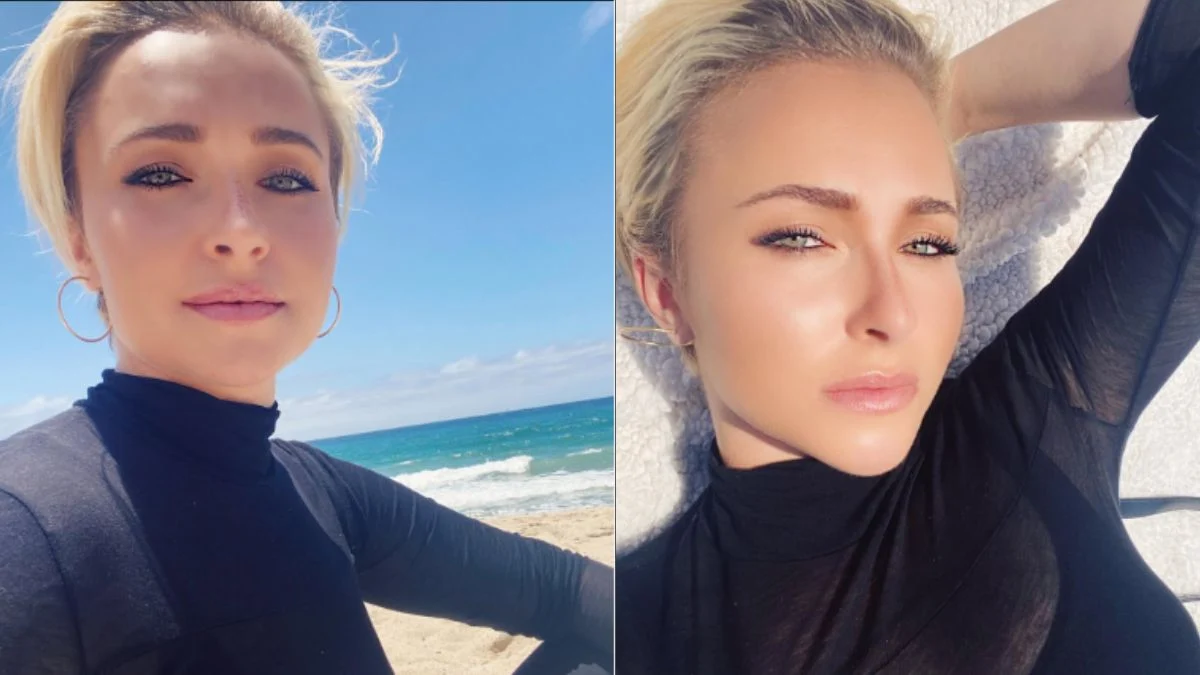
Hayden Panettiere’s death has reignited a controversy she had already revisited publicly in 2026: her claim that Neutrogena moved to end their roughly decade-long relationship after she spoke openly about postpartum depression. Panettiere, who died on August 16, 2026, at 36, was known for Heroes, Nashville, Scream 4, Scream VI and Remember the Titans. Her account, detailed in her memoir This Is Me: A Reckoning and subsequent interviews, has now triggered renewed criticism and boycott calls aimed at the skincare brand.
But there is an important distinction. Panettiere’s account is documented through her own memoir and interviews, while Neutrogena has not publicly confirmed that her postpartum-depression disclosure caused the partnership to end. As of August 20, 2026, Neutrogena and parent company Kenvue had not provided a substantive public explanation of their side of the dispute.
Open Questions: a young woman found dead near Big Sur left officials working through a similarly unresolved cause of death. To know more, read our story on Joanna Ruth Shields’ Big Sur Cause of Death.
Hayden Panettiere’s Neutrogena relationship began before her biggest TV roles
Panettiere became a recognizable Neutrogena face while still a teenager, with the partnership lasting approximately 2005 to 2015 as she moved from child acting into major roles including Heroes and Nashville.
In This Is Me: A Reckoning, she described the end of the relationship as another painful blow during an already difficult period:
“Neutrogena canceled my long-standing contract, and it was yet another blow in a year that had given almost nothing else.”
The issue centered on a 2015 appearance on Live with Kelly and Michael, where Panettiere discussed postpartum depression while connecting her experience to her Nashville character Juliette Barnes. She said postpartum depression involved “a lot of misunderstanding” and was “completely uncontrollable, and it’s really painful, and it’s really scary, and women need a lot of support.”
Panettiere later emphasized that she had not planned to discuss the subject. She said it simply came up during the interview.
Money and the Law: a former hedge fund manager’s poker winnings ended up at the center of his own sentencing over unpaid taxes. For more on that, read our article on Tom Goldstein’s Poker Tax Evasion Sentencing.
Why Hayden Panettiere said Neutrogena wanted to end her contract
During a May 2026 appearance on Jay Shetty’s On Purpose podcast, Panettiere gave her most detailed account of what followed.
“Neutrogena was a huge part of my life. I had the morals clauses, they caught absolutely everything. And of all the things that they would fire me over, this is the last thing that I thought they would ever fire me for.”
She said she had simply been honest about her experience and never expected the disclosure to create professional consequences:
“I had no intention of, or planned to talk about postpartum depression. It just came up, and I was just being honest. Never for a second did I think or care that anyone would have a bad reaction to it. It was my truth.”
According to Panettiere, she later received a call saying Neutrogena wanted to fire her. Her representative reportedly intervened.
“So when I got that call that Neutrogena wanted to fire me over that, and my representative at the time said, ‘That’s illegal. You can’t do that.’ And even though she saved the day, that year, I knew that that was going to be it. I was not going to be invited back the next year.”
She said the immediate termination did not happen because of her representative’s intervention, but she believed the existing arrangement would simply expire.
What hurt her most, she said, was the silence after nearly 10 years of working with the company:
“I’d worked with these people for 10 years, and I remember not hearing a word from anybody, not a ‘great working with you for 10 years,’ ‘hope you’re good; we wish you well.’ And I remember that really breaking my heart.”
Guilty Plea: a singer’s night out at a London nightclub ended with assault charges and a plea in court. To know more, read our post on Chris Brown’s Guilty Plea Over London Nightclub Assault.
Panettiere said the experience exposed the stigma around postpartum depression
The actress later said the episode changed how she understood public attitudes toward women experiencing postpartum depression.
“made me realise exactly what people thought of women who experience postpartum depression, and how misunderstood it is, how much stigma there is around it.”
Yet she said she would not undo her decision to speak publicly:
“I wouldn’t change it for the world; I wouldn’t take it back.”
In a Us Weekly cover story, she recalled being shocked that the interview could affect her brand relationship:
“After that interview [with Kelly and Michael], I had no idea when I walked off that stage that I was going to get the call saying, ‘Neutrogena wants to fire you. They’re not OK with this.’ And you’re going, ‘Wait a second, of all the things, how can they judge me about something that is so human and so real?’”
She later told The Hollywood Reporter:
“After I was public about it and talked about the Neutrogena aspect of it, I don’t think anybody in that industry will be doing that to anyone else.”
Life Imitating Art: the actor known for playing Coronation Street’s Fred Elliott was connected to a real-life stabbing incident. For more, read our story on John Savident’s Real-Life Stabbing: The Coronation Street Fred Elliott Actor’s Story.
Why the Neutrogena boycott calls exploded after Hayden Panettiere’s death
Panettiere died on August 16 after being found unresponsive and in cardiac arrest at an apartment complex in Greenville, South Carolina. Emergency responders attempted resuscitation, but she was pronounced dead at the scene. An autopsy found no trauma contributing to her death, while her official cause and manner of death remain pending further investigation. Police have said there were no indications of foul play.
Her father, Skip Panettiere, described her as:
“an incredible light and a force of nature who brought immeasurable love and joy to all who knew her — and to the millions who watched her onscreen.”
The Neutrogena controversy is separate from the death investigation. There is no indication that Neutrogena or Kenvue played any role in Panettiere’s death.
Instead, her earlier allegations resurfaced online, with users on Reddit, X, TikTok, Instagram and Threads calling for boycotts. One widely circulated X post stated:
“Reminder that Neutrogena fired Hayden Panettiere as a brand ambassador because she candidly spoke about her experience with postpartum depression on a talk show! Neutrogena hates women!”
A commenter on Neutrogena’s social media wrote:
“Sounds like y’all need to start making products for men since you don’t support women,”
Real Housewives of New York City cast member Carole Radziwill reportedly commented:
“You deserve the hate. #hayden.”
Reports also described increased searches for “Neutrogena boycott” and a surge in social-media discussion. The Independent reported that the backlash became widespread after Panettiere’s death.
Federal Involvement: authorities have escalated the case as toxicology results continue to be awaited. To know more, read our article on DEA Steps Into Investigation Following Death of Hayden Panettiere at 36 as Toxicology Results Remain Pending.
Kenvue stock and the question of whether the backlash affected the company
Because Kenvue owns Neutrogena, the controversy also drew attention to the company’s shares. Reports said Kenvue stock fell by more than 2% around the period when the backlash intensified before recovering some losses.
However, that movement cannot automatically be attributed to the Panettiere controversy. There is no definitive evidence that the boycott campaign alone caused the decline, and individual stock movements can have multiple causes.
As of August 20, 2026, Neutrogena and Kenvue had not issued a substantive response addressing Panettiere’s account. NBC News and PR Week were among the outlets reported to have sought comment.
Independent Findings: a separate death case saw an outside pathologist brought in, producing results that diverged from the initial findings. For more on that, read our post on Nolan Wells’ Independent Autopsy and Ben Crump’s Findings.
Crisis experts say Neutrogena’s silence could make the controversy worse
Crisis-management specialist Molly McPherson discussed the situation on NBC News Now, arguing that a standard statement might not be enough.
“Now what they need to see is action. This is not a time for a press release. Certainly, Neutrogena, this is one of these unknowns in crisis management. You could never plan for this. But you can always plan to be empathetic.”
She also said:
“This is the case of the story that they can no longer make good to the person who talked about this in May 2026.”
And added:
“Now it is almost too late, and the silence is deafening here. The social media commentary is being written, this narrative is being written by the public, and the public is not giving them a break.”
McPherson suggested that meaningful support for maternal health could potentially be more effective than a conventional public-relations response.
Behind Closed Doors: one case involving serious legal allegations stayed largely out of the headlines until the proceedings came to a head. To know more, read our story on Former Disney Channel Actor Matthew Prokop Arrested for Bond Violation.
Panettiere’s postpartum depression story makes the controversy even more personal
The dispute connects directly to the wider story Panettiere told about motherhood, addiction and recovery. After giving birth to her daughter Kaya in 2014, she experienced severe postpartum depression. She later described a traumatic birth involving a near-fatal C-section, seven blood transfusions and two surgeries.
She said postpartum depression left her emotionally detached from her newborn and contributed to subsequent substance use. Her experiences eventually became part of her public advocacy and her willingness to discuss subjects surrounded by stigma.
Those themes, along with addiction, recovery, childhood stardom and the pressures of growing up in entertainment, became major parts of This Is Me: A Reckoning, published in May 2026.
The controversy has therefore grown beyond an old celebrity endorsement dispute. It has reopened questions about morality clauses, mental-health disclosures, postpartum depression, corporate responsibility and the professional risks public figures may face when they reveal deeply personal experiences.
More Headlines: a boat trip in Mississippi turned into a case that kept state authorities busy. For more, read our article on Nolan Wells’ Boat Trip and Mississippi State Law Enforcement.
What remains unproven about the Hayden Panettiere and Neutrogena dispute
The central question remains unresolved. It is established that Panettiere had a roughly decade-long relationship with Neutrogena, publicly discussed postpartum depression in 2015 and later said the company sought to end the relationship because of that disclosure.
What has not been independently established is Neutrogena’s version of events. The company has not confirmed that her postpartum-depression comments caused the partnership to end or publicly supplied a detailed alternative explanation.
That distinction matters as the backlash continues. Claims that Neutrogena definitively “fired” Panettiere because she spoke about postpartum depression should be understood as an allegation based on Panettiere’s own account.
Her death has dramatically amplified a story she had already revisited months earlier. What began with a television interview more than a decade ago is now part of a much larger conversation about postpartum depression, celebrity contracts, corporate accountability and the consequences of speaking openly about mental health.
Taken In: another name recently making headlines was taken into custody, adding a fresh twist to an already tangled story. For more on that, read our story on Wendy Osefo & Husband Eddie Arrested on Fraud Charges.
Disclaimer and Sources
This article is based on thorough research of contemporaneous reporting, public statements, Hayden Panettiere’s memoir This Is Me: A Reckoning, her interviews and information available as of August 20, 2026. Claims concerning Neutrogena’s decision to end or not renew Panettiere’s contract are presented as Panettiere’s account, because Neutrogena has not publicly confirmed her version or provided its own detailed explanation. Social-media reactions, boycott activity and reported market movements can change as additional information emerges.
The article does not imply that Neutrogena or parent company Kenvue had any involvement in Panettiere’s death. Her cause and manner of death remain under investigation.
Sources researched: The Independent, PR Week, Forbes and Gulf News, alongside Panettiere’s memoir and published interviews.
Primary / core reporting:
- The Independent
- The Independent (bulletin)
- NBC News YouTube (Molly McPherson segment)
- Hollywood Reporter
- Variety
- People
- USA Today
- NY Post
- Mashable
- The Cut
Featured Image Source:
- Instagram / @haydenpanettiere


Leave a Reply