

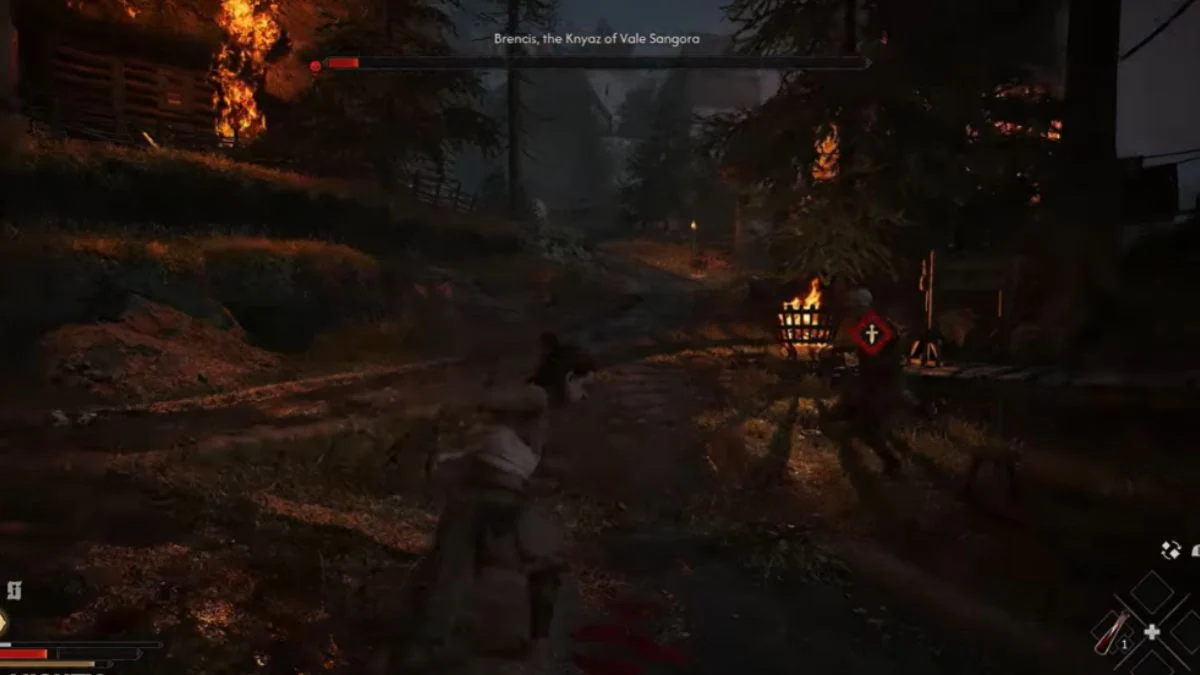
If you’re playing The Blood of Dawnwalker and wondering what the deal is with Brencis’s Court, Infamy, Anger Levels, and those three very dangerous vassals, you’re in the right place.
Brencis doesn’t exactly sit around waiting for Coen to come knocking. His rule is protected by three powerful vrakhiri vassals—Ambrus, Bakir and Xanthe—and the game gives you a pretty interesting choice in how you deal with them.
You cannot simply locate a Court member and immediately initiate their normal confrontation. Instead, you need to complete Court Activities associated with that vassal until their Anger reaches its maximum and their confrontation quest becomes available. You don’t have to complete every available Court Activity to reach that point, however. In practice, you can generally reach maximum Anger after completing around 75% of a vassal’s available activities.
And yes, Brencis notices.
As your Infamy rises, he responds with new Edicts designed to make your journey harder. There are nine Edicts tied to the Infamy system. But becoming one of his most notorious enemies also has a major upside: reaching the “Notorious” Infamy Level gives Coen the opportunity to join the Manumits, a rebel group seeking to put an end to the vrakhiri.
So, should you deliberately make Brencis angry while working through his Court?
Here’s how the entire system works.
Another Hidden Hunt Worth Chasing: Every location and clue-reading trick needed to uncover a set of well-hidden treasures. For more, check out our guide: Onimusha: Way of the Sword: All 5 Hidden Treasure Locations and How to Find Them.
What Is Brencis’s Court in The Blood of Dawnwalker?
After completing the prologue and recovering under Anca’s care, Coen gains access to the Court system through the main menu.
Brencis’s Court consists of three vrakhiri vassals, also referred to as boyars:
- Ambrus
- Bakir
- Xanthe
Each vassal controls their own portion of Brencis’s established order and serves under him.
The Court system essentially gives you a structured way to undermine these powerful figures and eventually unlock their individual confrontation quests.
There are 41 Court Activities in total:
- 14 for Ambrus
- 12 for Bakir
- 15 for Xanthe
These activities become available after the Prologue and form the main progression layer for the Court system.
When you first look at the Court menu, you’ll notice several question marks surrounding each vassal. These represent undiscovered or unknown Court Activities, rather than simply generic side quests.
Completing Court Activities raises the Anger Level of the corresponding vassal. Once that Anger reaches its maximum, the vassal’s confrontation quest becomes available.
The Court therefore isn’t simply about finding three enemies and beating them up. If you want to progress through the normal Court route, you need to investigate the world, uncover Court Activities and complete enough of them to push each vassal’s Anger to its maximum.
There is also a significant time-management element to the system. Coen has 30 in-game days to complete the main objective, and Court Activities consume in-game time. That means exploring and completing Court content has to be balanced against the game’s overall time limit.
A Different Kind of Collection Grind: Every location and upgrade cost needed to fully complete a game’s entire collectible set. For more, check out our guide: Onimusha Way of the Sword: All 15 Charm Locations and How to Fully Upgrade Every Charm.
How Anger Levels Work
Each member of Brencis’s Court has an Anger Level.
When you discover Court Activities associated with a particular vassal, completing those activities increases that character’s Anger Level.
You do not need to complete every Court Activity associated with a vassal. The important requirement is reaching maximum Anger, because that is what unlocks the corresponding confrontation quest.
For example, Ambrus has 14 Court Activities, but completing 10 of them is enough to reach the required Anger threshold.
That means the game does not require you to clear every single activity before allowing you to confront a vassal. You have some flexibility in which activities you pursue.
The question marks shown around each vassal in the Court menu represent activities you have not yet discovered. Exploring the surrounding world, investigating locations and interacting with the appropriate activities gradually reveals more of the Court’s network.
Do You Need to Max Out a Vassal’s Anger Level?
Yes, if you want to unlock the normal confrontation quest.
You must raise the relevant vassal’s Anger to its maximum before their confrontation becomes available.
However, that does not mean you need to complete every Court Activity.
The game allows you to reach the maximum Anger threshold without clearing the entire activity list. Roughly 75% of a vassal’s activities can be sufficient, depending on the vassal.
For example:
- Ambrus: 10 of 14 activities
- Bakir: 9 of 12 activities
- Xanthe: 11 of 15 activities
So the distinction is important: maximum Anger is required for the confrontation, but 100% completion of that vassal’s Court Activities is not.
Taking the time to work through these activities also gives you access to:
- Additional Court content
- Extra experience
- Individual quests for the Court members
- The confrontation quests
- Potentially different rewards depending on how encounters are resolved
- Progress toward increasing your Infamy
- The possibility of joining the Manumits if your Infamy reaches the required level
What Is Infamy in The Blood of Dawnwalker?
Think of Infamy as a measure of how aggressively Coen is disrupting Brencis’s regime.
Court Activities contribute to the wider process of undermining Brencis’s established order, but Infamy should not be understood as simply a meter generated exclusively by Court quests.

The Infamy system tracks Coen’s broader disruption of Brencis’s rule.
As that Infamy climbs, Brencis reacts by introducing additional Edicts.
There are nine Edicts in the Infamy system. These measures are designed to hinder Coen’s journey and make the consequences of becoming a greater threat to Brencis increasingly noticeable.
That means Infamy isn’t simply a hidden meter that exists to make Coen stronger.
In fact, becoming more notorious can make the journey more dangerous.
The more Coen interferes with Brencis’s regime, the more aggressively Brencis attempts to interfere with him.
That creates a genuine risk-and-reward system: you gain access to additional progression and opportunities, but Brencis also starts pushing back harder.
Working Toward A Legendary Reward: A full walkthrough for tracking down a complete armor set through a demanding side quest. For more, check out our guide: The Blood of Dawnwalker: A Bulwark Against Darkness Guide — All Arbiter Armor Locations and How to Get the Legendary Set.
What Happens When You Reach “Notorious” Infamy?
Here’s where things get particularly interesting.
If Coen reaches the “Notorious” Infamy Level while working against Brencis’s regime, he gets the opportunity to join the Manumits.
The Manumits are a rebel group seeking to put an end to the vrakhiri.
So if you want to explore the rebel-related content, Infamy becomes especially important.
Staying unnoticed may make your journey easier, but becoming one of Brencis’s most notorious enemies can open up content you might otherwise miss.
Just keep in mind that reaching “Notorious” provides the opportunity to join the Manumits; it should not be treated as an automatic guarantee that you have joined them simply because the Infamy threshold was reached.
Why Should You Anger Brencis’s Vassals?
At first, deliberately making powerful enemies angrier sounds like a terrible strategy.
You’re increasing their Anger Levels, increasing your own Infamy and causing Brencis to introduce additional Edicts.
So… why do it?
Because there’s plenty to gain.
The Court Activities provide additional experience and eventually allow you to unlock the individual confrontation quests for the vassals.
Those confrontations can also provide different rewards depending on how you resolve them.
For example, draining Ambrus grants Scarlet Shield, while draining Bakir grants Shadowstorm. Alternative resolutions can provide different rewards, so it is more accurate to think of the rewards as depending on the way particular vassal encounters are resolved rather than assuming every vassal simply gives Coen a new vampiric ability for being defeated.
More importantly, following the longer route lets you experience considerably more content than simply trying to reach the Court confrontations as quickly as possible.
If you’re playing primarily for story, exploration and character progression, rather than trying to complete the main objective as quickly as possible, working through the Court Activities is the more complete approach.
Knowing The Exact Number You Need: How long a full campaign actually takes from start to finish, cycle by cycle. For more, check out our guide: Star Wars Zero Company: How Many Cycles Does It Take to Finish the Campaign?.
How to Increase Your Infamy
The Court system is one part of Coen’s broader effort to disrupt Brencis’s regime.
As you explore the world, watch for opportunities involving Ambrus, Bakir and Xanthe, while also pursuing other activities that contribute to your disruption of Brencis’s rule.
One particularly useful early opportunity appears while exploring beyond Laslea.
During the “From Above” quest, you can encounter soldiers at a campsite while travelling toward the Briar Sloughs Watchtower.
Defeating these soldiers can lead you toward information connected to Ambrus’s operations and associated Court content.
Following the relevant activities increases Ambrus’s Anger Level and contributes to your wider progression against Brencis.
The exact connection between that particular soldier encounter and the Collectors quest line should be treated with some caution, however, rather than assuming that defeating those soldiers directly and definitively triggers the Collectors information in every version or circumstance.
So if you’re trying to progress through the Court system, don’t just sprint past every enemy camp you see.
Sometimes the seemingly random combat encounter is actually pointing you toward another piece of the Court’s quest network.
Don’t Ignore Enemy Camps
Enemy soldiers and camps can be surprisingly useful when you’re working through Brencis’s Court.
When you encounter soldiers, defeating them can potentially provide information about additional Court Activities.
Camps can also contain useful information that points you toward activities connected to the Court.
Instead of treating every enemy camp as nothing more than another combat encounter, consider it an opportunity to uncover more of the activity network surrounding Brencis’s vassals.
Exploration therefore becomes an important part of raising Anger Levels and progressing through the Court system.
When Difficulty Becomes Part Of The Story: Why two of gaming’s toughest difficulty settings remain some of the most demanding around. For more, check out our guide: MGS4 Difficulty Levels Explained: Why Big Boss Hard and The Boss Extreme Are Still Metal Gear’s Most Terrifying Challenges.
Follow the Main Quests While Exploring
You also don’t need to completely abandon the main story and scour every corner of the map before making progress against the Court.
Continuing through main quests such as “The Firebrand” naturally creates opportunities to disrupt the vrakhiri and discover activities connected to their territories.
As you move through these areas, keep an eye out for Court Activities and other opportunities involving Ambrus, Bakir and Xanthe.
A good strategy is to combine main-story progression with exploration rather than treating the Court system as a completely separate activity.
That way, you’re progressing the main story while simultaneously uncovering opportunities to raise Anger and build your Infamy.
Use Towers to Reveal Court Activities
The world also provides another useful tool for locating Court content.
There are 11 Towers to discover.
Finding these Towers can help reveal nearby Court Activities on the map, making them particularly useful when you’re trying to uncover the activities required to raise a vassal’s Anger.
If you’re having trouble finding enough Court Activities, exploring and discovering Towers can therefore make the process considerably easier.
Because the game has a 30-day time limit, using the map and Tower system efficiently can help you avoid wasting valuable in-game time while searching for the activities you need.
The Best Order to Defeat Brencis’s Court
The three Court members aren’t identical in difficulty, so choosing a sensible order can make the progression smoother.
A commonly recommended order is:
Ambrus → Bakir → Xanthe
However, this is a recommended progression route, not a mandatory order.
The game does not require you to follow this exact sequence in every playthrough. It is generally presented as a sensible route based on progression and relative difficulty.
Here’s why.
1. Ambrus — Take Him Down First
Ambrus is generally recommended as the first target.
His associated Court Activities are among the earlier opportunities you’re likely to encounter while exploring outside Laslea.
Working through his activities allows you to increase his Anger Level and eventually unlock the confrontation associated with him.
Because his content can appear relatively early, Ambrus makes sense as the first Court member to tackle for a level-conscious progression route.
2. Bakir — Your Next Court Target
Once you’ve dealt with Ambrus, Bakir is a sensible next target.
By this point, Coen should have gained additional experience and improved his capabilities, making the next Court confrontation more manageable.
Continue exploring and completing activities associated with Bakir to raise his Anger Level until the confrontation quest becomes available.
You do not need to clear all of his activities, but you do need to reach maximum Anger to unlock the confrontation.
3. Xanthe — Save Her for Last
Xanthe is commonly recommended as the final Court member.
Her higher difficulty makes her a better target once Coen has progressed further and already dealt with the other members of Brencis’s Court.
Following the recommended progression of Ambrus → Bakir → Xanthe gives you a sensible path through the Court encounters.
But again, this is a recommendation rather than a hard requirement.
Building A Squad For The Fight Ahead: A breakdown of every specialization and how to combine them for the strongest possible team. For more, check out our guide: Star Wars Zero Company Classes Guide: All 12 Specializations and the Best Ways to Build Your Squad.
Can You Fight Brencis’s Court Immediately?
Not through the normal vassal confrontation route.
You cannot simply find Ambrus, Bakir or Xanthe and immediately initiate their standard confrontation.
You first need to complete enough of the relevant Court Activities to raise that vassal’s Anger Level to maximum.
Once maximum Anger is reached, the corresponding confrontation quest unlocks.
The important distinction is that you don’t have to complete all of the activities.
The game only requires enough progress to reach the maximum Anger threshold.
For example, Ambrus has 14 activities, but 10 are sufficient to reach the required threshold.
So an efficient player can focus on selected Court Activities rather than attempting to complete every single one.
At the same time, completing more of the available activities can provide additional content, experience and opportunities to explore the consequences of Coen’s campaign against Brencis.
The Best Strategy for Brencis’s Court
If you want to squeeze as much content and progression as possible out of the Court system, don’t treat the three vassals as simple bosses that you can immediately rush.
Instead, use this progression:
- Complete the prologue and recover under Anca’s care.
- Access the Court system through the main menu.
- Explore beyond Laslea.
- Look for soldiers, camps, Towers and information that reveal Court Activities.
- Discover and complete Court Activities associated with Ambrus, Bakir and Xanthe.
- Raise each vassal’s Anger Level to maximum.
- Remember that you don’t need to complete every activity; roughly 75% can be enough to reach the required threshold.
- Increase your Infamy through activities that disrupt Brencis’s regime.
- Watch for the new Edicts introduced by Brencis as your Infamy rises.
- Keep the 30-day time limit in mind when deciding how much optional content to pursue.
- Reach “Notorious” Infamy if you want the opportunity to join the Manumits.
- Complete the individual Court confrontation quests as they become available.
- Consider the recommended progression of Ambrus, then Bakir, then Xanthe, while remembering that this order is not mandatory.
- Pay attention to how you resolve the vassal encounters, since different resolutions can produce different rewards.
- Resolve the three Court confrontations before pursuing Brencis if you’re following the standard Court route.
This approach lets you combine exploration, side content, progression and the main story instead of treating each part separately.
Different Fights, Different Rewards: A brutal soulslike-roguelike packing angel powers, heavy metal bosses and serious build value. For more, check out our review: Crimson Moon Review: A Brutal Soulslike-Roguelike With Angel Powers, Heavy Metal Bosses and Serious Value.
What Happens After You Resolve the Three Vassal Confrontations?
Once the confrontations involving Ambrus, Bakir and Xanthe have been resolved, the Court route leads toward the larger confrontation with Brencis.
However, it is important not to treat this as an absolute game-wide requirement that all three vassals must simply be killed before Brencis can be challenged.
In particular, Xanthe can be resolved through an alternative outcome, including an option to make a deal or cooperate rather than treating her confrontation as necessarily ending with her death.
Likewise, the game permits Coen to challenge Brencis early, so resolving all three Court members is best understood as the standard Court progression rather than an unbreakable requirement for reaching Brencis.
Completing the Court route first nevertheless gives you more opportunities to develop Coen, earn experience and explore the consequences of becoming increasingly notorious.
And that’s really the heart of the system.
Brencis’s Court isn’t just a checklist of three bosses. It’s a progression system built around how aggressively you choose to challenge his authority, how much time you’re willing to spend disrupting his regime and how much Infamy you’re willing to accumulate.
Brencis’s Court and Infamy Explained
| System | What It Does |
| Brencis’s Court | Contains his three major vassals: Ambrus, Bakir and Xanthe |
| Court Activities | The main progression activities connected to the three vassals; there are 41 in total: 14 Ambrus, 12 Bakir and 15 Xanthe |
| Anger Level | Increases as you complete Court Activities associated with an individual vassal |
| Maximum Anger | Required to unlock that vassal’s normal confrontation quest |
| Court Activity Completion | You do not need to complete every activity; roughly 75% can be sufficient to reach maximum Anger |
| Infamy Level | Tracks Coen’s broader disruption of Brencis’s regime |
| Edicts | Measures introduced by Brencis as Infamy increases; the system contains nine Edicts |
| Individual Court Confrontations | Become available after the corresponding vassal’s Anger reaches maximum |
| Manumits | Rebel group that becomes an opportunity when Coen reaches “Notorious” Infamy |
| Towers | There are 11 Towers, and discovering them helps reveal nearby Court Activities on the map |
| Time Limit | Coen has 30 in-game days to complete the main objective |
| Recommended Court Order | Ambrus → Bakir → Xanthe |
| Recommended Order Status | A sensible progression route, not a mandatory order |
| Vassal Rewards | Depend on how individual confrontations are resolved; for example, draining Ambrus grants Scarlet Shield and draining Bakir grants Shadowstorm |
| Final Objective | The standard Court route leads toward Brencis after the three vassal confrontations are resolved, but Brencis can also be challenged early |
Exploring Beyond The Obvious Path: A full location guide for tracking down all eight of one Metal Gear classic’s key items. For more, check out our guide: MGS4 Chaff Grenade Locations: Where to Find All 8 Chaff Grenades in Metal Gear Solid 4.
Should You Rush Brencis’s Court?
For most players, the longer route is the better choice.
There is no immediate shortcut to the normal vassal confrontations. You need to work through Court Activities and raise the relevant vassal’s Anger to maximum before their confrontation quest becomes available.
The good news is that you don’t need to complete every Court Activity.
With 41 Court Activities spread across Ambrus, Bakir and Xanthe, you have room to choose which activities you pursue. Roughly three-quarters of a vassal’s activities can be enough to reach the required Anger threshold.
The Court system is designed to make your growing reputation matter.
The more you interfere with Brencis’s regime, the more he tries to stop you through his nine Edicts. At the same time, pushing your Infamy higher can unlock additional opportunities and content, including the opportunity to join the Manumits when you reach “Notorious” Infamy.
The 30-day time limit also means that you cannot necessarily treat every optional activity as something you can complete without considering the clock. Towers can help reveal nearby Court Activities, making exploration more efficient.
The choice ultimately comes down to what kind of playthrough you want.
If you want to progress efficiently, focus on enough Court Activities to push each vassal’s Anger to maximum rather than trying to clear every activity.
If you want to experience more of The Blood of Dawnwalker, earn additional XP, explore the Court’s activity network, pursue different confrontation outcomes and potentially access the Manumit-related content, then spending more time on the Court system is the more complete approach.
The recommended progression of Ambrus → Bakir → Xanthe is a sensible route, but it isn’t mandatory.
And when you reach the confrontations, remember that the outcome isn’t always simply a matter of killing the vassal. Xanthe, for example, can be resolved through a deal or cooperation, while other confrontation choices can affect the rewards you receive.
Once the Court has been dealt with, the road toward Brencis himself becomes the central objective.
And after everything you’ve done to tear apart his regime, that confrontation carries a lot more weight.
Featured Image Credit: Rebel Wolves / Bandai Namco Entertainment / Mighty Noob via YouTube
Image 2 Credit: Rebel Wolves / Bandai Namco Entertainment / Mighty Noob via YouTube


Leave a Reply