

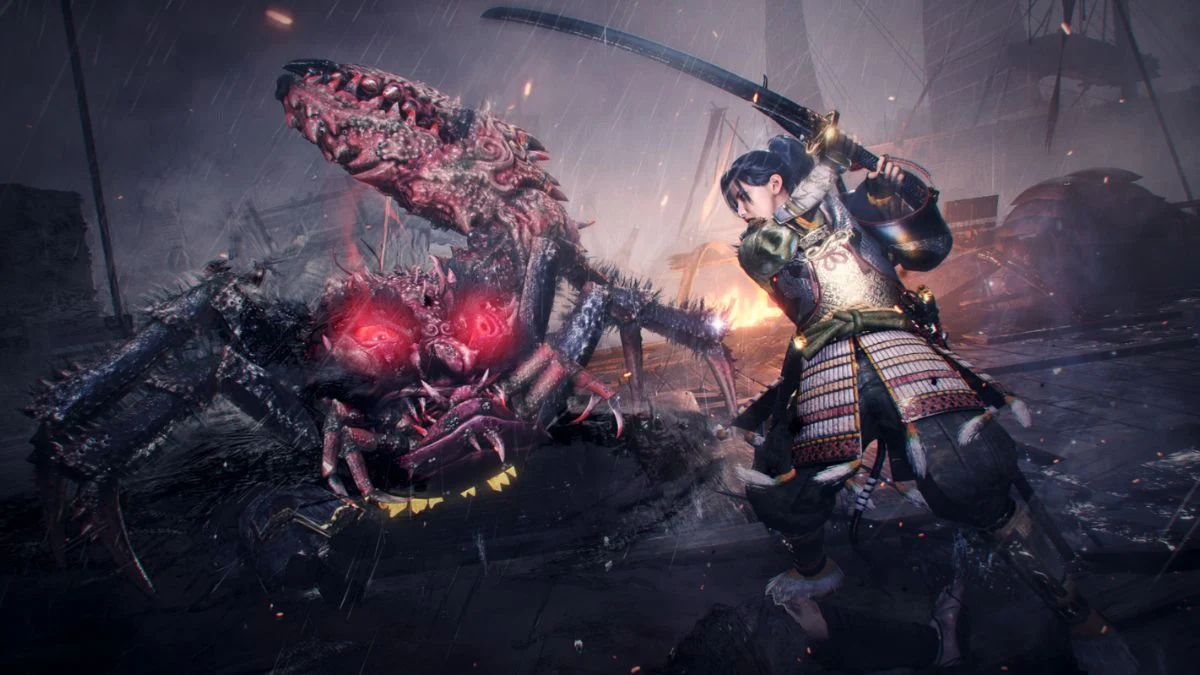
Nioh 3 breaks away from the series’ traditional linear structure by introducing 4 open world maps spanning different historical eras. Each region offers unique exploration, collectibles, and challenges. Here’s everything you need to know about Nioh 3’s maps and which ones demand the most time.
The 4 Open World Maps in Nioh 3
Nioh 3 takes you on a time-traveling journey across Japanese history through four distinct open world regions:
Complete Map List:
- Warring States (1572 CE)
- Heian (1190 CE)
- Antiquity (247 CE)
- Bakumatsu (1864 CE)
Additionally, Nioh 3 includes three linear, story-focused chapters set in Edo (1622 CE) that bookend the game. These aren’t open world regions but rather traditional mission-based levels.

Map Sizes and Sub-Regions Breakdown
The four open world maps vary dramatically in size and content density:
Warring States – Largest Map:

- 11 sub-regions total
- 363 collectibles to discover
- First major open world region players explore
- Serves as the introductory setting for open world mechanics
Heian – Medium Map:

- 9 sub-regions total
- 225 collectibles to discover
- Approximately half the size of Warring States
- Takes place during the Age of Clans
Bakumatsu – Second Largest Map:

- 10 sub-regions total
- 288 collectibles to discover
- Set during the New Era period (1864 CE)
Antiquity – Smallest Map:

- No sub-regions (linear structure)
- Only accessible during two story missions
- Functions more like traditional Nioh levels
How Exploration Works in Nioh 3
Nioh 3 introduces an Exploration Level system that rewards thorough map completion:
Exploration Level System:
- Each sub-region has 4 Exploration Levels
- Gathering collectibles increases your Exploration Level
- Each level grants permanent stat boosts (attack, defense, or luck)
- Level 2 automatically unfogs the entire region on your map
- Level 4 automatically marks all remaining collectibles
This system makes 100% completion significantly easier than previous Nioh games. You don’t need to meticulously search every corner—just collect enough items to hit Level 4, then follow the automatic markers.

What Collectibles Exist on Each Map?
Every open world region contains the same types of collectibles, just in different quantities:
Collectible Types:
- Kodama – 92 total across all maps
- Myths – 39 side missions
- Shrines and Bodhisattva Statues – 156 fast travel points
- Hot Springs – 26 healing locations
- Enemy Bases – 26 combat challenges
- Lesser Crucibles – 23 mini-dungeons
- Crucible Wraiths – 50 boss encounters
- Chijiko – 43 collectibles
- Six Jizo – 20 statue sets
- Scampusses – 16 cat companions
- Masters – 13 training NPCs
- Crucible Spikes – 13 world obstacles
Nioh 3 Chapter Structure
The game divides its content between open world exploration and linear story missions across 7 chapters and 16 main missions:
Chapter Breakdown:
Linear Chapters (Edo-based):
- Chapter 1: 1622 CE – Edo (1 mission)
- Chapter 5: 1622 CE – Return to Edo (1 mission)
- Chapter 7: 1622 CE – Final Battle of Edo (1 mission)
Open World Chapters:
- Chapter 2: 1572 CE – Warring States (5 missions)
- Chapter 3: 1190 CE – Heian (3 missions)
- Chapter 6: 1864 CE – Bakumatsu (3 missions)
Semi-Linear Chapter:
- Chapter 4: 247 CE – Antiquity (2 missions)
The open world chapters consume significantly more time than linear ones due to exploration, side content, and collectible hunting.
How Long Does Map Completion Take?
Completing all four maps depends on your playstyle:
Time Estimates:
- Story-focused playthrough: 40-50 hours (ignoring most collectibles)
- Balanced playthrough: 50-60 hours (some exploration and side content)
- Completionist playthrough: 70+ hours (all collectibles, max Exploration Levels)
The Warring States region alone can consume 15-20 hours if you thoroughly explore all 11 sub-regions. Bakumatsu demands similar time investment with its 10 sub-regions and 288 collectibles.

Strategic Map Completion Tips
Efficient Exploration Strategy:
- Focus on reaching Exploration Level 4 in each sub-region first
- Let the auto-reveal system mark remaining collectibles
- Enemy levels don’t scale—return to early regions when overleveled for easy cleanup
- Use Spirit Veins to unlock previously inaccessible paths
- Complete Myths (side missions) for substantial Exploration Level progress
Additionally, completing maps strengthens your character through permanent stat boosts, making later content significantly easier.
Frequently Asked Questions
Nioh 3 features 4 open world maps: Warring States (1572 CE), Heian (1190 CE), Antiquity (247 CE), and Bakumatsu (1864 CE). Additionally, three linear chapters take place in Edo (1622 CE) but aren’t open world regions.
Warring States is the largest map in Nioh 3 with 11 sub-regions and 363 collectibles. Bakumatsu comes second with 10 sub-regions and 288 collectibles, whilst Heian is roughly half the size of Warring States.
Reaching Exploration Level 4 in any sub-region automatically marks all remaining collectibles on your map. This makes finding the last few Kodama, Shrines, or Hot Springs much easier without guides.
Yes, you can freely travel between all unlocked maps throughout the game. Enemy levels stay locked and don’t scale, so returning to early regions when overleveled makes collectible cleanup significantly easier.
Achieving 100% completion across all four open world maps takes approximately 70+ hours for completionists. This includes maxing Exploration Levels in all sub-regions, collecting all 876 total collectibles, and finishing every Myth side mission.


Leave a Reply