

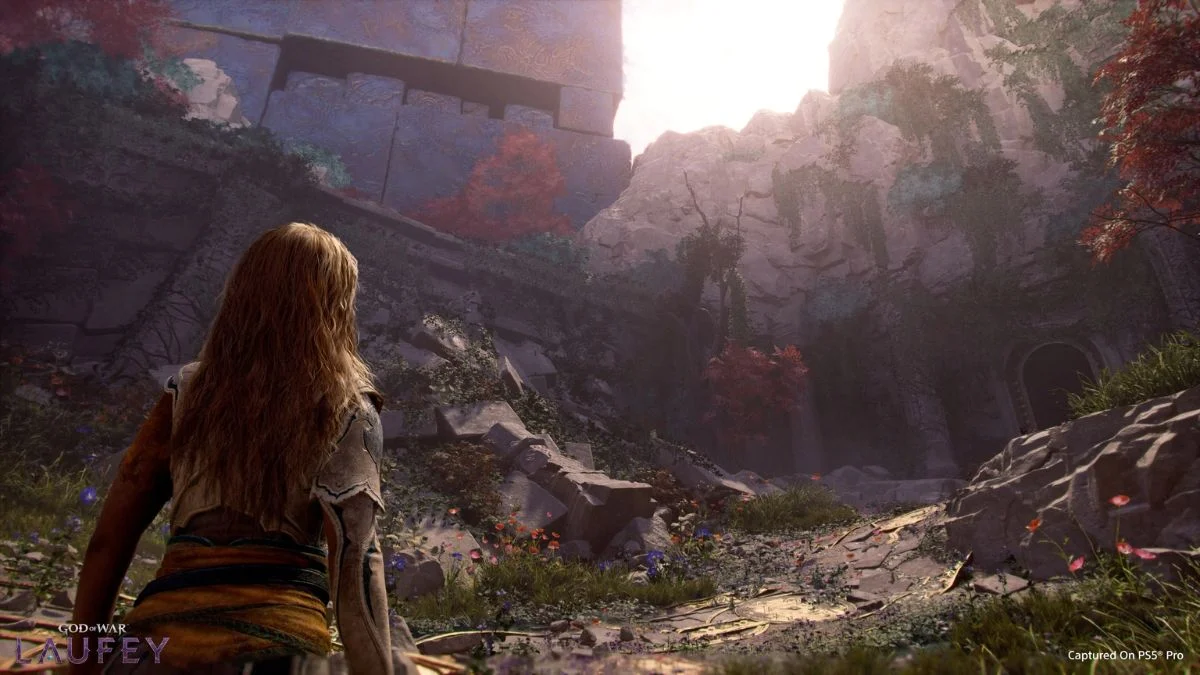
Bruce Straley has walked back one part of his recent criticism of modern AAA games after his comments unexpectedly placed God of War Laufey and its development team directly in the spotlight.
The former The Last of Us and Uncharted director recently discussed the state of blockbuster game development with Edge, arguing that AAA games have become increasingly familiar in the way they play. While Straley praised the technical achievement behind Santa Monica Studio’s upcoming PlayStation 5 title, he also said he was not excited by what players are actually being asked to do in the game.
That distinction quickly became difficult to separate from the game itself.
As his comments spread online, God of War Laufey became the headline example of Straley’s broader criticism. Straley has now apologized directly to the development team, saying that mentioning the game by name was a mistake and had dragged the developers into unwanted negative attention.
More Game News: Industry figures owning up to missteps has become its own storyline this year. For more, read our story on Level-5 apologizing for AI use in its Professor Layton and Yo-kai Watch showcase and promising changes after fan backlash.
Bruce Straley Says Mentioning God of War Laufey Was His Mistake
Straley’s original comments appeared in a recent Edge interview focused on the wider problems facing the AAA games industry.
While discussing modern blockbuster releases, Straley questioned whether major productions are still giving players enough genuinely new experiences.
“I think the verbs and experiences we’re delivering in the triple-A space are… I wanna say boring,” Straley said.
For players, “verbs” essentially means the actions a game asks you to perform. That can include things such as climbing, shooting, fighting, exploring, interacting with objects or moving through an environment.
Straley’s argument was not that modern AAA games are poorly made.
In fact, God of War Laufey was used as an example of the opposite. Straley praised the technical craftsmanship behind the game, pointing to the enormous amount of work required to create a visually polished blockbuster.
“Every pixel is mindblowing,” he said while acknowledging the skill involved in producing every frame.
But Straley then drew a line between visual production quality and gameplay innovation.
“But when I actually look at what you’re doing in the game? I’m not excited,” he said.
He also made clear during the discussion that his comments were not intended as an attack on the developers at Santa Monica Studio. His larger argument was that AAA development as a whole has become increasingly difficult to use as a space for unusual mechanics and unfamiliar player experiences.
Still, once the interview began circulating, God of War Laufey became the focus.
That led Straley to address the developers directly.
“I want to apologize to the Laufey team for dragging you all into this uninvited and unnecessary negative attention,” he wrote.
Straley explained that he had been trying to illustrate an industry-wide concern, but believed naming a specific game had distracted from the larger point.
“You don’t need this. I’m sorry.”
He later acknowledged the same mistake again, explaining that while attempting to have a thoughtful discussion about the industry’s problems, he had “stuck my foot in my mouth” by mentioning Laufey.
Recent reports on the controversy similarly note that Straley said his comments were being taken out of context and used for clickbait, while maintaining that his broader criticism of AAA development remained unchanged.
New Franchise Chapters Sparking Debate: Laufey isn’t the only franchise entry generating strong opinions before launch. Read our story on Diablo V coming in Spring 2029 with a twist — this time, Diablo has already won for another highly anticipated sequel already stirring reactions.
Straley’s Real Concern Is the AAA Gameplay Formula
Once the God of War Laufey controversy is stripped away, Straley’s main argument is much broader.
He is concerned that major AAA games are relying on many of the same basic player interactions that have dominated the medium for years.
His fear is that players could eventually become tired of repeatedly performing familiar actions across increasingly expensive blockbuster releases.
“My fear is that our player base is getting tired of playing the same verbs for the last 20 years,” Straley said.
That concern comes from his view that games have one major advantage over other entertainment mediums: players are actively participating.
“Our medium is unique because players are doing a thing,” he wrote while expanding on his argument.
Straley then pointed toward several influential games from the 2000s and early 2010s that he believes helped create the modern AAA formula.
His examples included Half-Life 2, released in 2004, Gears of War in 2006, BioShock in 2007, Uncharted 2: Among Thieves in 2009 and The Last of Us in 2013.
His point was that these games did not simply deliver increasingly expensive versions of familiar blockbuster experiences. Straley believes each attempted to introduce something distinctive while operating within the AAA space.
That history forms the foundation of his concern today.
The issue, in his view, is not that blockbuster games should stop being visually ambitious. Instead, he questions whether the enormous budgets, long production cycles and commercial expectations attached to AAA projects leave enough room for developers to take creative risks.
And that is where God of War Laufey became an unfortunate example rather than the actual target of his criticism.
Reinventing a Familiar Formula: Straley’s concern about repeated gameplay “verbs” is exactly the challenge some upcoming titles are trying to answer head-on. Our story on the Ocarina of Time remake being far more than a remaster, with new gameplay, release details and everything to know covers a classic getting a genuine reinvention.
Live-Service Success Is Also Part of Straley’s Criticism
Straley’s argument goes beyond traditional single-player gameplay mechanics.
He also questioned the industry’s repeated attempts to reproduce the success of major live-service games.
Titles such as Overwatch, Fortnite and Roblox were part of his discussion as examples of enormous successes that other companies may attempt to replicate.
Straley argued that chasing the next massive games-as-a-service hit is not necessarily a sustainable creative strategy.
“Unfortunately the platforms that need to bring stability have eroded the ability to innovate,” he said.
He also criticized the executives and decision-makers responsible for controlling budgets and setting long-term strategy.
“Hot take: There’s a lack of good leadership, clear direction & conviction from the ppl at the top, in charge of the money.”
Straley believes companies could have more productive conversations with creative teams when decision-makers understand their own brands and give developers enough room to pursue new ideas.
That does not mean he is arguing against financial stability. Instead, his concern is that the pursuit of stability can become so dominant that experimentation becomes harder to justify.
The controversy surrounding Laufey ultimately demonstrated exactly why Straley believes the issue is complicated.
His attempt to explain a wider industry problem became associated with one upcoming game.
“But in trying to have a thoughtful conversation I stuck my foot in my mouth and mentioned Laufey, and that was my mistake,” he wrote.
The apology therefore did not amount to Straley abandoning his criticism of AAA development. Rather, he separated the developers behind God of War Laufey from the larger argument he was trying to make.
Big Announcements Grabbing the Spotlight: Straley’s comments landed in the middle of a packed news cycle for major reveals. For more, check out our roundup of BlizzCon 2026’s biggest announcements, from Diablo V to a StarCraft shooter and World of Warcraft Forever.
Straley Knows Exactly How Difficult AAA Development Can Be
Straley’s comments also carry additional context because of his own history making some of PlayStation’s biggest games.
He joined Naughty Dog in 1999 and spent 18 years at the studio.
During that time, he worked on several major projects and became one of the company’s most prominent directors.
According to Naughty Dog’s own account of his career, Straley began at the studio working on Crash Team Racing. He later became co-art director on Uncharted: Drake’s Fortune before serving as game director on Uncharted 2: Among Thieves.
He also directed The Last of Us and worked as a director on Uncharted 4: A Thief’s End.
Straley announced his departure from Naughty Dog in September 2017 after what he described as “18 of the most influential years of my career.”
That history matters because Straley is not criticizing AAA production from someone unfamiliar with its demands. He spent years working inside the same enormous production environment that helped create some of PlayStation’s most recognizable games.
He later returned to development through Wildflower Interactive, where he serves as CEO and director.
His current work places him outside the massive studio structure associated with his best-known Naughty Dog projects.
That experience helps explain the distinction he made during his comments: the criticism was not aimed at the effort required to create a huge game. He specifically praised the craftsmanship visible in God of War Laufey while questioning whether the modern AAA system provides enough freedom to create substantially different gameplay experiences.
Leaks Fueling Fan Speculation: Straley’s comments about creative risk-taking are the exact kind of thing fans love picking apart when a new entry leaks early. Read our story on Persona 6’s leaked achievements revealing Yokohama, Hex, Underworlds and more for the latest speculation fueling a different upcoming RPG.
What Is God of War Laufey Actually About?
While Straley’s comments have pushed God of War Laufey into an unexpected industry debate, the game itself remains one of PlayStation’s major upcoming first-party releases.
Santa Monica Studio officially revealed God of War Laufey during the June 2, 2026 State of Play.
The game is positioned as the next mainline chapter in the God of War series.
This time, however, the playable lead is not Kratos.
Players will take control of Laufey, better known as Faye, who is Kratos’ wife and Atreus’ mother.
The story begins after Faye’s death. Rather than her story ending there, she unexpectedly awakens in a mysterious realm and discovers that preparations she made to protect Kratos and Atreus are now in danger.
That realm is known as the Everywhen.
PlayStation describes the Everywhen as an afterlife inhabited by gods from multiple mythologies, with those gods competing for power.
Faye must travel through this strange realm, protect her family and find a way back home.
The character herself also has a significant history within the game’s world.
PlayStation describes Faye as a guardian of the Jötnar, a rebel leader opposing the Aesir and the protector of the Wildwoods. Her combat abilities were considered legendary even among the Giants.
And that background feeds directly into one of the biggest gameplay changes.
Franchise Legacies Getting Physical: New chapters aren’t the only way beloved franchises stay in the spotlight — collectibles are having a moment too. Our story on the LEGO Ocarina of Time Link & Epona set with its 1,750 pieces, release date and price covers a different kind of franchise celebration.
Faye Brings a Different Combat Style to God of War
Anyone who has played the modern God of War games knows that Kratos is built around overwhelming strength, heavy attacks and brutal close-range combat.
God of War Laufey is taking a different route.
PlayStation’s official description emphasizes Faye’s speed, control and relentless combat style.
Santa Monica Studio is building encounters around her own abilities and movement rather than simply reproducing Kratos’ fighting style with a different character model.
That gives the game a distinct identity within the franchise and places Faye at the center of the experience.
It is also important context when considering Straley’s comments. His criticism was about the broader direction of AAA gameplay, while Laufey itself is introducing a different protagonist, a different combat approach and a story built around a previously unexplored part of Faye’s life.
Players will ultimately get to see how far those changes go when the game launches.
Industry Headaches Beyond Gameplay Debates: Not every gaming headline this month concerns creative direction — some involve much more tangible problems. Read our story on Gamescom 2026 hit by multiple equipment thefts as developers report stolen laptops and unfinished game builds for a very different kind of industry setback.
God of War Laufey Release Date Confirmed for February 2027
God of War Laufey is currently scheduled to launch exclusively on PlayStation 5 on February 16, 2027.
Sony’s official game page and PlayStation Store listing confirm the release date.
The game will also be playable as a standalone story, meaning newcomers will not have to finish the previous God of War games before jumping into Faye’s adventure.
That said, PlayStation recommends playing God of War (2018) and God of War Ragnarök for additional context surrounding Faye, Kratos, Atreus and the wider Norse storyline.
Pre-orders have not opened yet, although players can currently add the game to their wishlist.
So while Bruce Straley’s comments have created a surprisingly loud conversation around God of War Laufey, his follow-up makes one point clear: he did not intend for Santa Monica Studio’s developers to become the target of his industry criticism.
His argument remains focused on AAA development, familiar gameplay “verbs,” creative risk-taking, leadership, budgets and the pressure to recreate established commercial successes.
For God of War Laufey, meanwhile, the road to launch continues.
The game still has to prove its own gameplay identity when it arrives on PS5 in February 2027, with Faye stepping into the spotlight and bringing a new perspective to one of PlayStation’s biggest franchises.
Disclaimer
This article reflects publicly available statements and information as of September 20, 2026. Quotes have been retained in their original wording where relevant, while surrounding context has been independently summarized. Release dates and game details remain subject to change.
Sources:
- Bruce Straley’s post on X
- PlayStation – God of War Laufey official game page
- PlayStation Blog – First Look at God of War Laufey
- PlayStation Blog – State of Play June 2026 announcements
- Naughty Dog – A Message From Bruce Straley
- Naughty Dog – A Message From President Evan Wells
- VGC – Original report on Straley’s apology and comments
Featured Image Credit:
- Santa Monica Studio / Sony Interactive Entertainment


Leave a Reply