

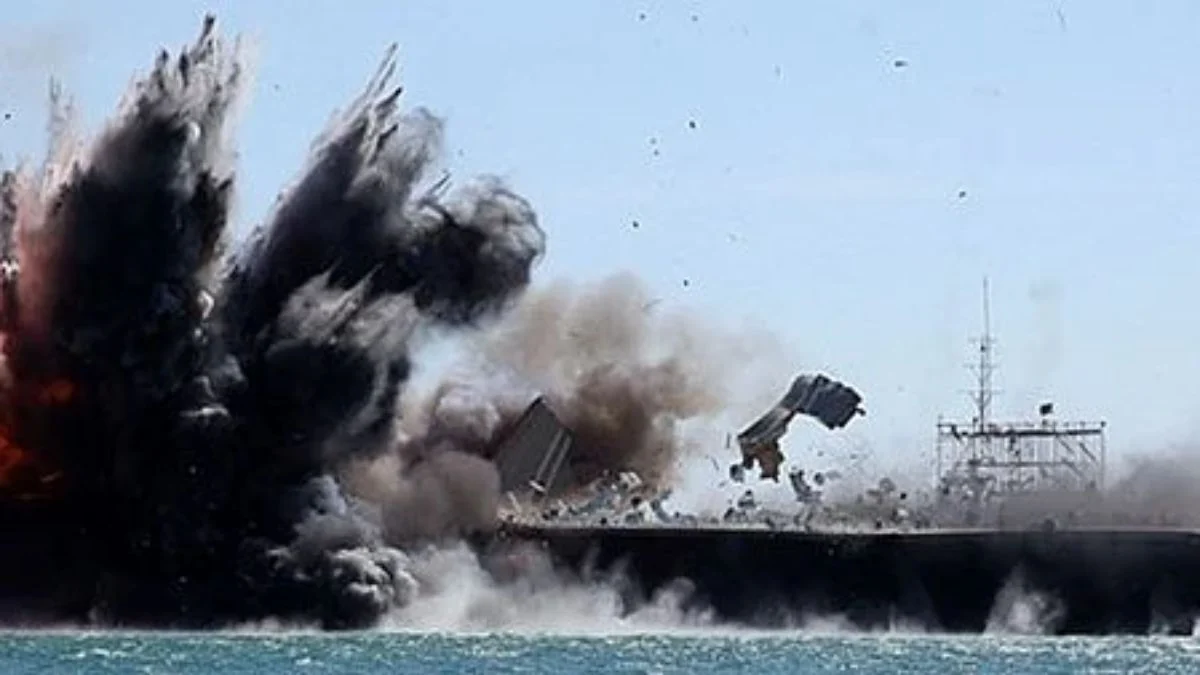
The conflict between the United States and Iran entered another dangerous phase on Thursday, July 16, 2026, as U.S. military operations expanded into northern Iran while tensions at the Strait of Hormuz intensified. What began as a campaign focused largely on southern strategic targets has now moved closer to Tehran, raising fresh concerns about how far the confrontation could spread.
At the same time, a dramatic maritime incident in the Persian Gulf added another layer to the crisis after the U.S. disabled a merchant oil tanker that it said ignored repeated warnings while attempting to breach a newly reimposed naval blockade.
Domestic politics have also been dominated by questions of executive authority this week, following a controversial personnel decision at the Justice Department. To know more, read our article Trump Fired a Court-Appointed U.S. Attorney Just 54 Minutes After His Swearing-In. Here’s Why It Happened
How the US Expanded Its Military Campaign Against Iran on July 16
According to reports from the Associated Press and multiple news outlets, U.S. strikes early Thursday reached targets farther north than in previous operations, including areas around Tehran for the first time during this latest phase of the conflict.
Iranian state media reported strikes in several provinces, including Semnan, which is considered important to Iran’s ballistic missile production and space program. Additional reported targets included Hamedan, Hormozgan, Khuzestan, Lorestan, Markazi, and Sistan and Baluchistan.
The latest attacks followed Wednesday’s operations targeting Greater Tunb Island, a strategically important location in the Strait of Hormuz, where missile and defense facilities were reportedly struck. Another attack hit barracks belonging to Iran’s 388th Mechanized Infantry Brigade in Sistan and Baluchestan. Iranian reports said at least 13 missiles were fired, killing seven people, including conscripts.

Washington has also been dealing with unrelated questions surrounding a sitting lawmaker’s sudden death this week. For more on that, read our post Lindsey Graham Death Sparks FBI Questions as Trump Says Agents Are “Wasting Their Time” — What Really Happened?
Oil Tanker Disabled After Allegedly Ignoring US Naval Blockade
One of the most closely watched developments came at sea.
The U.S. military targeted the Curacao-flagged oil tanker Belma, which was reportedly heading toward Kharg Island, Iran’s primary oil export terminal in the Persian Gulf.
According to U.S. officials, the vessel ignored multiple warnings to stop. A U.S. aircraft then fired a missile into the ship’s smokestack, disabling the tanker rather than sinking it. The action was part of Washington’s effort to enforce a naval blockade that President Donald Trump reimposed on Wednesday as the struggle over the Strait of Hormuz intensified.

Domestic legislative gridlock has also finally eased in Washington this week, after weeks of internal Republican disagreement stalled major bills. To learn more, check out our article House Republicans End Weeks-Long Revolt After Mike Johnson’s Surprise SAVE America Act Deal
Iran Responds With Missile and Drone Attacks Across the Region
Iran responded on Thursday morning with missile and drone attacks targeting Bahrain, Jordan, and Kuwait, all of which host U.S. military forces.
Initial reports did not confirm significant damage or casualties, although additional incoming fire was later reported in Kuwait. Separately, a drone attack near Irbil in northern Iraq was intercepted before reaching its target.
Iranian officials also reported that more than 35 people have been killed and over 300 wounded during this latest phase of U.S. strikes.
| Timeline | Key Development | Official Details |
| Wednesday | U.S. reimposes naval blockade | Aimed at enforcing control around the Strait of Hormuz |
| Wednesday | Greater Tunb Island struck | Missile and defense sites reportedly targeted |
| Thursday (Early) | U.S. strikes expand north | Areas around Tehran and multiple provinces reportedly hit |
| Thursday | Tanker Belma disabled | Missile fired into smokestack after alleged failure to heed warnings |
| Thursday | Iran retaliates | Missile and drone attacks launched toward Bahrain, Jordan, Kuwait, and near Irbil |
Why the Strait of Hormuz Remains at the Center of the Conflict
The latest escalation stems from the wider Iran-U.S./Israel conflict that began on February 28, 2026. Although an interim agreement briefly reduced tensions, recent fighting has centered on control of the Strait of Hormuz, one of the world’s most important shipping routes for oil exports.
After Iran effectively closed the waterway earlier in the conflict, global oil prices surged to nearly $120 per barrel before easing. Prices remain above $85 per barrel, still more than 15% higher than pre-war levels, while fertilizer and other commodity costs have also been affected.
Iran has repeatedly described outside interference in the strait as an “invincible red line.” Revolutionary Guard officials, including Col. Ebrahim Zolfaghari of Khatam al-Anbiya Central Headquarters, have warned that Iran could target regional energy infrastructure and halt all energy exports if fighting continues. Parliament Speaker Mohammad Bagher Qalibaf has also indicated the country is prepared for a broader confrontation.
President Donald Trump has meanwhile threatened additional strikes on Iranian power plants and bridges while saying Iran still wants a negotiated settlement. Referring to ongoing tensions, he said, “They don’t like what we’re doing, and they do want to settle. We’ll find out whether or not we settle with them, or we just finish it off.” Trump also pointed to the recent release of U.S.-Iranian detainee Dena Karari as a goodwill gesture.

Trump also pointed to the recent release of U.S.-Iranian detainee Dena Karari as a goodwill gesture. Domestic legislation has also seen movement this week, with lawmakers advancing a measure to permanently end seasonal clock changes. To know more, read our article US House Votes to End Daylight Saving Time Clock Changes Forever? What the Sunshine Protection Act Means Next
Beyond the battlefield, the crisis is creating political pressure inside the United States as higher oil prices become an issue ahead of November’s congressional elections. Meanwhile, countries including Pakistan continue attempting mediation, although analysts warn that reopening the Strait of Hormuz through military force would require enormous resources and carries the risk of an even wider regional conflict.


Leave a Reply