

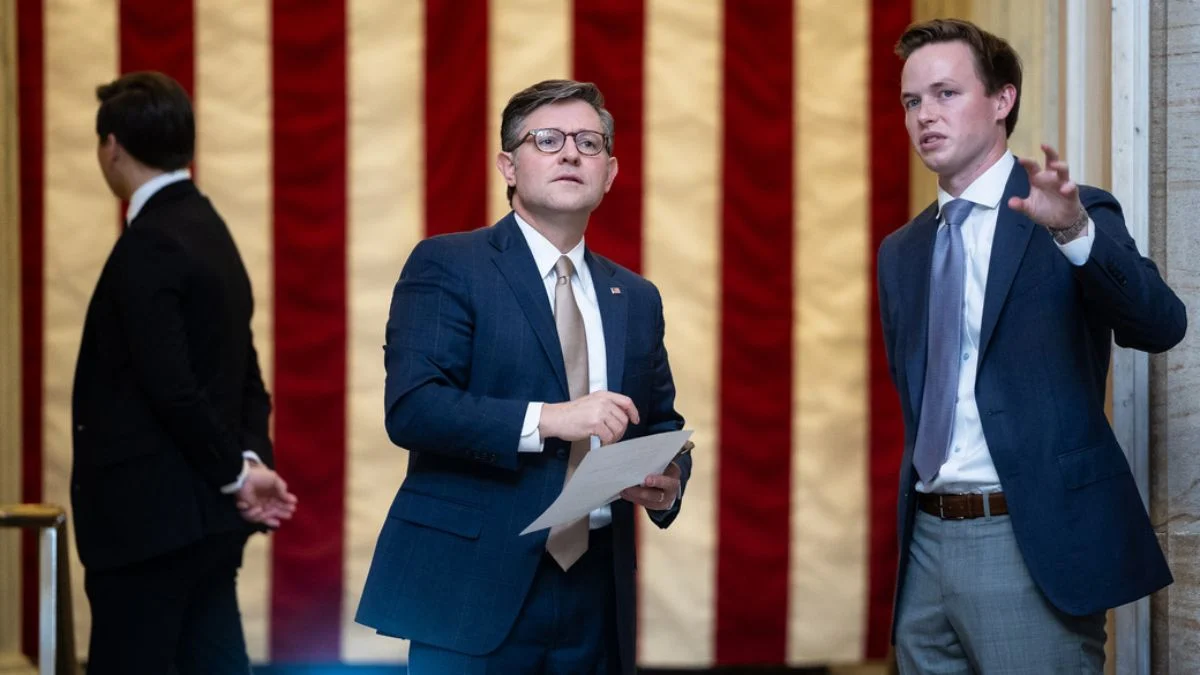
For weeks, a small group of House Republicans brought much of the U.S. House of Representatives to a standstill, halting progress on key legislation and exposing deep divisions within the Republican Party. The standoff, centered on election integrity legislation, finally came to an end in mid-July 2026 after Speaker Mike Johnson secured a procedural breakthrough that persuaded conservative holdouts to lift their blockade.
The agreement marked a significant moment for House Republicans as lawmakers resumed work on government funding bills, defense legislation, veterans’ benefits, and other stalled priorities while shifting the next battle over election legislation to the Senate.
Elsewhere in Washington, the Trump administration also made headlines this year with a major disclosure decision of its own. To know more, read our article Trump Orders Release of Alien and UFO Files — A Bombshell Announcement That Shook the World.
Why House Conservatives Blocked the Republican Agenda Over the SAVE America Act
The dispute revolved around the SAVE America Act, also referred to as the Safeguard American Voter Eligibility Act (SAVE Act), a top legislative priority for President Donald Trump and House Republicans.
The bill would amend the National Voter Registration Act of 1993 by requiring documentary proof of U.S. citizenship—such as a passport, birth certificate, or certain IDs showing citizenship—when registering to vote in federal elections. It also includes a photo ID requirement to cast a ballot.
Earlier versions of the legislation, including H.R. 22 sponsored by Rep. Chip Roy (R-TX), had already passed the House during 2025-2026 with votes including 218-213 and 220-208. However, the measure stalled in the Senate because it lacked the 60 votes needed to overcome a filibuster.
Supporters argue the legislation is necessary to prevent non-citizen voting, even if such cases are rare. Critics, including voting rights groups, contend that the requirements could create barriers for millions of eligible citizens who may not have immediate access to the required documents, potentially leading to administrative burdens or voter purges.

Media coverage of Washington politics has faced its own turbulence recently, with a major broadcast network shake-up drawing scrutiny over its ties to the administration. To learn more, check out our article CBS News in Crisis? Mary Walsh’s Exit After 46 Years Sparks Debate Over Bari Weiss, Trump Ties, and Media Independence.
How the Republican House Standoff Brought Congress to a Halt
Beginning in late June 2026, a small group of conservative Republicans, including members of the House Freedom Caucus and allies, refused to support procedural “rules” votes required to move legislation to the House floor.
With Republicans holding only a narrow majority, the strategy effectively froze action on several major priorities, including State Department and Foreign Operations funding, the National Defense Authorization Act (NDAA), veterans’ benefits legislation, daylight saving time permanence, and other measures ahead of the September 30 government funding deadline and the upcoming midterm elections.
Lawmakers separately advanced a proposal that would end seasonal clock changes for good. For more details, read our post US House Votes to End Daylight Saving Time Clock Changes Forever? What the Sunshine Protection Act Means Next.
Rep. Anna Paulina Luna (R-FL) emerged as one of the most prominent leaders of the effort, joined by lawmakers including Reps. Chip Roy, Ralph Norman, and Keith Self, all pressing leadership to attach the SAVE America Act—and in some cases border security proposals such as the Permanent Trump Secure Border Act—to must-pass legislation.
Speaker Mike Johnson warned the strategy was “self-defeating,” while House leadership even sent members home early for the July 4 recess. President Donald Trump publicly urged Republicans to resolve the dispute while continuing to prioritize the SAVE Act, including delaying action on a housing bill.
Mike Johnson’s Deal That Ended the House Republican Revolt
The breakthrough came on July 14-15, 2026, when Speaker Johnson proposed pairing the SAVE America Act with the FY2027 State Department appropriations bill.
The House then approved a procedural rule by a 215-211 vote, largely along party lines, allowing consideration of the appropriations package along with veterans’ benefits legislation and the daylight saving time bill.
| Date | Event | Key Details |
| Late June 2026 | Republican blockade begins | Conservatives block procedural votes to pressure leadership |
| July 14-15, 2026 | Johnson’s compromise | SAVE America Act paired with State Department appropriations bill |
| House Vote | Procedural rule passes | Approved 215-211, largely along party lines |
| Republican Holdouts | Position changes | Rep. Anna Paulina Luna and most conservatives voted “yes”; Rep. Randy Fine (R-FL) was the only Republican “no” vote while all Democrats opposed |
Following the agreement, Rep. Anna Paulina Luna said responsibility now shifts to the Senate, stating “the entire country should be watching.”

Trump family finances also made headlines around the same period, after new disclosures revealed substantial outside earnings. To see the numbers, read our article Melania Trump Earned Over $17.2 Million in 2025: Inside the Documentary Deal, NFT Boom and Memoir That Fueled Her Income.
What Happens Next for the SAVE America Act?
The compromise reopened normal House business, allowing lawmakers to resume work on government funding bills before the September 30 deadline, as well as the NDAA and other legislative priorities.
Attention now turns to the Senate, where the future of the SAVE America Act remains uncertain. The legislation continues to face strong Democratic opposition and the Senate filibuster, prompting discussions among Republicans about possible paths forward, including reconciliation or attaching the measure to other must-pass legislation.
The episode also underscored continuing tensions within the Republican Party, highlighting the divide between hardline conservatives and party leadership as both sides seek to advance election integrity measures while managing a razor-thin House majority.
The Trump family also stayed in the headlines in March for reasons unrelated to legislation, after a viral grocery store video sparked widespread online debate. Read the full story in our article Kai Trump Erewhon Backlash: Why Donald Trump’s Granddaughter’s $233 Grocery Vlog Sparked a Massive Online Debate.


Leave a Reply