

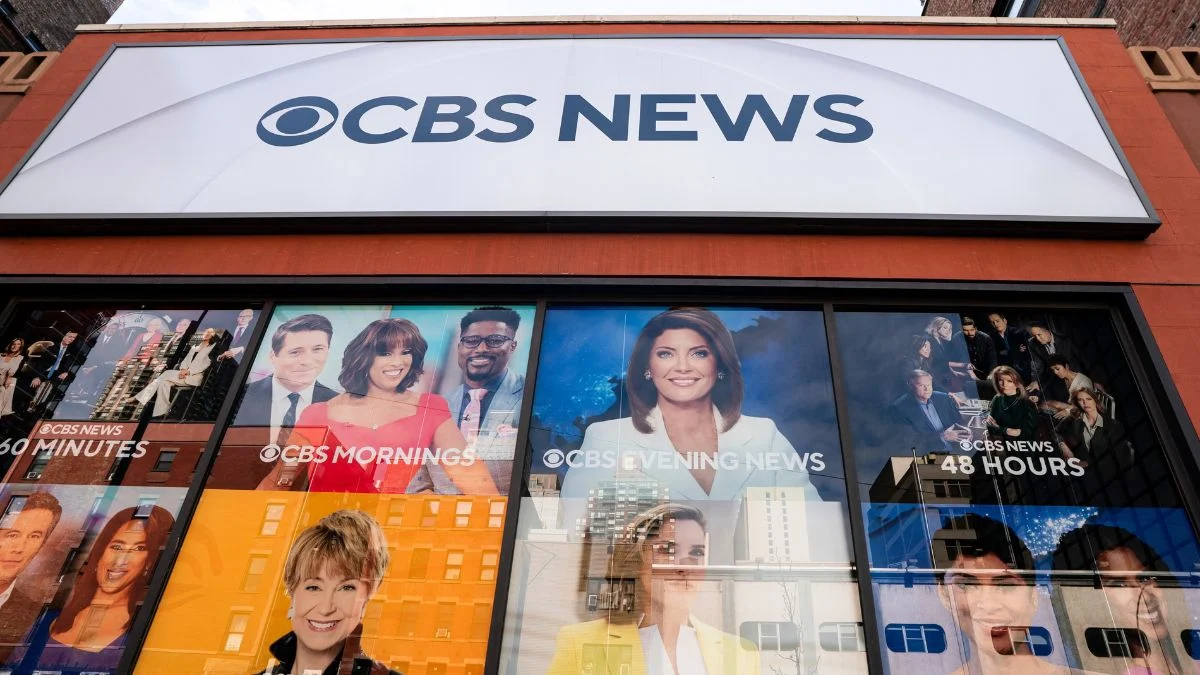
In the high-stakes world of American broadcast journalism, few things send shockwaves through newsrooms like the quiet departure of a veteran. But when that veteran is a 46-year institutional pillar of CBS News, the tremors are felt far beyond Manhattan.
On February 27, 2026, Mary Walsh — a producer who joined CBS in 1979 during the era of Walter Cronkite — walked away from the network. Her exit memo did not name names. It did not stage a public protest. Yet its implications have ignited one of the most consequential debates in modern U.S. media: Is CBS News undergoing necessary reform — or a politically motivated transformation?
For audiences in both the United States and the United Kingdom, where trust in legacy media continues to shift dramatically, the story unfolding at CBS reflects something bigger than one newsroom. It is about power, politics, perception — and the future of journalism itself.
Paramount Skydance, Bari Weiss, and the $150 Million Move That Changed CBS News

The turbulence did not begin with Walsh. It began months earlier.
In October 2025, Paramount Global — newly operating under the Paramount Skydance banner after an $8 billion acquisition led by CEO David Ellison — purchased The Free Press for $150 million. The outlet’s founder, Bari Weiss, was appointed editor-in-chief of CBS News.
Weiss, a former opinion editor at The New York Times who resigned in 2018 citing internal bias, entered CBS with a clearly articulated mission. Her appointment followed a politically sensitive chapter: a $16 million lawsuit settlement with Donald Trump over alleged biased editing of a Kamala Harris interview on 60 Minutes.
Critics on the left argued the move signaled a strategic alignment with the Trump administration. Conservative outlets, meanwhile, praised it as a long-overdue correction of what they described as a liberal slant within legacy media.
Weiss described her agenda as a “de-Baathification” of CBS News — an effort to strip away what she sees as elite bias and rebuild trust among Americans who feel politically homeless. In a memo to staff, she outlined ten guiding principles: scrutinize both parties equally, platform diverse viewpoints, and present the strongest arguments on all sides.
Her message was clear: CBS must evolve or risk irrelevance.

“Heterodox Journalism” vs. Legacy Media: Inside the Culture Clash at CBS
Weiss has openly criticized reliance on traditional linear television, stating CBS was “not producing a product that enough people want.” Her strategy includes digital expansion, collaborations with online personalities, and a willingness to air content that may “offend” segments of the audience.
For some, this represents innovation.
For others inside CBS, it represents pressure.
By late January 2026, internal anxiety surfaced during a tense town hall. One CBS Evening News staffer reportedly described a “chilling effect” inside the newsroom, claiming employees feared retaliation and self-censorship.
Layoffs intensified concerns. In October 2025, eight female on-air personalities were let go. Eleven Evening News staffers later accepted voluntary buyouts. The departures fueled claims that the transformation was not merely structural — but ideological.
Alicia Hastey’s February 11 Exit: Warning Signs Before the Storm
Before Walsh’s departure, another producer signaled unrest.
On February 11, 2026, Alicia Hastey — a four-year producer at CBS Evening News — announced her buyout. Her farewell memo, shared publicly by New York Times reporter Ben Mullin on X, criticized what she described as a “sweeping new vision.”
She wrote:
“The truth is that commitment to those people and the stories they have to tell is increasingly becoming impossible.”
Hastey warned that stories were being evaluated not only on journalistic merit, but on whether they aligned with shifting ideological expectations. She suggested producers felt pressure to avoid narratives that might trigger backlash or unfavorable headlines.
Liberal outlets such as MSNBC and The Daily Beast framed her memo as evidence of a rightward tilt and newsroom fear. Conservative commentators at the New York Post and Fox News countered that her note defended outdated liberal norms.
Her exit was part of a broader buyout wave — but it was Mary Walsh’s farewell that carried historic weight.
Mary Walsh’s 46-Year Legacy at CBS News — and Her Explosive Farewell Memo
Walsh joined CBS in 1979. She worked with giants of broadcast journalism, including:
- Dan Rather
- Joan Shorenstein
- Bob Schieffer
To colleagues, she was not just a producer — she was an institution.
Her February 27 memo, obtained by The Guardian, struck a tone both reflective and troubling:
“We’ve been told to aim our reporting at a particular part of the political spectrum. Honestly, I don’t know how to do that.”
She did not specify which segment of the spectrum. However, context surrounding Weiss’s appointment and prior controversies suggests perceived pressure to adjust coverage in ways some interpret as currying favor with the Trump administration.
Walsh also delivered a powerful defense of legacy journalism:
“Legacy is about standing on the shoulders of the great journalists of CBS News… It is not about technology.”
Quoting Bob Schieffer, she reminded colleagues:
“We were lucky because we were part of something grand, something that made a difference and no one can take that away from us.”
Her encouragement to staff — “History is being made every day. Cover it. I’ll be watching.” — resonated as both farewell and warning.
CBS Evening News executive producer Kim Harvey quickly responded:
“That is simply not true. Here at the Evening News, we value our editorial independence, and CBS News leadership has never asked us to aim our reporting in any political direction.”

Timeline of Key Events at CBS News (2025–2026)
| Date | Event | Key Figures | Official Context |
| Early 2025 | $8B acquisition of Paramount | David Ellison | Approved by Trump administration |
| Oct 2025 | Acquisition of The Free Press for $150M | Bari Weiss | Weiss named CBS News editor-in-chief |
| Oct 2025 | Layoffs of 8 female on-air personalities | CBS News | Internal restructuring |
| Dec 2025 | Memo reaffirming independence | CBS leadership | “No amount of outrage… will derail us.” |
| Jan 2026 | Staff town hall expressing fear | CBS Evening News staff | “Chilling effect” reported |
| Feb 11, 2026 | Alicia Hastey buyout | Alicia Hastey | Criticism of “heterodox” direction |
| Feb 26, 2026 | Paramount bids successfully for Warner Bros. Discovery | Paramount Skydance | Raises CNN implications |
| Feb 27, 2026 | Mary Walsh departure | Mary Walsh | Memo alleges political targeting |
Paramount’s Warner Bros. Discovery Bid: What It Means for CNN and Media Consolidation
The drama intensified when Paramount successfully bid to acquire Warner Bros. Discovery on February 26, 2026 — beating Netflix in the process. The acquisition includes CNN, raising fresh concerns among journalists that political considerations could influence a larger media conglomerate.
While Weiss’s future involvement with CNN remains unclear, media observers note that consolidation amplifies scrutiny. For UK audiences watching parallels in British media ownership debates, the implications are strikingly familiar.
Is this the beginning of a new era of corporate-driven editorial strategy — or a recalibration toward balance?
A Polarized Media Landscape: Reform or Hostile Takeover?
The reactions remain sharply divided.
From a liberal viewpoint:
The transformation represents a hostile takeover by a digital outsider aligned with billionaire interests and political power, potentially compromising journalistic independence.
From a conservative perspective:
The changes correct longstanding left-wing bias and restore credibility by welcoming broader ideological diversity.
Weiss herself has defended controversial editorial decisions — including delays to reporting on El Salvador’s CECOT prison to incorporate administration viewpoints — as necessary for balance.
In a December 2025 memo, CBS executives stated:
“No amount of outrage — whether from activist organizations or the White House — will derail us. We are not out to score points with one side of the political spectrum.”
Yet the departures continue.

What Mary Walsh’s Exit Means for the Future of American Broadcast Journalism
For viewers in New York, London, Washington, and beyond, the question is no longer whether CBS is changing — it is whether the changes strengthen or weaken public trust.
Walsh’s 46-year career spanned analog editing rooms where scripts were cut with scissors and tape. Her farewell underscores a generational crossroads: legacy versus digital disruption, neutrality versus ideological recalibration.
As buyouts continue and newsroom morale remains under scrutiny, CBS News stands at a defining moment.
Is this renewal?
Or reinvention under pressure?
The answer may determine not only the network’s future — but the credibility of broadcast journalism in a polarized age.
As of February 28, 2026, no further public statements have been issued by Walsh or CBS leadership. But in an era where newsroom memos go viral and media consolidation reshapes influence overnight, this story is far from over.


Leave a Reply