

A Billboard Triumph Turns Into a Beauty Conversation
When Taylor Swift celebrates a milestone, the world watches. But on February 23, 2026, what began as a jubilant career moment quickly turned into one of the most talked-about celebrity beauty debates of the year across the UK and USA.
Swift took to Instagram to mark her single “Opalite” reaching No. 1 on the Billboard Hot 100. The achievement was historic: it became her 14th chart-topper, and her album The Life of a Showgirl earned a notable distinction — her first album since 1989 (2014) to produce multiple No. 1 singles.
But it wasn’t just the chart statistics that captured attention. It was a fleeting, seemingly casual moment within the celebration that sent social media into overdrive.
Inside the Instagram Carousel: Behind-the-Scenes Footage From “Opalite”
Rather than posting a single glamour shot, Swift shared a carousel of behind-the-scenes (BTS) content from the recording and music video production of “Opalite.”
The post included:
- Intimate studio clips and candid photos
- Footage of Swift collaborating with producers, including mentions of Max Martin and others
- Clips from the music video shoot featuring vibrant ’80s-inspired costumes
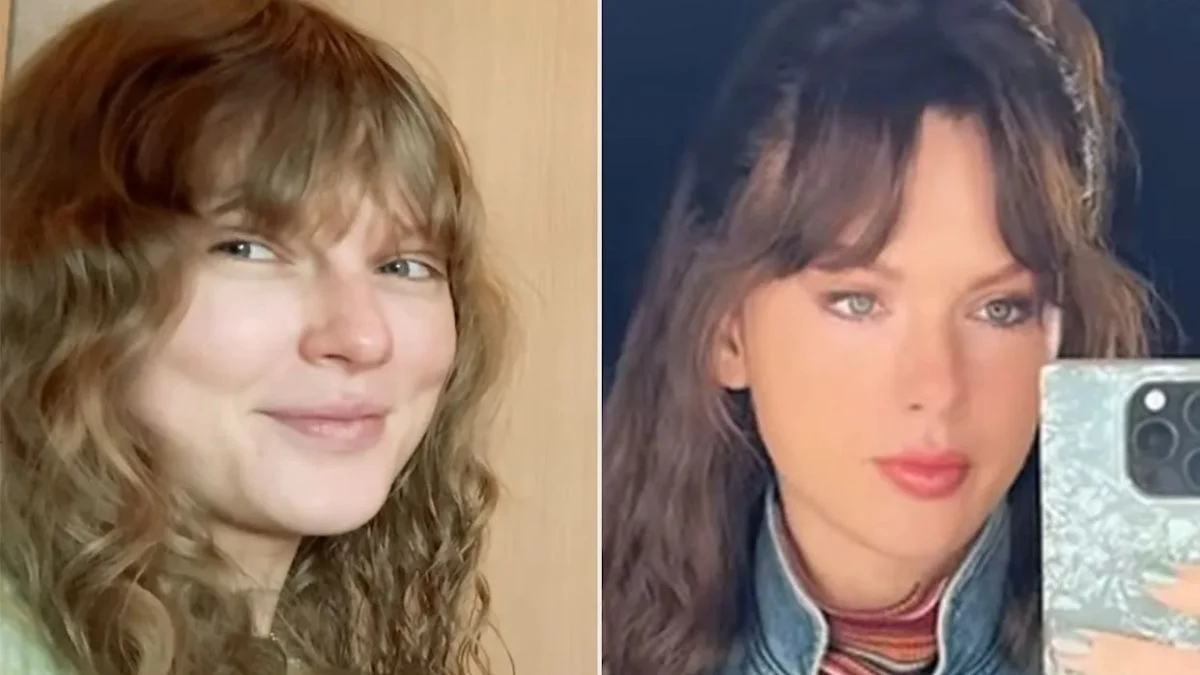
- A standout video of Swift in the studio — completely without makeup
In the now-viral clip, Swift appears relaxed and focused, her natural blonde curls framing her face, dressed in cozy sweaters — notably an oversized green one — as she works in the recording studio. There was no dramatic reveal, no caption announcing a “bare-faced” moment. It was simply embedded within celebratory career content.
Her caption radiated joy and gratitude:
“Seriously bouncing off the walls about this!!”
She thanked fans for their love and support, clearly thrilled that “Opalite” had reached the top of the charts.
Yet within hours, the online narrative shifted.

Taylor Swift’s No-Makeup Look Goes Viral: “People Lost Their Minds”
By February 24, headlines began appearing across major outlets in both the United States and the United Kingdom.
The Kansas City Star — with syndicated versions circulating on Yahoo and other platforms — ran a headline reading exactly:
“Taylor Swift posted a glimpse of herself without makeup and people lost their minds.”
Other major lifestyle and entertainment publications, including People, Page Six, InStyle, Elle, Cosmopolitan, and Bored Panda, amplified the moment. Coverage framed it as:
- A rare display of vulnerability
- A refreshing, authentic glimpse behind the pop icon persona
- Proof that Swift looks radiant with or without makeup
- A cultural moment that sparked intense online discourse
Within days (February 24–27, 2026), the conversation snowballed into trending territory across platforms like X (formerly Twitter), Instagram, TikTok, and Facebook.
But the reactions weren’t uniform.

A Timeline of the Viral Moment
| Date | Event | Key Detail |
| February 23, 2026 | Instagram post published | Swift celebrates “Opalite” reaching No. 1 |
| February 23, 2026 | Chart milestone confirmed | 14th No. 1 on the Billboard Hot 100 |
| February 24–27, 2026 | Media coverage explodes | Headlines focus on makeup-free clip |
| Late February 2026 | Online reactions peak | Praise, debate, criticism, memes |
Praise: “Refreshing, Authentic, Stunning”
A large portion of fans embraced the moment as empowering.
Supporters described the clip as:
- “Raw and real”
- “Confident and comfortable”
- “Proof that she doesn’t need makeup”
- “So herself”
Many pointed out that Swift has long been known for her signature red lip and polished public image. Seeing her stripped back in a working environment felt intimate and humanising.
Some praised her for subtly challenging celebrity beauty standards simply by existing naturally on camera. Others admired how she seamlessly shifted between a bare-faced studio moment and glamorous, ’80s-inspired music video costumes — demonstrating the transformative power of artistry.
The phrase “she looks great with or without makeup” trended repeatedly in comment sections.
Critics and Trolls: Scrutiny in the Spotlight
As often happens with high-profile celebrities, not all reactions were kind.
Some critics fixated on specific facial features — mentioning her nose, cheeks, chin, and complexion. A few commenters speculated, “Is that really her?” claiming that differences in nose or eye shape appeared too drastic to be explained by makeup removal alone.
Others joked that it couldn’t possibly be Swift without her usual glam styling. Memes circulated. Comparisons were made — sometimes unfavourably.
There were also voices questioning the broader media frenzy:
- Why was a no-makeup moment from a 36-year-old superstar headline-worthy?
- Was this truly “news,” or simply celebrity culture at work?
- Why did her appearance overshadow her 14th No. 1 single?
The scrutiny underscored a larger truth: Swift’s influence is so immense that even a casual studio clip can ignite global debate.
The Career Context: 14 No. 1 Singles and a Historic Album Milestone
Lost beneath the beauty discourse was the original achievement.
With “Opalite” hitting No. 1, Swift secured her 14th chart-topping single on the Billboard Hot 100 — an extraordinary feat in contemporary music. Even more significant, The Life of a Showgirl became her first album since 1989 (2014) to produce multiple No. 1 hits.
For longtime fans in the UK and USA alike, the milestone felt like a full-circle moment. 1989 marked a defining pop reinvention. Now, more than a decade later, Swift once again dominates the singles chart with an album that blends theatrical flair and pop sensibility.
Yet ironically, the cultural conversation pivoted from numbers to natural skin.

Celebrity Beauty Standards in 2026: Why This Moment Resonated
The frenzy highlights a broader cultural tension.
Makeup can dramatically alter lighting, contours, perceived symmetry, and overall presentation. Celebrities — particularly women — often face impossible standards: expected to look flawless, yet criticised for appearing “too polished.” Praised for going natural, yet scrutinised when they do.
Swift’s post wasn’t framed as a political statement. It wasn’t marketed as a “no-makeup movement.” It was simply part of a celebratory BTS carousel.
And perhaps that’s precisely why it resonated.
The moment felt unscripted, unfiltered, and tucked inside professional triumph. It blurred the line between pop icon and studio artist — reminding audiences that behind chart-toppers are real, working musicians in oversized sweaters.
The Frenzy Fades, But the Spotlight Remains
As quickly as the discourse ignited, it began to settle. By the end of February, the wave of intense commentary started to fade.
Yet the episode reinforced something that both British and American audiences have observed for years: every move Swift makes is magnified. A hairstyle change becomes a trend. A lyric sparks theories. A behind-the-scenes clip becomes a headline.
There is no evidence that this was a standalone selfie post designed to shock. It was embedded within celebratory career content — a mosaic of studio sessions, music video clips, and gratitude.
Still, it dominated cultural conversation for days.

Final Thoughts: When Celebration Turns Into Cultural Commentary
In many ways, the story of Swift’s makeup-free moment says less about cosmetics and more about modern celebrity.
A single Instagram carousel achieved multiple things simultaneously:
- Celebrated a No. 1 hit
- Marked a major album milestone
- Offered fans rare studio intimacy
- Sparked debates about beauty standards
- Generated viral headlines
For some, it was empowering. For others, puzzling. For critics, a target. For fans, another reason to admire her authenticity.
But above all, it reaffirmed one undeniable reality: whether she’s in full ’80s-inspired glam or bare-faced in a recording booth, Taylor Swift remains one of the most closely watched cultural figures of her generation.
And in 2026, even an oversized green sweater can break the internet.


Leave a Reply