

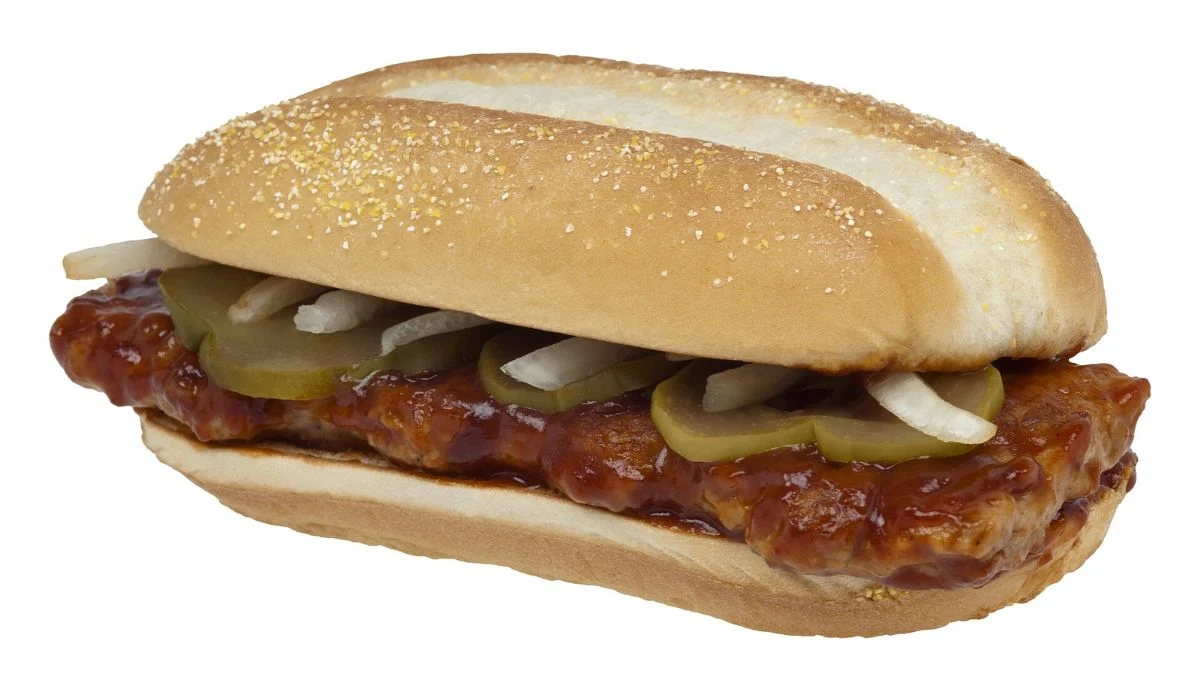
The McRib has been a familiar name on McDonald’s menu for decades, but its name and appearance are now at the centre of a legal dispute that raises an interesting question: what exactly should customers expect when they order a sandwich called McRib? For some consumers, the answer seems obvious. For McDonald’s, however, the product’s name does not necessarily mean what the plaintiffs claim it suggests.
The disagreement has now reached an important stage in federal court. A legal challenge over the sandwich’s ingredients and marketing is continuing, and the judge’s latest decision has given consumers pursuing the case an opportunity to take their allegations further.
Why Is McDonald’s Facing a Lawsuit Over the McRib?
The proposed class-action lawsuit was filed against McDonald’s Corporation in the U.S. District Court for the Northern District of Illinois. Four consumers — Peter Le, Charles Lynch, Dorien Baker and Darrick Wilson — are bringing the case, arguing that the fast-food chain misrepresented the nature of the meat used in its McRib sandwich.
The case, officially titled Le et al. v. McDonald’s Corporation, carries the number 1:25-cv-15609 and was originally filed on December 23, 2025.
At the centre of the complaint is the argument that the name McRib, combined with the sandwich’s distinctive rib-like shape and the company’s marketing, could lead an ordinary customer to believe that the product contains actual pork rib meat.
The plaintiffs argue that consumers could reasonably interpret the word “Rib” as referring to the particular cut of meat rather than simply being part of a product name.
They also allege that the McRib does not contain pork rib meat and that customers purchased the sandwich under a mistaken impression about its composition.
The original complaint made further allegations about the patty’s ingredients, claiming that it was made using reconstructed pork products that could include pork shoulder, heart, tripe and scalded stomach.
However, these remain allegations made by the plaintiffs. The court has not established that the McRib contains those ingredients or that McDonald’s misled its customers.
Another Consumer Lawsuit to Follow
Consumer lawsuits involving major companies can raise questions about how products are marketed and what customers are told before making a purchase.
For another recent case, see our Dollar General FTC lawsuit report.
McDonald’s Rejects the Claims About McRib Ingredients
McDonald’s has strongly disputed the allegations, maintaining that the lawsuit misrepresents both the sandwich and its ingredients.
The company says the McRib is made with 100% pork sourced from farmers and suppliers across the United States. It has also specifically denied using hearts, tripe or scalded stomach in the sandwich’s patty.
Responding to the legal challenge, McDonald’s described the lawsuit in a statement:
“This lawsuit distorts the facts and the claims are meritless.”
The company has also maintained that it has been transparent about the ingredients used in the McRib.
This disagreement is important because the lawsuit involves more than whether the sandwich contains pork. The plaintiffs are questioning whether the product contains the particular type or cut of pork that its name and presentation allegedly lead consumers to expect.
McDonald’s, meanwhile, argues that its ingredient information is available and that the sandwich’s name should not automatically be interpreted as a promise that it contains actual rib meat.
Judge April M. Perry Allows Key McRib Lawsuit Claims to Continue
The latest development came on October 30, 2026, when U.S. District Judge April M. Perry rejected McDonald’s attempt to dismiss the lawsuit in its entirety.
The decision allows important claims involving consumer deception, fraud and unjust enrichment to proceed. However, the judge also dismissed five claims without prejudice.
McDonald’s had argued that consumers could not reasonably interpret the name McRib as a representation that the sandwich contained actual pork rib meat.
Judge Perry was not persuaded that the plaintiffs’ interpretation could be dismissed as unreasonable at this stage of the proceedings.
According to Reuters’ reporting on the ruling, the judge considered it premature to conclude that no reasonable consumer could expect the sandwich to contain rib meat.
Perry explained the court’s position in the following words:
“Plaintiffs’ proffered understanding of ‘McRib’ is not unreasonable or fanciful.”
The ruling also considered McDonald’s website description of the sandwich as containing pork. The court’s reasoning recognised that consumers do not necessarily have an obligation to conduct additional research before purchasing a fast-food product.
This does not mean that Judge Perry has decided the plaintiffs are correct. Instead, the court has determined that their interpretation is sufficiently plausible for key legal claims to continue.
McRib’s Rib-Shaped Patty and Advertising Become Central to the Case
The lawsuit does not rely exclusively on the sandwich’s name.
The plaintiffs argue that three elements work together to create the impression that the McRib contains actual pork rib meat:
- The name McRib.
- The patty’s distinctive shape, designed to resemble a rack of ribs.
- McDonald’s marketing and advertising emphasising that appearance.
According to the complaint, the company deliberately shaped the patty with ridges resembling ribs and used that visual presentation in its promotional material.
The plaintiffs argue that this combination could create a misleading impression about the meat used in the sandwich.
Reuters reported that Judge Perry considered the advertising allegations potentially relevant to whether McDonald’s intended to deceive consumers.
However, the plaintiffs will still need evidence to establish that allegation. The court has not ruled that the company’s advertising was deceptive.
The judge’s decision simply means that the allegations cannot be dismissed before the case progresses further.
Consumer Surveys Support the Plaintiffs’ Argument
The plaintiffs have also pointed to consumer surveys to support their position that their understanding of the McRib is not unusual.
According to reporting about the October 30 ruling, one survey found that 72% of respondents expected the McRib to contain rib meat.
A second survey found that 67% of respondents considered rib meat important or very important to their decision to purchase the sandwich.
These figures form part of the plaintiffs’ arguments concerning consumer expectations and the potential effect of the sandwich’s name and presentation.
However, they should not be confused with independent findings made by the judge.
Judge Perry has not ruled that the surveys establish consumer deception. They are evidence cited by the plaintiffs that may become relevant as the litigation develops.
Timeline: How the McDonald’s McRib Lawsuit Developed
The legal dispute has been progressing through federal court since December 2025. The sequence of filings provides a clearer picture of how the case reached its latest stage.
| Date | Legal development |
| December 23, 2025 | Peter Le, Charles Lynch, Dorien Baker and Darrick Wilson filed the original complaint. |
| February 2026 | McDonald’s initially moved to dismiss the complaint. |
| March 19, 2026 | The plaintiffs filed their first amended complaint. |
| April 10, 2026 | McDonald’s filed another motion to dismiss. |
| May 2026 | The parties completed briefing on the motion. |
| October 30, 2026 | Judge April M. Perry issued a ruling allowing key claims to proceed while dismissing five claims without prejudice. |
The October decision concerns McDonald’s later motion to dismiss the amended complaint.
The publicly accessible docket information confirms the sequence of the March 19 amended complaint and the company’s April 10 motion.
Five Claims Were Dismissed, but the Lawsuit Survives
Although the October 30 decision represents a procedural development for the plaintiffs, it was not a complete victory.
Judge Perry dismissed five claims without prejudice while allowing key allegations involving consumer deception, fraud and unjust enrichment to continue.
A dismissal without prejudice generally means that the claims have been dismissed at that stage without a permanent determination on their merits preventing them from being pursued again.
The available reporting does not provide enough publicly accessible detail to responsibly reconstruct every dismissed count without relying on an unavailable or incomplete copy of the full October 30 order.
The important distinction is that the judge trimmed the lawsuit but did not throw out the entire case.
Is the McRib Lawsuit a Class Action? What Consumers Should Know
The lawsuit was filed as a proposed class action, meaning the four named plaintiffs are seeking to represent other consumers who allegedly purchased McRib sandwiches under similar circumstances.
However, the court has not certified a consumer class.
This distinction matters because the latest ruling does not automatically entitle everyone who has purchased a McRib to compensation.
As of October 31, 2026, there is:
- No court-approved settlement.
- No established payment programme.
- No class-action claim deadline resulting from the October 30 ruling.
- No damages awarded to the plaintiffs.
The original complaint sought damages and other forms of relief, including measures intended to stop the allegedly deceptive practices.
Any potential compensation would depend on future developments, including further court decisions, possible class certification and whether the case eventually results in a settlement or judgment.
McRib Has Been a McDonald’s Menu Favourite Since 1981
The controversy concerns a sandwich that has been part of McDonald’s product history for decades.
The company introduced the McRib in 1981. Rather than remaining continuously available nationwide, it has appeared periodically as a limited-time offering.
The sandwich is known for its boneless pork patty, barbecue sauce, onions and pickles. Its patty is formed into a shape resembling a rack of ribs.
That distinctive appearance is particularly relevant to the lawsuit because the plaintiffs argue that it reinforces the impression created by the McRib name.
The existence of the rib-like shape itself is not disputed. The disagreement concerns whether the combination of the product’s name, shape and advertising could reasonably mislead customers about the particular cut or source of pork used.
What Does the Ruling Actually Say About McRib Meat?
One detail deserves particular attention: the judge’s decision does not establish what the McRib patty contains.
It does not confirm that the sandwich contains heart, tripe or stomach. Equally, it does not determine that the product contains actual pork rib meat.
The plaintiffs have made allegations about the patty’s composition, while McDonald’s has denied those allegations and specifically stated that hearts, tripe and scalded stomach are not used.
The company’s statement that the sandwich contains 100% pork does not independently settle the separate question of whether that pork includes actual rib meat.
This distinction between pork generally and a particular cut of pork is central to the legal dispute.
Other Fast-Food Advertising Lawsuits Have Raised Similar Questions
The McRib case also comes amid a broader history of legal challenges involving fast-food advertising.
Reuters noted that McDonald’s, Burger King and Wendy’s have faced lawsuits over allegations that burgers appeared larger in advertisements or on menu materials than the products customers received.
Those disputes involve different factual and legal circumstances and do not determine the outcome of the McRib lawsuit.
However, they share a broader question about whether the way a food product is advertised or presented can create expectations that differ materially from what customers actually receive.
What Happens Next in the McDonald’s McRib Lawsuit?
With several important claims surviving the dismissal motion, the case can now move forward.
Further proceedings may involve additional legal motions and the exchange of evidence between the parties. If the plaintiffs continue seeking class-action treatment, the court will also eventually need to consider whether the requirements for class certification have been satisfied.
McDonald’s will have further opportunities to challenge the claims and the evidence supporting them. The plaintiffs, meanwhile, must still establish their allegations as the litigation develops.
There is currently no final judgment against the company, no approved settlement and no established compensation for McRib purchasers.
A Separate Food-Related Legal Dispute
Food-related lawsuits can also involve alleged contamination and questions about responsibility for what consumers receive. For another legal development, see our Oregon school pretzel contamination lawsuit report.
Conclusion
The October 30, 2026 ruling has kept the McRib lawsuit alive, but it has not established that McDonald’s committed fraud or misled consumers about its ingredients.
Judge April M. Perry’s decision means that the plaintiffs’ interpretation of the sandwich’s name, shape and marketing is not so unreasonable that their key claims should be dismissed at this stage.
The central question remains unresolved: whether McDonald’s presentation of the McRib reasonably communicates that it contains actual pork rib meat, and whether the plaintiffs can prove that this presentation violates consumer-protection laws.
For now, the company must continue defending itself in court, while the consumers pursuing the proposed class action face the task of proving their allegations.
Source Disclaimer: This article has been prepared based on research of the sources provided, including Reuters, the original federal complaint in Le et al. v. McDonald’s Corporation, Law360 and FOX Business. It reflects information available from those sources as of October 31, 2026. Allegations, company statements and reported court findings have been distinguished wherever appropriate. The article does not imply independent verification beyond the information supported by the cited source material. The lawsuit remains ongoing, and its allegations have not been established as facts by a final court judgment.
Sources
- Reuters: McDonald’s must face lawsuit over McRib, US judge rules
- Original federal complaint: Le v. McDonald’s Corporation, Case No. 1:25-cv-15609
- Law360: McDonald’s Must Keep Fighting McRib Proposed Class Action
- FOX Business: McDonald’s McRib lawsuit moves forward after federal judge’s ruling
- Reuters version hosted by Investing.com
Featured Image Credit: Evan-Amos / Public Domain / Wikimedia Commons


Leave a Reply