

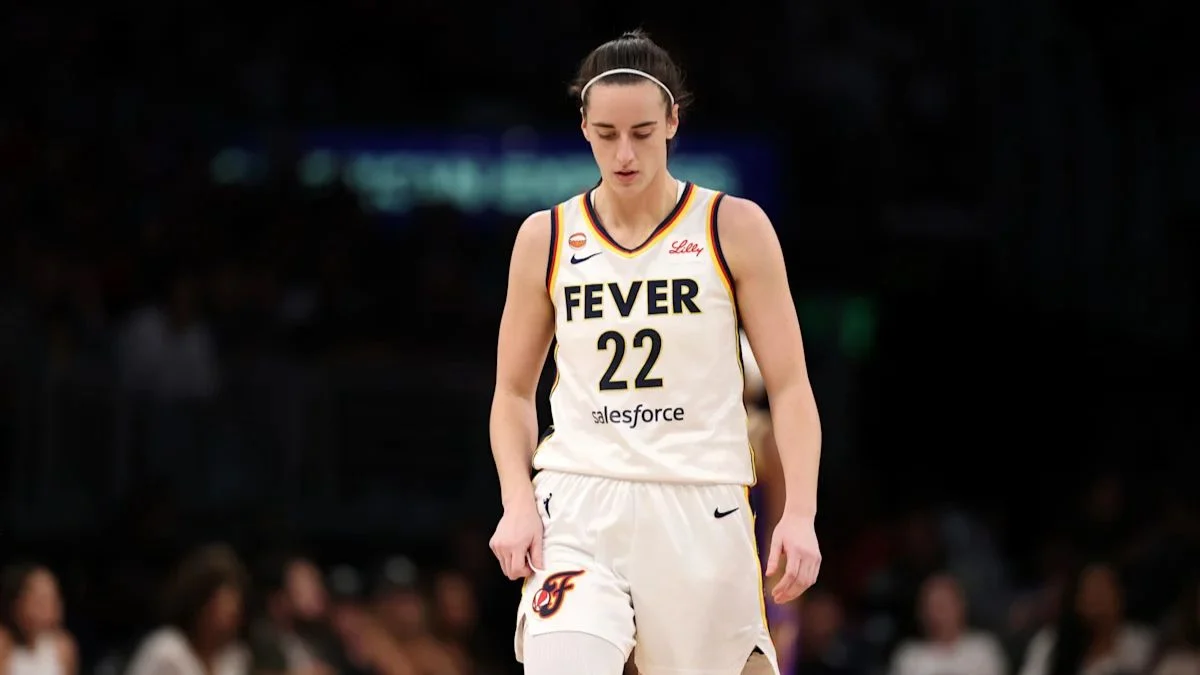
Caitlin Clark has spent much of her WNBA career at the center of conversations far beyond basketball. While her performances continue to reshape interest in the league, the latest controversy has shifted attention from the court to politics, race, and social media.
In mid-July 2026, criticism surrounding Clark intensified after public support from former NCAA swimmer Riley Gaines and a group of Republican lawmakers sparked fierce online debate. What began as concerns over physical play in the WNBA quickly evolved into a broader cultural and political argument, with Clark herself becoming the focal point despite not endorsing the political support.
Politically charged online firestorms have become a recurring theme in entertainment this year, including a major halftime show that drew similar backlash. To know more, read our article Bad Bunny Super Bowl LX Halftime Show Controversy: MAGA Backlash, Trump’s Reaction, and the Culture War Explosion
Caitlin Clark controversy timeline: How the latest backlash unfolded
| Time | Event | Official Details |
| Around July 8, 2026 | Republican lawmakers send WNBA letter | Led by Rep. August Pfluger (R-TX) and the Republican Study Committee, 11 GOP members sent a letter to WNBA Commissioner Cathy Engelbert regarding repeated physical incidents involving Clark and requested a response by July 24. |
| Around July 12–13, 2026 | Riley Gaines defends Clark | Gaines appeared on Fox News, arguing Clark is being targeted primarily because of jealousy over her talent and marketability while also acknowledging race and sexuality could be factors. |
| Mid-July 2026 | Indiana Fever responds | The franchise distanced itself from political involvement, emphasizing its focus on basketball. |
| July 13, 2026 onward | Social media backlash | Following a game against the Las Vegas Aces, criticism escalated online, with derogatory nicknames including “Confederate Clark” and “Caitlin Congress” circulating across social media. |
Why did Republican lawmakers and Riley Gaines defend Caitlin Clark?
The controversy follows months of debate over the physical treatment Clark has received since entering the WNBA. During her career, she has been involved in several high-profile incidents, including hard fouls, a throat strike, hip-checks, and an eye poke. Those moments have fueled ongoing discussions about targeted aggression, officiating standards, and player safety.
Around July 8, 2026, a group of 11 Republican lawmakers, led by Rep. August Pfluger (R-TX) and the Republican Study Committee, sent a formal letter to WNBA Commissioner Cathy Engelbert. The letter referenced what lawmakers described as “repeated acts of unnecessary physical hostility and violence” toward Clark and suggested some incidents “may be racially motivated,” noting that Clark is white while the WNBA is predominantly Black. The lawmakers also requested information about foul reviews, player discipline, protections against online harassment, and asked for a response by July 24.

Other members of the Trump family have also faced viral online scrutiny recently, following a grocery store outing that sparked debate. For more on that, read our post Kai Trump Erewhon Backlash: Why Donald Trump’s Granddaughter’s $233 Grocery Vlog Sparked a Massive Online Debate
Days later, Riley Gaines defended Clark during a Fox News appearance, calling her the “golden goose” and “queen of the WNBA” before she had even played professionally. Gaines argued that jealousy over Clark’s exceptional talent and commercial impact is the primary reason for the hostility she faces. While acknowledging that race or sexuality could also play a role—stating, “Do they hate her because she’s white? Maybe. Because she’s straight? Maybe.”—Gaines maintained that Clark’s basketball ability and generational influence remain the central reasons she has become such a polarizing figure. Gaines also criticized the league for “self-imploding” and contrasted political visits, including Kamala Harris visiting the Los Angeles Sparks.
A country music artist has also spoken out about facing industry pushback tied to his political views. To learn more, check out our article Aaron Lewis Says Country Music Industry Turned Its Back on Him Over Conservative Views Ahead of Give My Country Back Album
Why is Caitlin Clark being called “Confederate Clark”?
Following Indiana Fever’s July 13, 2026 game against the Las Vegas Aces, some social media users accused Clark of exaggerating contact or flopping during certain plays. The criticism expanded beyond basketball, with online users coining or amplifying terms such as “Confederate Clark” and “Caitlin Congress.”
Critics argued that the support from Republican lawmakers and Gaines politicized Clark, turning her into what they viewed as a symbol of “white cultural grievance.” Others accused her of seeking special treatment or encouraging fans to target opposing players, although Clark herself has not endorsed those political interventions.
Supporters, meanwhile, contend that Clark has been subjected to disproportionate physical play because of her unprecedented popularity, rapid rise, and transformative impact on the WNBA. They argue that jealousy, rather than politics, remains the primary driver behind the treatment she receives.
Throughout the controversy, Clark’s own public position has remained consistent. She has condemned online harassment and racism directed at WNBA players—including Black women in the league—and has emphasized that the focus should remain on basketball while distinguishing genuine fans from online trolls.

Insensitive online behavior has also drawn swift backlash for other public figures recently, including a comedic actor mocking a distressing video. To know more, read our article Josh Peck Faces Online Backlash After Mocking House Fire Video: Full Breakdown of the Viral Controversy


Leave a Reply