

When global music icons break into new territories, the moment often becomes more than just another concert—it becomes a cultural milestone. That’s exactly what happened on March 7, 2026, when Bad Bunny delivered his first-ever performance in Japan.
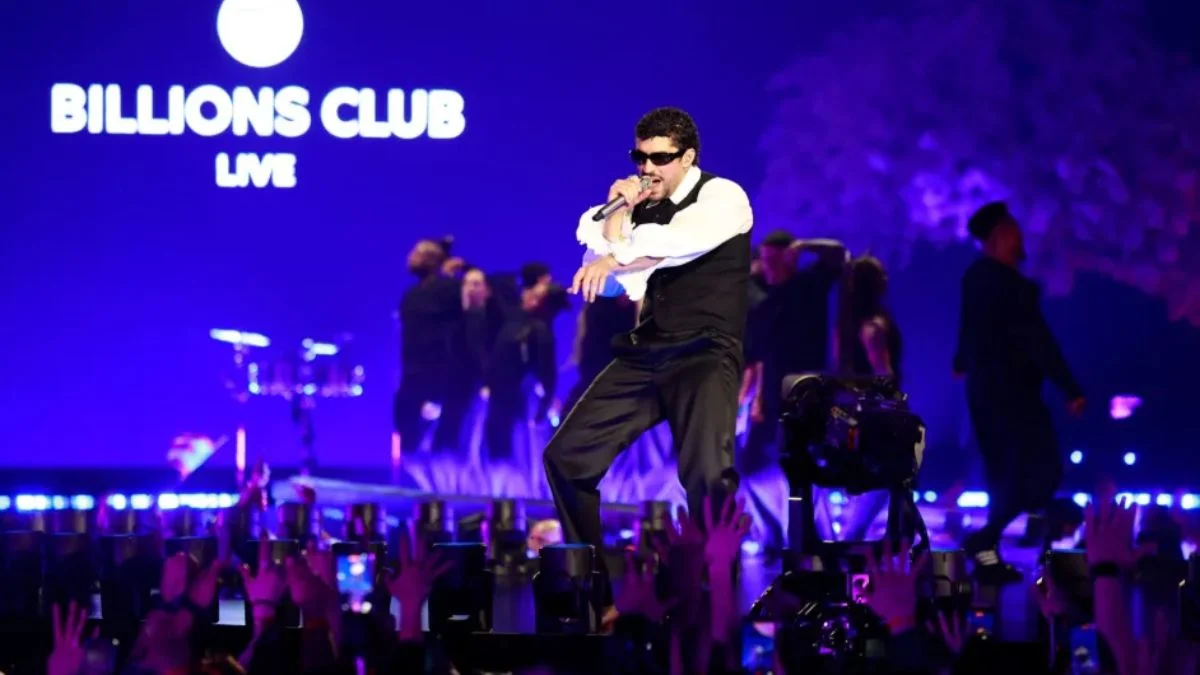
The Puerto Rican superstar, whose real name is Benito Antonio Martínez Ocasio, headlined an exclusive invite-only concert at the Tipstar Dome Chiba during Spotify’s inaugural Asian edition of the Billions Club Live event.
But while the music electrified the crowd, another detail caught global attention: the custom tuxedo he wore for the historic night. Designed by New York menswear label Bode, the outfit quickly became one of the most talked-about celebrity fashion moments of 2026.
From reggaeton anthems to a bold fashion statement stitched with Tokyo symbolism, the evening blended music, culture, and style into one unforgettable spectacle.
Bad Bunny’s Historic First Concert in Japan: Spotify’s Billions Club Live Tokyo

The event marked a significant moment in the global rise of Latin music. Spotify selected Tokyo for the Asian premiere of its Billions Club Live series—an exclusive celebration for artists whose songs have surpassed one billion streams
For Bad Bunny, the night was especially symbolic.
The 31-year-old superstar has dominated global streaming charts for years. His catalog includes an extraordinary achievement: becoming the first artist to occupy the entire top 25 of the Hot Latin Songs chart while simultaneously boasting 29 songs with over one billion streams on Spotify.
Fresh off his widely watched halftime performance at Super Bowl LX—which reportedly attracted 128.2 million viewers—Bad Bunny arrived in Japan riding a wave of historic momentum.
And the audience waiting for him was equally special.
Around 2,300 of his top Japanese Spotify listeners were invited to the intimate concert at Tipstar Dome Chiba. Instead of a massive arena spectacle, the performance had the energy of a private celebration for his most dedicated fans in the region.

Tokyo’s Sakura-Inspired Stage Design Turned the Venue Into a Cultural Bridge
The production design transformed the arena into a visually stunning fusion of Puerto Rican flair and Japanese artistry.
Two towering pink cherry blossom (sakura) trees framed the stage, glowing under dynamic lighting that shifted throughout the performance—from romantic purple shades to vibrant orange-blue waves washing across the crowd.
Additional design details elevated the atmosphere:
- Yakisugi (charred cedar wood) textures gave the stage an artisanal Japanese touch.
- A massive glowing sun hovered above the performance area.
- At times, the sun billowed a Puerto Rican flag, symbolically connecting the Caribbean with Japan.
With fewer than 2,000 core fans plus VIP guests, the venue felt more like a high-energy club than a traditional concert arena. The floor erupted with dance circles, and fans waved pavas, traditional Puerto Rican straw hats, creating a sea of movement beneath the sakura lights.
Celebrity Guests Spotted in the Crowd
The intimate show attracted several high-profile guests, adding another layer of cultural crossover.
Among those seen enjoying the concert were:
- Lisa of BLACKPINK
- Renowned contemporary artist Takashi Murakami
Their presence underscored the event’s blend of music, fashion, and art—making it one of the most talked-about cultural gatherings in Tokyo that weekend.
Meanwhile, DJ Nasthug handled the opening and closing mixes, building momentum before Bad Bunny took the stage for his 90-minute performance.

Bad Bunny’s 17-Song Setlist Turned Tokyo Into a Reggaeton Dance Floor
Once the show began, Bad Bunny wasted no time igniting the crowd.
Running along the stage catwalk and flashing his signature grin, he repeatedly encouraged fans to “Baila sin miedo, Tokio” — Dance without fear, Tokyo.
The setlist blended reggaeton classics with salsa reinterpretations and emotional crowd-singalong moments.
Key Moments From the Performance
| Time/Event | Song | Album/Notes | Highlight |
| Opening | EoO | Instrumental intro | Instantly sparked dancing as lights dimmed for dramatic buildup |
| Mid-Set | NUEVAYoL | From the album Nadie Sabe Lo Que Va a Pasar Mañana | Frenetic energy and massive crowd response |
| Crowd Frenzy | Tití Me Preguntó | From Un Verano Sin Ti | Opening chords alone triggered deafening cheers |
| Cultural Moment | Yonaguni | Standalone single | Fans sang the Japanese lyrics loudly |
| Salsa Surprise | MIA | Originally featuring Drake | Debut salsa version with Puerto Rican groups Los Pleneros de la Cresta and Los Sobrinos |
| Dancefloor Chaos | Safaera | From YHLQMDLG | Guest appearance by Jowell and Randy |
| Emotional Finale | DtMF | Closing performance | Bad Bunny teased fans asking “¿Quieres más?” |
The crowd response never slowed. Mini mosh pits formed, Puerto Rican flags draped barriers, and bilingual sing-alongs echoed throughout the venue.
Fit Check: The Custom Bode Tuxedo That Defined the Night
While the music dominated headlines, Bad Bunny’s outfit became an instant viral fashion moment.
For the milestone performance, he wore a custom tuxedo designed by Bode, a New York label known for blending vintage craftsmanship with contemporary tailoring.
Instead of a traditional stiff tuxedo, the design reflected Bad Bunny’s signature mix of elegance and rebellion.
Key Design Features of the Custom Bode Suit
Back Motif
The back of the jacket featured a handmade “Tokyo” inscription in kanji characters, crafted from shimmering jet-black beads and sequins that sparkled under stage lights.
Rope Belt Closure
Rather than standard buttons, the suit tied together with a hand-braided rope belt, giving the outfit a relaxed and artistic silhouette.
Vintage Tassel Cuffs
Tassels sourced from antique curtain tie-backs dangled from the cuffs, swaying rhythmically as he danced across the stage.
Romantic Silhouette
The look included:
- A single-breasted jacket with subtle beadwork along the lapels
- Slim black trousers
- A crisp white shirt with wide ruffled cuffs reminiscent of a poet’s blouse
Bad Bunny initially layered the outfit with a vest, which he later removed during the show to create evolving stage looks.
Bode’s Statement on the Custom Suit
After the performance, Bode shared details of the design on social media, explaining the inspiration behind the piece.
According to the brand, the tuxedo was created specifically to celebrate Bad Bunny’s first performance in Asia.
The handcrafted “Tokyo” motif and vintage elements were meant to represent a fusion of cultures, echoing the theme of the evening itself.
Fans quickly flooded the post with praise. One comment summed up the general reaction:
“He looked stunning in it! Great design.”
Puerto Rico Meets Japan: A Cultural Celebration Through Music
Beyond the fashion and music, the night represented something bigger.
Bad Bunny repeatedly emphasized the “union of Puerto Rico and Tokyo.”
He also acknowledged Latino fans who had traveled internationally to attend the performance, thanking them for supporting his journey.
For many Japanese attendees, the event was especially meaningful. Some fans revealed it was their first live concert experience, making the moment even more emotional.
The fusion of salsa rhythms, reggaeton beats, sakura stage design, and Puerto Rican symbolism created a rare cultural dialogue.
Why Bad Bunny’s Tokyo Performance Marks a New Era for Global Music
The success of the show highlights a growing trend: Latin music’s expanding global influence.
A decade ago, reggaeton concerts in Japan would have seemed unlikely. But Bad Bunny’s massive streaming numbers and cultural impact have reshaped the international music landscape.
His performance at Billions Club Live Tokyo wasn’t simply another stop on a tour.
It was:
- A celebration of streaming dominance
- A cultural bridge between continents
- A fashion moment that blended street style with couture craftsmanship
And judging by the audience reaction, Asia may become a major new chapter in Bad Bunny’s career.

The Final Word: A Tuxedo-Clad Victory Lap
By the time the final song ended and fans posed with oversized Spotify plaques commemorating his billion-stream hits, the meaning of the night was clear.
Bad Bunny didn’t just perform in Japan—he connected cultures through music, fashion, and energy.
From the sakura-framed stage to the shimmering Bode tuxedo embroidered with “Tokyo,” every detail reflected intention and artistry.
For an artist who has already conquered charts worldwide, this Tokyo debut felt less like a first step and more like a victory lap on a global stage.
And if this performance is any indication, Bad Bunny’s influence across Asia is only just beginning.


Leave a Reply