

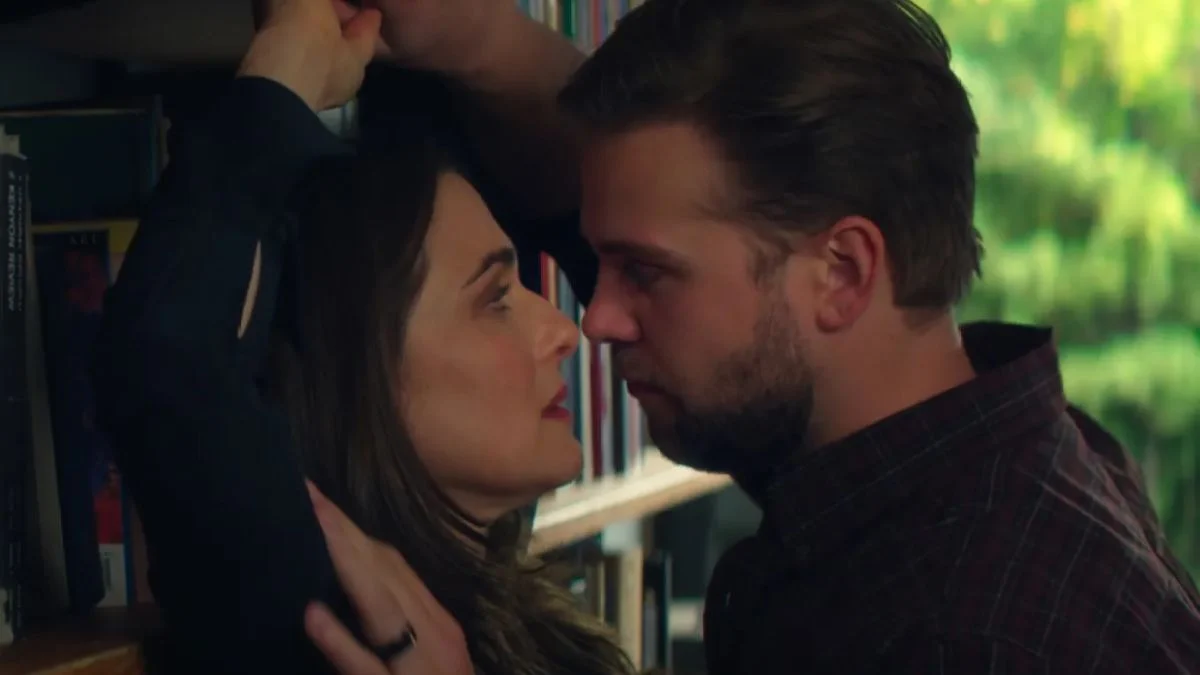
When streaming platforms chase the next big prestige hit, they often turn to literary adaptations that push boundaries. That’s exactly what Vladimir delivers. Premiering on Netflix on March 5, 2026, this provocative limited series adapts the critically acclaimed 2022 novel by Julia May Jonas, transforming its controversial themes of obsession, female desire, and academic politics into a binge-worthy television experience.
With all eight episodes dropping simultaneously, each running about 27–32 minutes, the show quickly establishes itself as a fast-paced watch that blends dark comedy, erotic tension, and biting social satire. Anchored by a fearless performance from Rachel Weisz, the series explores what happens when intellectual ambition, midlife crisis, and temptation collide within the insulated world of academia.
At first glance, Vladimir looks like another campus drama. But within minutes, viewers realize it’s something stranger—and far more daring. It flips the classic narrative of obsession on its head, centering a woman’s unapologetic gaze in a story that’s as seductive as it is uncomfortable.
What Is Netflix’s “Vladimir” About? Plot, Themes, and Why It’s Trending in 2026
At its core, Vladimir is a slow-burn psychological comedy-drama set at a small liberal arts college where personal desires and institutional politics collide.
The story follows “M,” an unnamed English professor played by Rachel Weisz. Once a celebrated novelist and influential academic voice, M now finds herself drifting in midlife uncertainty. Her professional reputation has faded, enrollment in her once-popular fiction course is dwindling, and her personal life feels equally stagnant.
Her husband John, portrayed by John Slattery, is the department chair whose career is still thriving—at least until an explosive scandal erupts.
Their unconventional open marriage, once thrilling and intellectually liberating, has hardened into routine indifference. Emotional scars linger from years of blurred boundaries, and both partners appear trapped in a relationship defined by history rather than passion.
Then everything changes.

The Inciting Scandal: A Post-#MeToo Academic Crisis
The narrative ignites when a decade-old sexual misconduct investigation resurfaces against John. Several former students accuse him of engaging in relationships they now claim were non-consensual.
John insists the encounters were consensual, but in a post-#MeToo academic climate, the accusations trigger institutional chaos.
M’s reaction is anything but predictable.
Rather than condemning her husband, she dismisses the allegations as puritanical overreach in what she sees as an increasingly sanitized world. Her contrarian stance places her at odds with colleagues, students, and the wider campus community.
While the university launches investigations and gossip spreads through hallways and faculty meetings, M finds herself oddly invigorated by the turmoil.
Because someone new has arrived on campus.
Enter Vladimir: The Magnetic New Faculty Member
The arrival of Vladimir, played by Leo Woodall, sends shockwaves through M’s carefully controlled world.
A rising literary star and newly appointed faculty member, Vladimir embodies everything she feels she has lost:
- Youth
- Creative energy
- Intellectual curiosity
- Charismatic charm
Accompanied by his enigmatic wife Cynthia, portrayed by Jessica Henwick, Vladimir becomes the object of M’s growing fascination.
What begins as a seemingly harmless intellectual attraction soon evolves into something far more dangerous.
The line between admiration, desire, and obsession begins to blur.
And for the first time in years, M feels alive.
A Story Told From Inside an Unreliable Mind
One of the series’ most distinctive storytelling techniques is its use of direct-to-camera monologues.
Much like the narrative style popularized by shows such as Fleabag, M frequently breaks the fourth wall to address the audience directly. These moments reveal her inner thoughts—witty, scandalous, and often deeply uncomfortable.
Her confessions combine:
- Shakespearean literary references
- Sharp academic satire
- Lewd humor and unfiltered fantasies
These asides transform mundane scenes—grading papers, cooking dinner, attending faculty meetings—into windows into a mind spiraling toward obsession.
The show describes these moments as “the good kind of cringe”: seductive, humorous, and intentionally awkward.
They also highlight the central question driving the series:
Is M reclaiming her agency—or simply losing control?
How “Vladimir” Satirizes Campus Culture and Academic Politics
Beyond the central obsession, Vladimir offers a surprisingly sharp critique of modern academic institutions.
The fictional college becomes a stage for:
- Endless Title IX seminars
- Performative activism
- Whispered alliances in faculty offices
- Public reputational battles
The show lampoons the absurdity of campus bureaucracy while also examining serious themes:
- The complexity of consent and power dynamics
- The impact of cancel culture
- The loneliness of aging in a youth-focused profession
- The tension between intellectual freedom and institutional control
Against this backdrop, M’s pursuit of Vladimir becomes both deeply personal and symbolically rebellious.

Main Cast and Characters in Netflix’s “Vladimir”
The limited series features a compact but powerful ensemble, led by Rachel Weisz’s widely praised performance.
| Actor | Character | Description |
| Rachel Weisz | M (The Protagonist) | A sharp-tongued English professor and stalled novelist navigating obsession and scandal. |
| Leo Woodall | Vladimir | A charismatic young writer whose arrival sparks M’s creative and emotional awakening. |
| John Slattery | John | M’s husband and department chair facing misconduct allegations. |
| Jessica Henwick | Cynthia | Vladimir’s poised and enigmatic wife, adding intrigue to the central story. |
| Ellen Robertson | Sid | M’s estranged daughter representing generational conflict. |
| Kayli Carter | Lila | A recurring figure embodying youthful idealism and institutional tension. |
| Miriam Silverman | Florence | A faculty colleague with dry wit and ambiguous loyalties. |
| Mallori Johnson | Edwina | Another academic navigating diversity politics and power struggles. |
| Matt Walsh | David | A bombastic administrator amplifying the show’s comedic critique of bureaucracy. |
| Tattiawna Jones | Alexis | A student caught in the fallout of the scandal. |
| Louise Lambert | Dawn | A colleague highlighting themes of sidelined women in academia. |
The dynamic between Weisz and Woodall provides the emotional engine of the series, with their scenes balancing flirtation, ambiguity, and underlying tension.
Behind the Scenes: How the Series Was Created
The television adaptation remained closely tied to its literary origins. Author Julia May Jonas served as both creator and lead writer, adapting her own novel for television.
Key Production Details
| Category | Official Details |
| Creator / Showrunner | Julia May Jonas |
| Executive Producers | Julia May Jonas, Rachel Weisz, Sharon Horgan, Kate Robin, Stacey Greenberg, Kira Carstensen, Jason Winer, Jon Radler |
| Production Companies | Merman, Astral Projection, Small Dog Picture Company, 20th Television |
| Filming Location | Toronto, Ontario |
| Filming Timeline | July 2025 – September 2025 |
| Streaming Platform | Netflix |
| Episodes | 8 |
| Runtime | 27–32 minutes |
Filming primarily took place in Toronto, which doubled as a generic East Coast American college town. The location helped create what the production team calls the “romantic bubble” of academia—a world filled with crisp fall leaves, quiet libraries, and tension-filled faculty corridors.
Episode Guide: Literary Easter Eggs in Every Title
The episode titles in Vladimir reference classic works of literature, reinforcing the show’s academic themes.
| Episode | Title | Director(s) | Writer |
| 1 | We Have Always Lived in the Castle | Shari Springer Berman & Robert Pulcini | Julia May Jonas |
| 2 | The Awakening | Shari Springer Berman & Robert Pulcini | Julia May Jonas |
| 3 | Enormous Changes at the Last Minute | Francesca Gregorini | Susan Soon He Stanton |
| 4 | Bad Behavior | Josephine Bornebusch | Matthew Capodicasa |
| 5 | Play It As It Lays | Josephine Bornebusch | Jeanie Bergen |
| 6 | Because It Is Bitter And Because It Is My Heart | Francesca Gregorini | Colette Burson |
| 7 | Everything That Rises Must Converge | Francesca Gregorini | Julia May Jonas |
| 8 | Against Interpretation | Shari Springer Berman & Robert Pulcini | Julia May Jonas |
These literary references underline the meta-concept of the series: M teaches these stories, yet her own life begins to resemble them.

Music, Cinematography, and Visual Style
The show’s atmosphere is amplified by its visual and musical design.
Composer Tim Phillips blends sultry jazz tones with uneasy strings, mirroring M’s emotional instability.
Meanwhile cinematographer François Dagenais uses warm, hazy filters that evoke nostalgia while subtly hinting at psychological tension.
The result is a world that feels both inviting and unsettling—perfectly reflecting the protagonist’s conflicted inner life.
Critical Reviews and Early Audience Reactions
Within its first 24 hours, Vladimir reportedly entered Netflix’s global Top 10, sparking intense debate online.
Critics have largely praised the show’s willingness to tackle complicated themes.
USA Today reviewer Kelly Lawler awarded the series three and a half stars, describing it as:
“Juicy, seductive, compelling and off-putting… irresistibly delicious to watch bad characters be so very bad.”
The Hollywood Reporter highlighted the show’s “fast-paced, heart-racing tension”, noting that it avoids typical thriller gimmicks while still delivering constant suspense.
On Rotten Tomatoes, the first season currently holds an 88% critics’ score, with consensus praising its exploration of desire and respect.
Meanwhile Mashable compared Rachel Weisz’s fearless performance to the energy of Fleabag, calling it:
“Witty, wicked, and wildly unfiltered.”
Why “Vladimir” Is Sparkling Debate on Social Media
Online reactions—especially on X—have focused on two elements:
- Rachel Weisz’s bold performance
- Leo Woodall’s brooding charisma
Fans frequently describe the show as “sexy cringe TV”, a term capturing its blend of humor, discomfort, and emotional intensity.
Others praise its willingness to explore female desire without apology, a perspective still relatively rare in mainstream television.
Will There Be a Season 2?
As of now, Vladimir is officially billed as a limited series, meaning its story is designed to stand alone.
However, given its early success and the richness of Julia May Jonas’s literary universe, some industry watchers speculate that spin-offs or anthology expansions could emerge in the future.
For now, the eight-episode arc delivers a complete narrative—one designed to provoke thought as much as entertainment.

Why “Vladimir” Is One of Netflix’s Most Unforgettable Series of 2026
In a streaming landscape crowded with crime thrillers and fantasy epics, Vladimir stands apart.
It’s bold, uncomfortable, funny, and deeply intelligent.
By placing a middle-aged woman’s perspective at the center of a story about desire, power, and self-reinvention, the show challenges familiar narratives and invites viewers to question their own assumptions.
Whether audiences interpret M’s journey as empowerment or self-destruction, one thing is certain:
The conversation around Vladimir is just beginning.
And if the early buzz is any indication, this daring adaptation could become one of Netflix’s most talked-about prestige dramas of the year.


Leave a Reply