

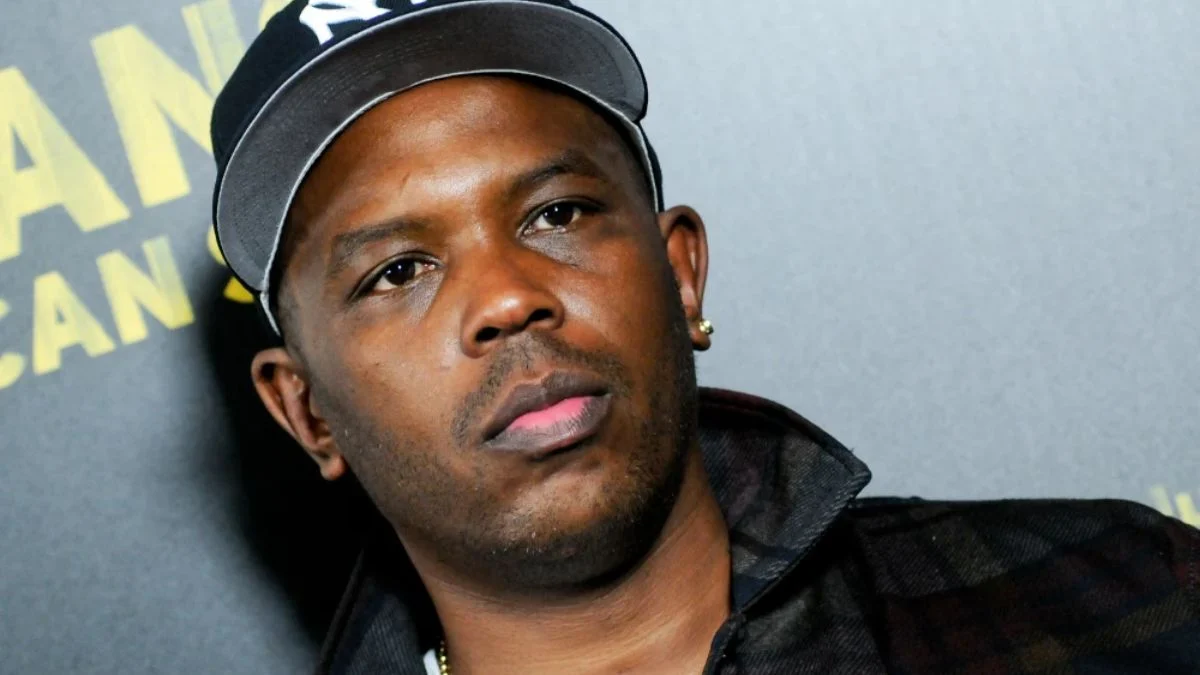
The hip-hop world is mourning the loss of a man whose name may not have echoed through verses — but whose vision shaped an empire.
Oliver “Power” Grant, a pivotal founding business architect, executive producer, and close collaborator of the Wu-Tang Clan, died on February 23, 2026, at the age of 52. Two days later, on February 25, 2026, the legendary collective confirmed the devastating news with a tribute that immediately reverberated across the culture: “Rest in Power, Power.”
Posted across their verified social media platforms — including X/Twitter (@WuTangClan) and Instagram — the message featured a moving video montage of archival interviews, underscoring Grant’s foundational role in building what would become one of the most influential hip-hop dynasties of all time.
What followed was an outpouring of tributes, headlines, and heartfelt reflections — not just from artists, but from generations of fans who may never have known how deeply “Power” shaped the Wu legacy.
The Official Announcement That Shook Hip-Hop: “Rest in Power, Power”
The phrase itself — “Rest in Power, Power” — felt symbolic. It echoed across timelines, trended on X, and quickly became the defining tribute to the man who helped architect Wu-Tang’s rise from Staten Island streets to global domination.
Major outlets including People, Deadline, Rolling Stone, The Guardian, USA Today, Billboard, HipHopDX, NBC News, and Hot 97 published verified obituaries and tributes. The official Wu-Tang post alone garnered thousands of likes, reposts, and replies, as fans shared memories of Grant’s impact on music, fashion, and business.
The announcement came at a particularly emotional moment — amid the group’s 2026 Rock & Roll Hall of Fame nomination — amplifying the weight of the loss.
As of February 26, 2026, no cause or location of death has been publicly disclosed by the family, the group, or official representatives.

Biography: From Jamaica to Staten Island’s Park Hill Projects
Born Oliver Grant on November 3, 1973, in Jamaica, he was raised in the Park Hill Projects of Staten Island, New York — the same neighborhood that birthed Wu-Tang’s raw creative energy.
It was there that Grant formed childhood friendships with Divine, the older brother of RZA. He was also the older brother of Killarmy member Killa Sin (Jeryl Gant), further embedding him within the Wu family tree.
During an early chess game with members of the collective, he earned the nickname “Power.” The moniker symbolized the force required to make things happen — and history would prove the name prophetic.
Grant wasn’t just present at Wu-Tang’s origin story — he invested in it. An early financial contribution helped secure critical studio time and infrastructure when the group was still fighting for recognition.
Executive Producer of a Revolution: Enter the Wu-Tang (36 Chambers)
Though not one of the nine core rappers, Grant was consistently described in verified obituaries as a founding member, co-founder, and visionary business architect.
He served as executive producer on all Wu-Tang Clan albums, beginning with their groundbreaking 1993 debut, Enter the Wu-Tang (36 Chambers).
That album changed hip-hop forever. But behind the gritty beats and razor-sharp lyricism stood Grant’s logistical coordination — securing studio access, managing early funding, and enabling the group’s rare contractual independence.
Wu-Tang’s business model — allowing members to sign solo deals with different labels while maintaining collective identity — became a blueprint for artist autonomy. Grant was instrumental in structuring that vision.
Beyond Music: Film, Gaming, and Multimedia Expansion
Grant understood early that Wu-Tang was more than a rap group — it was a brand.
In 1999, he produced the PlayStation game Wu-Tang: Shaolin Style, featuring group voiceovers and music. It was a bold move at a time when few hip-hop artists were expanding into gaming.
His film credits were equally notable. Grant appeared in Belly (1998) as “Knowledge,” alongside Method Man. He also acted in Black and White (1999), where he served as producer and music supervisor, as well as When Will I Be Loved (2004), Coalition, and Queen of Media (as Big Kev).
From records to reels, Grant ensured Wu-Tang’s presence was multidimensional.

Wu-Wear: The $25 Million Streetwear Empire That Changed Hip-Hop Fashion
Perhaps Grant’s most visionary move came in 1995 when he founded and served as CEO of Wu-Wear — one of hip-hop’s first major artist-owned streetwear lines.
What began as mail-order logo tees grew into a multimillion-dollar enterprise, peaking at over $25 million annually. Physical stores opened in Staten Island and Los Angeles, with distribution through Macy’s, Rich’s, and d.e.m.o.
Long before artist-owned brands became standard, Grant proved hip-hop could own its commerce.
In 2008, due to counterfeiting issues, he rebranded the company as Wu-Tang Brand. In 2017, he relaunched it alongside RZA and Live Nation, serving as “Historic Creative Consultant.”
Today’s era of independent hip-hop entrepreneurship owes much to the blueprint he pioneered.
Portrayal in Pop Culture: Wu-Tang: An American Saga
Grant’s behind-the-scenes influence was dramatized in the Hulu series Wu-Tang: An American Saga (2019–2023), where he was portrayed by actor Marcus Callender.
The series introduced a new generation to his foundational role — reinforcing that Wu-Tang’s mythology wasn’t just lyrical. It was strategic.
Timeline of Key Milestones
| Year | Event | Details |
| 1973 | Birth | Born November 3 in Jamaica |
| 1993 | Executive Producer | Enter the Wu-Tang (36 Chambers) |
| 1995 | Founded Wu-Wear | Became CEO of artist-owned streetwear empire |
| 1998 | Film Debut | Belly (as Knowledge) |
| 1999 | Gaming Expansion | Produced Wu-Tang: Shaolin Style |
| 2008 | Rebrand | Wu-Wear renamed Wu-Tang Brand |
| 2017 | Relaunch | Relaunched brand with RZA & Live Nation |
| 2026 | Passing | Died February 23 at age 52 |
Verified Tributes: “Wu Wouldn’t Have Come to Fruition Without Power”
Tributes from within the Wu family were deeply personal.
Method Man posted:
“Paradise my Brother safe Travels!! #pookie #power” and later added, “Bruh I am not ok.” He also confirmed the loss in conversation with Hot 97.
GZA stated:
“Wu wouldn’t have come to fruition without Power. His passing is a profound loss to us all.”
Raekwon shared:
“The most high is merciful. I love you.”
The collective grief reflected something deeper than business — it was brotherhood.

The Quiet Architect Behind “Wu-Tang Forever”
Oliver “Power” Grant rarely sought the spotlight. He didn’t need verses to cement his place in hip-hop history.
Instead, he built infrastructure. He secured independence. He turned raw street energy into a sustainable cultural machine — spanning platinum albums, global tours, gaming ventures, films, and multimillion-dollar fashion lines.
At a moment when the Wu-Tang Clan stands on the threshold of Rock & Roll Hall of Fame recognition, the loss of one of its founding architects feels particularly poignant.
His legacy endures not only in music but in ownership models, branding strategies, and the entrepreneurial spirit now embedded in hip-hop culture.
The phrase “Wu-Tang forever” was never just a lyric.
It was a business plan.
And Oliver “Power” Grant made it possible.
Rest in Power, Power. 🕊️


Leave a Reply