

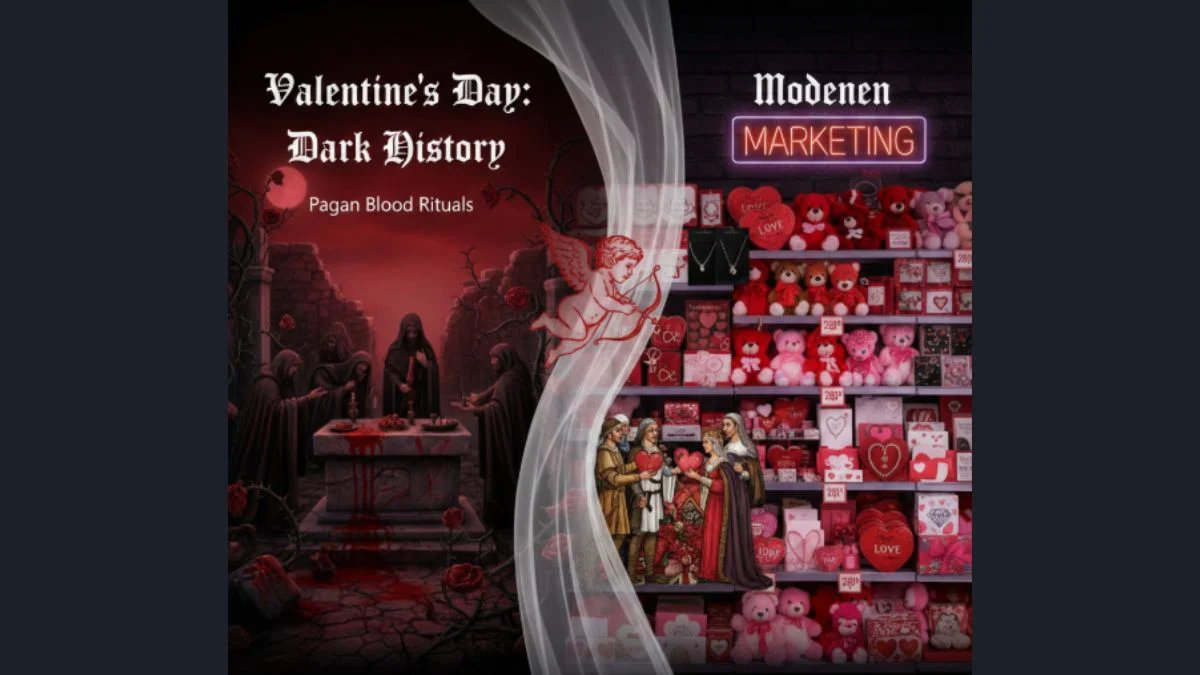
Every February 14, millions exchange heart-shaped chocolates and crimson roses, believing they’re celebrating pure romance. But beneath the modern Valentine’s Day facade lies a 1,500-year journey through martyrdom, pagan fertility rites, and ecclesiastical manipulation. What began as a controversial Roman festival involving animal sacrifices and ritual whipping evolved into the $26 billion industry we recognize today. The transformation from Lupercalia’s chaotic matchmaking lotteries to Victorian lace-trimmed cards reveals how cultural forces reshaped an ancient celebration into something almost unrecognizable—and far more profitable. This isn’t merely a story of romance; it’s a masterclass in how societies reinvent traditions to serve evolving needs, from church-sanctioned love to consumer-driven connection.
What Ancient Roman Festival Involved Whipping Women for Fertility?

Before Valentine’s Day existed, Romans celebrated Lupercalia from February 13-15, a wild fertility rite that would shock modern sensibilities. This pagan festival honored Lupercus, god of shepherds, and Faunus, god of agriculture, through animal sacrifices and ritualistic practices designed to promote fertility and ward off evil spirits. Young men would sacrifice goats and dogs, then cut strips from the animals’ hides. Dressed in these bloody skins, they ran through Rome’s streets, striking women with the hides—a practice women eagerly participated in, believing it enhanced fertility and eased childbirth pain.
The festival also featured matchmaking lotteries where men drew women’s names from jars, forming temporary—and sometimes lasting—unions. These chaotic pairings symbolized nature’s unpredictability, mirroring wild Roman parties where social norms dissolved. By the late 5th century, Pope Gelasius I banned Lupercalia, recognizing its pagan excess conflicted with Christian values. Yet rather than simply eliminate the celebration, the church strategically overlaid it with St. Valentine’s feast day, absorbing its mid-February timing and fertility themes while redirecting them toward sanctified love and devotion.

Who Were the Three Saint Valentines? The Martyrs Behind Valentine’s Day Explained

The identity of Saint Valentine remains historically murky, with Catholic records acknowledging at least three different martyrs named Valentine or Valentinus who died in the third century A.D. The most prominent account involves Valentine of Rome, a priest executed around A.D. 270 by Emperor Claudius II Gothicus. According to legend, Claudius banned marriages for young soldiers, believing unmarried men made superior warriors without familial distractions. Valentine defied this decree, secretly performing Christian wedding ceremonies for young couples, viewing marriage as a sacred covenant worth defending even unto death.
Another narrative features Valentine of Terni, a bishop also beheaded for converting pagans to Christianity and performing forbidden marriages. A third Valentine’s story became intertwined with romantic mythology: the imprisoned priest allegedly fell in love with his jailer’s blind daughter, miraculously restoring her sight before his execution. He purportedly sent her a farewell letter signed “From your Valentine,” inspiring the modern greeting card tradition. These 18th-century embellishments, while historically questionable, transformed a martyrdom story into a romantic origin myth, making Valentine’s sacrifice symbolize love’s triumph over oppression.
Historical Timeline: From Pagan Rituals to Modern Romance
| Time Period | Key Figure/Event | Significance |
| Ancient Rome | Lupercalia Festival (Feb 13-15) | Pagan fertility rite with animal sacrifices, ritual whipping, and matchmaking lotteries |
| c. A.D. 270 | Valentine of Rome martyred | Priest executed by Claudius II for performing forbidden Christian marriages, martyred on February 14 |
| A.D. 496 | Pope Gelasius I formalizes feast | Established St. Valentine’s Day on February 14, banned Lupercalia, ‘Christianized’ pagan celebration |
| 1380s | Geoffrey Chaucer’s poem | ‘The Parliament of Fowls’ linked February 14 to romantic love, noting birds choose mates on this day |
| 1415 | Charles, Duke of Orléans | Wrote oldest surviving valentine poem to his wife from Tower of London prison |
| 1840s | Esther Howland pioneers cards | Mass-produced elaborate lace-trimmed valentines in U.S., industrializing the tradition |
| Present Day | Global celebration | 145+ million cards exchanged annually in U.S.; $26 billion spent on gifts, second only to Christmas |
How Medieval Beliefs About Birds Turned Valentine’s Day Into a Romance Holiday

The romantic transformation of Valentine’s Day owes much to Geoffrey Chaucer, England’s medieval poet who fundamentally reshaped the holiday’s meaning in his 1380s work ‘The Parliament of Fowls.’ Chaucer wrote that February 14 marked the day when birds chose their mates, symbolizing spring’s onset and nature’s renewal. This poetic association between mid-February and courtship captured medieval imaginations, establishing romantic love as the holiday’s central theme rather than martyrdom or fertility rites.
By the 15th century, handwritten valentines—affectionate notes exchanged between lovers—became fashionable across European aristocracy. The oldest surviving valentine, penned in 1415 by Charles, Duke of Orléans, was a poem he sent to his wife while imprisoned in the Tower of London following his capture at the Battle of Agincourt. This touching gesture during captivity epitomized how Valentine’s Day evolved into an opportunity for expressing emotions that social conventions often suppressed. In Victorian England’s repressed society, the holiday became especially significant, allowing people to communicate feelings through elaborate lace-trimmed cards adorned with romantic verses.

The Hidden Psychology: Why Valentine’s Day Triggers Anxiety and Depression
While Valentine’s Day celebrates love, psychologists recognize it also intensifies complex emotions through societal expectations. The holiday operates on attachment theory principles—humans possess innate needs for connection, releasing oxytocin during affectionate interactions that strengthen bonds. However, this neurochemical response creates performance pressure for couples, with research revealing partners appear ‘ideal’ on positive days but emotionally distant when expectations aren’t met. Singles or grieving individuals often experience magnified isolation, with studies documenting pessimistic affective forecasting where people overestimate negative emotions like sadness.
Mental health conditions compound these effects: depression predicts underestimating positive affect, anxiety heightens negativity bias, and borderline personality traits amplify emotional forecasting errors.
Individuals with PTSD, particularly from interpersonal trauma, may find past wounds resurfacing during this emotionally charged period. The neuroscience underlying attraction—dopamine driving initial passion, serotonin promoting stability—clashes with commercial pressures to perform romance perfectly, creating a psychological minefield. Yet positively approached, the holiday encourages vulnerability and authenticity in relationships, building emotional resilience through thoughtful rather than performative gestures.

Cupid’s Arrows : The Mythology That Shaped Modern Love
Valentine’s Day intertwines Christian hagiography with Greco-Roman mythology, creating a rich symbolic tapestry. Central is Cupid (Roman) or Eros (Greek), the winged god of desire born to Aphrodite (Venus) and Ares (Mars). Depicted as a cherubic archer, Cupid wielded arrows that could ignite passionate love or aversion, linking to Lupercalia’s chaotic matchmaking rituals. Some legends connect Cupid directly to Saint Valentine through an amethyst ring the martyr allegedly wore, etched with the god’s image—a symbolic bridge between pagan and Christian love traditions.
Other romantic embellishments include the imprisoned Valentine falling in love with his jailer’s blind daughter, miraculously restoring her sight through divine intervention before his execution. This 18th-century addition transformed a martyrdom narrative into a love story, inspiring the ‘From your Valentine’ signing tradition. Additional folklore speaks of heart-shaped leaves growing near Valentine’s prison window, while the bird-mating myth reinforced February 14’s romantic significance. These stories, blending pagan mysticism with Christian virtue, emphasize love’s transformative and transcendent power across cultures and centuries.
What Would Aristotle Say About Buying Last-Minute Valentine’s Gifts?

Philosophers offer compelling critiques of Valentine’s Day commercialism while providing frameworks for authentic celebration. Aristotle, in his ‘Nicomachean Ethics,’ portrayed love as philia—friendship rooted in mutual virtue-building—criticizing one-day gestures as superficial compared to daily commitment to another’s flourishing.
From this perspective, last-minute flowers represent performative love rather than genuine care, reducing profound connection to transactional exchange. Aristotle would argue true love demands consistent attention, not annual grand gestures driven by social obligation.
Plato’s ‘Symposium’ offered a contrasting view, presenting eros as a ladder ascending from physical attraction toward divine beauty and ultimate truth. Valentine’s Day could serve as an entry point for this philosophical journey rather than its destination. Stoic thinkers like Epictetus emphasized rational, resilient love that accepts what’s uncontrollable, transforming holiday pressures into opportunities for emotional growth. Modern philosophers like bell hooks advocate a ‘love ethic’ emphasizing justice, respect, and communal bonds beyond romance. Thomas Jay Oord’s concept that God’s essence is love—spanning agape (selfless), philia (friendship), storge (familial), and eros (romantic)—suggests Valentine’s Day should celebrate universal compassion, not just romantic partnership.
From Black Day Noodles to Galentine’s Brunch: How the World Celebrates Differently
Contemporary Valentine’s Day transcends Western romance, adapting globally with fascinating cultural variations. In Japan, women gift chocolate on February 14—honmei-choco for romantic interests, giri-choco for social obligations—with men reciprocating on White Day (March 14). South Korea extends this further with Black Day on April 14, where singles gather to eat jjajangmyeon (black noodle dish), transforming potential loneliness into community celebration. Georgia shifts focus entirely, celebrating broader love forms on April 15 rather than emphasizing romantic partnerships.
The United States drives Valentine’s commercialization with approximately $26 billion spent annually—$14 billion on jewelry alone—with over 145 million cards exchanged, second only to Christmas. Yet modern celebrations increasingly challenge traditional romance narratives: 60% of global celebrants now honor friends, family, and self-love rather than exclusively romantic partners. Self-gifting surges, with 40% of women purchasing for themselves, emphasizing personal well-being over external validation. ‘Galentine’s Day’ (February 13) celebrates female friendships, while post-pandemic virtual celebrations underscore empathy and connection amid ongoing digital isolation concerns.

Why Valentine’s Day Still Matters in 2026
Valentine’s Day’s enduring relevance stems from its remarkable adaptability—from Lupercalia’s fertility rites through Christian martyrdom to modern inclusive celebrations. While commercialization draws valid criticism, the holiday serves crucial psychological and social functions in an increasingly isolated digital age. It creates structured opportunities for vulnerability, gratitude expression, and relationship investment that busy modern lives often neglect. The evolution toward celebrating all love forms—platonic, familial, self-directed—reflects society’s growing emotional intelligence and recognition that connection transcends romantic partnership.
Understanding Valentine’s Day’s complex history—its pagan origins, ecclesiastical
Exploring Valentine’s Day’s pagan roots, religious reinvention, and philosophical debates deepens its meaning instead of diminishing it. The celebration reminds us that love is powerful, chaotic, and essential to human life—whether shared through centuries-old love poems or today’s Galentine’s brunches. In a world still grappling with post-pandemic loneliness, Valentine’s Day speaks louder than ever: authentic human connection, messy and imperfect as it may be, remains our greatest need and our most meaningful achievement.


Leave a Reply