

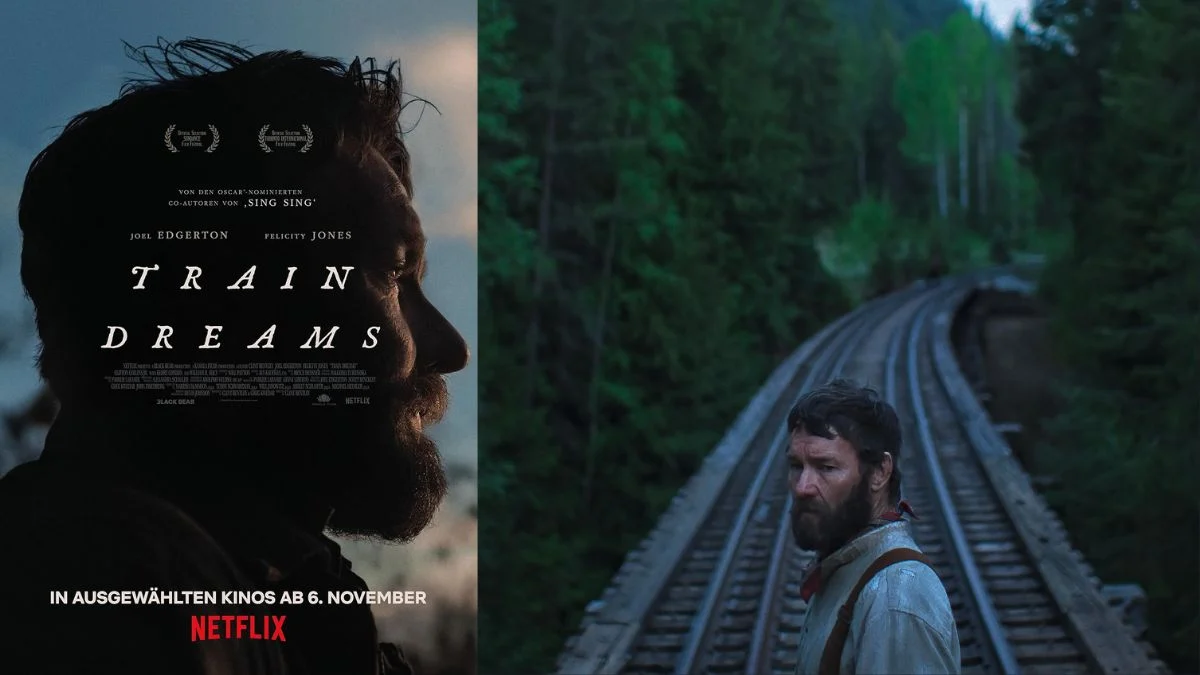

Few films in recent years have captured the quiet immensity of American life quite like Train Dreams. Released in 2025 and adapted from Denis Johnson’s celebrated novella, the film has emerged as one of the most talked-about prestige dramas of the 2026 awards season. Directed by Clint Bentley and anchored by a widely acclaimed performance from Joel Edgerton, Train Dreams is a meditative journey through memory, loss, labor, and the inexorable passage of time.
With four major nominations at the 98th Academy Awards and widespread critical acclaim, the film stands as a striking example of how intimate storytelling can leave a monumental cultural impact. What follows is a comprehensive, slowly unfolding exploration of Train Dreams—from its origins and production to its poetic narrative, ensemble cast, awards trajectory, and lasting legacy.
In This Post:

A Lyrical American Epic: What Is Train Dreams About?
At its core, Train Dreams is a period drama that spans more than six decades of American history, tracing the life of Robert Grainier, a logger and railroad worker whose existence mirrors the transformation of the United States itself. Set primarily in rural Idaho and the Pacific Northwest, the film examines themes of loss, displacement, industrial progress, and humanity’s fragile bond with nature.
Rather than relying on conventional plot mechanics, Train Dreams unfolds as a series of impressions—moments remembered, dreams revisited, and tragedies quietly endured. Its narrative approach, often described as poetic and non-linear, places the viewer inside the consciousness of a man who witnesses the modern world arrive faster than he can understand it.
From Denis Johnson’s Novella to the Big Screen
The film is adapted from Denis Johnson’s 2011 novella Train Dreams, originally published as a short story in 2002. Widely regarded as one of Johnson’s finest works, the source material is known for its spare prose, dreamlike structure, and emotional restraint.
Director Clint Bentley co-wrote the screenplay with Greg Kwedar, remaining faithful to Johnson’s language and tone while expanding the visual and emotional scope of the story. The adaptation preserves the novella’s lyrical narration and existential focus, using voiceover and imagery rather than exposition to guide the audience.
Bentley has cited influences such as Terrence Malick, Andrei Tarkovsky, and Hayao Miyazaki, and those inspirations are evident in the film’s contemplative pacing and reverence for natural landscapes.
Joel Edgerton’s Robert Grainier: A Life Observed
Joel Edgerton stars as Robert Grainier, delivering a performance widely praised for its quiet intensity and emotional depth. Grainier enters the story as a young orphan arriving in Bonners Ferry, Idaho, via the Great Northern Railway in the early 1900s. With little formal education and no clear direction, he drifts into railroad construction and logging—industries that shape both his livelihood and his worldview.
Grainier’s life takes on new meaning when he meets Gladys Olding (Felicity Jones). The two marry, build a modest log cabin along the Moyie River, and welcome a daughter, Kate. These early domestic scenes form the emotional heart of the film, grounding its later tragedies in genuine intimacy.
Tragedy, Violence, and the Weight of Memory

As Robert’s work takes him farther from home, the film begins to darken. While employed on the Spokane International Railway, he witnesses a brutal act of racial violence against a Chinese worker, Fu Sheng (Alfred Hsing). The incident haunts Robert, resurfacing in recurring visions and nightmares that blur the boundary between memory and imagination.
Seasonal logging brings further hardship. Robert watches fellow workers die in senseless accidents—crushed by falling trees or murdered by vigilantes. One haunting image shows graves marked by boots nailed to a stump, underscoring the disposability of laborers in an unforgiving industry. His close friend Arn Peeples (William H. Macy), an explosives expert, dies after a fatal branch accident, deepening Robert’s emotional isolation.

Fire, Loss, and an Irrecoverable Past
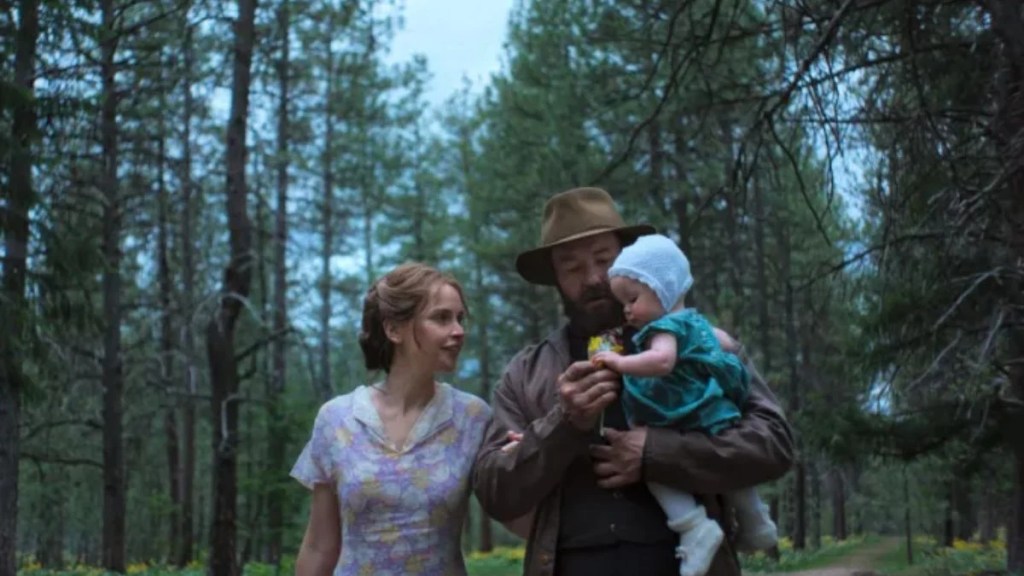
Following World War I, economic hardship forces Robert and Gladys to abandon logging and attempt farming and lumber milling. Their fragile stability is shattered when a massive wildfire destroys their cabin. Gladys and Kate disappear in the blaze and are presumed dead.
This loss becomes the defining rupture of Robert’s life. Though he rebuilds with the help of Ignatius Jack (Nathaniel Arcand), he never fully recovers. Logging crews grow younger, technology advances, and Robert finds himself increasingly alienated from the world he once knew.
Aging in a World That Moves On
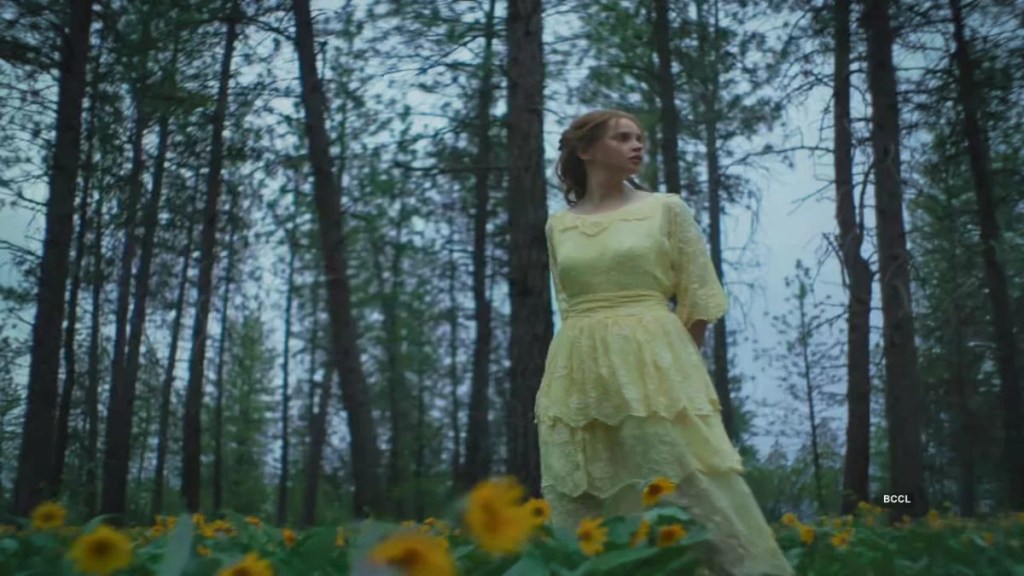
Unable to keep pace with mechanized logging, Robert quits and becomes a carriage driver. During this period, he meets Claire Thompson (Kerry Condon), a U.S. Forest Service worker who offers him companionship and encouragement. Though their connection is gentle and restrained, it represents one of the film’s few moments of late-life hope.
As Robert ages, the film leans further into its dreamlike sensibility. He senses the spirits of his lost family in the woods and experiences a hallucinatory vision in which Kate returns, injured but alive. After a single night of care, she vanishes again—leaving the audience uncertain whether the encounter was supernatural, imagined, or something in between.
History Passing by the Window
The broader sweep of American history unfolds quietly around Robert. He rides the Great Northern Railway to Spokane, watches John Glenn’s space flight on television, and takes a biplane ride that triggers visions of the people and places that defined his life.
Narrated by Will Patton—who also voiced the audiobook of Johnson’s novella—the story concludes with Robert’s peaceful death in his sleep in November 1968. He leaves behind no heirs, symbolizing the quiet end of an era shaped by manual labor, wilderness, and isolation.

Cinematography, Music, and Visual Poetry
Much of Train Dreams’ power lies in its visual language. Cinematographer Adolpho Veloso, nominated for an Academy Award, uses natural light and expansive landscapes to evoke both beauty and impermanence. Though shot digitally due to a tight schedule, the film achieves a tactile, organic look reminiscent of classic American cinema.
Composer Bryce Dessner provides the original score, while the Oscar-nominated title song, “Train Dreams,” co-written with Nick Cave, adds a haunting emotional resonance that lingers long after the film ends.
Cast and Key Creative Team
The ensemble cast delivers understated yet powerful performances:
- Joel Edgerton as Robert Grainier
- Felicity Jones as Gladys Olding Grainier
- Kerry Condon as Claire Thompson
- William H. Macy as Arn Peeples
- Will Patton as the Narrator
- Nathaniel Arcand as Ignatius Jack
- Alfred Hsing as Fu Sheng
- Supporting roles include John Diehl, Paul Schneider, Clifton Collins Jr., and others
Key crew members include director Clint Bentley, co-writer Greg Kwedar, costume designer Malgosia Turzanska, and producers from Black Bear Pictures and Kamala Films.
Production History and Filming Locations
Development began in early 2024, with principal photography lasting just 29 days starting in April. Filming took place across Washington state, including Tekoa, Snoqualmie, Spokane, Metaline Falls, and Colville. Environmental responsibility was a priority, with artificial props and visual effects used to minimize real logging.

Release Strategy and Streaming Success
Train Dreams premiered at the 2025 Sundance Film Festival on January 26, 2025, receiving a standing ovation. Netflix quickly acquired distribution rights. The film later screened at the Stockholm International Film Festival and received a limited theatrical release on November 7, 2025, before debuting globally on Netflix on November 21, 2025.
While box office figures remain limited, the film performed strongly in select theaters and achieved high viewership on Netflix, fueled by awards buzz.
Critical Reception and Audience Response
The film holds a 95% Rotten Tomatoes approval rating and an 88 Metacritic score, indicating universal acclaim. Critics praised its cinematography, emotional restraint, and Edgerton’s performance. Audience scores echoed this enthusiasm, with a 90% approval rating and a 7.6/10 IMDb score from over 53,000 users.

2026 Oscar Nominations and Awards Recognition
On January 22, 2026, Train Dreams received four Academy Award nominations:
- Best Picture
- Best Adapted Screenplay
- Best Cinematography
- Best Original Song (“Train Dreams”)
Despite widespread praise, Joel Edgerton was not nominated for Best Actor—a decision Bentley described as “bittersweet.”
Beyond the Oscars, the film has earned 21 wins and 153 nominations, including recognition from the National Board of Review, AFI, Critics Choice Awards, Golden Globes, and numerous film festivals.

Why Train Dreams Endures
In an awards season dominated by large-scale productions, Train Dreams stands apart for its intimacy and artistic ambition. It is a film that invites patience, reflection, and emotional openness—rewarding viewers with a profound meditation on what it means to live, lose, and remember.
Streaming now on Netflix and screening in select theaters, Train Dreams has secured its place as one of the defining cinematic achievements of 2025 and a lasting presence in the 2026 Oscars conversation.


Leave a Reply