

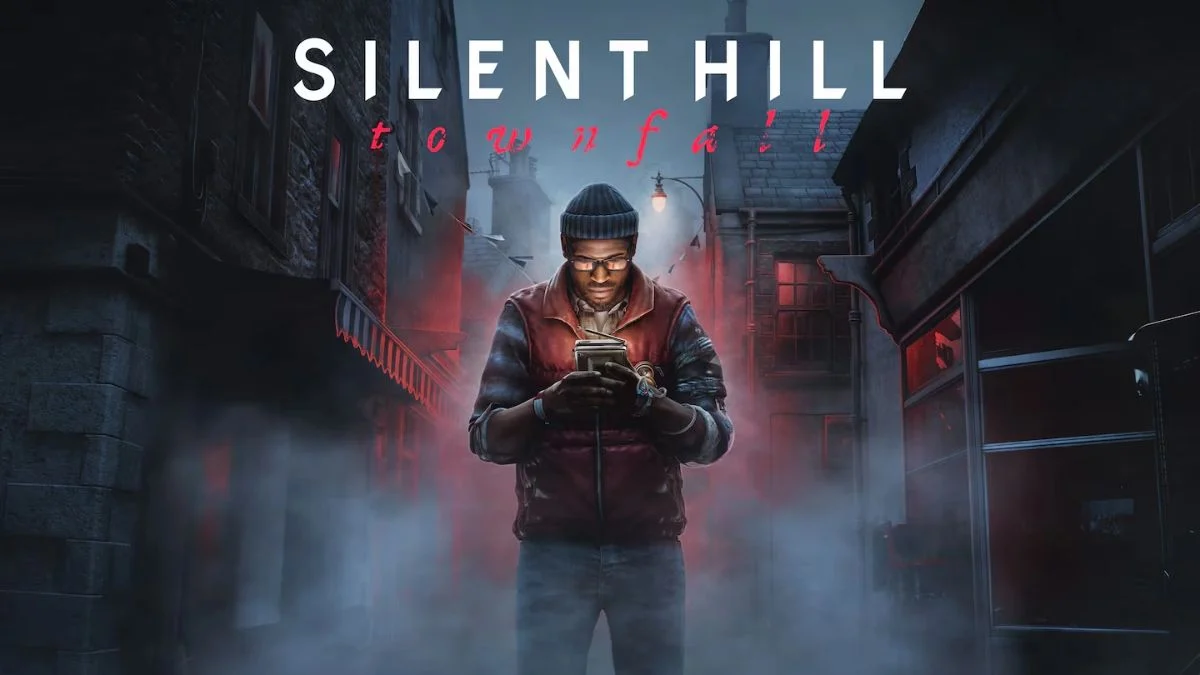
Silent Hill: Townfall takes the franchise somewhere seriously unsettling: a fictional Scottish coastal town where the fog feels like it is hiding something every few steps.
Instead of simply throwing monsters at you, Townfall builds its horror around uncertainty. You explore cramped interiors, abandoned streets and oppressive fog while trying to understand what happened to St. Amelia. The first-person perspective makes the experience feel much more personal, while the game’s 1996 setting gives its technology and environments a distinctive identity.
Playing as Simon, you are not exactly walking around like an action hero. You are vulnerable, resources are limited and enemies are often better avoided than fought. That makes every strange noise, dark hallway and movement in the distance feel important.
The result is a Silent Hill experience that gets many of the franchise’s most important ingredients right, even though some gameplay systems can seriously test your patience.
Why St. Amelia Is the Heart of Silent Hill: Townfall
The biggest strength of Townfall is arguably St. Amelia itself.
Moving Silent Hill to a Scottish setting could have felt like a simple change of scenery, but the game gives the fictional coastal community its own identity. The 1996 setting is especially effective because the technology, buildings and everyday objects make the town feel like somewhere people genuinely lived.

And that makes the emptiness creepier.
You are not wandering through a generic haunted location created purely to spawn monsters. Homes, streets and buildings all suggest normal lives that existed before everything went wrong. The absence of those people becomes part of the horror.
The fog pushes that feeling even further.
Sometimes the game does not need to explain why a particular street feels dangerous. You can simply walk through the silence and realize that something about the environment is completely wrong.
That is where Townfall understands psychological horror particularly well: the location itself can become frightening before a monster ever appears.
More Silent Hill Coverage: Decay has never looked this gorgeous — our take on the franchise’s other 2026 descent into dread. For more, read our review of Silent Hill f.
How the First-Person Perspective Changes Townfall
Townfall is the first full-length Silent Hill game to fully commit to a first-person perspective, and it makes a huge difference.
Third-person horror gives you a certain amount of distance. You can see your character, understand where they are standing and sometimes get a better view of the surrounding environment.
Townfall takes that comfort away.
You see everything through Simon’s eyes. Entering a cramped room means you are personally entering it. Hearing something behind you means turning around yourself. Looking around a corner means exposing yourself without having a detached camera protecting you.
The peeking mechanic makes this especially effective.
You can carefully look around corners while trying to expose as little of yourself as possible. That turns hesitation into an actual gameplay mechanic. You are constantly making a decision between getting information and potentially putting yourself in danger.
Simon also never feels like a traditional action-game protagonist. He feels vulnerable and uncertain, which fits the situation far better.
That vulnerability is one of the reasons the first-person perspective works so well.
The CRTV Is Your Most Important Horror Tool
The CRTV is one of Townfall’s smartest ideas.
The portable television essentially becomes the game’s answer to the iconic Silent Hill radio. Instead of simply relying on static to warn you that something dangerous is nearby, Simon can use the CRTV to track creatures and uncover information.
The interesting part is that the device does not make you feel safe.
It makes you more nervous.
You might see a distorted representation of a creature through the tiny screen without actually seeing the monster with your own eyes. You know something is close, but you do not necessarily know exactly what it is doing.
That creates an excellent horror contradiction.
The CRTV gives you information, but knowing more can make the situation scarier.
It also fits the 1996 setting perfectly. Rather than feeling like a modern gameplay interface disguised as retro technology, the CRTV feels like something that belongs in St. Amelia.
The device can turn enemy detection into its own tense ritual, forcing you to monitor threats while still dealing with the fact that your attention is focused on a tiny television.
More Horror Gaming Picks: Game Freak trades Pokémon for punishment in a brutal Soulslike RPG built for fans who love a good beatdown. For more, read our story on Beast of Reincarnation Review (2026).
How Townfall Uses Psychological Horror
The monsters are not the only source of horror.
Townfall is also interested in Simon’s personal history and the emotional problems affecting the other characters. The mystery surrounding St. Amelia gradually connects to those personal struggles.
That gives the supernatural elements more purpose.
One of the things that works particularly well is the game’s approach to information. Some Silent Hill stories deliberately make almost everything mysterious, sometimes leaving players wondering what is happening or why characters behave the way they do.
Townfall provides a little more clarity.
You can generally understand what the characters are dealing with even when the supernatural situation remains confusing. That creates a useful middle ground between explaining too much and hiding information simply to make the story seem mysterious.
The horror is also connected to the people and community of St. Amelia rather than existing only as something designed to frighten Simon.
That gives the story a more human dimension.
Why the Puzzles Fit the Setting
The puzzles are another area where Townfall tries to keep gameplay connected to its world.
Instead of constantly throwing abstract videogame riddles at you, the game often asks you to interact with objects and technology that make sense within the environment.
Old computers, documents, telephones and analogue devices become part of the process of discovering what is happening.
That helps keep you immersed.
Even basic exploration can feel physical because Simon often interacts with objects rather than simply opening a conventional menu and selecting an answer.
However, the puzzle design is not flawless.
Some puzzles can become so obscure that the mystery stops being fun. There is a major difference between finally understanding a clever puzzle and spending a long time wondering whether you simply missed something obvious.
When Townfall gets the balance right, solving a puzzle feels rewarding because you have figured out something about the world.
When it gets the balance wrong, the mystery can become frustration.
Another Grim Adventure: Angelic powers meet heavy metal bosses in a roguelike that punishes hard and rewards harder. For more, check out our post on Crimson Moon Review.
Stealth Is Townfall’s Biggest Problem
This is where the experience becomes much more inconsistent.
Townfall clearly wants stealth to be a major part of its horror. Combat is limited, ammunition is scarce and several encounters encourage you to avoid enemies instead of defeating them.
That concept makes perfect sense for Silent Hill.
The problem is that the enemy detection does not always feel consistent.
The supplied Game Informer review raises a similar concern. It describes situations where moving slowly behind cover worked, while other encounters appeared to result in detection despite apparently similar behaviour.
That can lead to repeated reloads, and repeated reloads are dangerous for a horror game’s atmosphere.
Stealth does not need to reveal every detail of enemy AI. In fact, knowing exactly how enemies work could make them less frightening.
But players still need to understand why they were caught.
When that connection disappears, the focus changes.
Instead of thinking about the monster, you start thinking about the detection system.
That was one of the biggest frustrations with Townfall: some encounters stopped feeling scary and started feeling mechanically confusing.
Sound Makes the Fog Even More Uncomfortable
Townfall also understands how important sound is to psychological horror.
The game’s 3D audio helps create the feeling that threats are nearby even when you cannot see them.
That works particularly well with the fog and first-person camera.
You hear something.
You look toward the sound.
You check the CRTV.
You notice movement.
Then you wait.
Sometimes nothing happens.
That waiting can be more uncomfortable than an actual attack because the game forces you to imagine what might be hiding nearby.
The limited visibility makes sound even more important. Instead of constantly showing players exactly what is happening, Townfall can let audio create the threat first.
That is classic psychological horror territory.
Why Townfall Does Not Need to Copy Silent Hill 2
One of the best things about Townfall is that it does not try to recreate Silent Hill 2.
It does not need James Sunderland, Pyramid Head or the same type of story to justify itself.
Instead, Screen Burn takes the psychological language associated with Silent Hill and applies it to a different location, different characters and a different perspective.
St. Amelia gives the game its own identity.
The Scottish setting changes the visual atmosphere, while the first-person perspective changes how players experience exploration and danger.
That makes Townfall feel like a new chapter rather than an attempt to reproduce an old one.
For a long-running horror franchise, that distinction matters.
Why Simon’s Story Takes Time to Unfold
Simon is not presented as a loud or traditionally heroic protagonist.
That works because he feels like someone caught inside a situation much larger than himself.
The story gradually reveals why he has returned to St. Amelia, while other characters bring their own problems and perspectives into the mystery.
The game does not immediately give Simon all the answers.
He is confused.
You are confused.
And the town clearly has secrets.
That shared uncertainty helps connect the player with Simon. You are both trying to understand what happened and why everything around you feels so wrong.
When answers finally arrive, they have more weight because the game has spent so much time building questions.
Combat Takes a Back Seat to Atmosphere
Townfall is not built for players looking for an action-heavy survival horror experience.
Combat exists, but it is not the game’s biggest strength.
The moments that stick with you are more likely to be the fog, the strange CRTV, the abandoned streets and the sound of something moving nearby.
You remember walking through St. Amelia wondering what happened to everyone.
You remember hearing something before seeing it.
You remember checking the television because you were afraid to look around the corner.
Those moments are what make Townfall work.
That is also why the stealth problems are so noticeable. There is a strong horror experience underneath them, and inconsistent mechanics can break the illusion.
When the game trusts its atmosphere, it is at its best.
Silent Hill: Townfall Review Guide — The Good and the Not So Good
The Good
- Excellent first-person horror atmosphere
- St. Amelia is a memorable new setting for Silent Hill
- The CRTV is an inventive and genuinely useful horror mechanic
- Strong environmental storytelling
- Psychological themes fit the franchise
- First-person perspective makes exploration feel more vulnerable
The Not So Good
- Enemy detection can feel inconsistent
- Some stealth encounters become frustrating instead of frightening
- Certain puzzles can be overly obscure
- Mechanical issues occasionally interrupt the otherwise excellent atmosphere
Silent Hill: Townfall Final Verdict
Silent Hill: Townfall is not perfect, but its strongest ideas are extremely effective.
St. Amelia works as a new setting. The first-person perspective creates genuine vulnerability. The CRTV is an inspired mechanic that turns enemy detection into another source of tension, while the environmental storytelling gives the town a personality of its own.
The psychological themes also feel naturally connected to what Silent Hill has traditionally explored.
The biggest issue is the stealth.
When enemy behaviour feels unpredictable in the wrong way, the tension can disappear. Instead of worrying about what is hiding inside the fog, you can end up worrying about what the game’s detection system expects you to have noticed.
Still, Townfall is at its best when it does less.
It does not always need to attack you. Sometimes it just needs to make you walk slowly through an empty street while wondering whether you are actually alone.
Silent Hill: Townfall is a compelling new direction for the series, even though some of its gameplay systems prevent it from reaching the same heights as its atmosphere.
Beyond the Fog: Bigger titans and messier family drama define the MonsterVerse’s next big swing. For more, read our breakdown of Monarch: Legacy of Monsters Season 2.
Rating: 8.5/10
Final thought: Silent Hill: Townfall does not need to recreate the classics to feel like Silent Hill. It simply needs to make you uncomfortable when the fog rolls in. For most of its journey, it does exactly that.
Disclaimer: This review reflects an editorial opinion based on the game and the verified review material available at the time of writing. Individual experiences with horror, puzzles and stealth mechanics may vary.
Image Credits:
- Featured Image: Konami / Screen Burn Interactive
- Image 2: Konami / Screen Burn Interactive


Leave a Reply