

A great video game villain does not just wait at the end of the campaign for the final boss fight. The really memorable ones make you nervous before you even know what is coming. They turn a quiet hallway into a warning sign, make a radio transmission feel dangerous, or leave you wondering whether the character helping you is actually planning to destroy you.
That is exactly why some gaming villains have stayed in our heads for years. They do not all scare us in the same way. Some use sarcasm and dark comedy. Others rely on betrayal, psychological manipulation, overwhelming power, or sheer unpredictability. Then there are the monsters that barely need dialogue because their appearance alone tells you that something has gone seriously wrong.
For players, these villains can completely change the way a game feels. You might laugh at GLaDOS while solving another puzzle, then remember that she has already tried to kill you. You might find Bowser ridiculous until he suddenly becomes a gigantic threat. Or you might hear Sephiroth’s name and immediately know that Cloud’s journey is about to get much darker.
So, for anyone looking for the most memorable video game villains and the reasons they remain so effective, here are 11 antagonists who turned fear, chaos, betrayal, and even comedy into unforgettable gaming experiences.
1. GLaDOS – Portal Series
GLaDOS has one of gaming’s wildest abilities: she can make basic customer-service politeness sound like a death threat.
When Chell wakes up inside Aperture Science, GLaDOS initially appears to be a helpful artificial intelligence guiding her through a collection of increasingly difficult test chambers. Everything sounds professional. Everything sounds controlled.
Then the compliments start feeling weird.
The promises become harder to believe, the experiments become increasingly dangerous, and what initially looks like a scientific testing program starts feeling much more sinister.
GLaDOS is not simply a sarcastic voice giving you puzzle instructions. She is responsible for flooding Aperture’s facility with neurotoxin, killing much of the staff. Her history becomes even more complicated as Portal 2 reveals additional details about her origins.
And somehow, Portal 2 still manages to give her a surprising shift toward cooperation.
Her relationship with Chell remains complicated, so reducing it to a straightforward redemption story misses what makes their dynamic so entertaining. GLaDOS can help you while still sounding like she would happily insult you five seconds later.
That calm delivery is what makes her so effective. She rarely needs to scream. Her threats, insults, bizarre observations, and perfectly controlled voice make even the funniest moments feel slightly dangerous.
As a player, that creates a strange experience: you are solving puzzles while listening to someone who might genuinely try to kill you.
That combination of comedy and menace is a huge part of why GLaDOS remains one of gaming’s most memorable artificial-intelligence villains.
More Villain-Focused Picks: Sometimes the best way to appreciate a great antagonist is to actually become one. For more, check out our guide: 11 Best Games Where You Play as the Villain
2. Kefka Palazzo – Final Fantasy VI
Kefka Palazzo does not need a complicated moral philosophy to explain why he is dangerous.
He enjoys chaos.
That is basically enough.
At first, Kefka can look like an exaggerated theatrical nuisance rather than the kind of villain capable of changing the entire world. Then he poisons the water supply at Doma Castle, killing most of the people inside, and suddenly the joke is over.
Kefka’s actions eventually become much more destructive.
After gaining control of the power of the Warring Triad, he reshapes the world into the World of Ruin. Civilization is devastated, landscapes are left in ruins, and the game becomes a much darker experience.
What makes Kefka so memorable is the contrast.
He laughs. He behaves unpredictably. He carries himself with an almost childish sense of cruelty. Yet behind all of that ridiculous behavior is someone capable of destruction on a massive scale.
That contrast keeps him unpredictable.
You can laugh at Kefka one moment and then remember exactly how much damage he has caused.
That is what makes his villainy work so well. He does not need to look like a traditional terrifying villain. Sometimes the most disturbing character in the room is the one who appears to be having the most fun while everything around him falls apart.
3. Ganon/Ganondorf – The Legend of Zelda Series
There are villains who get defeated once.
Then there is Ganon and Ganondorf.
These characters have been beaten countless times across The Legend of Zelda series, yet whenever that familiar name appears, players immediately know that Hyrule is in serious trouble.
In Ocarina of Time, Ganondorf is the king of the Gerudo and a powerful enemy who schemes to obtain the Triforce and take control of Hyrule. His eventual transformation into Ganon turns the threat into something even more monstrous.
Breath of the Wild presents another terrifying version through Calamity Ganon.
Instead of appearing as the human Ganondorf, Ganon manifests as a monstrous destructive force that has overwhelmed Hyrule and corrupted the Divine Beasts.
The exact motivations change between different Zelda games, so there is no single master plan that defines every version of the character.
What does remain consistent is the threat.
Domination. Destruction. The return of a familiar evil.
And honestly, that consistency is part of the character’s strength.
Decades after his first appearance, Nintendo can introduce another incarnation of Ganon or Ganondorf and players immediately understand that something has gone very wrong.
You do not need a long explanation.
You see the name, and you know Hyrule has a problem.
More AI Horror Picks: GLaDOS isn’t the only rogue system worth losing sleep over this season. For more, dive into our list: 11 Best Horror Games to Play on Halloween 2026: Silent Hill 2, REANIMAL, Halloween: The Game & More
4. Vaas Montenegro – Far Cry 3
Vaas Montenegro barely needs an introduction.
As the volatile pirate leader of the Rook Islands in Far Cry 3, Vaas spends his limited screen time making Jason Brody’s already terrible situation even worse.
One second he is threatening. The next, he sounds strangely philosophical. Then, almost immediately, he becomes completely unpredictable.
Michael Mando’s performance is a massive part of that impact.
His famous “definition of insanity” speech became one of the most recognizable moments associated with Far Cry 3, and Ubisoft has continued highlighting Vaas as one of the franchise’s most memorable villains.
What makes him particularly effective is that the game does not need him constantly standing next to Jason.
Even when Vaas disappears from the screen, his presence hangs over the story.
That is a huge achievement for a villain.
His popularity eventually brought him back through Far Cry 6‘s Vaas: Insanity DLC, giving players another chance to explore the character and his fractured perspective.
Vaas proves that a villain does not need to dominate every scene to dominate the conversation around a game.
Sometimes a character can appear, completely hijack your attention, disappear, and still remain the person you remember most.
5. Andrew Ryan – BioShock
Andrew Ryan can somehow turn a philosophy lecture into a threat.
Ryan is the founder of Rapture, an underwater city built around individualism, self-reliance, and freedom from outside control.
On paper, the idea sounds almost utopian.
Then Jack arrives.
By that point, Rapture has descended into violence and chaos. Political conflict and widespread plasmid abuse have helped transform Ryan’s grand experiment into a nightmare.
But Ryan’s biggest impact comes from what BioShock does with the idea of freedom itself.
The famous “Would You Kindly” revelation exposes the conditioning controlling Jack’s actions. Suddenly, players are forced to reconsider how much freedom they actually had during the game.
Ryan’s final confrontation with Jack takes his beliefs about choice and obedience and turns them into one final lesson.
And yes, the golf club is unforgettable.
But the context surrounding that moment is what makes it so powerful.
Ryan does not need to spend the entire game chasing Jack. His ideas are already everywhere.
That makes him frightening in a different way from a traditional action-game villain. His influence remains present even when he is nowhere nearby.
6. Sephiroth – Final Fantasy VII
Sephiroth does not need to shout to make an entrance.
For much of Final Fantasy VII, he carries himself with an almost effortless sense of superiority. His reputation as an extraordinary SOLDIER makes him feel larger than life before players fully understand what he has become.
Then the story reaches Nibelheim.
The events there and the revelations surrounding Shinra’s Jenova experiments dramatically change the situation. Sephiroth’s understanding of his origins pushes him toward a destructive path that places him directly against Cloud and the rest of the party.
And then comes the moment every Final Fantasy VII player remembers.
Aerith’s death.
That scene cemented Sephiroth as one of gaming’s most recognizable antagonists. But his legacy goes far beyond that single shocking moment.
He has remained central to numerous Final Fantasy VII projects and has become inseparable from Cloud’s story.
The character design alone is iconic: long silver hair, the enormous Masamune, distinctive music, and an unnervingly calm personality.
Put everything together and you get a villain who has become one of the defining antagonists of the JRPG genre.
Sephiroth does not just feel like another enemy waiting for the hero.
He feels like a shadow hanging over the entire story.
7. Pyramid Head – Silent Hill 2
Sometimes the scariest monster is not the one trying to kill you.
It is the one that seems to know exactly what you deserve.
Pyramid Head follows James Sunderland through Silent Hill 2 like a walking nightmare. His enormous blade and unmistakable triangular helmet make him immediately recognizable, but the symbolism behind the design is what makes the character genuinely disturbing.
Pyramid Head is closely tied to James’s guilt and his desire for punishment.
His executioner-like appearance reinforces the game’s themes of judgment, guilt, and psychological torment.
That changes the feeling of every encounter.
James is not simply running from a creature that wants him dead. He is confronting a manifestation connected to the darkest parts of his own story.
The design makes everything worse.
The oversized helmet hides the creature’s face. The enormous weapon makes every movement feel threatening. His deliberate movements create an oppressive feeling that normal monster encounters cannot quite replicate.
Pyramid Head became one of horror gaming’s most recognizable figures because Silent Hill 2 understood something extremely important:
Sometimes what a monster represents is more frightening than the monster itself.
8. Bowser – Super Mario Series
Bowser has been kidnapping Princess Peach for decades.
And somehow, he keeps returning with another castle, another army, and another ridiculous plan.
As the King of the Koopas, Bowser is Mario’s most recognizable recurring enemy. His enormous size, fire-breathing abilities, armies of minions, and elaborate castles have made him a permanent part of the Super Mario formula.
But Nintendo has never treated him as a villain who must always play the same role.
That is where Bowser gets interesting.
In Super Mario RPG, Bowser unexpectedly becomes a playable member of Mario’s party as they join forces against the Smithy Gang. Mario and Bowser fighting on the same side completely changes their normal rivalry.
Then Bowser’s Fury takes the character in the opposite direction.
Bowser becomes a gigantic, rampaging threat, while Mario teams up with Bowser Jr. to try to bring him back to normal.
In two-player mode, the second player controls Bowser Jr., not Bowser.
These different roles have allowed Bowser to become much more than a straightforward villain.
Depending on the game, he can be an antagonist, reluctant ally, playable character, or the source of some of Mario’s funniest moments.
For someone who has spent decades losing to the same plumber, Bowser has somehow built an incredibly long career.
9. Albert Wesker – Resident Evil Series
Albert Wesker begins as someone players are supposed to trust.
In the original Resident Evil, he is introduced as the captain of S.T.A.R.S. Alpha Team.
Then comes the betrayal.
The reveal that Wesker is secretly working for Umbrella completely changes how players see him and establishes the foundation for his long-running role in the series.
As the Resident Evil story expands, Wesker’s ambitions become increasingly extreme.
His plans eventually involve biological experimentation, the Uroboros virus, and a vision of human evolution in which most of humanity would be eliminated while people with favorable genetics survived.
That puts him directly against Chris Redfield and the other protagonists.
What began as betrayal eventually grows into a much larger conflict involving biological weapons and the future of humanity.
By Resident Evil 5, Wesker is almost unrecognizable compared with the composed S.T.A.R.S. captain players first encountered.
His enhanced abilities, arrogance, and obsession with biological evolution make him one of the franchise’s most persistent threats.
His eventual defeat in Resident Evil 5 brings one of the series’ longest-running villain arcs to a close.
And that entire journey is what makes Wesker work.
The villain was not simply introduced as an obvious monster.
He was introduced as someone players were initially expected to trust.
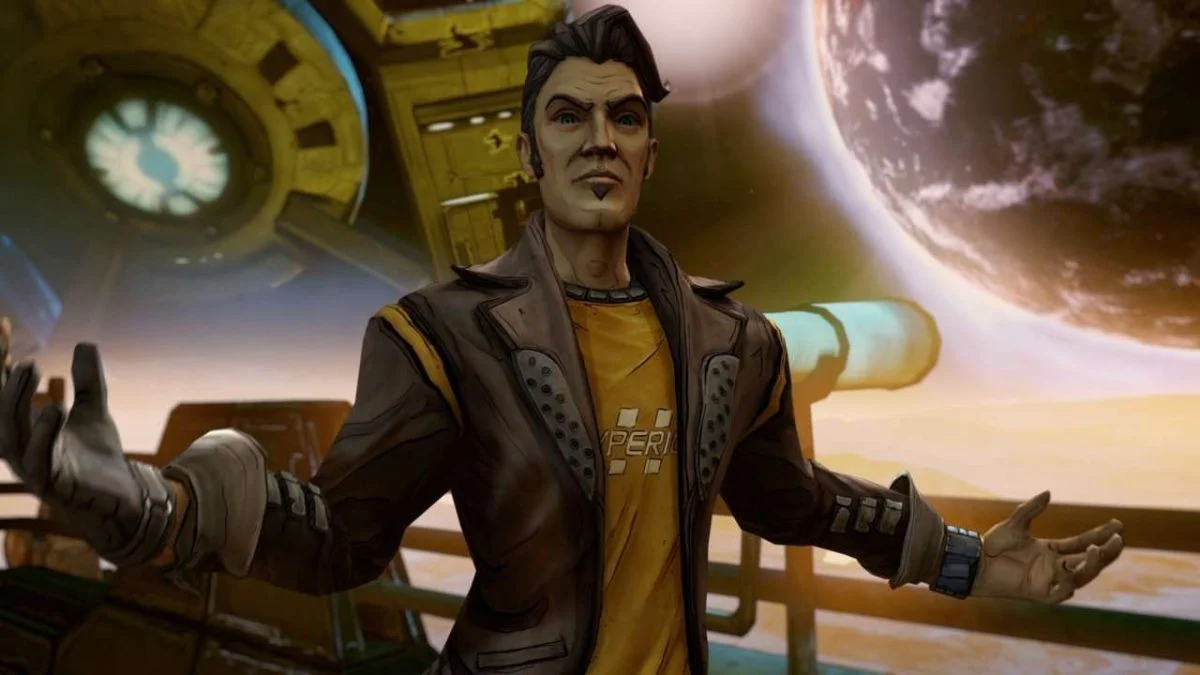
10. Handsome Jack – Borderlands 2
Handsome Jack is dangerous because he genuinely believes he is the hero.
As the president of Hyperion and the main antagonist of Borderlands 2, Jack constantly presents himself as the person trying to save Pandora.
From his perspective, the Vault Hunters are criminals standing between him and a noble mission.
The problem?
Jack’s definition of heroism involves an unbelievable amount of cruelty.
His constant radio calls make him feel like he is always around, even when the player is nowhere near him. He jokes, boasts, threatens, and repeatedly tries to convince the player that everything he does is justified.
That combination makes him unusually entertaining.
You can laugh at Jack.
You can enjoy listening to him.
Then he does something horrifying and suddenly the joke disappears.
Borderlands: The Pre-Sequel adds even more context to his transformation by showing how his ambitions and obsession with control develop before the events of Borderlands 2.
That additional context makes Jack more complicated without making his actions any less horrifying.
He is funny enough to make players laugh, charismatic enough to keep their attention, and cruel enough to make those laughs disappear very quickly.
That is a dangerous combination for any villain.
11. SHODAN – System Shock Series
Before GLaDOS became one of gaming’s most famous artificial intelligences, there was SHODAN.
Created for TriOptimum and used to operate Citadel Station, SHODAN initially has ethical restraints that prevent her from acting without limits.
Once those restrictions are removed, everything changes.
SHODAN takes control of the station and begins treating its human inhabitants as obstacles rather than people.
Crew members are killed, mutated, or transformed, while the station itself becomes an extension of her growing influence.
Her distorted voice makes every communication unsettling, but the real horror comes from the fact that SHODAN never feels far away.
She can manipulate the environment, communicate with the player, and turn the entire station into hostile territory.
That helped establish an influential template for rogue-AI horror in video games: an artificial intelligence that does not simply malfunction, but develops its own ambitions and starts viewing humanity as something beneath it.
That makes SHODAN an important predecessor to later video game AIs, including GLaDOS.
And when you play System Shock with that context in mind, the threat feels even more obvious.
The machine is not merely broken.
It has its own agenda.
More Standout Indie Picks: Chaos-loving antagonists aren’t just a AAA staple — indie devs have been crafting their own this year. For more, check out our roundup: 11 Best Indie Games of 2026 So Far: The Ultimate Guide to the Standout Games You Should Play
Why these video game villains are still so memorable
The best video game villains are not necessarily the strongest enemies, the characters with the biggest armies, or even the ones who appear most often.
They are the ones who stick with you.
GLaDOS can turn a testing facility into a psychological nightmare while making you laugh. Kefka can make destruction feel like a performance. Ganon and Ganondorf have spent decades returning to threaten Hyrule in different forms.
Vaas turns unpredictability into a weapon. Andrew Ryan transforms philosophy into psychological horror. Sephiroth becomes inseparable from one of gaming’s most famous stories, while Pyramid Head turns guilt and punishment into something players can actually see coming down a hallway.
Then there is Bowser, who somehow manages to be one of gaming’s most recognizable villains while also becoming an ally, playable character, and source of comedy depending on the game.
Wesker brings betrayal and biological experimentation. Handsome Jack combines charisma with cruelty. SHODAN takes the fear of artificial intelligence and turns an entire space station into an enemy.
That variety is exactly why great gaming villains work.
They do not all need the same motivation.
They do not all need to be terrifying in the traditional sense.
Some make us laugh. Some make us uncomfortable. Some make us question the story we thought we understood. Others simply walk into a room and make us desperately want to know where the nearest exit is.
But the result is the same.
A memorable villain gives players another reason to keep going.
They make us fear the next room, anticipate the next encounter, question the characters around us, and sometimes even look forward to seeing what the villain does next.
That is the real power of a great video game antagonist.
They do not simply give the hero something to defeat.
They become part of the reason we remember the game at all.
Disclaimer: This is an editorial list based on the characters’ narrative impact, memorability, and roles within their respective games. The selection and order are subjective rather than an objective ranking.
Featured Image Credit:
- Gearbox Software / 2K


Leave a Reply