

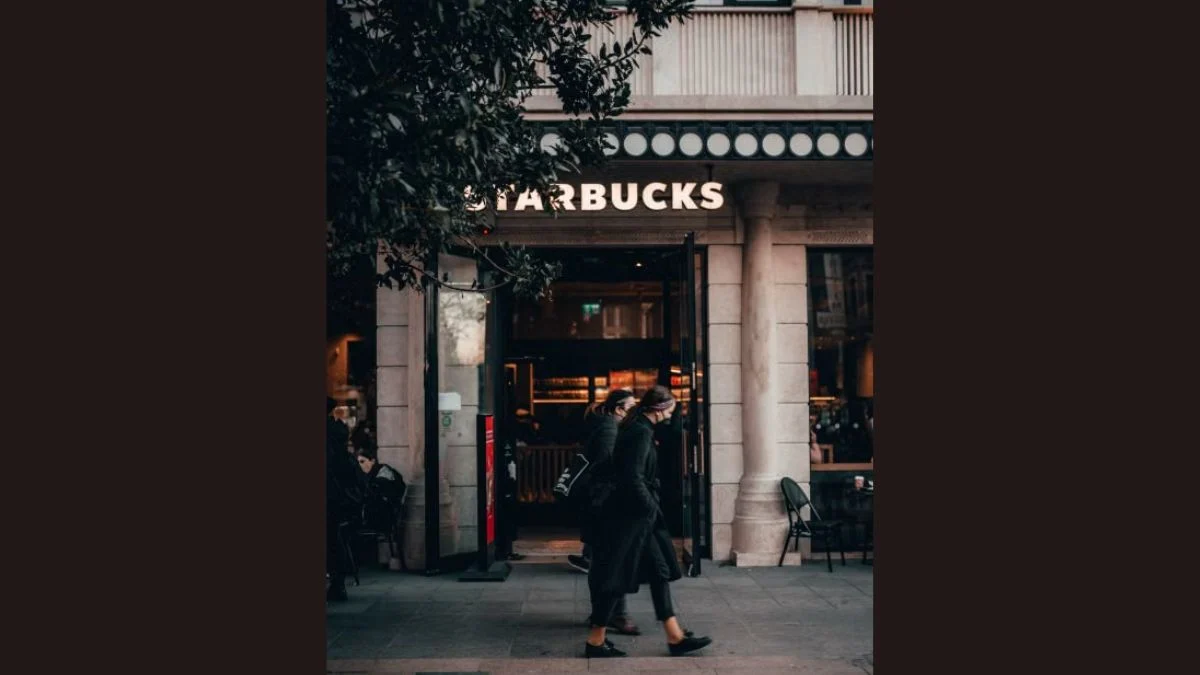
Starbucks is making a major change to its North American coffeehouse network, and the timing is hard to ignore. The coffee giant is preparing to close approximately 250 locations across the U.S. and Canada this week, even as it reports stronger sales, renovates hundreds of existing cafés and continues developing new stores.
The closures are part of CEO Brian Niccol’s broader “Back to Starbucks” turnaround, a strategy focused on rebuilding the coffeehouse experience while reshaping the company’s store portfolio. The latest move affects roughly 1% of Starbucks’ more than 18,000 North American coffeehouses — but the bigger story is what the company is doing with the stores it plans to keep.
Why is Starbucks closing 250 stores?
The latest round of closures was announced by Starbucks Chief Operating Officer Mike Grams in a message to employees on September 24.
The company says it conducted a detailed review of its North American coffeehouse portfolio and identified locations that either could not consistently deliver the customer and employee experience Starbucks wants or did not have a clear path toward acceptable financial performance.
Grams wrote:
“We have carefully reviewed our North America coffeehouse portfolio and identified locations where we do not believe we can consistently deliver the experience we want for customers and partners or where we don’t see a path to acceptable financial performance.”
Starbucks said approximately 250 coffeehouses would close later in the week.
The company estimates that the closures represent roughly 1% of its more than 18,000 North American coffeehouses.
But Starbucks is making an important distinction: the closures do not mean it has abandoned its plans for North American growth.
“Every year we close some coffeehouses and open others as part of managing our portfolio,” Grams wrote, adding that Starbucks remains excited about the long-term growth opportunity in North America and is developing a pipeline of new coffeehouses.
Redesigned cafes aren’t the only place technology is reshaping everyday experiences this week. One new AI demo is letting people talk back to a synthetic version of a major public figure in real time. Check our story on ACTx486 AI Demo Lets Viewers Interrupt Elon Musk’s Podcast and Make a Synthetic Musk Answer Questions
Starbucks’ latest store changes at a glance
| Detail | Official information provided |
| Closures | Approximately 250 coffeehouses |
| Region | U.S. and Canada |
| Share of North American portfolio | Roughly 1% |
| Announcement | September 24, 2026 |
| Starbucks executive announcing closures | COO Mike Grams |
| North American coffeehouses | More than 18,000 |
| Stores already receiving “uplifts” | More than 1,000 |
| Fiscal 2026 uplift goal | At least 1,500 |
| Q3 FY2026 global comparable sales | 7.9% growth |
| Q3 FY2026 North America comparable sales | 8.1% growth |
| Q3 FY2026 U.S. comparable sales | 7.9% growth |
| Q3 FY2026 North America store count | 18,371 |
Starbucks is renovating more than 1,000 stores at the same time
Here is where the story gets more complicated.
While Starbucks is closing hundreds of coffeehouses, it is simultaneously investing heavily in the locations it believes can succeed.
On September 23, Starbucks announced that more than 1,000 coffeehouses across the U.S. and Canada had already received “uplifts” since late 2025.
The redesigned locations are intended to feel warmer and more comfortable, with changes including softer seating, additional textures, artwork, greenery and local design elements.
The program began with pilot projects in Southern California and New York before expanding into additional markets.
Starbucks now plans to complete at least 1,500 coffeehouse uplifts by the end of fiscal 2026, with the company planning to accelerate the program further during fiscal 2027.
The idea goes beyond simply giving stores a visual refresh. Starbucks is trying to rebuild its traditional “Third Place” concept — a setting between home and work where customers can stay, meet other people and spend time inside the café.
That effort includes the rollout of Green Apron Service, the return of ceramic cups and glassware for customers staying in the café, the return of condiment bars and expanded access to power outlets.
The uplift markets include Atlanta, Austin, Dallas, Houston, Miami, Nashville, Orlando, Seattle and Washington, D.C. in the U.S., along with Toronto, Vancouver and Calgary in Canada. Starbucks is also testing the concept in several Mexican markets.
Starbucks isn’t the only brand rethinking its café experience right now. A completely different kind of themed cafe is about to open overseas, built entirely around a beloved anime storyline. Read our story on Chainsaw Man’s Reze Cafe Is Coming to Japan — And the Story-Inspired Menu Is Far More Detailed Than Fans Might Expect
What does Starbucks’ “Back to Starbucks” strategy mean?
The latest closures form part of a turnaround that began after Brian Niccol became chairman and CEO in September 2024.
Niccol launched the “Back to Starbucks” strategy around the idea that the company needed to refocus on the experience that originally distinguished its coffeehouses.
The strategy has included changes to staffing, service, store design, menus, marketing and Starbucks Rewards, alongside decisions to close locations that management believes do not fit the direction of the business.
In a September 2026 message marking two years of the strategy, Niccol said Starbucks had made progress toward creating warmer coffeehouses, improving customer service and strengthening connections between stores and their communities.
At Starbucks’ January 2026 Investor Day, Niccol said:
“Starbucks is back.”
He also said:
“Customers are responding to our commitment to world-class service, compelling menu innovation, and marketing that truly resonates.”
The company has continued framing the turnaround around customer experience and restoring Starbucks’ traditional coffeehouse identity.
Starbucks is closing stores despite stronger sales
The timing of the latest closures stands out because Starbucks has also reported a substantial improvement in comparable-store sales.
For the third quarter of fiscal 2026, which ended June 28, Starbucks reported 7.9% global comparable-store sales growth.
North America comparable-store sales increased 8.1%, while U.S. comparable-store sales rose 7.9%.
North America’s comparable transactions increased 4.5%, while average ticket increased 3.5%.
Starbucks also reported that North American revenue increased 7% year over year to about $7.4 billion, while North America operating income rose 10% to about $1.01 billion during the quarter.
At the end of the third quarter, Starbucks had 18,371 North American stores, compared with 18,734 a year earlier. That represents a decline of about 2% in the reported store count over that period.
Yet the company continues to say it intends to grow its North American footprint over the longer term.
That creates an important distinction: the latest closures are happening during a period of improving reported sales momentum, rather than during a straightforward sales collapse.
Starbucks says individual store performance is driving the closures
Grams said the broader improvement in Starbucks’ business has actually allowed the company to make clearer decisions about individual coffeehouses.
“As we shared on our most recent earnings calls, our North America business has returned to strong growth,” he wrote.
According to Grams, customers were receiving faster service and a more consistent experience, while Starbucks was accelerating its coffeehouse redesign program.
Still, not every location was benefiting equally.
“This progress has given us a clearer view of the performance of every coffeehouse,” he wrote. “While most are benefiting from this overall momentum, some coffeehouses continue to underperform despite the hard work and commitment of all of you.”
That distinction sits at the centre of Starbucks’ explanation.
The company is not saying its entire North American network is underperforming. Instead, management is attempting to remove locations it believes do not have a sustainable future under its current strategy.
What happens to Starbucks employees at the stores closing?
Starbucks says it will work directly with employees at affected coffeehouses during the transition.
The company said it will offer transfer opportunities wherever possible. Employees who cannot be placed at another coffeehouse will receive severance support.
Grams wrote:
“Closing any coffeehouse is a difficult decision, and we know today’s news will be hard for the partners, customers and communities affected.”
Starbucks also said it would help customers maintain their routines by directing them toward nearby coffeehouses.
The company used similar measures during the larger store review announced in 2025, when employees at affected locations were offered transfers where possible and severance support where transfers were unavailable.
The 250 closures follow another major Starbucks reduction
This is not Starbucks’ first major store reduction under Niccol.
In September 2025, the company announced another round of restructuring. Starbucks said its North American company-operated store count would decline by approximately 1% in fiscal 2025 after accounting for both openings and closures.
The company also announced plans to eliminate approximately 900 non-retail positions as it reorganized its support organization.
That restructuring was presented as part of the same broader effort to redirect resources toward coffeehouses, employees and customer experience.
Starbucks subsequently continued investing in store renovations and service improvements rather than simply cutting its physical presence.
Starbucks is still planning new North American stores
The closures also do not signal the end of Starbucks’ expansion plans.
Grams said Starbucks is “actively developing a strong pipeline of new coffeehouses” and remains committed to North American growth.
The strategy is essentially to change the composition of the store network: close locations Starbucks considers unsustainable, invest in existing cafés and develop new stores where management sees long-term potential.
That approach can be seen in the ongoing uplift program, which has moved beyond its initial testing phase and is now being deployed across more markets.
Starbucks’ transformation is reaching beyond coffeehouses
The company’s wider restructuring is not limited to North America’s physical stores.
On September 21, Starbucks announced that Chennai, India, had been selected as the location for a new Starbucks Technology hub.
The facility is expected to support Starbucks’ global business and work with technology and business teams in the United States and other countries.
Starbucks plans to bring some work currently performed by third-party service providers in-house over time. The company said Chennai was selected partly because of its technology talent pool, talent retention and ability to support Starbucks’ long-term business needs.
Recruiting is expected to begin in the first quarter of fiscal 2027, although Starbucks said the project remains in its early stages.
So while one part of Starbucks is closing stores, another part is preparing for technology expansion in India.
What happens next for Starbucks?
Starbucks entered this latest phase of its turnaround with several pieces moving at once.
The company has reported four consecutive quarters of comparable-store sales growth and two consecutive quarters of margin expansion as of its third-quarter fiscal 2026 results. Starbucks also raised its fiscal 2026 guidance in July.
At the same time, it is closing approximately 250 North American coffeehouses, renovating hundreds more, targeting at least 1,500 store uplifts by the end of fiscal 2026, improving service through Green Apron Service and continuing to develop new locations.
The company is also establishing a technology hub in Chennai as part of its wider reorganization.
Corporate strategy isn’t the only thing making headlines involving food this week. One competitive eater just reclaimed a title that had slipped away for four years. For more, read our post on Leah Shutkever Takes Back the Burrito World Record After Four Years — But That Wasn’t Her Only Guinness Win
Conclusion: Starbucks is not simply shrinking — it is reshaping
The 250-store closure plan marks another dramatic step in Starbucks’ “Back to Starbucks” turnaround, but the company’s own explanation points to something more targeted than a companywide retreat.
Some locations are being removed because Starbucks says they cannot consistently deliver the customer and employee experience it wants or do not have a clear path to acceptable financial performance. Meanwhile, the company is putting substantial resources into stores it believes can thrive.
More than 1,000 coffeehouses have already received uplifts, at least 1,500 are targeted by the end of fiscal 2026, reported North American comparable-store sales have strengthened, new coffeehouses remain in development and a new technology hub is planned for Chennai.
For the employees, customers and communities connected to the approximately 250 affected locations, the change is immediate. For Starbucks, the larger test now is whether this combination of closures, renovations, service changes, new stores and technology investment can deliver sustainable growth while preserving the coffeehouse network at the centre of its brand.
The next chapter of “Back to Starbucks” is therefore not simply about how many stores disappear. It is about which stores remain, what Starbucks does with them — and whether the company’s bet on a more focused version of its traditional coffeehouse model can deliver the long-term growth it is pursuing.
Disclaimer: This article has been prepared based on thorough research of the Starbucks corporate announcements and publicly reported financial information provided in the source material above. It reflects the information available from those sources as of September 26, 2026, and does not imply independent verification beyond what those provided sources support. Store closures, employee arrangements and other business plans may change as Starbucks completes the process.
Sources
- Starbucks: Creating Coffeehouses Customers Love and Partners are Proud of
- Starbucks: More than 1,000 coffeehouses redesigned across the U.S. and Canada
- Starbucks Investor Relations: Q3 Fiscal 2026 results
- Starbucks: Two years of Back to Starbucks
- Starbucks: New technology hub in Chennai, India
- Starbucks: September 2025 restructuring announcement
- Starbucks Investor Relations: 2026 Investor Day
Featured Image Credit: Musa Ortaç / Pexels


Leave a Reply