

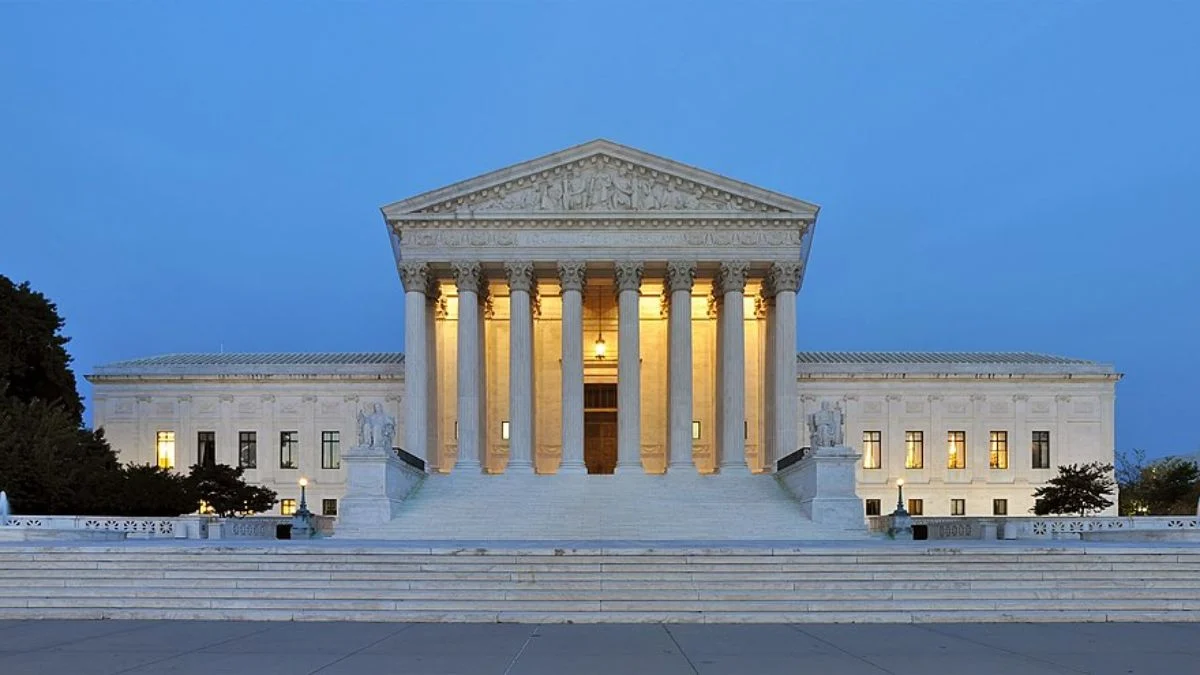
The U.S. Supreme Court is still made up of nine justices. But after a dramatic House vote, the political battle over whether that number should ever change has become much harder to ignore.
On Wednesday, September 2, 2026, the House rejected a Republican-backed constitutional amendment that would have permanently fixed the Supreme Court at nine members. The measure failed 212-206, falling far short of the two-thirds majority required for a constitutional amendment. The result leaves the court’s current structure untouched — but, crucially, it also leaves Congress with its existing authority to change the number of justices.
Another Power Struggle in Washington: Leadership shakeups aren’t confined to the judiciary — the Pentagon is navigating its own high-stakes transition. For more, read our story on Army Secretary Daniel Driscoll’s departure amid tensions with Pete Hegseth.
Why the House rejected the Supreme Court nine-justice constitutional amendment
The proposal, introduced by Rep. Andy Biggs, R-Ariz., as House Joint Resolution 1, was designed to do something much bigger than simply confirm the Supreme Court’s current structure.
It would have written the number nine directly into the Constitution.
The proposed language stated:
“The Supreme Court of the United States shall be composed of nine justices consisting of one chief justice and eight associate justices.”
The goal was straightforward: prevent Congress from increasing or decreasing the number of Supreme Court seats through ordinary legislation.
But the House considered the resolution under a procedure requiring a two-thirds majority. The official roll call recorded 212 votes in favor, 206 against and 15 members not voting. That meant the amendment failed despite receiving support from the overwhelming majority of Republicans.
Only one Democrat, Rep. Don Davis of North Carolina, voted in favor.
Independent Rep. Kevin Kiley of California, who caucuses with Republicans, voted against the measure.
That breakdown matters because Wednesday’s vote cannot simply be interpreted as 206 lawmakers supporting a larger Supreme Court. Democrats who voted against the amendment were rejecting a constitutional requirement fixing the court at nine, but that does not automatically mean they support adding four justices.
Several Democrats also did not vote.
When Political Missteps Carry Real Consequences: Accountability in Washington often plays out far beyond the House floor. Catch the full story in our piece on George Santos receiving Kalshi’s first lifetime ban over a betting scandal.
Why Democrats oppose permanently fixing the Supreme Court at nine justices
At the heart of the Democratic argument is a constitutional question: Who should have the power to determine the size of the Supreme Court?
Democrats opposing the amendment argue that the Constitution deliberately leaves that decision to Congress.
Ahead of the vote, House Minority Whip Katherine Clark’s office urged lawmakers to reject the proposal, arguing that permanently establishing nine justices would remove a power currently exercised by elected representatives.
“This proposed constitutional amendment would permanently fix the number of Supreme Court justices at nine, stripping Congress of yet another constitutional authority that is meant to be controlled by the American people’s representatives.”
Clark’s office also argued that the amendment would not address what Democrats describe as the “affordability crisis” under President Donald Trump.
The historical record gives that constitutional argument significant context. The Supreme Court itself explains that the Constitution does not establish a specific number of justices. Instead, Congress has historically determined the size of the court through legislation.
That process dates back to the Judiciary Act of 1789.
Executive Power Under Scrutiny Elsewhere: Questions about who holds authority extend well beyond the courts — immigration enforcement is facing similar tension. For the full account, read our story on ICE’s expanding third-country deportations and an Afghan man sent to Africa.
Supreme Court history: Why there have not always been nine justices
The nine-member Supreme Court Americans know today is not the structure the United States started with.
When Congress created the federal judiciary in 1789, the Supreme Court had six justices — one chief justice and five associate justices.
The number did not remain fixed.
According to the Supreme Court’s historical account, Congress changed the size of the court several times, with the number fluctuating between five and ten justices.
Congress eventually settled on nine through the Judiciary Act of 1869.
The court has remained at nine members ever since.
That history has now become one of the central battlegrounds in the modern court-packing debate.
Republicans seeking a constitutional nine-justice requirement argue that making the number permanent would shield the Supreme Court from politically motivated changes to its membership.
Opponents see the issue differently. They argue that permanently putting the number nine into the Constitution would remove a congressional power that has historically been exercised through legislation.
So while nine justices may feel like a permanent feature of American government, legally and historically, it has not always been one.
When Courtrooms Become Battlegrounds: Legal disputes over authority and fairness aren’t limited to Washington — they’re playing out in local courts too. Dive into the full story in our article on an Ohio manufacturer suing a reviewer for over $25,000 after a 1-star Google post.
The Supreme Court court-packing debate is becoming a major political fight
Wednesday’s vote is only one part of a much larger argument over the future of the Supreme Court.
Calls for expanding the court have become increasingly prominent within the Democratic Party and among progressive judicial-reform organizations, particularly following major decisions by the court’s conservative majority.
Among the rulings frequently cited by supporters of expansion are the Supreme Court’s 2022 decision overturning Roe v. Wade, as well as subsequent decisions involving voting rights and presidential immunity.
The court currently has a 6-3 conservative majority, including three justices appointed by Donald Trump during his first presidency.
That ideological balance has helped fuel calls from some Democrats to keep court expansion available as a political option.
Josh Orton, president of the progressive judicial advocacy organization Demand Justice, said the idea has moved significantly closer to the center of Democratic politics.
“What was once a fairly dramatic and fringe idea has now become mainstream because of how fed up the country has become with the [Chief Justice John] Roberts majority.”
Orton added:
“People understand this is now an emergency. They see the Roberts majority as more corrupt, more friendly to corporate power and to the Trump administration and more antidemocratic.”
Those statements are Orton’s political assessments of the court and its majority and are not established independent findings about the justices.
Moving Something Massive Takes Collective Will: Shifting an institution as deeply rooted as the Supreme Court is no small feat — much like this literal display of collective effort. See the full story in our piece on thousands pulling a 400-tonne Japanese castle by hand.
Republicans turn the nine-justice Supreme Court fight into a 2026 election issue
Republicans are also using the Supreme Court’s size as part of their wider political messaging ahead of the 2026 midterm elections.
The resolution was one of several measures Republicans brought forward as they sought to draw a contrast with Democrats on issues expected to appeal to conservative voters.
Mike Marinella, a spokesman for the House Republicans’ campaign operation, used particularly sharp language when describing the stakes.
“Give House Democrats an ounce of power, and they’ll use every bit of it to fundamentally transform America into an unrecognizable socialist hellscape,” Marinella said.
The Republican strategy is to portray opposition to the amendment as evidence that Democrats could eventually expand the Supreme Court if they gain control of Congress and the White House.
However, that conclusion cannot automatically be applied to every Democrat who voted against the proposal.
The legislation before the House was a constitutional prohibition on changing the court’s size, not a direct bill to add four justices.
That distinction is at the center of the debate.
Political Stakes and Public Fallout: Election-year messaging often carries consequences that stretch far past the campaign trail. Read the complete story in our article on George Santos’s lifetime ban following his State of the Union betting scandal.
Jim Clyburn supports expanding the Supreme Court to 13 justices
Some Democrats, however, have explicitly gone much further than simply opposing the Republican amendment.
Rep. Jim Clyburn, D-S.C., a veteran Democratic lawmaker and former House majority whip, said Sunday that he supports increasing the Supreme Court from nine members to 13 justices.
“I think that we are in a position now that calls for some significant actions taken by the Congress, and we ought to expand,” Clyburn said.
He continued:
“Thirteen is a pretty good number. A baker’s dozen would be a good number to have on the court. And I would hope we would get people on the court who will follow the constitutional underpinnings of this great nation of ours.”
A 13-member Supreme Court would mean adding four seats to the current bench.
Clyburn’s position illustrates why the issue is becoming politically significant. Democratic opposition to permanently fixing the court at nine exists alongside an increasingly visible group of Democrats who openly support expansion.
Setting New Numbers, Setting New Records: Talk of a “baker’s dozen” on the bench is its own kind of record-chasing ambition. Explore the full story in our piece on the iPhone 17 Pro’s record-setting 30,607-metre free fall for a Guinness World Record.
Kamala Harris says Supreme Court expansion should be revisited
Former Vice President Kamala Harris, the Democratic Party’s 2024 presidential nominee, has also supported reconsidering the number of Supreme Court justices.
Harris said this summer:
“We need to revisit the point of expanding the court to 13 justices.”
Her comments put another nationally prominent Democrat behind the 13-member proposal and reinforce the likelihood that Supreme Court expansion will remain part of Democratic policy debates.
When Prominent Voices Weigh In on Power Shifts: High-profile figures reshaping institutional power isn’t limited to the courts — it’s unfolding at the Pentagon too. For more, read our story on the White House’s praise for departing Army Secretary Daniel Driscoll.
What Republicans say could happen if the Supreme Court is expanded
The Republican argument against expansion revolves around a potential political cycle.
Under the existing system, Congress can change the number of Supreme Court seats through legislation.
That means one Congress could theoretically increase the number of justices, while a future Congress could change the number again.
Republicans argue that this could turn the composition of the Supreme Court into an ongoing political contest.
The constitutional amendment proposed by Biggs was designed to remove that possibility by establishing nine justices as a permanent constitutional requirement.
But Wednesday’s defeat means that congressional authority remains intact.
Any future attempt to change the number of seats would still have to pass both chambers of Congress and be signed into law by the president, assuming Congress could not override a veto.
Testing the Limits of Executive Authority: Concerns about unchecked power cycling through different administrations aren’t unique to the judiciary. Catch the full report in our story on ICE’s expanding third-country deportation practices.
The Supreme Court battle could continue into the 2028 presidential election
For supporters of court expansion, the failed House vote is clearly not the final chapter.
Orton said Demand Justice intends to continue campaigning for Supreme Court reform through the next presidential election cycle.
“We intend to continue building the case for major Supreme Court reform through the 2028 election cycle,” Orton said.
He also rejected the argument that Democrats should avoid expanding the court because Republicans could respond by adding even more seats later.
“You can be damn sure that if there had been a long-standing progressive majority on the court, Republicans would have already voted to expand it. This has to happen in the first two years of the next Democratic administration.”
That is the position of one progressive judicial advocacy organization, while Republicans are working to make opposition to court expansion a defining political issue in the 2026 elections.
The Hunt Isn’t Over Yet: Some pursuits stretch on far longer than expected, with no resolution in sight. Discover the full story in our piece on Canadian police still hunting for the thieves who stole an entire cabin.
What happens next after the House Supreme Court vote?
For now, nothing changes about the Supreme Court’s composition.
The court remains a nine-member institution, as it has since 1869.
What changed Wednesday was the political landscape surrounding that number.
The House did not agree to permanently constitutionalize the nine-justice structure. As a result, Congress retains its existing authority to determine the size of the Supreme Court through legislation.
The vote also does not establish that Democrats as a whole support adding four justices.
More precisely, it showed that the Democratic caucus — with Don Davis the exception among those voting — was unwilling to surrender Congress’s existing authority to determine the court’s size.
At the same time, support for a 13-member Supreme Court from figures such as Clyburn and Harris demonstrates that expansion is no longer an idea confined solely to political activists on the margins of the Democratic Party.
With Republicans defending the traditional nine-member structure and some Democrats openly calling for a 13-member court, the fight over the Supreme Court’s size is shaping up as a potentially significant issue in the 2026 midterm elections.
And if the debate continues as expected, it could become an even bigger political flashpoint heading into the 2028 presidential campaign.
When Answers Take Years to Find: Some searches for a resolution stretch on far longer than anyone expects. Get the full story in our article on a West Bengal teen who has spent five years in ponds as doctors search for the cause of his condition.
Disclaimer and Sources
This article is based on a review of the legislative record and publicly reported information available as of September 3, 2026. The story draws on the U.S. House Clerk’s official roll call, the U.S. Government Publishing Office, the Supreme Court of the United States’ historical and institutional information, and reporting from Reuters and CBS News.
Political statements, opinions and characterizations attributed to lawmakers, campaign representatives and advocacy organizations have been presented as their stated positions and should not be interpreted as independent findings of fact.
Sources reviewed include the U.S. House Clerk — Official Roll Call 293; U.S. Government Publishing Office — H.J. Res. 1; Supreme Court of the United States — General Information FAQ; Supreme Court of the United States — The Court as an Institution; Reuters — “House Democrats defeat Republican effort to cap Supreme Court at nine”; and CBS News — “House rejects constitutional amendment to limit Supreme Court to nine justices.”
Sources
- U.S. House Clerk — Official Roll Call 293
- U.S. Government Publishing Office — H.J. Res. 1
- Supreme Court of the United States — General Information FAQ
- Supreme Court of the United States — The Court as an Institution
- Reuters — House Democrats defeat Republican effort to cap Supreme Court at nine
- CBS News — House rejects constitutional amendment to limit Supreme Court to nine justices
Featured Image Credit: Joe Ravi / Creative Commons Attribution-Share Alike 3.0


Leave a Reply