

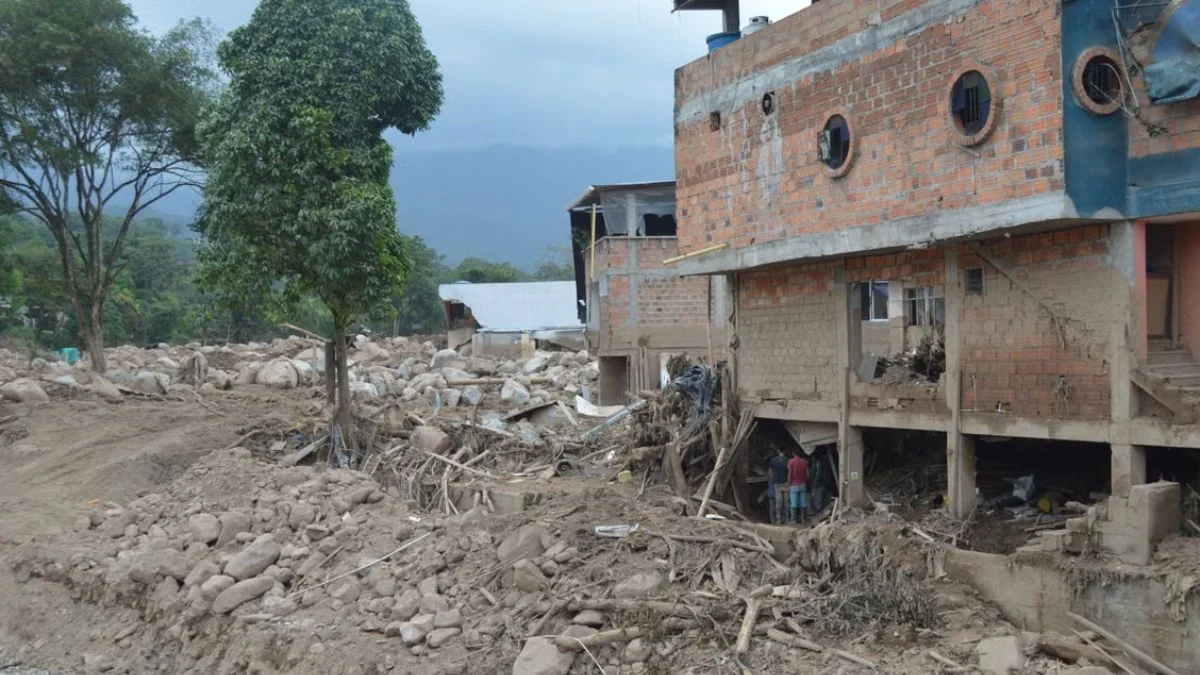
The ground began shaking across western Colombia shortly after sunrise on Monday, August 10, turning an ordinary morning into a major national disaster. A magnitude 7.4 earthquake struck at about 7:34 a.m. local time, collapsing buildings, damaging hospitals and leaving people trapped beneath rubble. By Tuesday, the Colombian Association of Capital Cities (Asocapitales) reported at least 132 deaths and 570 injuries, with the toll expected to change as rescue teams continue searching damaged structures.
The epicenter was near San José del Palmar in Chocó, a sparsely populated area on Colombia’s Pacific coast roughly 280 kilometers west of Bogotá. The U.S. Geological Survey placed the earthquake at a depth of about 107 kilometers, while Colombian estimates varied. Despite its relatively deep focus, the earthquake unleashed enough energy to cause serious destruction across western and central Colombia. The shaking was felt in Bogotá and neighboring Ecuador, Panama, and Venezuela.
What makes the disaster especially alarming is where the worst damage occurred. Several important cities in Colombia’s coffee-growing Eje Cafetero, or Coffee Axis, were hit hard. And as emergency crews moved through the rubble, the scale of the disaster became clearer by the hour.
Another Unfortunate Disaster: The devastation in Colombia comes amid several other disasters that have recently forced communities into emergency situations. The Gann Fire in Calaveras County also prompted evacuations as firefighters battled a fast-moving wildfire in California.
7.4 Colombia Earthquake Leaves Pereira and Cali Facing Major Destruction
Pereira became one of the hardest-hit cities. Asocapitales’ latest figures put the city’s death toll at around 60. Earlier reports had recorded at least 40 fatalities, dozens of collapsed buildings and people believed trapped inside approximately 15 structures. Videos from the city showed buildings collapsing, rubble filling streets and debris falling inside the airport.
The emergency became even more dramatic when 16 people were trapped for roughly six hours in an aerial cable-car system before being successfully evacuated. Parts of Pereira also introduced a nighttime curfew as authorities worked to control movement and support rescue operations.
Cali, Colombia’s third-largest city, also suffered extensive damage. Reports described dozens of collapsed buildings, with estimates ranging from 32 to around 40. A hospital was damaged, including areas serving pediatric and neonatal patients, creating an especially urgent rescue operation. Local officials at one stage reported nearly 200 people missing, although missing-person figures remained fluid as families searched for relatives.
Manizales also reported deaths and structural damage. A tower of its neo-Gothic cathedral collapsed, while cable-car services were disrupted. Quibdó, the capital of Chocó, and other municipalities were affected, with more than 20 municipalities reporting damage.
Interestingly, San José del Palmar itself reported no deaths or injuries, although roads were damaged.
Another Devastating Earthquake: The destruction left behind in Colombia is a reminder of how quickly powerful earthquakes can overwhelm buildings and infrastructure. A similar disaster unfolded in Japan with the 2026 Kumamoto earthquake mall collapse, where a major structural collapse added to the earthquake’s devastating impact.
Colombia Earthquake Damage Spreads Across Homes, Hospitals, Schools and Airports
The earthquake’s impact went far beyond collapsed buildings.
President Abelardo de la Espriella reported approximately 1,575 to 1,577 homes damaged, with dozens completely destroyed. More than 60 buildings were reported fully collapsed, while 18 health centers and 52 schools were damaged. Around 18 highways were also affected.
Seven airports, including those serving Pereira, Manizales, Quibdó, Armenia, Cartago, Cali and Buenaventura, suspended operations because of structural concerns. Power failures, disrupted roads and communications problems complicated rescue efforts, particularly in remote and jungle-covered parts of Chocó.
Authorities also warned that more shaking could follow. Multiple aftershocks were recorded, including tremors around magnitudes 2.8 and 4.8, with reports of roughly 21 aftershocks by Monday night.
Another Emergency Rescue: As Colombian rescue crews continue searching through damaged structures, other recent disasters have also demanded large-scale emergency responses. In California, the Foster City condo fire brought firefighters into a major six-alarm emergency involving a residential building.
Rescue Teams Race Against Time as Colombia Searches for Survivors
Across the affected areas, the immediate mission was brutally simple: find people who could still be alive beneath the rubble.
Soldiers, firefighters, specialist rescue crews, volunteers and local residents worked side by side. Some dug through debris by hand while others used heavy equipment. Rescue operations continued into the night, with teams working under headlamps as families waited for news.
In Cali, one man described searching through a destroyed apartment building for his wife, unsure whether she had survived. Witnesses described violent shaking, screams, falling bricks and thick clouds of dust, with some saying the experience felt almost like a powerful blast.
Hospitals treated hundreds of injured people, while some patients had to be transferred because medical facilities themselves were damaged.
The disaster is particularly significant because Colombia sits within the seismically active Pacific Ring of Fire, where the Nazca Plate is subducting beneath the South American Plate.
The earthquake also revived memories of the 1999 Coffee Axis earthquake, a magnitude 6.2 disaster that killed more than 1,000 people. The 2026 earthquake was considerably stronger, but its deeper focus helped limit some of the surface effects compared with what might have happened from a shallower quake.
Another Tragedy Under Investigation: The Colombian earthquake has also drawn attention to the international response required after a major disaster. A separate tragedy in Peru, the Nazca Lines plane crash, likewise left investigators working to understand the circumstances surrounding a devastating incident.
Colombia Declares Disaster as U.S. Announces $15.5 Million in Aid
For newly inaugurated President Abelardo de la Espriella, the earthquake became his first major national crisis just days after taking office.
The government declared a national emergency or disaster response, established a Unified Command Post and mobilized military and specialist rescue resources. De la Espriella said saving people trapped under rubble was the government’s top priority and coordinated with the National Unit for Disaster Risk Management.
He also announced rental assistance for displaced families while damaged homes are repaired and promised priority for medical transfers. Five capital cities were placed under red alert.
International assistance quickly followed. The United States committed $15.5 million for shelter, food, protection and assessments, while U.S. officials said they were assisting Americans in Colombia. Other countries and organizations also offered support, including satellite imagery assistance.
For now, the final cost of the earthquake remains unknown. Early economic assessments have suggested losses could reach hundreds of millions of dollars, but officials are still determining the full extent of the destruction.
And with rescue teams continuing to search damaged buildings and aftershocks still possible, the story of Colombia’s 7.4 earthquake is far from over.
Source Disclaimer
This article was prepared from a thorough review of information provided in the source material, including reporting from Reuters, BBC News, CNN, NHK World, EFE, the U.S. Geological Survey, the Colombian Geological Service, the Colombian Association of Capital Cities (Asocapitales), statements from President Abelardo de la Espriella and local officials, and reporting from international organizations and news outlets including The New York Times and Al Jazeera. Casualty and damage figures are developing figures and may change as Colombian authorities continue search, rescue and verification operations.
Key source links for the Colombia earthquake information:
Image Credit: Franklin Peña Gutierrez on Pexels


Leave a Reply